
Armenia Expands Big Areni Wine Tourism as Ancient Cave Heritage Draws Global Travellers
Armenia Expands Big Areni Wine Tourism as Ancient Cave Heritage Draws Global Travellers

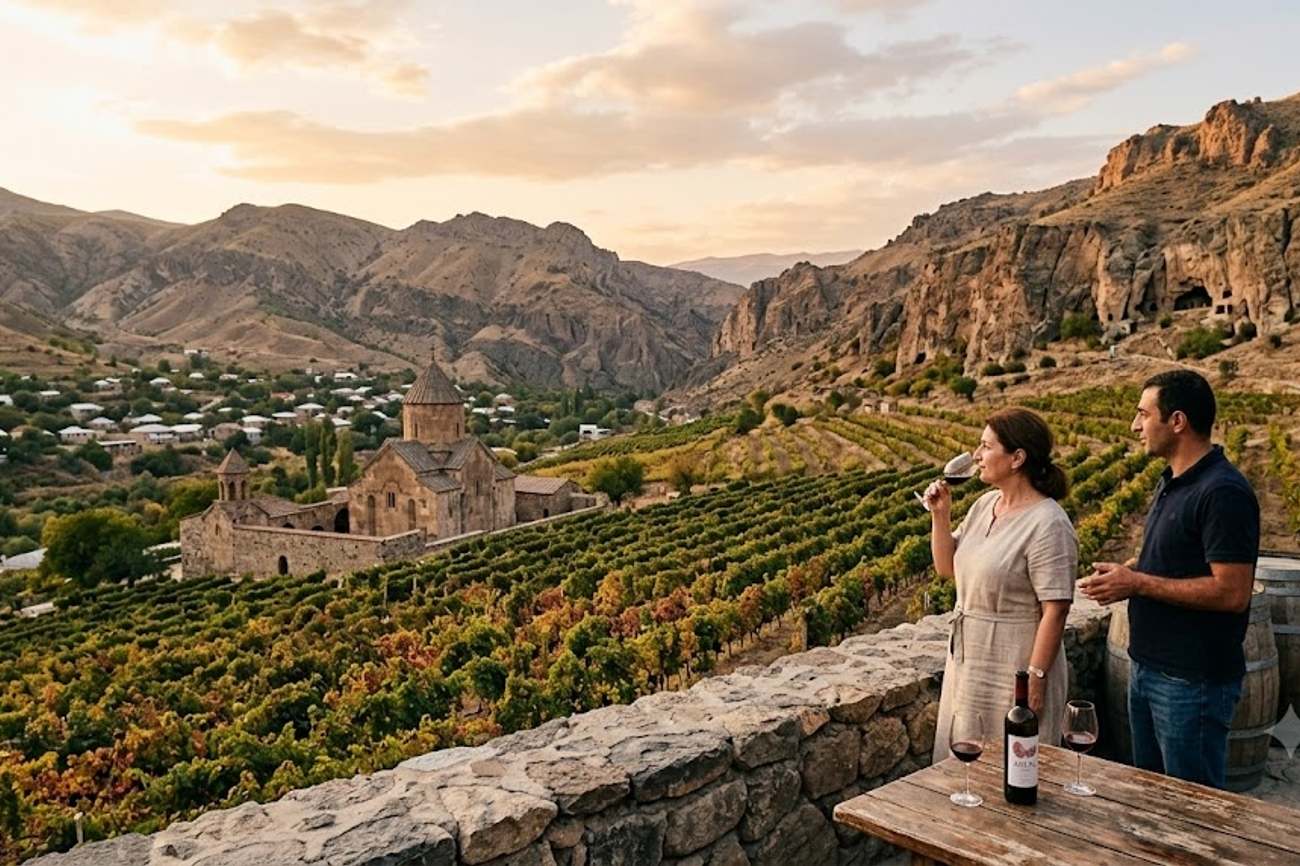
Image generated by AI
6,100 years of viticultural history converge in a single limestone cavern in Vayots Dzor, marking the Areni-1 Cave as the oldest known winery in human existence. This archaeological site does not merely serve as a museum but functions as the anchor for a sophisticated integration of rural tourism, archaeology, and indigenous agriculture that defines the southern Armenian travel experience. For the high-value traveler, this region represents a shift from passive sightseeing to an immersive study of continuity, where the same soil that yielded the world's first fermentation jars now produces the modern Areni Noir grape.
The Vayots Dzor Archaeological Nexus
The strategic appeal of Vayots Dzor lies in its ability to synthesize disparate travel motivations—history, gastronomy, and nature—into a singular geographical corridor. At the center of this is the Areni-1 Cave, situated near the village of Areni at the threshold of the Gnishik Canyon. Unlike sterilized urban galleries, this site allows visitors to enter a natural subterranean environment where the evidence of human habitation is preserved in situ.
The archaeological record here is not limited to viticulture. The discovery of a 5,500-year-old leather shoe provides a rare glimpse into the organic material culture of the Neolithic and Bronze Ages. The site is managed by the Areni-1 Cave Scientific Research Foundation, ensuring that the transition from a research excavation to a tourist attraction remains regulated. Because the cave remains an active scientific site, the logistical requirement for guided tours is a mandatory safeguard for the preservation of the remaining fermentation jars, wine presses, and ancient grape seeds.
Logistics of the Southern Armenia Circuit
For those planning a journey in September 2026, the region operates as a compact ecosystem of attractions. The proximity of the Areni-1 Cave to the village of Areni and the subsequent drive toward the Noravank Monastery creates a high-density itinerary that minimizes transit time while maximizing cultural exposure.
The following table outlines the primary components of the Vayots Dzor regional circuit:
| Attraction | Primary Draw | Key Feature/Date | Distance from Yerevan |
|---|---|---|---|
| Areni-1 Cave | Archaeology | 6,100-year-old winery | Approx. 1.5 Hours |
| Areni Village | Viticulture | Sev Areni (Areni Noir) Grape | Approx. 1.5 Hours |
| Noravank Monastery | Architecture | 13th-century red-rock cliffs | Extended drive via Canyon |
| Areni Wine Festival | Cultural Event | October 3, 2026 | Local to Areni Village |
The journey through Gnishik Canyon serves as a scenic transition between the subterranean history of the cave and the architectural height of Noravank. This route is increasingly recognized not just for its vistas, but as a corridor for birdwatching and ecological study, adding a layer of nature tourism to the heritage-heavy itinerary.
Expert Analysis: The Economics of Indigenous Viticulture
The integration of the Areni-1 Cave with the modern wine industry is a masterclass in "heritage branding." By linking the current production of Sev Areni (Areni Noir) grapes to a 6,100-year-old archaeological find, Armenia has created an untouchable market position for its regional wines. This is not merely about tourism; it is about establishing a provenance that cannot be replicated by New World wine regions.
For travelers booking this route in September, the direct consequence is a shift in the local economy. September is the peak of the agricultural cycle, where the rhythm of the village pivots toward the autumn harvest. This creates a "seasonal premium" for visitors; while the landscape is at its most visually striking, the demand for local guesthouses and family-run wineries peaks.
The pricing pressure this creates means that those visiting in September 2026 will likely find limited availability in authentic village accommodations. However, the timing is strategic. By visiting in September, travelers position themselves to experience the quietude of the vineyards just before the massive influx of crowds for the Areni Wine Festival on October 3, 2026. This festival acts as the commercial climax of the season, transforming a quiet rural village into a hub of music, crafts, and global viticultural interest.
From a logistical standpoint, the reliance on the Armenian Government's official tourism platforms indicates a centralized effort to steer visitors away from the capital, Yerevan, and into the rural periphery. This redistribution of tourism capital helps sustain the family-run businesses and boutique wineries that preserve the indigenous grape varieties. For the traveler, this means a more authentic, decentralized experience, provided they have the transport means to navigate the 1.5-hour journey from the city.
Key Takeaways
- Historical Primacy: The Areni-1 Cave houses the world's oldest discovered winery, dating back over 6,100 years, alongside a 5,500-year-old leather shoe.
- Strategic Timing: September is the optimal window for visiting to witness the harvest preparations before the Areni Wine Festival occurs on October 3, 2026.
- Integrated Itinerary: The most efficient route combines the Areni-1 Cave, the vineyards of Areni village, and the 13th-century Noravank Monastery via the Gnishik Canyon.
- Indigenous Focus: The region is the exclusive home of the Sev Areni (Areni Noir) grape, linking modern production to Neolithic origins.
- Logistical Access: The Vayots Dzor region is approximately a 1.5-hour drive from Yerevan, making it viable for both day trips and extended rural stays.
FAQ: Vayots Dzor Travel 2026
Do I need a guide to visit the Areni-1 Cave? Yes. Because Areni-1 is an active archaeological site rather than a standard museum, guided visits are required to protect the integrity of the excavations and the ancient artifacts.
When is the best time to visit the Areni Wine Festival? The festival is scheduled for October 3, 2026. It is the primary event for those wanting to experience Armenian wine, music, and crafts in a festive, communal atmosphere.
What is the most famous wine in the Vayots Dzor region? The region is renowned for Sev Areni, also known as Areni Noir. This is an indigenous red grape variety that has been cultivated in the area for millennia.
How far is Areni from the capital city? Areni is roughly a 1.5-hour drive from Yerevan. It is recommended to use this journey as part of a larger southern Armenia road trip that includes the Noravank Monastery.
The bridge between a 6,000-year-old fermentation jar and a modern glass of Areni Noir is the shortest distance between prehistory and the present.
Tags: Areni-1 Cave, Vayots Dzor, Areni Wine Festival 2026, Sev Areni Grape, Noravank Monastery, Armenia Rural Tourism
Related Travel Guides
Disclaimer
This article is for informational and educational purposes only. It does not constitute legal, financial, or professional advice. While we strive to provide accurate and up-to-date information, travel policies, regulations, and conditions change rapidly. Always verify information with official sources before making travel decisions. Nomad Lawyer makes no representations about the accuracy, reliability, completeness, or suitability of the information provided. Readers should consult qualified professionals for advice specific to their circumstances. The views expressed in this article are those of the author and do not necessarily reflect the views of Nomad Lawyer.
Preeti Gunjan
Contributor & Community Manager
A passionate traveller and community builder. Preeti helps grow the Nomad Lawyer community, fostering engagement and bringing the reader experience to life.
Learn more about our team →