
Japan Land Prices Rise for Fifth Year as Tourism Unlocks New and Better Hotel Opportunities in the Regions
Japan Land Prices Rise for Fifth Year as Tourism Unlocks New and Better Hotel Opportunities in the Regions

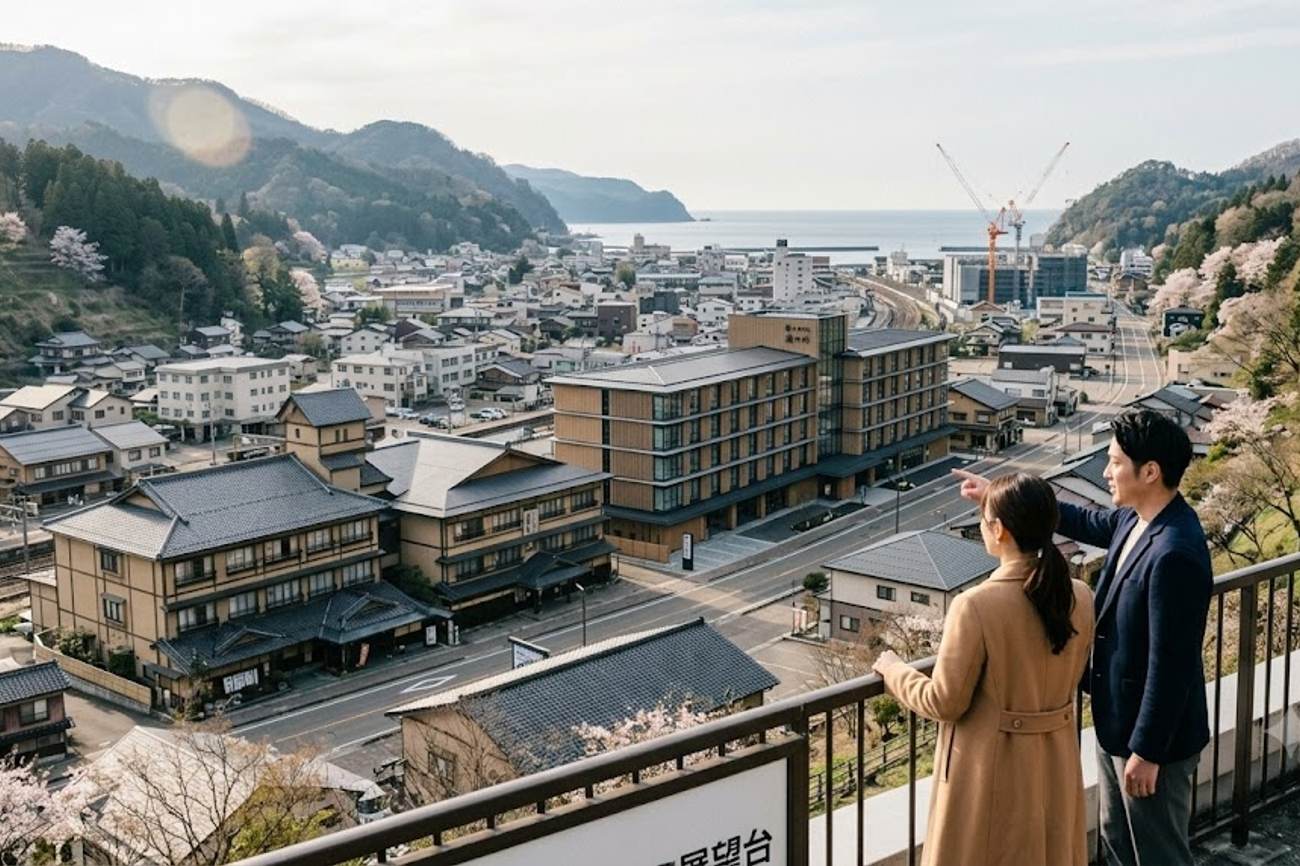
Image generated by AI
Japan’s national land value growth has maintained a steady 1.5% increase for two consecutive years, but the underlying distribution of this growth reveals a sharp divergence between stagnant regional hubs and hyper-growth tourism corridors. While the broad average suggests stability, the acceleration of commercial land values to 2.9% indicates a strategic shift in capital allocation toward high-yield visitor districts, signaling a transition from general recovery to targeted tourism-driven expansion.
The 2026 Prefectural Land Price Metrics
The 2026 Prefectural Land Price Survey, released on 15 September by Japan’s Ministry of Land, Infrastructure, Transport and Tourism, provides a data-driven snapshot of the nation's economic geography as of 1 July. The survey analyzed 21,466 specific locations, revealing a market where commercial and industrial sectors are significantly outperforming residential growth.
The data shows that industrial land led the surge with a 3.3% increase, followed closely by commercial land at 2.9%. Residential land remained the slowest growth sector, holding steady at 1%. This disparity is a critical indicator for the travel industry; when commercial land grows nearly three times faster than residential land, it suggests that investors are prioritizing revenue-generating assets—such as hotels, retail hubs, and tourist infrastructure—over long-term housing.
The concentration of wealth is most evident in the "Big Three" metropolitan areas. Tokyo, Osaka, and Nagoya recorded a combined all-use increase of 4.4%, a figure nearly triple the national average of 1.5%. However, the internal dynamics of these cities differ. While Tokyo and Osaka saw acceleration in land values, Nagoya experienced a deceleration, suggesting a shift in where corporate and tourism capital is being deployed within the Japanese archipelago.
Comparative Market Dynamics: 2025 vs. 2026
The current trajectory marks the fifth consecutive year of national land price increases. To understand the scale of this shift, one must look at the delta between general market growth and the specific surges in tourism-heavy zones. While the national all-use average remained flat year-over-year at 1.5%, the commercial sector showed a marginal acceleration from 2.8% to 2.9%.
The most striking data points are found in the "outlier" destinations. The survey identified the largest commercial price spike at a site in Hakuba and the largest residential increase in Furano. This indicates that the "tourism effect" is no longer confined to Tokyo or Kyoto but has migrated deeply into regional mountain and island markets.
| Land Use Category | 2025 Growth Rate | 2026 Growth Rate | Trend Direction |
|---|---|---|---|
| All-Use Average | 1.5% | 1.5% | Stable |
| Residential Land | 1.0% | 1.0% | Stable |
| Commercial Land | 2.8% | 2.9% | Accelerating |
| Industrial Land | N/A | 3.3% | High Growth |
| Metro (Tokyo/Osaka/Nagoya) | < 4.4% | 4.4% | Accelerating |
This pattern aligns with broader global trends reported by the World Travel & Tourism Council (WTTC), where "overtourism" in primary hubs pushes investment into secondary and tertiary destinations. In Japan, this is manifesting as a land-grab in places like Nozawa Onsen and Miyakojima, where limited land supply meets rising international demand.
What This Means for Travelers
While the Ministry of Land, Infrastructure, Transport and Tourism confirms that no visa, passport, or border regulations have changed, these economic shifts will fundamentally alter the traveler's experience in the coming 24 to 36 months. Land prices are a leading indicator of future operational costs.
1. Anticipate "Premiumization" of Accommodation When commercial land values spike—as seen in Hakuba and Furano—developers rarely build budget-tier lodging. High land acquisition costs necessitate higher Average Daily Rates (ADR) to ensure a return on investment. Travelers visiting these high-growth corridors should expect a shift toward luxury villas and high-end condominiums rather than affordable guesthouses.
2. Booking Lead Times for Regional Hubs The surge in demand for "holiday homes" and "migrant housing" mentioned in the survey suggests that residential inventory is being converted into short-term rentals or worker housing. If you are planning a trip to Miyakojima or the Japanese Alps for the 2027 season, booking 6-9 months in advance is now essential, as the available "non-luxury" inventory is shrinking.
3. Potential for New Infrastructure On a positive note, the 2.9% commercial growth indicates a healthy appetite for investment. This typically leads to an increase in the quality and quantity of visitor services, including new dining options and retail centers in previously underserved regional areas.
Projecting the 2027 Trajectory
Based on the current data, the Japanese property market is entering a phase of "selective intensification." We are moving away from a blanket national recovery and toward a model where specific "tourism clusters" decouple from the national average.
The data reveals a fragile balance. While the national average is positive, areas affected by the 2024 Noto Peninsula earthquake continue to see price declines. This creates a two-tier Japan: one side experiencing an investment boom fueled by inbound tourism and semiconductor projects, and the other struggling with disaster recovery.
Looking forward, the pressure on housing in popular destinations will likely become a primary "destination-management" crisis. As land is repurposed for hotels and luxury condos, the local workforce—the people who staff the ryokans and restaurants—will face higher housing costs. This could lead to labor shortages, potentially impacting service quality for travelers. According to data patterns often tracked by STR, when land costs outpace wage growth in hospitality hubs, the resulting labor volatility often leads to reduced operating hours or increased service fees.
FAQ: Japan Land Trends 2026
Will hotel prices increase because of this report? Not immediately, but it is a strong leading indicator. Higher land costs for new developments typically lead to higher room rates in new hotels to offset the initial capital expenditure.
Is it still a good time to visit regional Japan? Yes, but the "hidden gem" era is ending. Data from Furano and Hakuba shows these areas are now primary investment targets, meaning they will become more crowded and expensive.
Which regions are seeing the most growth? The Tokyo and Osaka metropolitan areas are accelerating, while specific resort hubs like Hakuba, Furano, Nozawa Onsen, and Miyakojima are recording the sharpest local gains.
Does this affect my travel documents or entry requirements? No. The survey is an economic assessment of property values. There are no changes to visas, passports, or border policies resulting from this data.
The map of Japan is being redrawn not by borders, but by the balance sheets of hotel developers.
Tags: Japan-Land-Price-2026, Prefectural-Land-Price-Survey, Japan-Tourism-Investment, Commercial-Land-Growth-Japan, Hakuba-Furano-Real-Estate
Related Travel Guides
Disclaimer
This article is for informational and educational purposes only. It does not constitute legal, financial, or professional advice. While we strive to provide accurate and up-to-date information, travel policies, regulations, and conditions change rapidly. Always verify information with official sources before making travel decisions. Nomad Lawyer makes no representations about the accuracy, reliability, completeness, or suitability of the information provided. Readers should consult qualified professionals for advice specific to their circumstances. The views expressed in this article are those of the author and do not necessarily reflect the views of Nomad Lawyer.
Preeti Gunjan
Contributor & Community Manager
A passionate traveller and community builder. Preeti helps grow the Nomad Lawyer community, fostering engagement and bringing the reader experience to life.
Learn more about our team →