
Arabian Travel Market 2026 Unveils AI Revolution As Dubai Leads The Future Of Smart Tourism Innovation
Arabian Travel Market 2026 Unveils AI Revolution As Dubai Leads The Future Of Smart Tourism Innovation

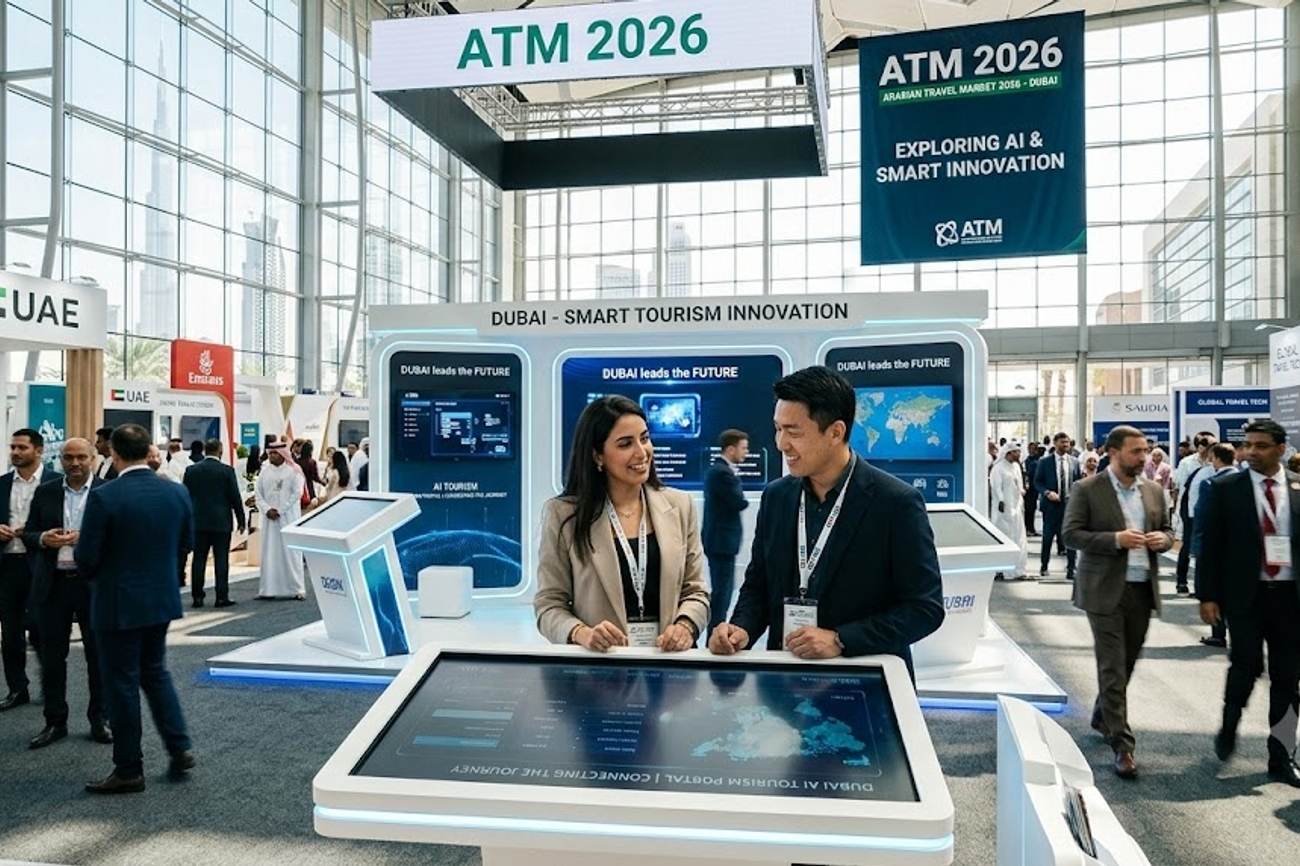
Image generated by AI
A four-day intensive program at the Arabian Travel Market (ATM) 2026 has identified artificial intelligence not as a supplementary tool, but as a structural replacement for traditional travel service architectures. The industry is currently pivoting away from isolated AI applications—such as basic chatbots and recommendation engines—toward a fully integrated digital ecosystem where AI governs the entire journey from initial inspiration to final booking.
The Shift from Tooling to Infrastructure
The discourse at the ATM 2026 Future Stage, situated within the Tech & Innovation Hub, signals a fundamental departure from the "plugin" era of travel technology. For the last several years, the industry viewed AI as a layer added onto existing systems to handle customer service or automate email responses. The consensus among global experts at the event is that this approach is obsolete.
We are entering an era of "connected ecosystems." In this model, AI does not simply assist a human agent or a website; it becomes the primary infrastructure through which destinations, airlines, and hotels communicate. This shift requires a total overhaul of how travel data is stored and shared. When AI agents begin managing trip planning autonomously, the traditional "search engine optimization" (SEO) strategy becomes irrelevant. The new priority is "AI interpretability"—ensuring that a destination's data is structured so that an intelligent system can verify its accuracy and present it to a traveler without human intervention.
This evolution is particularly evident in the strategy adopted by major hubs. Dubai’s tourism network was cited as a primary case study in the necessity of digital foundations. For a city to remain competitive, its information cannot exist in silos; it must be fluid and accessible across emerging AI platforms to prevent "hallucinations" or outdated information from steering travelers away.
Data Connectivity and Market Dynamics
The transition to an AI-driven ecosystem creates a new set of dependencies. The efficacy of these systems relies on three pillars: data connectivity, responsible governance, and cross-sector collaboration. If an airline's AI cannot communicate in real-time with a hotel's AI and a government's visa portal, the "seamless journey" remains a marketing myth.
The following table outlines the projected structural shifts across the primary travel sectors as discussed during the ATM 2026 sessions:
| Sector | Legacy AI Application | Future Ecosystem Integration | Primary Objective |
|---|---|---|---|
| Airlines | Basic Chatbots | Predictive Demand & Operational Sync | Operational Efficiency |
| Hotels | Simple Rec Engines | Hyper-Personalized Guest Lifecycle Mgmt | Service Delivery |
| Destinations | Static Web Portals | Real-time AI Discovery & Behavioral Mapping | Visitor Engagement |
| Governments | Digital Forms | Integrated Regulatory & Entry Automation | Frictionless Border Flow |
This systemic change is being accelerated by the evolving nature of the traveler. The "single-purpose" trip is disappearing. Modern travelers are blending business, wellness, and culture into single itineraries—a trend that requires a level of logistical agility that human travel agents or static websites cannot provide at scale.
Expert Analysis: The Death of the Traditional Search Funnel
For the professional traveler and the nomad, the direct consequence of the ATM 2026 findings is the collapse of the traditional "discovery funnel." Historically, a traveler would move from inspiration (social media) to research (blogs/reviews) to booking (OTAs/Direct). AI agents are compressing this entire timeline into a single conversational interface.
The pricing pressure this creates is significant. As AI removes the "noise" of traditional marketing, the value shifts from those who can market the loudest to those who provide the most reliable, structured data. We are seeing a move toward "zero-click" travel planning. If an AI agent can book a flight via International Air Transport Association (IATA) standards and a hotel via a connected API without the user ever visiting a website, the traditional commission models of online travel agencies will face an existential crisis.
Furthermore, the focus on Chinese outbound tourism recovery highlights a geopolitical data challenge. To attract this market, Middle Eastern destinations must integrate with specific digital ecosystems that Chinese travelers prefer. This isn't just about translation; it is about technical interoperability. Destinations that fail to align their AI infrastructure with the platforms used by high-spending demographics will effectively become invisible to those markets.
The reliance on FlightAware and similar real-time data streams will move from being a "pro-user" feature to a core requirement for the AI agents managing these journeys. When the AI is the one making the decision, the quality of the data feed becomes the only thing that matters.
Key Takeaways
- Beyond Chatbots: AI is moving from a customer support tool to the primary operational infrastructure of the global tourism network.
- AI Interpretability: Destinations must shift focus from SEO to ensuring their data is structured for AI consumption to remain visible in "zero-click" searches.
- Ecosystem Strategy: The future of travel depends on the integration of airlines, hotels, and governments into a single, connected digital fabric.
- Blended Travel: Hospitality providers must adapt to "multi-motivation" trips (combining business, leisure, and wellness) through flexible, AI-managed services.
- Market Specificity: Recovering the Chinese outbound market requires deep technical integration with specific regional AI platforms rather than general digital presence.
FAQ: AI in Travel 2026
How will AI change how I book my next trip? You will likely move away from browsing multiple websites. Instead, AI agents will handle the research and booking across airlines and hotels in one conversation, using real-time data to optimize for your specific preferences and budget.
Will AI replace human travel agents? AI will replace the administrative tasks of travel agents (searching, comparing, booking). However, human expertise will shift toward high-value curation and managing complex disruptions that require emotional intelligence and creative problem-solving.
What is "AI interpretability" for a destination? It is the process of organizing a city or country's tourism data so that AI platforms can accurately read, verify, and recommend it to users without making mistakes or providing outdated information.
How does "blended travel" affect hotel stays? Hotels are redesigning services to accommodate guests who work and vacation simultaneously. This means more flexible check-ins, integrated co-working spaces, and wellness packages tailored for business travelers.
The era of searching for travel is ending; the era of being guided by an invisible, integrated intelligence has begun.
Tags: Arabian Travel Market 2026, Dubai Tourism, AI Travel Integration, Chinese Outbound Tourism, Travel Tech Ecosystems, Future Stage ATM
Related Travel Guides
- India Welcomes Espolòn Tequila As Campari Group Expands Premium Spirits Portfolio And Cocktail Culture Growth
- USA Travel Spotlight: Florida Route 60 Could Become a Powerful Scenic Road Trip Corridor
- Malaysia’s Sarawak Emerges As Asia’s Next Music Tourism Hotspot After Borderland Festival Pulls 9,000 Visitors In One Night
Disclaimer
This article is for informational and educational purposes only. It does not constitute legal, financial, or professional advice. While we strive to provide accurate and up-to-date information, travel policies, regulations, and conditions change rapidly. Always verify information with official sources before making travel decisions. Nomad Lawyer makes no representations about the accuracy, reliability, completeness, or suitability of the information provided. Readers should consult qualified professionals for advice specific to their circumstances. The views expressed in this article are those of the author and do not necessarily reflect the views of Nomad Lawyer.
Preeti Gunjan
Contributor & Community Manager
A passionate traveller and community builder. Preeti helps grow the Nomad Lawyer community, fostering engagement and bringing the reader experience to life.
Learn more about our team →