Busan Emerges as Global Tourism Powerhouse: 4 Million Visitors, Emirates Dubai Flight Talks, and Insider Guide

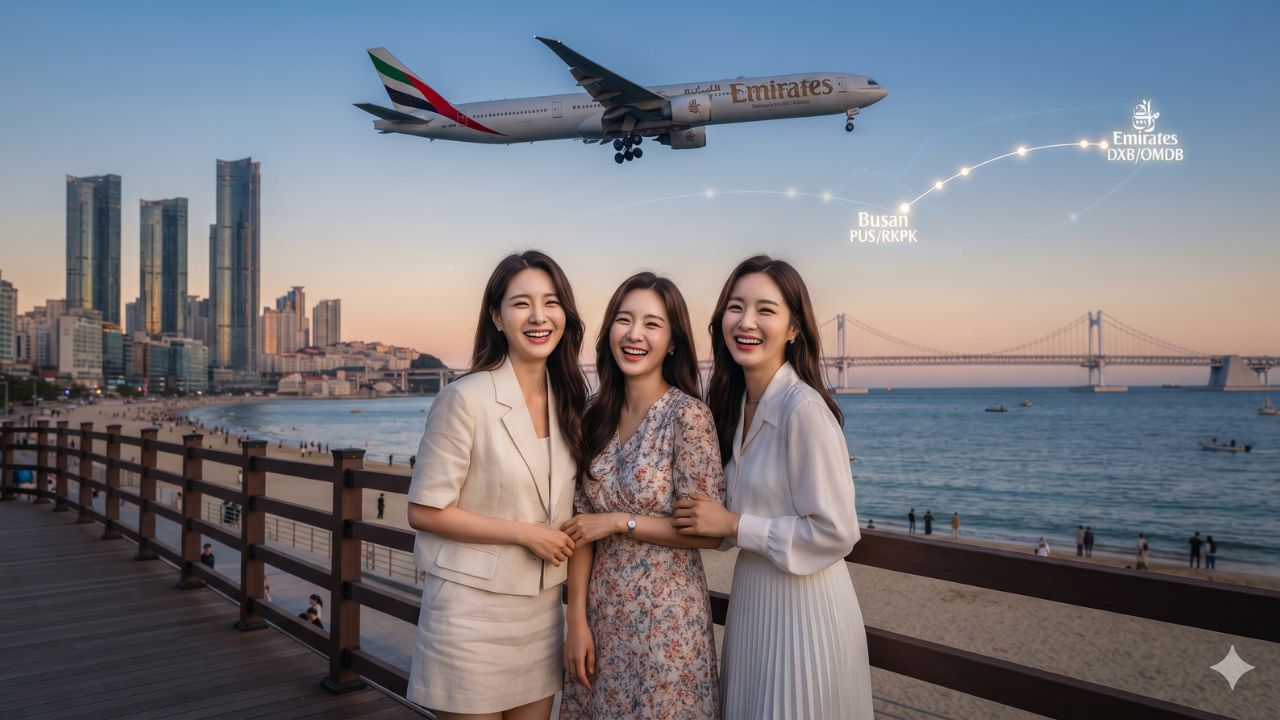
While international travelers to South Korea historically spent four-fifths of their vacations confined to Seoul, the maritime metropolis of Busan welcomed an unprecedented 3,934,876 foreign visitors between January and September 2026—a stunning 47% surge that generated roughly 1.016 trillion South Korean won in international credit card spending. Driven by surging arrivals from Greater China, Japan, and the United States, municipal leaders are capitalizing on this momentum to transition Gimhae International Airport (PUS) from a regional feeder into an intercontinental gateway. On 2 November 2026, the city attended the official opening ceremony of an Emirates Airline commercial office in Jungang-dong, Jung-gu, formally launching negotiations for a 7,000-kilometer nonstop flight route connecting Busan directly with Dubai International Airport (DXB). Backed by municipal subsidies capped at 2 billion won (approximately US$1.4 million) to support early operating expenses, the initiative aims to bridge southern South Korea with Europe, Africa, and the Middle East in collaboration with the Korea Tourism Organization.
The 7,000-Kilometer Dubai Connection and Gimhae Airport Expansion
For decades, international visitors bound for South Korea's southern coast faced a mandatory transit: either transferring through Seoul Incheon International Airport or boarding the high-speed KTX train for a two-and-a-half-hour rail journey south. The proposed nonstop air link between Busan and Dubai removes this domestic transfer entirely.
The strategic opening of Emirates' office in Jungang-dong establishes a dedicated diplomatic and commercial foundation. Emirates, whose partnership with flydubai encompassed more than 214 destinations across over 100 countries and 4,600 connecting opportunities as of September 2026, could open direct one-stop access to Busan for holidaymakers from the United Kingdom, France, Germany, Italy, Spain, Saudi Arabia, Bahrain, and South Africa. While Emirates has not yet locked in a formal launch date, aircraft type, or weekly frequency, the city's financial assistance package provides commercial de-risking by pledging up to 2 billion won (US$1.4 million) to offset initial route development costs.
The flight negotiations coincide with historic records at Gimhae International Airport. In December 2025, Gimhae became the first regional airport outside the Seoul capital area to process 10 million international passengers within a single calendar year. In October 2026, Gimhae crossed the 10-million passenger threshold once again, prompting airport authorities to revise their long-term operational target upward to 12 million annual international passengers. In addition to Middle Eastern connections, Busan is expanding winter services to Kagoshima, Xiamen, Guangzhou, and Kuala Lumpur, while pursuing long-term route evaluations for services to Türkiye and Los Angeles.
| Aviation Metric | Official Milestone Data | Strategic Significance |
|---|---|---|
| Proposed Route Distance | Approximately 7,000 kilometers | Direct nonstop link between Gimhae (PUS) and Dubai (DXB) |
| Municipal Route Subsidy | Capped at 2 billion won (~US$1.4M) | De-risking early operational costs for long-haul carriers |
| Gimhae International Volume | Surpassed 10 million in Oct 2026 | Second consecutive year reaching eight-figure international traffic |
| Airport Target Capacity | 12 million international passengers | Upgraded terminal capacity and regional international dispersal |
| Emirates-flydubai Global Scope | 214 destinations across 100+ nations | Connecting Busan with Europe, Middle East, and Africa |
What Makes Busan Different: Coastal Geography and Cultural Soul
Unlike Seoul’s dense urban concrete, Busan is sculpted by dramatic topography where craggy pine-covered mountains descend steeply into the turquoise waters of the Korea Strait. The city's identity is defined by maritime commerce, creative coastal regeneration, and a distinct regional dialect (Satoori) celebrated for its warm, rhythmic cadence.
The city’s urban shoreline stretches across distinct neighborhood pockets. Haeundae Beach features wide sandy shores framed by luxury skyscraper hotels and waterfront dining promenades. At night, Gwangalli Beach provides front-row views of the illuminated Gwangan Bridge (Diamond Bridge), where weekend drone light shows reflect across calm coastal waters.
On the terraced foothills of Saha-gu lies Gamcheon Culture Village. Once a refugee settlement during the Korean War in the 1950s, the community was transformed through civic arts projects into an open-air creative sanctuary, where pastel-painted residences, narrow staircase alleys, vibrant murals, and rooftop sculpture cafes look out over the commercial port.
Near the central harbor, Jagalchi Fish Market operates as the beating culinary heart of southern Korea. Run predominantly by formidable matriarchs known as Jagalchi Ajumma, the market hall displays live octopus, snow crabs, sea squirts, and flounder in overflowing saltwater tanks, prepared fresh on the second-floor dining counters moments after selection.
| Destination Attraction | Neighborhood District | Cultural and Travel Highlight |
|---|---|---|
| Haeundae Beach | Haeundae-gu | Premier resort sands, coastal walking paths, luxury stays |
| Gamcheon Culture Village | Saha-gu | Terraced hillside alleys, public art, historic heritage |
| Jagalchi Fish Market | Jung-gu | Historic seafood trading hall and freshly sliced sashimi |
| Gwangan Bridge & Beach | Suyeong-gu | Nighttime suspension bridge illumination and beachside cafes |
| Haeundae Blueline Park | Songjeong to Mipo | Heritage coastal train and elevated private Sky Capsules |
| Beomeosa Temple | Geumjeong-gu | Historic Silla-dynasty mountain sanctuary founded in 678 AD |
Foreign Visitor Arrivals and Economic Performance
Data published by the Busan Metropolitan Government confirms that international arrivals have diversified rapidly beyond traditional Northeast Asian markets. Between January and September 2026, foreign visitors reached 3,934,876, nearly achieving the city's full-year target of 4 million visitors three months ahead of schedule.
| Source Market | Jan–Sept 2026 Arrivals | Share of Inbound Tourism | Traveler Profile Highlights |
|---|---|---|---|
| Mainland China | 826,268 visitors | 21.0% | Cultural touring, cosmetics, luxury duty-free |
| Taiwan | 819,323 visitors | 20.8% | Culinary weekends, cafe hopping, photography |
| Japan | 475,765 visitors | 12.1% | High-frequency short-haul getaways, spa visits |
| United States | 324,816 visitors | 8.3% | Heritage touring, beach leisure, film festivals |
| All Other International | 1,488,704 visitors | 37.8% | Southeast Asian, European, and Oceanian travelers |
| Total International Inbound | 3,934,876 visitors | 100% (+47% YoY) | 1.016 trillion won total card expenditures |
Visitor spending patterns reflect this expanding base, with foreign tourist card transactions topping 1.016 trillion won (~US$740 million) during the first nine months of 2026. September alone generated 500,256 foreign tourist arrivals, fueled by late-summer coastal vacations and programming leading into the Busan International Film Festival (BIFF).
Visitor Insider Tips: Exploring Busan Like a Local
To experience Busan's authentic coastal rhythms while avoiding midday crowds, incorporate hyper-local navigation practices:
- Ride the Haeundae Blueline Sky Capsule Early: The elevated, retro-styled Sky Capsules running between Mipo and Cheongsapo offer sweeping views of the sea cliffs. Avoid the two-hour afternoon queues by booking the 09:30 morning departure online through the Busan Tourism Organization portal, then walk back along the wooden coastal boardwalk.
- Order Dwaeji Gukbap Near Seomyeon Station: Busan’s ultimate comfort food is Dwaeji Gukbap (rich pork broth simmered for hours with tender pork slices, served boiling with fresh chives, salted baby shrimp, and fermented chili paste). Head to the dedicated Pork Soup Alley near Seomyeon Market for lunch, seasoned to taste using tiny spoonfuls of salted shrimp (saeujeot).
- Visit Gamcheon Village Before 10:00 Respectfully: Gamcheon remains a living residential neighborhood where elderly locals reside. Arrive by 09:00 to admire the morning light reflecting off the pastel houses and the Little Prince statue without crowds, and refrain from filming down private residential stairwells.
- Hike the Igidae Coastal Walk to Oryukdo Skywalk: For spectacular nature without city noise, take the scenic 4.5-kilometer Igidae cliffside trail. The path meanders over suspension footbridges and volcanic rock shelves overlooking the crashing waves, concluding at the glass-bottomed Oryukdo Skywalk.
- Take the Subway Line 1 to Jagalchi Instead of Taxis: Traffic across Nampo-dong and the harbor bridges can freeze during evening rush hours. Use the efficient Busan Metro Line 1 to Jagalchi Station (Exit 10), which delivers you directly to the fish market promenade in under three minutes.
Cultural and Environmental Context: Coastal Ecology and Sustainable Growth
Busan’s rapid transition into a global aviation destination introduces critical sustainability considerations. The city's coastline borders sensitive marine reserves, and the surrounding waters of the Nakdong River estuary host thousands of migratory waterfowl each autumn. Balancing 4 million annual tourists with environmental preservation requires strict municipal management.
In response, Busan has pioneered green eco-tourism corridors, converting disused coastal railways into the electric Blueline Park and expanding pedestrian boardwalks along Songdo and Taejongdae. Community-based tourism initiatives in historic hillside villages like Gamcheon and Huinnyeoul ensure that a portion of tourist revenues directly funds neighborhood senior welfare centers and historic preservation projects.
Furthermore, developing direct long-haul aviation links into Gimhae reduces domestic transfer emissions. Bypassing domestic Seoul-Busan flight connections or highway road travel eliminates thousands of tons of ground transit carbon emissions for travelers whose primary destination is the Gyeongsangnam-do coastal belt, supporting sustainable regional economic distribution across Ulsan, Tongyeong, and Geoje Island.
FAQ: Visiting Busan 2026
When are direct Emirates flights between Dubai and Busan expected to launch?
Emirates opened its commercial branch in Busan on 2 November 2026 to negotiate direct flights to Dubai. While discussions are actively advancing with municipal route support of up to 2 billion won, the airline has not yet announced an official launch date or schedule.
How do travelers reach Busan from Seoul currently?
Travelers can take the KTX high-speed train from Seoul Station directly to Busan Station in approximately 2 hours and 15 minutes, or take domestic flights connecting Seoul Gimpo (GMP) with Busan Gimhae (PUS) in under an hour.
What is the best season to visit Busan?
Autumn (September through November) is the ideal time to visit Busan, offering mild sunny weather, comfortable ocean breezes, vibrant fall foliage at Beomeosa Temple, and international cultural events like the Busan International Film Festival.
Do international travelers need a visa for Busan?
Travelers from visa-exempt countries (including the United States, European Union, United Kingdom, and Canada) can enter South Korea for tourism by obtaining an approved K-ETA (Korea Electronic Travel Authorization) online prior to departure.
[From the morning mist cloaking the cliffs of Taejongdae to the glittering evening expanse of Gwangan Bridge, Busan welcomes the world with coastal warmth and unyielding ambition.]
Related Travel Guides
This article is for informational purposes. Flight routes, passenger regulations, visa rules, and transit advisories are subject to change by airlines and aviation authorities. Readers are advised to verify schedules and travel documentation with relevant carriers and border agencies before departure.
Related Stories

National Geographic Names Five Must-Visit US Destinations for 2027: Insider Cultural and Travel Guide

Colorado’s Nine Affordable Mountain and Plains Towns for Retirement: Scenic Beauty and Budget Guide 2026