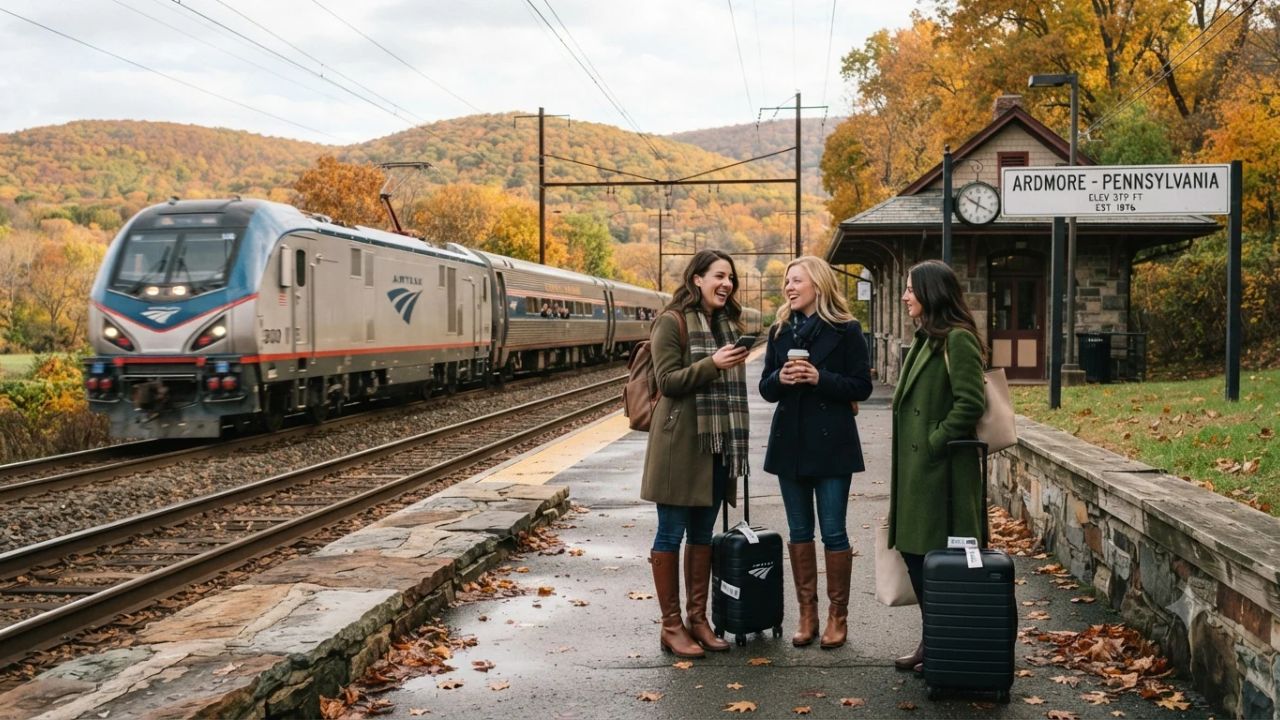
Amtrak Expands Thanksgiving 2026 Train Services: Inside the Surge in Holiday Ridership, NextGen Acela Deployments, and the Airo Pacific Northwest Debut

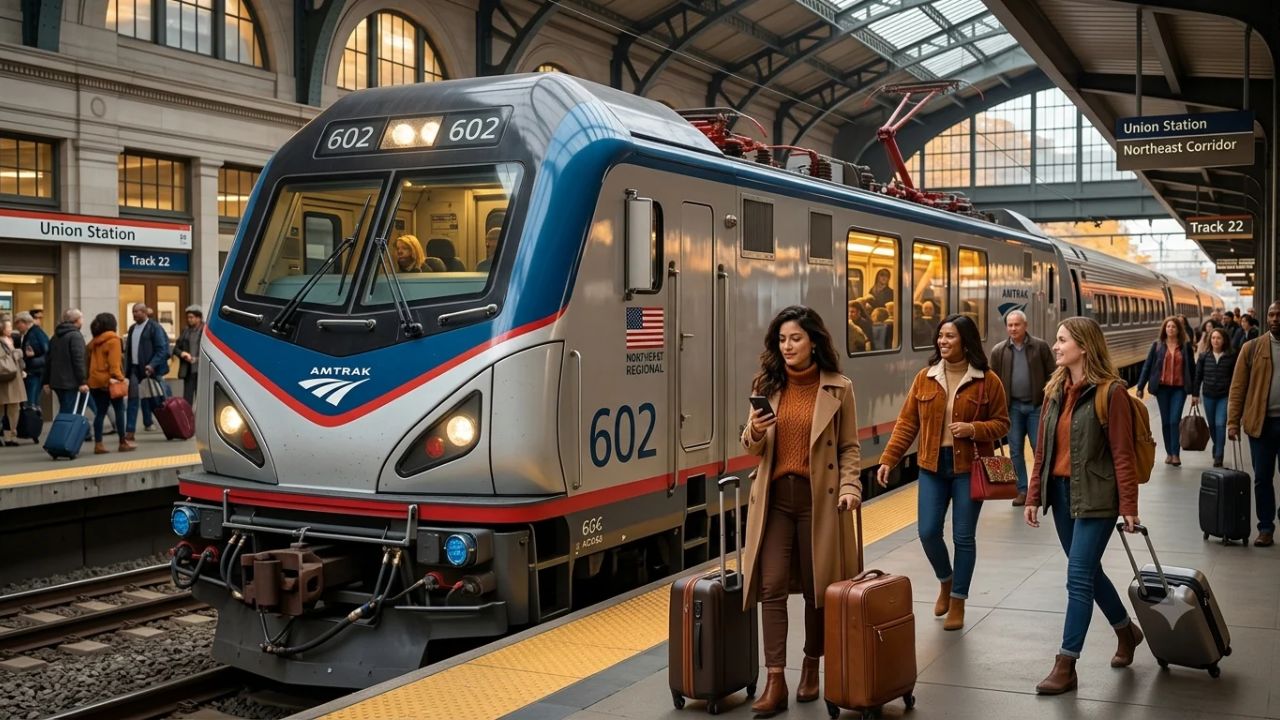
WASHINGTON, November 4, 2026 — Preparing for an unprecedented holiday mobility surge that reflects America’s accelerating rediscovery of intercity passenger rail, Amtrak has mobilized an expansive nationwide service expansion for the Thanksgiving 2026 travel corridor. Building on a record-shattering 2025 performance that saw more than 1.2 million holiday passenger journeys, the national rail carrier is deploying additional passenger carriages across high-density routes, introducing supplementary high-frequency departures between major metropolitan centers, and integrating its state-of-the-art NextGen Acela and Siemens-built Airo train fleets. As highways across the Eastern Seaboard and Pacific Northwest brace for gridlock and commercial aviation terminals contend with weather delays and baggage bottlenecks, America’s rail network is stepping into the spotlight as an efficient, low-carbon transit backbone for millions of reuniting families.
The annual Thanksgiving travel window—spanning from November 20 through November 30, 2026—serves as the ultimate operational stress test for United States transportation infrastructure. For Amtrak, the holiday period represents a critical demonstration of its multi-billion-dollar modernization agenda supported by the Infrastructure Investment and Jobs Act (IIJA). By increasing seating capacity along the heavily traveled Northeast Corridor (NEC) between Boston, New York, and Washington, D.C., and introducing modern rolling stock on scenic regional routes like the Amtrak Cascades, the railroad is demonstrating how targeted fleet renewal and flexible service scheduling can absorb peak seasonal demand while delivering a dependable, dignified passenger experience.
========================================================================================
AMTRAK THANKSGIVING 2026 OPERATIONAL EXPANSION & RIDERSHIP BENCHMARKS
========================================================================================
  [HOLIDAY TRAVEL WINDOW]    --> November 20 – November 30, 2026 (11-Day Peak Surge)
  [2025 BASELINE BENCHMARK]  --> 1.2+ Million Holiday Passenger Journeys (+6% YoY Record)
  [2026 PROJECTED RIDERSHIP] --> Over 1.3 Million Passengers Across the National Network
  [NORTHEAST CORRIDOR PEAK]  --> Extended Train Formations + Extra Washington-NY Frequencies
  [NEXTGEN ACELA DEPLOYMENT] --> 15 Avelia Liberty Trainsets in Active Commercial Service
  [PACIFIC NORTHWEST DEBUT]  --> Siemens Airo Fleet Operating 4 Daily Cascades Roundtrips
========================================================================================
Strategic Key Indicators for Amtrak's 2026 Holiday Mobilization
- Historic Ridership Trajectory: Following an all-time record of 1.2 million passenger journeys during Thanksgiving 2025, forward booking data indicates that 2026 ridership will exceed 1.3 million travelers across the 21,400-mile national network.
- Northeast Regional Capacity Scaling: Additional passenger coaches are being coupled to existing train formations from November 20 to November 30, maximizing seat availability without requiring congested terminal track allocations.
- Targeted Supplementary Frequencies: Two additional roundtrip services between Washington Union Station and New York Penn Station / Moynihan Train Hall have been added on November 24–25 (pre-holiday exodus) and November 28–29 (post-holiday return).
- NextGen Acela Fleet Integration: Fifteen next-generation Avelia Liberty high-speed trainsets are now active along the Northeast Corridor, offering tilt technology, 160 mph capability, and upgraded business and first-class interiors.
- Pacific Northwest Modernization: The brand-new Amtrak Airo passenger fleet has entered commercial service on the Amtrak Cascades corridor, delivering four daily roundtrips featuring panoramic windows, touchless cafe ordering, and reduced emissions.
The Anatomy of Holiday Demand: Breaking Down the 1.2 Million Thanksgiving Baseline
Thanksgiving is uniquely positioned within the American cultural calendar. Unlike the December festive season, which often disperses travel across three to four weeks, Thanksgiving concentrates tens of millions of long-distance journeys into an intense five-day window centered on the fourth Thursday of November. In 2025, Amtrak recorded an extraordinary milestone by carrying more than 1.2 million passengers nationwide, representing a 6% increase over the previous year. This performance established the highest Thanksgiving passenger ridership in the railroad's fifty-four-year history.
AMTRAK THANKSGIVING RIDERSHIP TRAJECTORY & GROWTH DYNAMICS (2022–2026)
| Entity / Facility | Delays | Cancellations | Details |
|---|---|---|---|
| Operating Year | Holiday Passengers | YoY Change (%) | Primary Driver |
| 2022 | 1,020,000 | +18.5% (Post-pan) | Travel Normalization |
| 2023 | 1,130,000 | +10.8% | High Gas Prices |
| 2024 | 1,155,000 | +2.2% | Frequency Recovery |
| 2025 (Record Year) | 1,225,000 | +6.1% | NextGen Acela Tests |
| 2026 (Projected) | 1,310,000+ | +6.9% | Full Fleet Rollout |
In 2026, passenger demand has accelerated even faster. Reservations opened months in advance, with peak Wednesday afternoon and Sunday evening departures along the Northeast Corridor, the Keystone Corridor in Pennsylvania, and the Empire Corridor in New York reaching near-total capacity several weeks before the holiday. This surge is driven by changing traveler priorities. Holidaymakers are increasingly seeking alternatives to the stress of driving along congested interstate highways like Interstate 95, where multi-hour traffic delays, expensive tolls, and severe parking shortages are common. Similarly, commercial aviation has faced consumer fatigue due to aggressive ticket pricing, strict baggage fees, lengthy security checkpoints, and the persistent threat of weather-related flight cancellations.
Amtrak's fixed reservation system provides a predictable alternative. Unlike automobile travel, where traffic delays are unpredictable, passenger rail operates on dedicated schedules with reserved seating. Ticket sales data shows that the booking curve for Thanksgiving 2026 began accelerating three weeks earlier than historical norms. Travelers secured seats in late September and October to avoid dynamic fare increases as departure dates approached. For university students returning home from major academic centers in Boston, Philadelphia, and Washington, D.C., as well as young families and remote professionals, passenger rail has become the preferred holiday travel option.
Northeast Corridor Capacity Optimization: Car Lengthening and Extra Frequencies
The Northeast Corridor (NEC) is the busiest passenger rail line in North America, connecting Boston, New York, Philadelphia, Baltimore, and Washington, D.C. During Thanksgiving week, the corridor carries more than half of Amtrak’s total national passenger volume. To accommodate the massive influx without exceeding terminal track capacity at complex junctions like New York Penn Station and Washington Union Station, Amtrak operations teams have implemented an efficient capacity optimization strategy: train lengthening.
Between November 20 and November 30, 2026, Amtrak mechanical facilities in Sunnyside Yard (Queens, New York), Ivy City (Washington, D.C.), and Southampton Street (Boston) are coupling additional passenger carriages to existing Northeast Regional train formations. By expanding standard seven-car train consists into eight- and nine-car formations, Amtrak increases passenger seating by 15% to 25% per scheduled run. This allows the railway to transport thousands of additional travelers daily without adding extra train slots to an already dense regional timetable.
========================================================================================
NORTHEAST CORRIDOR HOLIDAY SCHEDULING INTERVENTIONS
========================================================================================
  [TRAIN LENGTHENING]     --> Northeast Regional expanded from 7 to 8-9 cars (+25% seats)
  [EXTRA DEPARTURES]      --> 2 Additional Washington-New York roundtrips on peak days
  [PEAK EXODUS WINDOW]    --> November 24–25 (Tuesday afternoon & Wednesday pre-holiday)
  [PEAK RETURN WINDOW]    --> November 28–29 (Saturday afternoon & Sunday post-holiday)
  [TERMINAL COORDINATION] --> Moynihan Train Hall, 30th St, Union Station passenger flow
========================================================================================
In addition to lengthening existing trains, Amtrak is introducing dedicated supplementary frequencies on the most heavily traveled segment of the corridor: between Washington Union Station and New York Penn Station. Two additional daily return services have been scheduled for the peak travel days of November 24–25 (pre-Thanksgiving departure) and November 28–29 (post-Thanksgiving return). These extra frequencies provide flexible options for travelers moving between the nation's political and financial capitals, serving intermediate stations including New Carrollton, BWI Rail Station, Baltimore Penn Station, Wilmington, Philadelphia 30th Street, Trenton, Metropark, and Newark Penn Station.
To manage the heavy passenger volumes at major hubs, station operations teams are deploying crowd-management protocols. At Moynihan Train Hall in New York, digital boarding gates and separate queues for general boarding and priority passengers help ensure orderly passenger movements. At Philadelphia's historic 30th Street Station and Washington Union Station, customer service ambassadors guide holiday travelers, assist with baggage handling, and manage boarding lines, keeping train dwell times minimal and maintaining on-time schedule performance.
Behind the scenes, Amtrak engineering divisions have executed extensive seasonal winterization protocols across the corridor. Track maintenance crews have inspected and tested hundreds of automated electric switch heaters, gas-fired blowers, and snow melters at complex interlockings like Harold Interlocking in Queens and Zoo Interlocking in Philadelphia to prevent freezing sleet from jamming track points. Specialized pantograph de-icing railcars patrol overhead catenary wires during sub-freezing night hours, applying non-corrosive fluids to eliminate ice accumulation that could otherwise cause electrical arcing and power disruptions. Auxiliary emergency diesel locomotives are staged at strategic junction points, ready to provide immediate mechanical recovery if an electrified train experiences overhead wire failure.
NextGen Acela Fleet Mobilization: 15 High-Speed Trainsets in Commercial Rotation
A highlight of the 2026 Thanksgiving travel period is the expanded presence of the NextGen Acela high-speed train fleet. Following rigorous dynamic testing and phased system approvals by the Federal Railroad Administration (FRA), Amtrak has integrated fifteen Avelia Liberty trainsets into revenue passenger service along the Northeast Corridor. Manufactured by Alstom at its Hornell, New York facility, these modern trainsets represent a multi-generational leap in American high-speed rail technology.
NEXTGEN ACELA (AVELIA LIBERTY) OPERATIONAL SPECIFICATIONS & AMENITIES
| Entity / Route | Metrics | Operational Status |
|---|---|---|
| System Parameter | Technical Specification | Passenger Experience Impact |
| Operating Speed | Certified for 160 mph (257 km/h) | Faster transit over upgraded |
| commercial operations | track sections in NJ and MA | |
| Active Tilt Tech | Tiltronix anticipatory active | Smooth passenger comfort |
| hydraulic carriage tilting | around historic curved track | |
| Seating Capacity | 378 Passengers per Trainset | 25% Increase in available |
| (Fixed nine-car formation) | premium seats over legacy fleet | |
| Digital Amenities | High-speed onboard 5G Wi-Fi; | Seamless mobile connectivity |
| USB-A, USB-C, and AC at every seat | for remote holiday work | |
| Onboard Gastronomy | Modernized Cafe Acela featuring | Sustainable regional dining |
| contactless digital pre-ordering | with reduced service wait times |
The NextGen Acela trains replace the original Acela Express equipment, which entered service in late 2000 and has reached the end of its design lifespan. The new trainsets feature an aerodynamic nose design, lightweight articulated carriage structures, and integrated active tilt technology. This system gently tilts passenger coaches inward around curves, allowing trains to travel through historic track curves at speeds up to 160 miles per hour where track infrastructure permits, notably along upgraded sections in New Jersey, Rhode Island, and Massachusetts.
For holiday travelers, the NextGen Acela delivers an upgraded passenger environment. Each nine-car trainset accommodates 378 passengers—representing a 25% increase in seating capacity over older equipment. Interior designs feature Italian-inspired ergonomic leather seats, winged headrests, individual reading lights, personal power outlets, and modern USB-C ports at every seat. Overhead baggage bins provide ample room for holiday luggage, while wide, touchless automatic doors and level-boarding platforms make boarding easy for passengers of all mobility levels.
Onboard dining has also been modernized. The Cafe Acela car features a contemporary layout with touchless payment systems, grab-and-go snack displays, and mobile pre-ordering through the Amtrak smartphone app. Menus highlight regional food offerings, including craft beers from Northeast breweries, artisan sandwiches, and organic snacks. For business-class and first-class travelers, complimentary meals curated by celebrated regional chefs are served directly at seats on fine chinaware, turning travel time into an enjoyable part of the holiday experience.
The Pacific Northwest Revolution: Amtrak Cascades Debuts the Siemens Airo Fleet
Amtrak's holiday modernization extends well beyond the Eastern Seaboard. In the Pacific Northwest, travelers along the scenic Amtrak Cascades corridor are experiencing the commercial debut of the brand-new Amtrak Airo trainsets. Operating on four daily roundtrips connecting Eugene, Portland, Seattle, and Vancouver, British Columbia, these modern trainsets represent the first phase of Amtrak’s comprehensive $7.3 billion national fleet replacement program.
Manufactured by Siemens Mobility at its solar-powered facility in Sacramento, California, the Amtrak Airo trains are engineered to replace legacy passenger equipment that has operated on state-supported routes for decades. The trainsets feature a sleek, aerodynamic exterior and modern dual-mode propulsion systems capable of operating on both diesel-electric power and overhead electric catenary lines, reducing fuel consumption and operational carbon emissions.
========================================================================================
AMTRAK AIRO CORRIDOR INTEGRATION: THE PACIFIC NORTHWEST BLUEPRINT
========================================================================================
  [ACTIVE ROUTE]         --> Amtrak Cascades (Vancouver, BC – Seattle – Portland – Eugene)
  [MANUFACTURER]         --> Siemens Mobility (Sacramento, California Facility)
  [DEPLOYMENT METRIC]    --> 4 Daily Roundtrips Operating on Full Commercial Schedules
  [PANORAMIC DESIGN]     --> Expansive picture windows optimized for scenic river views
  [ONBOARD AMENITIES]    --> Touchless restrooms, individual power, dedicated bike racks
  [EMISSIONS PROFILE]    --> Advanced Tier 4 clean diesel engines reducing emissions
========================================================================================
The passenger experience aboard the Airo trainsets is designed to showcase the scenic beauty of the Pacific Northwest. Expansive, panoramic picture windows offer sweeping views of Puget Sound, the snow-capped Cascade Range, and the Columbia River valley. Inside, travelers enjoy spacious, contoured seats with generous legroom, adjustable headrests, integrated seatback tablet holders, and individual reading lights.
The onboard bistro car offers regional specialties, including Pacific Northwest wines, craft beers from Oregon and Washington breweries, and locally sourced cheeses and artisan snacks. Dedicated luggage racks accommodate winter baggage, while specialized interior bicycle racks allow travelers to transport their bicycles between cities with ease. For thousands of holiday travelers moving along the congested Interstate 5 corridor between Portland and Seattle, the Airo fleet offers a comfortable, reliable alternative to highway gridlock.
The cross-border reach of the Cascades route into British Columbia introduces another layer of operational coordination. At Pacific Central Station in Vancouver, passengers boarding southbound departures clear United States Customs and Border Protection inspection prior to boarding, allowing trains to cross the international boundary at Blaine, Washington, without prolonged trackside delays. This pre-clearance arrangement allows Canadian travelers visiting family across the border to disembark smoothly at stations like Bellingham, Everett, and Seattle King Street Station, providing an accessible cross-border holiday bridge that avoids multi-hour automobile queues at the Peace Arch border crossing.
The Macroeconomic and Environmental Dividend of Passenger Rail Mobility
The surge in holiday train travel generates substantial macroeconomic and environmental benefits. When travelers shift from highway driving and commercial flights to passenger rail, they reduce the strain on regional transportation networks while lowering holiday travel expenses.
COMPARATIVE HOLIDAY TRANSPORTATION ECONOMICS & CARBON EFFICIENCY
| Entity / Facility | Delays | Cancellations | Details |
|---|---|---|---|
| Transport Mode | Typical Cost Base | Carbon Emissions | Downtown-to-Downtown |
| (NYC to DC Return) | (kg CO2 per Pax) | Total Journey Time | |
| Amtrak Northeast | $98 – $210 | 16.5 kg CO2 | 3 Hours 15 Minutes |
| Regional (Rail) | (Early booking) | (Up to 83% reduction) | (Station center) |
| Private Automobile | $165 – $240 | 98.2 kg CO2 | 4.5 – 6.5 Hours |
| (Interstate 95) | (Gas + tolls) | (Single-occupant) | (Subject to gridlock) |
| Commercial Airline | $280 – $520 | 59.4 kg CO2 | 3.5 – 4.5 Hours |
| (LGA/JFK to DCA) | (Holiday surge) | (High altitude) | (Including airport TSA |
From a financial perspective, traveling by rail offers significant cost savings. The total cost of driving a private vehicle between Washington, D.C., and New York City—including gasoline, tolls on the New Jersey Turnpike and Delaware Turnpike, and expensive holiday parking fees—often exceeds $200 for a roundtrip journey. Commercial flights between regional airports carry holiday pricing premiums, with roundtrip economy tickets often exceeding $350, alongside extra fees for checked baggage, carry-on luggage, and seat selection. In contrast, Amtrak passengers who book early can secure one-way Northeast Regional fares starting around $49, which include two free carry-on bags and personal items without hidden fees.
The environmental advantages are equally compelling. Passenger rail along the electrified Northeast Corridor produces up to 83% fewer greenhouse gas emissions per passenger-kilometer than driving a single-occupancy vehicle, and up to 72% fewer emissions than flying on domestic short-haul flights. Because the Northeast Corridor is powered primarily by zero-emission nuclear and renewable electricity grids in Maryland, Pennsylvania, New Jersey, and New York, holiday travel by train represents one of the most environmentally responsible choices available to American consumers.
In addition, rail travel offers the convenience of downtown-to-downtown connectivity. Arriving directly at Moynihan Train Hall in Manhattan, 30th Street Station in Philadelphia, or Union Station in Washington, D.C., eliminates the need for expensive ground transportation and long airport security lines, allowing travelers to walk directly off the train into city centers.
Long-Distance Corridors and Midwest Hubs: Expanding the National Network
While the Northeast Corridor and Pacific Northwest capture significant attention, Amtrak’s long-distance routes and Midwestern passenger hubs are also preparing for heavy Thanksgiving travel volumes.
In the Midwest, Chicago Union Station functions as the primary hub for a network of state-supported regional corridors and long-distance trains. Routes such as the Hiawatha (Chicago–Milwaukee), the Lincoln Service (Chicago–St. Louis), and the Wolverine (Chicago–Detroit) operate at high frequencies, carrying university students and families across the Great Lakes region. Maintenance facilities at the Beech Grove, Indiana heavy maintenance complex have conducted intensive overhaul programs throughout the autumn, returning refurbished Superliner double-decker passenger coaches and P42 diesel locomotives to commercial service to ensure maximum fleet availability for the holiday rush.
========================================================================================
AMTRAK LONG-DISTANCE & REGIONAL HOLIDAY ARTERIES
========================================================================================
  [MIDWEST HUB (CHICAGO)]    --> Hiawatha, Lincoln Service, Wolverine running peak sets
  [EAST COAST AUTO TRAIN]    --> Lorton, VA to Sanford, FL carrying record vehicle volumes
  [WESTERN CROSS-COUNTRY]    --> Empire Builder, Southwest Chief, California Zephyr
  [SOUTHEAST CORRIDORS]      --> Silver Service, Palmetto, Piedmont connecting Carolinas
  [BEECH GROVE OVERHAULS]    --> Restored Superliner coaches expanding cross-country space
========================================================================================
Along the East Coast, the Auto Train—which operates daily non-stop service between Lorton, Virginia (near Washington, D.C.) and Sanford, Florida (near Orlando)—reports sold-out conditions across its passenger sleeper compartments and auto-carrier wagons. This service allows holiday travelers to transport their personal vehicles, sport utility vehicles, and family pets while relaxing in private sleeper cabins, avoiding over nine hundred miles of congested driving along Interstate 95.
Cross-country western trains like the Empire Builder (Chicago to Seattle/Portland), the California Zephyr (Chicago to the San Francisco Bay Area), and the Southwest Chief (Chicago to Los Angeles) provide essential connectivity for rural communities across the Great Plains and Rocky Mountains. For many small towns with limited commercial flight connections or intercity bus options, Amtrak represents an essential holiday lifeline connecting residents with urban centers and extended family networks.
A distinct appeal of long-distance rail travel during Thanksgiving is the social atmosphere aboard bi-level Superliner trains. In the Sightseer Lounge car, floor-to-ceiling curved windows provide panoramic views of snow-dusted prairie expanses and the rugged Continental Divide, while passengers gather to converse, read, play board games, and share stories. Traditional dining car service—complete with linen napkins, three-course chef-prepared meals, and communal seating that seats solo travelers with small groups—creates a warm communal atmosphere that mirrors the Thanksgiving spirit itself. For many holidaymakers, this unhurried journey through the American heartland is not simply a transit necessity, but an unforgettable component of the holiday celebration.
Infrastructure Modernization and the $66 Billion Federal Capital Horizon
Amtrak’s operational successes during the 2026 Thanksgiving season are occurring against the backdrop of an unprecedented capital investment cycle. Through the Bipartisan Infrastructure Law, the federal government committed $66 billion to modernize passenger rail across the United States. This represents the largest federal investment in public transit since the creation of Amtrak in 1971.
A substantial portion of this funding is directed toward eliminating historic infrastructure bottlenecks along the Northeast Corridor, some of which date back to the late nineteenth century.
MAJOR NORTHEAST CORRIDOR MEGAPROJECTS UNDER ACTIVE CONSTRUCTION
| Entity / Route | Metrics | Operational Status |
|---|---|---|
| Capital Project | Engineering Scope | Operational Transformation |
| Gateway Program | New two-track Hudson River | Doubles trans-Hudson capacity; |
| (New York / NJ) | Tunnel and Portal North Bridge | prevents single-point failure |
| Frederick Douglass | Modern four-track tunnel | Replaces 1873 B&P bottleneck; |
| Tunnel (Baltimore) | bypassing 150-year-old bores | increases speeds to 100 mph |
| Susquehanna River | High-level four-track bridge | Replaces century-old bridge; |
| Bridge (Maryland) | replacing two-track structure | allows 160 mph passenger runs |
| Connecticut River | Modernized moveable bridge | Eliminates maritime delays; |
| Bridge Replacement | supporting higher speeds | improves coastal reliability |
The flagship investment is the Gateway Program, a multi-phase project designed to expand rail capacity between Newark, New Jersey, and New York Penn Station. Construction on the brand-new two-track Hudson River Tunnel is progressing, while the new Portal North Bridge over the Hackensack River nears completion. When fully operational, the project will double train capacity into Manhattan, ending decades of commuter delays caused by aging century-old rail tubes.
In Baltimore, construction is underway on the Frederick Douglass Tunnel, a $6 billion engineering project that will replace the 150-year-old Baltimore & Potomac (B&P) Tunnel. The new tunnel will feature electrified tracks capable of handling passenger trains at 100 miles per hour, eliminating a major bottleneck where trains currently slow to thirty miles per hour through tight curves. Further north in Maryland, the replacement of the two-track Susquehanna River Bridge with two modern high-level bridges will allow passenger trains to cross at speeds up to 160 miles per hour.
These infrastructure investments are transforming the Northeast Corridor into a modern high-speed rail line. By eliminating structural bottlenecks, expanding electrical power grids, and upgrading signal technologies with positive train control systems, Amtrak is laying the groundwork for a future where high-speed trains operate with greater frequency, speed, and reliability.
Comparative Performance Benchmark Table: Thanksgiving Intercity Travel Modes (2026)
To provide travelers with a clear assessment of holiday travel options, the following comparative matrix examines key performance indicators across three primary modes of intercity transport between major East Coast hubs:
EAST COAST THANKSGIVING TRAVEL MODES: COMPARATIVE PERFORMANCE MATRIX (2026)
| Performance Axis | Amtrak Northeast | Amtrak NextGen | Commercial Airline | Private Passenger |
|---|---|---|---|---|
| Regional Rail | Acela High-Speed | (Shuttle Flights) | Automobile | |
| Transit Time | 3 Hours 15 Minutes | 2 Hours 45 Minutes | 1 Hour 15 Minutes | 4.5 to 7.0 Hours |
| (DC to NYC) | (Reliable) | (Fastest Rail) | (Airborne Only) | (Severe Gridlock) |
| Total Terminal | 15 – 20 Minutes | 15 – 20 Minutes | 90 – 120 Minutes | 0 Minutes |
| Overhead Time | (Easy boarding) | (Priority lounge) | (TSA checkpoints) | (Direct departure) |
| Baggage Policy | 2 Free Carry-Ons | 2 Free Carry-Ons | $35 – $45 First | Vehicle Trunk |
| & Surcharges | + Personal Items | + Personal Items | Bag Surcharge | Capacity Limits |
| Productive Work | Spacious seating, | Premium ergonomic, | Constrained space, | Zero (Driver must |
| Environment | reliable 5G Wi-Fi | wide tables, power | limited Wi-Fi gate | maintain focus) |
| Weather Impact | Minimal (All- | Minimal (All- | High (Prone to fog, | Moderate to High |
| Vulnerability | weather electric) | weather electric) | wind & snow delays) | (Rain / Icy roads) |
| Carbon Intensity | 16.5 kg CO2 | 14.8 kg CO2 | 59.4 kg CO2 | 98.2 kg CO2 |
| Per Passenger | (Low carbon) | (Renewable grid) | (High altitude) | (Single occupant) |
This performance comparison explains why holiday passenger rail demand has reached historic levels. While commercial flights appear faster when looking at flight times alone, total door-to-door transit times between central city destinations are often comparable when accounting for airport security lines, boarding procedures, and ground transfers. Meanwhile, driving private vehicles along holiday highway corridors exposes families to severe traffic delays, physical exhaustion, and high fuel costs. By offering a balanced combination of speed, comfort, affordability, and downtown-to-downtown convenience, passenger rail has firmly established itself as an attractive choice for holiday travel.
Actionable Traveler Field Guide: Strategic Protocols for Thanksgiving Rail Journeys
For passengers planning to travel aboard Amtrak during the Thanksgiving 2026 holiday corridor, thoughtful preparation can ensure a smooth, relaxing journey. The following field recommendations outline essential travel strategies:
PRACTICAL FIELD PROTOCOL: THANKSGIVING RAIL TRAVEL PLANNING
| Category / Entity | Details / Impact |
|---|---|
| Planning Factor | Operational Guidance |
| Booking Window | Reserve tickets at least three to four weeks in advance; avoid |
| peak travel slots on Wednesday afternoon and Sunday evening. | |
| Station Arrival | Arrive at departure stations 30 to 45 minutes prior to scheduled |
| departure to navigate holiday queues and secure overhead space. | |
| Mobile Tools | Download the Amtrak mobile application to access digital e-tickets |
| track real-time train status, and pre-order cafe car items. | |
| Baggage Etiquette | Take advantage of the two free carry-on allowances; keep aisles |
| clear and store larger bags in designated end-of-car luggage racks | |
| Quiet Car Protocol | When booking Quiet Car seats on Northeast Regional or Acela runs, |
| maintain silence and refrain from making phone calls. |
Travelers seeking competitive fares should consider booking departures during off-peak hours, such as early morning trains departing before 7:00 AM or late-evening departures on Thanksgiving Day itself, which often offer lower ticket prices and quieter passenger cars.
Passengers should also utilize the Amtrak mobile app, which provides gate notifications, boarding information, and real-time train tracking. By remaining informed and planning ahead, travelers can enjoy a comfortable journey home, experiencing firsthand why American passenger rail is undergoing a major renaissance.
The Strategic Roadmap: Sustaining Momentum Beyond the Holiday Rush
As Amtrak executes its expanded Thanksgiving 2026 operations, the railroad is demonstrating the growing vitality of passenger rail in the United States. The combination of record ridership numbers, modernized train fleets like the NextGen Acela and Airo, and major infrastructure upgrades across the Northeast Corridor reflects an industry actively evolving to meet contemporary transportation needs.
Sustaining this momentum beyond seasonal holiday peaks will require continued investment and focused execution. Delivering major infrastructure projects on schedule, expanding modern fleet rollouts to regional corridors across the Midwest and West Coast, and maintaining reliable on-time performance will be essential to retaining new holiday passengers as permanent year-round rail travelers. By demonstrating that passenger rail can deliver comfortable, sustainable, and reliable transportation during the busiest travel week of the year, Amtrak is reaffirming its role as a vital pillar of America’s intercity transit network, connecting communities and bringing families together.
Related Travel Guides and Analysis
- Brussels Travel Price Storm and European Energy Volatility
- Bolivia Emerges as a Global Corporate Incentive Powerhouse
- Indonesia Pioneers the Global Regenerative Tourism Revolution
- Spain, France, Austria, and Thailand Top Global Winter Tourist Rankings
- Cambodia Travel Industry Slowdown and Sustainable Recovery Push
- Dominica 48th Independence and Creole Heritage Tourism Resilience
- Ultra-Luxury World Cruises Economics and Land Travel Cost Comparison
This article is for informational purposes. Flight routes, passenger regulations, visa rules, and transit advisories are subject to change by airlines and aviation authorities. Readers are advised to verify schedules and travel documentation with relevant carriers and border agencies before departure.
Related Stories
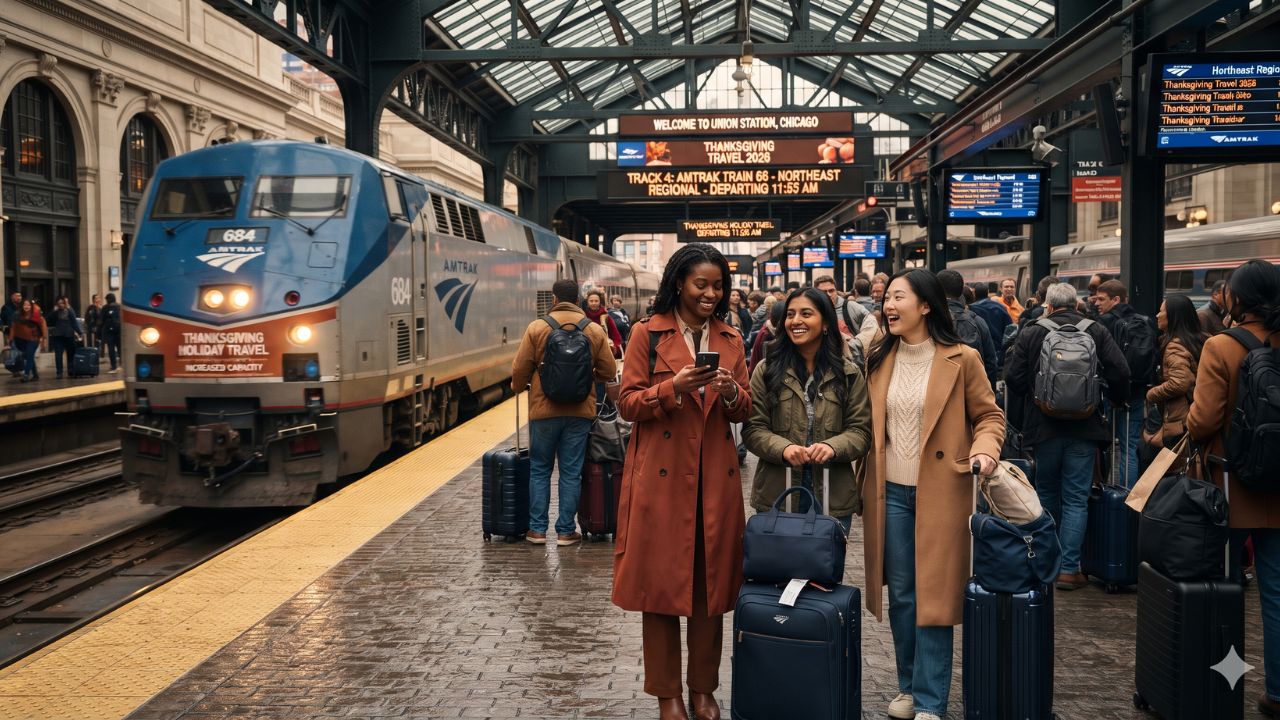
Amtrak Expands Thanksgiving Rail Services for 2026: NextGen Acela, Airo Fleets, and Extra Northeast Trains
Amtrak Expands Loyalty Reach With Bilt Partnership Bringing Housing-Based Rewards to Rail Travellers