Amsterdam Alongside Barcelona and Venice Navigate Tourism Challenges While Strengthening Europe’s International Connections: All You Need to Know

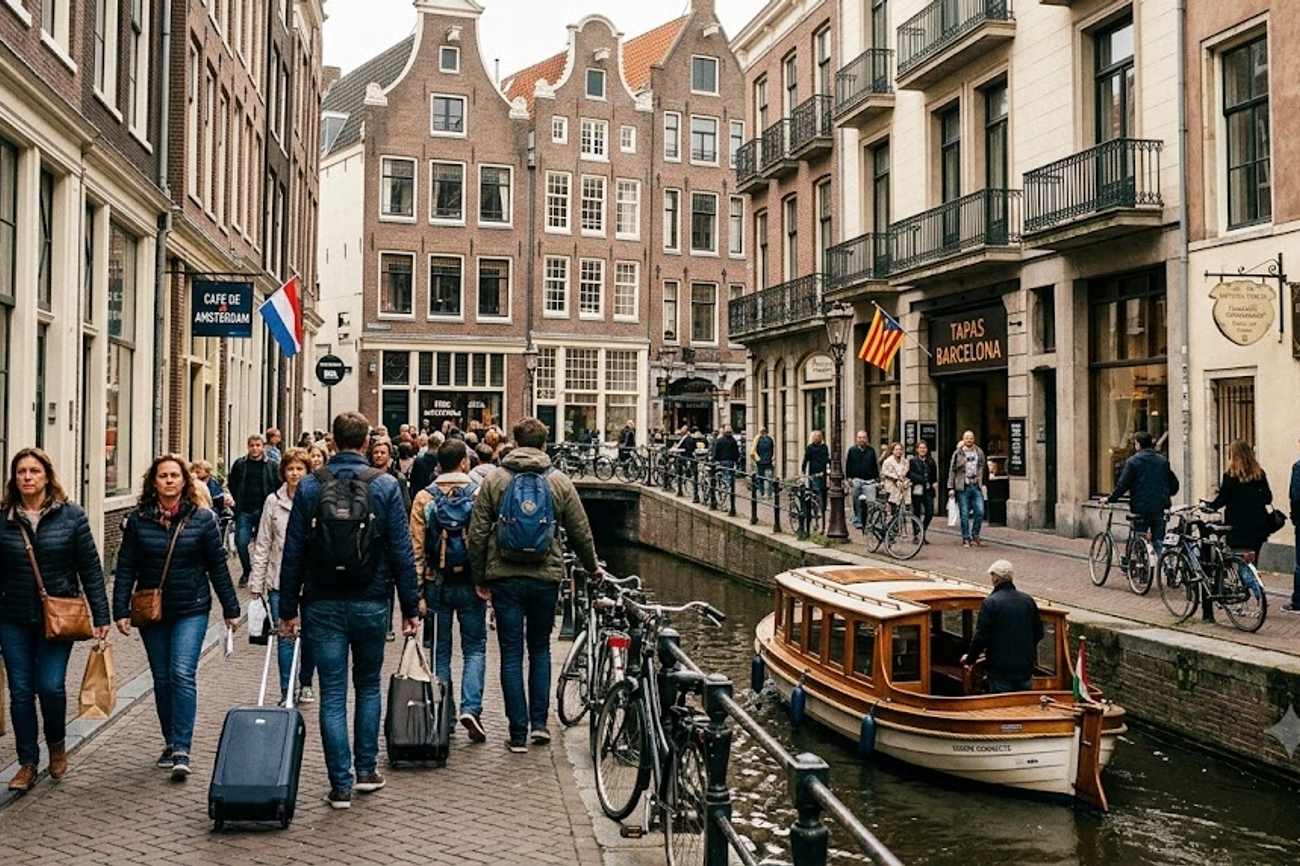
Image generated by AI
Venice has transitioned from a city of canals to a living laboratory for tourism control, recently pioneering an entry fee trial to monitor and limit the sheer volume of people stepping onto its fragile stones. This shift reflects a broader, urgent movement across Europe's most iconic hubs where the goal is no longer to attract more visitors, but to curate the ones who arrive.
The Great European Pivot Toward Managed Growth
Across the continent, a paradoxical tension has emerged: while aviation infrastructure is expanding at a rapid pace to accommodate soaring international demand, the cities these planes land in are actively trying to slow the flow. From the Mediterranean shores of Spain and Croatia to the canal rings of the Netherlands, the era of unchecked tourism growth is ending.
We are seeing a systemic shift in how destinations like Barcelona and Lisbon operate. It is no longer about the raw number of arrivals—which continues to provide a massive economic boost—but about the "quality" of the visitor. Governments are now deploying sophisticated toolkits to prevent urban collapse, including strict visitor quotas, targeted tourist taxes, and aggressive campaigns to push travelers away from the "postcard" centers and toward under-visited neighborhoods.
This tension is most visible at the gateways. Airports such as Amsterdam Schiphol, Josep Tarradellas Barcelona-El Prat, and Venice Marco Polo are modernizing and expanding their capacities to ensure seamless connectivity, even as the city councils just a few kilometers away implement restrictions on disruptive tourism activities and cruise ship arrivals. The objective is a delicate balance: maintaining the profit margins of the aviation and hospitality sectors while preventing the displacement of local residents.
What Makes These Hubs Unique Now
The current appeal of these cities lies in their struggle for authenticity. In Amsterdam, the draw remains the historic canal belt and world-class museums, but the experience is changing as the city restricts activities that degrade the quality of life for residents. The city is effectively redesigning itself to be a place where people live, not just a place where people visit.
Barcelona offers a different study in urban resilience. While the architecture and Mediterranean coastline remain the primary draws, the city is now focusing on dispersing visitor flows. The goal is to move the crowd away from the saturated Gothic Quarter and toward the wider metropolitan area, ensuring that the economic benefits of tourism reach beyond the central tourist traps.
In Dubrovnik, the challenge is vertical and seasonal. The city’s massive fortifications and coastal beauty create a natural bottleneck, exacerbated by the arrival of giant cruise ships. The unique experience here is now defined by a "managed" encounter with history, where daily visitor numbers are capped to ensure the stone walls can withstand the foot traffic.
Lisbon is navigating a similar trajectory of rapid growth. The city’s charm—its steep hills and traditional fado houses—is under pressure from urban density. The local strategy has shifted toward diversification, encouraging travelers to explore the outskirts and the surrounding region rather than clustering in the historic center.
Visitor Insider Tips
To navigate these cities without feeling like a cog in a tourist machine, you need to change your timing and your geography.
Amsterdam: Beyond the Centrum Avoid the Red Light District and the immediate vicinity of Dam Square during midday. Instead, base yourself in the Noord district. You can reach it via a free ferry from the central station. It is the creative heart of the city, offering industrial warehouses turned into galleries and a much slower pace of life. For museum visits, always book the first slot of the day via the official Netherlands tourism portal to avoid the three-hour queues.
Barcelona: The Neighborhood Shift Skip the hotels in Las Ramblas. Instead, look for accommodations in Gràcia. This neighborhood feels like a village within a city, with small plazas and independent boutiques. To avoid the crowds at the Sagrada Família, visit the surrounding Eixample district's smaller modernist buildings which are often empty but equally stunning. Use the T-Usual transport pass for the most cost-effective way to navigate the metro and bus systems.
Amsterdam, alongside Barcelona and Venice, is navigating tourism challenges while strengthening Europe's international connections, with a focus on sustainable tourism practices. According to the European Travel Commission, these cities are implementing measures to manage tourist flows and reduce their environmental impact. By visiting the official website, travelers can stay informed about the latest developments and plan their trips responsibly.
Venice: The Early Bird Strategy The only way to experience Venice without the crush is to be out by 7:00 AM. The city transforms between dawn and 10:00 AM, before the cruise ships unload. Avoid the main artery leading from the train station to St. Mark's Square. Instead, wander into the Castello district, where you will find laundry hanging across alleys and locals drinking espresso in silence. Be aware of the current entry fee trials and ensure you have your QR code ready to avoid fines.
Dubrovnik: The Cruise Window Check the cruise ship schedules. When the mega-ships are docked, the Old Town becomes nearly impassable. Use these windows to head up to Mount Srđ via the cable car or explore the islands of the Elaphiti archipelago. When you do enter the walls, do so immediately upon opening to experience the fortifications before the midday heat and crowds arrive.
Cultural and Environmental Context
The friction between tourism and local life in Europe has reached a tipping point. In cities like Venice and Barcelona, the "touristification" of housing—where apartments are converted into short-term rentals—has pushed local families out of their ancestral neighborhoods. This creates a sterile environment where the "culture" being sold to tourists is a performance rather than a living reality.
Environmentally, the pressure is immense. The fragile foundations of Venice are literally being eroded by the wake of motorized boats and the weight of millions of footsteps. In Dubrovnik, the seasonal surge in water and energy consumption puts a massive strain on local utilities that were not built for such peaks.
The response has been a move toward "Regenerative Tourism." This is different from sustainable tourism; while sustainability seeks to minimize harm, regenerative tourism seeks to actively improve the destination. By implementing tourist taxes and quotas, these cities are attempting to fund the restoration of UNESCO World Heritage sites and invest in green infrastructure. The goal is to move from a model of extraction—where the city is a product to be consumed—to a model of exchange, where the visitor contributes to the preservation of the place they have come to admire.
FAQ: Visiting Europe 2025
What is the best time to visit these major hubs? Avoid July and August. The "shoulder seasons" of May-June and September-October offer the best balance of weather and manageable crowds. In cities like Lisbon and Barcelona, visiting in late autumn provides a more authentic experience of local life.
Do I need a visa for these destinations? Most visitors from the US, Canada, and the UK can enter the Schengen Area visa-free for up to 90 days. However, check the latest ETIAS requirements for 2025, as new electronic travel authorizations are being phased in for visa-exempt travelers.
How do I get around these cities sustainably? Prioritize rail and public transit. In Amsterdam and Barcelona, biking and the metro are the fastest ways to travel. In Venice, the Vaporetto (water bus) is the standard, but walking through the quieter residential districts is the only way to truly see the city.
Is it safe for solo travelers? Yes, these cities are generally very safe. The primary concern is petty theft (pickpocketing) in high-density areas like Las Ramblas in Barcelona or the crowded alleys of Venice. Use a crossbody bag and remain vigilant in tourist hotspots.
Travel is no longer about ticking a box on a map, but about learning how to exist in a city without erasing the people who call it home.
Related Travel Guides
- Germany And More Countries Drive Europe’s Multi-Modal Luxury Travel Boom as River Droughts Reshape Rhine and Danube Tourism
- Spain Seville Travel Surge With Warm October Sun Culture And Affordable City Breaks For UK Visitors
- India’s Delhi Tourism Future Gets A Powerful Boost As Historic Town Hall Becomes A Global Heritage Hub
This article is for informational purposes. Flight routes, passenger regulations, visa rules, and transit advisories are subject to change by airlines and aviation authorities. Readers are advised to verify schedules and travel documentation with relevant carriers and border agencies before departure.
Related Stories

European Mass Protests Disrupt Travel Across France, Italy, Belgium, and Turkey in 2026

Tainan Tourism Expansion 2026: Tigerair Debut and MICE Growth at TTF International Travel Fair