
India’s Delhi Tourism Future Gets A Powerful Boost As Historic Town Hall Becomes A Global Heritage Hub
India’s Delhi Tourism Future Gets A Powerful Boost As Historic Town Hall Becomes A Global Heritage Hub

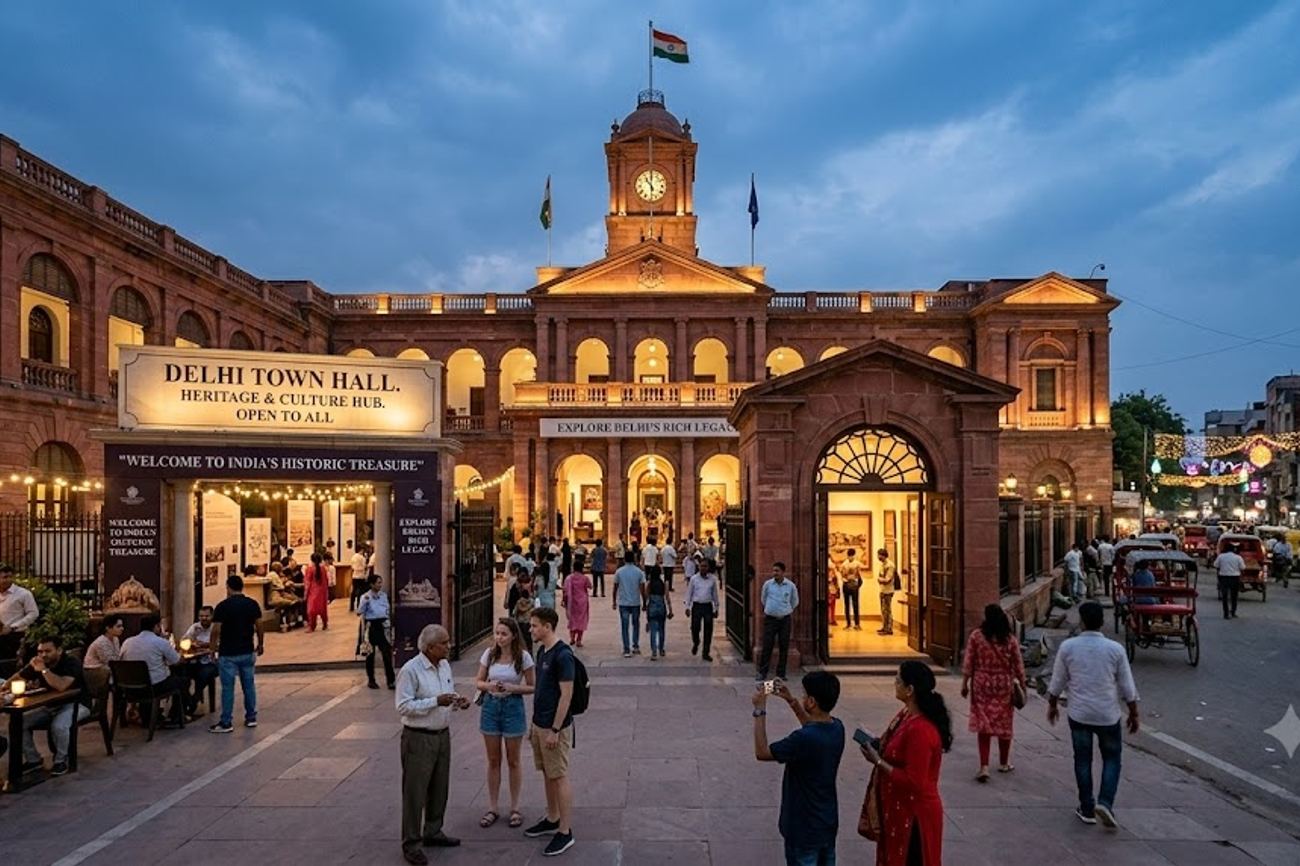
Image generated by AI
[New Delhi, October 2024] — The Government of Delhi and the Municipal Corporation of Delhi (MCD) have formalized a redevelopment agreement to transform the historic Town Hall complex in Chandni Chowk into a "Global Heritage Hub," converting the Grade-I heritage site into a world-class cultural destination.
The initiative marks a strategic shift in the capital's tourism infrastructure, aiming to revitalize a landmark that has remained largely underutilized since 2010. The project will integrate professional conservation efforts with the installation of modern museums, cultural centers, and dedicated tourism facilities to attract both domestic and international visitors to the heart of Old Delhi.
The Catalyst for Redevelopment
The push for this transformation stems from the need for "adaptive reuse" of Delhi's colonial-era architecture. The Town Hall complex, constructed between 1860 and 1866, served as the primary administrative headquarters for the Municipal Corporation of Delhi for over a century. However, the site became a dormant asset after the civic body relocated its operations to the Dr SP Mukherjee Civic Centre on Minto Road in 2010.
Left without a primary function for over a decade, the Grade-I structure—the highest category of heritage protection—required a sustainable vision to prevent decay. The new agreement ensures that while the MCD retains ownership, the tourism department will oversee the conversion of the site into a public-facing cultural asset. This shift is designed to prevent the building from becoming a mere monument, instead turning it into an active participant in the city's economic and cultural life.
Scope of the Heritage Hub
The redevelopment encompasses a significant footprint in one of the world's most densely populated urban areas. The project targets a total area of approximately 12,180 square meters, integrating three distinct components of the existing complex:
- The Town Hall Building: The primary Grade-I structure which will house the core museum facilities and exhibitions.
- The Press Building: An ancillary historic structure to be repurposed for cultural programming and visitor services.
- The Adjoining Park: A green space intended to provide a buffer and leisure area for tourists navigating the congested streets of Shahjahanabad.
The hub is strategically positioned to capture high foot traffic due to its proximity to the Old Delhi Railway Station and the traditional markets of Chandni Chowk. By consolidating Delhi’s history into a single accessible location, the government expects to increase the "dwell time" of tourists who currently visit the area for short shopping trips or brief visits to the Red Fort.
What This Means for Travelers
For the modern traveler, this project translates to a significant upgrade in the "visitor experience" within Old Delhi. Historically, exploring Shahjahanabad has been a fragmented experience, consisting of navigating narrow alleys and visiting disparate monuments. The Global Heritage Hub will provide a centralized, curated entry point into the city's history.
Direct Impacts for Visitors:
- Enhanced Infrastructure: Travelers can expect professional museum facilities, including climate-controlled galleries and organized exhibitions, replacing the current lack of structured storytelling in the immediate vicinity.
- Improved Accessibility: The hub will serve as a formal "gateway," providing a structured environment for international tourists to understand the evolution of the capital before venturing into the chaotic markets of Chandni Chowk.
- Diversified Itineraries: The addition of cultural programs and exhibitions means the Old Delhi circuit is no longer just about the Jama Masjid or Red Fort, potentially extending overnight stays in the district.
- Educational Depth: Rather than just viewing architecture, visitors will have access to curated narratives regarding the administrative and social evolution of Delhi from the 19th century to the present.
The Roadmap to Completion
The transition from a dormant civic office to a Global Heritage Hub will follow a strict regulatory and technical timeline to ensure the Grade-I status of the building is not compromised. The project is not moving immediately into construction; rather, it is entering a rigorous planning phase.
The tourism department is mandated to conduct a series of comprehensive preliminary studies. This includes detailed structural assessments to determine the integrity of the 160-year-old masonry and exhaustive historical surveys to ensure restoration remains authentic to the 1860s design. These findings will culminate in a comprehensive project report (CPR) that will dictate the exact methods of restoration and the layout of the museum spaces.
Once the technical blueprints are finalized, the focus will shift to the "adaptive reuse" phase—installing modern amenities (such as lighting, HVAC, and accessibility ramps) without altering the external architectural identity of the complex. The goal is to create a seamless blend of 19th-century aesthetics and 21st-century tourism requirements.
FAQ: Delhi Global Heritage Hub 2024
When will the Global Heritage Hub be open to the public? An official opening date has not been announced. The project is currently in the survey and structural assessment phase. A comprehensive project report must be completed before physical redevelopment begins.
Will the redevelopment change the look of the Town Hall? No. Because the building is a Grade-I heritage structure, the project focuses on conservation and restoration. The original architectural character and historical identity of the 1860-1866 construction must be preserved.
Is the site accessible for international tourists? Yes. The complex is located in Chandni Chowk, near the Old Delhi Railway Station, making it highly accessible via rail and road. It is designed specifically to serve as a cultural gateway for global visitors.
What will be inside the hub besides museums? The plan includes dedicated spaces for cultural programs, temporary exhibitions, and general tourism infrastructure to support visitors exploring the Shahjahanabad area.
A new chapter for a 160-year-old landmark.
#DelhiTourism #ChandniChowk #MCD #Shahjahanabad #HeritageConservation #OldDelhi2024
Related Travel Guides
- Croatia Sets a New Europe Tourism Standard as Dubrovnik Wins Green Pioneer Honour in 2026
- India Travel Faces Diwali Fare Surge As Domestic And International Flight Prices Rise Over Three Hundred Percent
- Munich Follows Frankfurt And More Places In Germany As Over 2% Oil Slide Unlocks Relief For Aviation And Tourism
Disclaimer
This article is for informational and educational purposes only. It does not constitute legal, financial, or professional advice. While we strive to provide accurate and up-to-date information, travel policies, regulations, and conditions change rapidly. Always verify information with official sources before making travel decisions. Nomad Lawyer makes no representations about the accuracy, reliability, completeness, or suitability of the information provided. Readers should consult qualified professionals for advice specific to their circumstances. The views expressed in this article are those of the author and do not necessarily reflect the views of Nomad Lawyer.
Kunal K Choudhary
Co-Founder & Contributor
A passionate traveller and tech enthusiast. Kunal contributes to the vision and growth of Nomad Lawyer, bringing fresh perspectives and driving the community forward.
Learn more about our team →