
Beyond New England: How 10 Regional American Hubs From Gatlinburg to Mackinac Island Are Redefining Autumn Travel
With fall foliage tracking underway since September 16, ten diverse US destinations from Gatlinburg to Mackinac Island offer strategic alternatives to crowded autumn corridors.

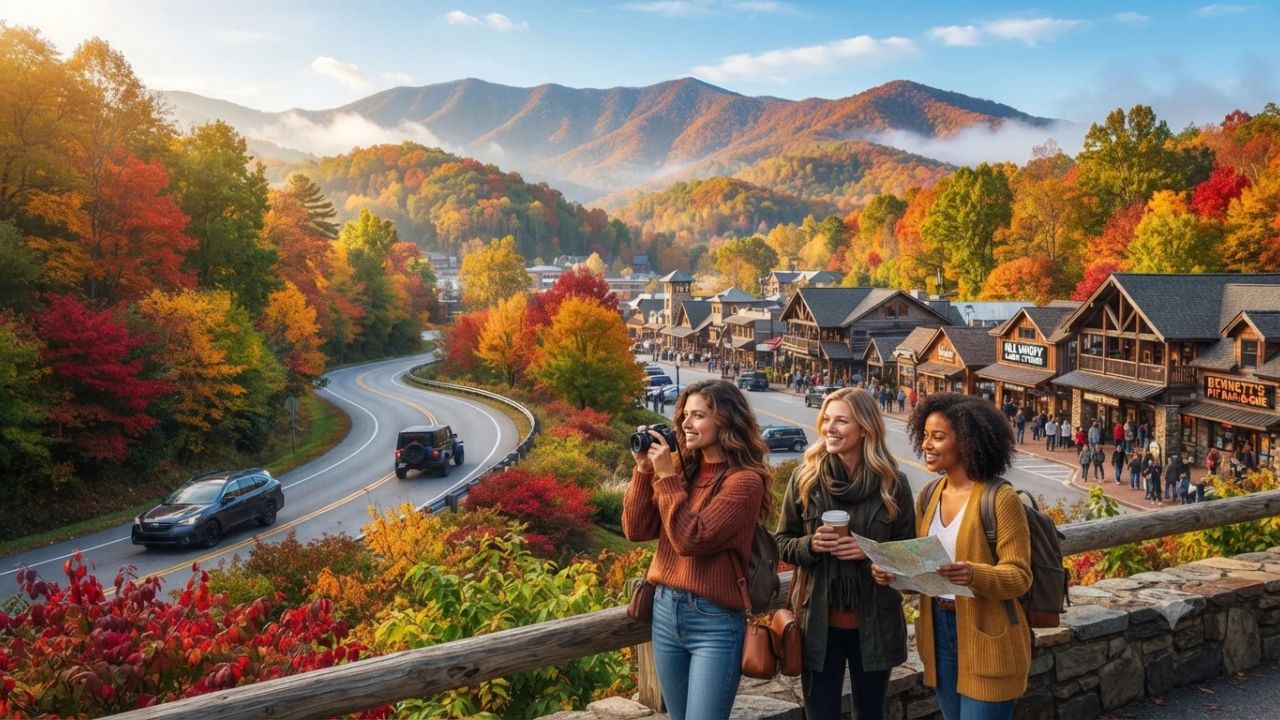
Image generated by AI
With official state monitoring confirming active foliage development across Vermont's Northeast Kingdom as early as September 16, 2026, and October routinely generating the highest monthly visitation of the year across the Great Smoky Mountains, autumn tourism across the United States is undergoing a geographic decentralization. While traditional fall foliage journeys have historically funneled international and domestic visitors into a congested corridor across northern New England, a national evaluation highlighting ten diverse destinations—spanning Gatlinburg, Mackinac Island, Allegany County, Lafayette, Estes Park, Saratoga County, Loudoun County, Columbus, Cody, and Branson—demonstrates how seasonal travel demand is diffusing into mountain ridges, historic islands, and culinary heartlands.
The broadening scope of autumn travel reflects a fundamental shift in how travelers approach seasonal itineraries. Instead of obsessing over a narrow, unpredictable four-day window of peak canopy color in New Hampshire or Maine, visitors are constructing multifaceted vacations where environmental color transitions serve as a backdrop to regional food, historic architecture, and outdoor recreation. Supported by promotional initiatives from Brand USA (Visit the USA), overseas travelers are using multi-state road networks to access lesser-known regional enclaves that offer greater pricing predictability and lower visitor density.
The Elevation Gradient: Deconstructing the Great Smoky Mountains Phenomenon
Nowhere is the seasonal compression of autumn travel more pronounced than in Gatlinburg, Tennessee. Positioned at the primary gateway to Great Smoky Mountains National Park, the municipality experiences its most intense commercial period between late September and early November. The park's distinct topography—rising from 875 feet in valley floors to 6,643 feet at Clingmans Dome—creates a rolling chromatic schedule that insulates visitors against microclimate shifts.
According to official operational guidance from the National Park Service (NPS), forest canopy transitions initiate across high-elevation ridges above 4,000 feet during mid-to-late September, where yellow birch, American beech, and mountain maple react to early frost cycles. In contrast, middle and lower elevations dominated by sugar maples, scarlet oaks, and sweetgums reach their peak visual saturation between mid-October and early November.
However, this multi-tiered progression creates acute infrastructure friction. October consistently ranks as the park's busiest month, with millions of motorists creating bottlenecks along Newfound Gap Road, Cades Cove Loop, and the Roaring Fork Motor Nature Trail. The National Park Service advises visitors to navigate around popular trailheads by scheduling excursions during early morning hours, exploring western park corridors like Greenbrier or Tremont, and budgeting substantial transit buffers for gateway corridors connecting Gatlinburg and Pigeon Forge.
| Destination & State | Primary Regional Feature | Seasonal Progression Window | Operational Traveler Profile |
|---|---|---|---|
| Gatlinburg, Tennessee | Great Smoky Mountains gateway | Late Sept (peaks) to early Nov (valleys) | National park hikers, family road trippers |
| Mackinac Island, Michigan | Car-free Great Lakes heritage | Early October to late October | Historic architecture, cycling, slow-paced travel |
| Allegany County, Maryland | Western Maryland Appalachians | Early October to late October | Scenic rail journeys, trail biking, fall drives |
| Lafayette, Louisiana | Cajun and Creole cultural hub | Mid-October through November | Food enthusiasts, zydeco music, swamp tours |
| Estes Park, Colorado | Rocky Mountain elk rut and peaks | Mid-September to mid-October | Alpine wildlife watching, high-altitude hiking |
| Saratoga County, New York | Historic springs and Hudson valley | Late September to mid-October | Equine heritage, mineral spas, culinary routes |
| Loudoun County, Virginia | DC wine country and Blue Ridge | Mid-October to early November | Vineyard tastings, estate stays, rural cycling |
| Columbus, Ohio | Urban park systems and riverfront | Mid-October to early November | City culture, museum corridors, botanical centers |
| Cody, Wyoming | Yellowstone gateway and Absaroka | Late September to mid-October | Western frontier history, big game wildlife drives |
| Branson, Missouri | Ozark mountain lakes and stages | Mid-October to early November | Live entertainment, lake recreation, multigenerational |
Regional Diversity: Comparing Island Isolation, Western Ranges, and Cultural Corridors
The emergence of ten distinct autumn hubs reveals how geographical variety shapes the seasonal experience. On Michigan's Mackinac Island, autumn eliminates summer ferry crowds while preserving the destination's famous horse-drawn carriage transport and car-free Victorian streets. Surrounded by Lake Huron, the island's coastal microclimate produces brilliant foliage transitions framed by 19th-century colonial fortifications and historic hotel verandas, offering an unhurried retreat before winter closures take effect in November.
Moving west into the Colorado Rockies, Estes Park pairs its golden aspen canopies with one of North America's most dramatic wildlife spectacles: the annual elk rutting season. As bull elk gather in Rocky Mountain National Park's Moraine Park and Horseshoe Park, bugling calls echo across frosty morning meadows, creating an immersive outdoor setting that draws photographers and nature enthusiasts. Across the northern border in Wyoming, Cody blends dramatic autumn colors in the Absaroka Range with historic rodeo culture and the Buffalo Bill Center of the West, serving as a tranquil staging base for motorists exploring the eastern gateways of Yellowstone before seasonal pass closures.
Conversely, destinations like Lafayette, Louisiana, demonstrate that autumn travel can transcend leaf-peeping entirely. Situated in the heart of Acadiana, Lafayette offers travelers temperate autumn weather tailored for open-air culinary gatherings, boudin cook-offs, and music festivals celebrating French-speaking heritage. For international visitors, combining the mountain views of western Maryland's Allegany County or the horse farms of Saratoga County with Southern Louisiana's culinary bayous yields a comprehensive exploration of North America's cultural breadth.
Microclimate Volatility and Vermont's September Tracking Benchmark
Understanding seasonal volatility is essential for realistic itinerary planning. While marketing brochures often depict uniform carpets of red and gold, real-time forest data reveals that weather patterns heavily dictate color vibrancy. According to seasonal tracking released on September 16, 2026, by the Vermont Department of Tourism and Marketing, early foliage development was already evident across northern counties, with the elevated terrain of the Northeast Kingdom displaying the most advanced color shifts.
Summer rainfall levels, drought stress, and nighttime temperature drops create localized variations that can accelerate or postpone leaf transitions by several weeks. When early frosts strike without adequate moisture, deciduous trees often drop foliage prematurely, whereas mild autumns can keep canopies green well past historical mid-point averages.
For international travelers planning multi-destination journeys, relying on fixed peak-date predictions is an operational mistake. The most resilient travel strategies incorporate varied elevations and diverse attractions. A road trip connecting Loudoun County's Virginia vineyards with Maryland's Allegany mountain passes ensures that if high-altitude foliage has faded, valley vineyards and historic canal towns remain visually engaging and operationally accessible.
Expert Analysis: Yield Dispersion and the Logistics of Shoulder-Season Travel
From a travel industry economics standpoint, autumn has ceased to function as a low-demand shoulder season. Across regional gateway towns, October now regularly eclipses July in average daily hotel rates (ADR) and retail spend per visitor. The compressed four-to-six-week operational window creates intense supply-demand imbalances, particularly in gateway communities with limited lodging inventories like Estes Park, Cody, and Gatlinburg.
For travelers booking this route, the direct consequence is that flexible, last-minute travel planning is no longer financially viable. Securing lodging, rental vehicles, and national park timed-entry reservations requires a minimum lead time of 60 to 90 days. Travelers attempting walk-up bookings in October frequently encounter room rates double their typical summer averages or find themselves displaced to peripheral motels located an hour from trailheads.
The pricing pressure this creates means destination managers must actively promote secondary and tertiary hubs to protect visitor satisfaction and preserve fragile ecosystems. Urban bases like Columbus, Ohio, and countryside corridors like Saratoga County, New York, benefit from this displacement. These peripheral destinations offer ample hotel capacity, walkable downtown districts, and cultural programming that capture traveler spending without subjecting national park infrastructure to unsustainable gridlock. By choosing regional alternatives, travelers avoid peak congestion while discovering authentic American regional culture.
Key Takeaways
- Geographic Diversification: Autumn tourism across the United States has expanded beyond northern New England into ten distinct regional hubs, spanning the Great Smoky Mountains to the Ozarks.
- Elevation-Driven Timing: In mountain regions like Gatlinburg, foliage develops across a six-week gradient, starting at 4,000 feet in September and descending into valley floors through early November.
- Early Seasonal Markers: Official state tracking confirmed active foliage development in Vermont's Northeast Kingdom by September 16, 2026, signaling the start of the transcontinental autumn cycle.
- Logistical Bottlenecks: October represents the highest-volume visitation month for popular national park gateways, necessitating early reservations and early-morning park entries to avoid vehicle gridlock.
- Cultural and Culinary Integration: Modern fall itineraries combine scenic drives with regional gastronomy, live music, and historic preservation in destinations like Lafayette and Mackinac Island.
FAQ: American Fall Foliage and Regional Autumn Travel 2026
When is the best time to see fall foliage in the Great Smoky Mountains?
High-elevation ridges above 4,000 feet peak in late September and early October. Lower valleys and scenic drives around Gatlinburg produce their best displays from mid-October through early November.
How does Mackinac Island function as a fall destination?
Mackinac Island offers an uncrowded autumn experience with car-free streets, historic carriage tours, and lake views framed by turning foliage, operating before ferry schedules reduce for winter in November.
What should travelers do if peak foliage dates shift due to weather?
Build itineraries that span different elevations and include non-foliage activities like culinary tours in Lafayette, museum visits in Columbus, or historic exploration in Loudoun County to ensure travel value.
Do national parks require reservations during peak fall months?
Many popular national parks, including Rocky Mountain and sections of the Great Smokies, implement timed-entry reservations, parking permits, or commercial vehicle rules to manage heavy October crowds.
As vibrant canopies descend from high alpine passes to historic southern bayous, the American autumn reveals that the truest seasonal magic lies far off the beaten path.
Related Travel Guides
Disclaimer
This article is for informational and educational purposes only. It does not constitute legal, financial, or professional advice. While we strive to provide accurate and up-to-date information, travel policies, regulations, and conditions change rapidly. Always verify information with official sources before making travel decisions. Nomad Lawyer makes no representations about the accuracy, reliability, completeness, or suitability of the information provided. Readers should consult qualified professionals for advice specific to their circumstances. The views expressed in this article are those of the author and do not necessarily reflect the views of Nomad Lawyer.
Raushan Kumar
Founder & Lead Developer
Full-stack developer with 11+ years of experience and a passionate traveller. Raushan built Nomad Lawyer from the ground up with a vision to create the best travel and law experience on the web.
Learn more about our team →