
American Airlines Flight 618 from Dallas Fort Worth to Newark Diverts to Baltimore Following First-Class Passenger In-Flight Restraint in September 2026
American Airlines Flight 618 from DFW to EWR diverted to Baltimore (BWI) after crew and passengers restrained an aggressive first-class passenger.

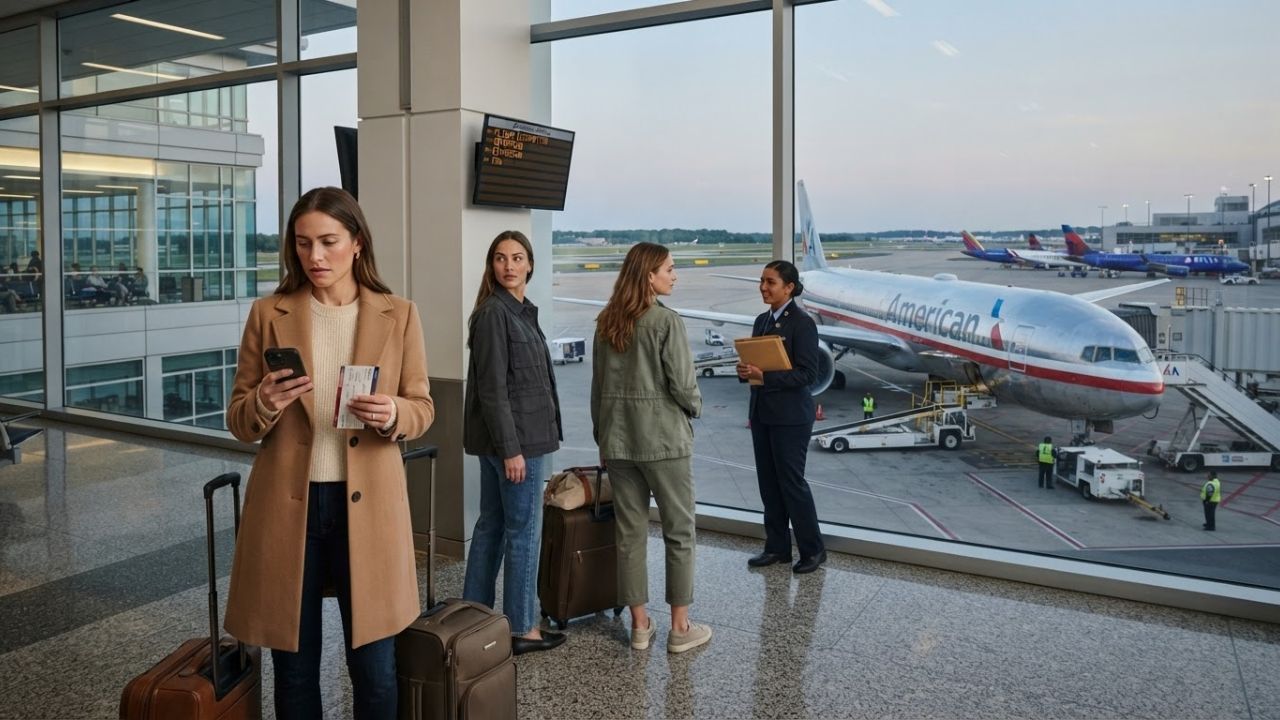
Image generated by AI
American Airlines Flight 618 operating from Dallas Fort Worth International Airport (DFW) to Newark Liberty International Airport (EWR) diverted to Baltimore/Washington International Thurgood Marshall Airport (BWI) after a first-class passenger disturbance. The flight crew and passengers restrained the individual using zip ties and duct tape prior to an emergency landing and law enforcement intervention.
Commercial aviation safety protocols were put to an immediate test at cruising altitude when an in-flight disturbance forced the flight deck crew of American Airlines Flight 618 to abandon their scheduled flight path into New Jersey and execute an unscheduled diversion into Maryland.
Mid-Flight Disturbance and Emergency Restraint Timeline
According to witness accounts and carrier statements, the incident began in the aircraft's first-class cabin while Flight 618 was en route between Texas and New Jersey. A male passenger reportedly exhibited escalating verbal aggression and physical confrontation toward cabin crew members and surrounding passengers.
As the behavior escalated into a direct threat to flight safety, flight attendants initiated emergency cabin defense protocols:
- In-Flight Intervention: Cabin crew members, assisted by willing passengers, intervened to physically contain the individual in the aisle.
- Emergency Restraint: The disruptive passenger was immobilized using approved emergency restraint tools, including zip ties and heavy-duty tape, securing the individual to a seat for the remainder of the flight.
- Flight Deck Action: The captain declared an emergency with Federal Aviation Administration (FAA) Air Traffic Control, requesting an immediate descent vector to Baltimore/Washington International Thurgood Marshall Airport (BWI).
- Law Enforcement Transfer: Upon touchdown at BWI, local airport police and federal law enforcement officers boarded the aircraft, took the restrained individual into custody, and removed them from the airframe.
- Onward Continuation: Following security clearance and statement gathering by authorities, Flight 618 departed BWI and safely completed its onward journey to Newark Liberty International Airport.
+-----------------------------------------------------------------------------------+
|                  AMERICAN AIRLINES FLIGHT 618 DIVERSION ROUTE                     |
+-----------------------------------------------------------------------------------+
|  ORIGIN AIRPORT               CRUISING ALTITUDE INCIDENT       DIVERSION / FINAL  |
|                                                                                   |
|  Dallas Fort Worth (DFW) ---> In-Flight Restraint Executed --> Baltimore (BWI)    |
|  (Dallas, Texas)              (Zip Ties & Duct Tape Applied)   (Emergency Landing |
|                                                                 / Police Custody) |
|                                                                        |          |
|                                                                        v          |
|  Newark Liberty (EWR) <------------------------------------------------+          |
|  (Final Scheduled Destination)                                                    |
+-----------------------------------------------------------------------------------+
Flight Specifications and Diversion Routing Parameters
The emergency diversion highlighted the operational flexibility required by major airlines when navigating unexpected cabin events across congested East Coast airspace.
| Flight Parameter | Operational Detail |
|---|---|
| Airline Operator | American Airlines |
| Flight Identifier | Flight 618 (AA 618) |
| Origin Gateway | Dallas Fort Worth International Airport (DFW) |
| Scheduled Destination | Newark Liberty International Airport (EWR) |
| Emergency Diversion Gateway | Baltimore/Washington International Thurgood Marshall Airport (BWI) |
| Cabin Class of Origin | First Class |
| Restraint Equipment Utilized | Zip ties and duct tape |
| Primary Regulatory Agency | Federal Aviation Administration (FAA) |
FAA Zero-Tolerance Regulations and Airline Cabin Safety Protocols
The Federal Aviation Administration maintains a strict zero-tolerance policy regarding unruly passenger behavior onboard commercial aircraft. Under US federal law (49 U.S.C. § 46504), interfering with the performance of a flight crew member's duties carries severe criminal penalties, including fines up to $37,000 per violation from the FAA and potential federal prison sentences.
Flight crews undergo mandatory annual recurrent training to manage cabin conflicts, de-escalation strategies, physical defense, and restraint procedures. Emergency physical restraint is classified as a last-resort intervention, authorized only when an individual presents an imminent threat to aircraft integrity, flight crew capacity, or passenger safety.
Traveler Logistics & Flight Diversion Contingency Guide
Flight diversions created by security or passenger disruptions create downstream travel delays, missed connections, and baggage routing challenges.
Essential Steps for Passengers Facing Flight Diversions
- Remain Seated and Comply with Crew Instructions: During an active cabin disruption or emergency diversion landing, passengers should remain seated with seatbelts fastened, allowing flight attendants and law enforcement unrestricted access to aisles.
- Real-Time Flight Tracking: Monitor carrier updates via the American Airlines mobile app or FlightAware to check revised departure times for the second leg of the diverted flight.
- Connecting Flight Rebooking Rights: Under US Department of Transportation (DOT) customer service commitments, if an operational or security diversion causes passengers to miss connecting flights, the carrier is required to rebook travelers on the next available flight at no additional charge.
- Baggage Tracking Protocols: Checked baggage remains loaded in the cargo hold during short law enforcement diversion stops. Bags automatically transfer to the final destination once the airframe resumes its flight path.
Hub Connectivity and Airport Infrastructure Impact
Both Dallas Fort Worth (DFW) and Newark Liberty (EWR) represent pivotal nodes in the American Airlines and global aviation networks. DFW serves as American Airlines' primary international hub, processing tens of millions of passengers annually across transcontinental and international routes.
While isolated passenger disruptions do not alter long-term flight frequencies between DFW and EWR, the rapid resolution of Flight 618 demonstrates the coordination between air traffic control, flight crews, and airport law enforcement at diversion hubs like BWI to protect commercial airspace integrity.
Related Travel Guides
Asia Flight Disruptions Escalate as Regional Airports Report Widespread Delays
United Airlines Introduces Automated Standby App Tool for Disrupted Passengers
The 10 Best Airline Passenger Protection Tips for Delays and Diversions, According To Reddit
Disclaimer
This article is for informational and educational purposes only. It does not constitute legal, financial, or professional advice. While we strive to provide accurate and up-to-date information, travel policies, regulations, and conditions change rapidly. Always verify information with official sources before making travel decisions. Nomad Lawyer makes no representations about the accuracy, reliability, completeness, or suitability of the information provided. Readers should consult qualified professionals for advice specific to their circumstances. The views expressed in this article are those of the author and do not necessarily reflect the views of Nomad Lawyer.
Raushan Kumar
Founder & Lead Developer
Full-stack developer with 11+ years of experience and a passionate traveller. Raushan built Nomad Lawyer from the ground up with a vision to create the best travel and law experience on the web.
Learn more about our team →