New Zealand Balances Tourism Pressure with Smarter Skies: Auckland Flight Routing, Queenstown Upgrades, and NZeTA Remote Work Rules

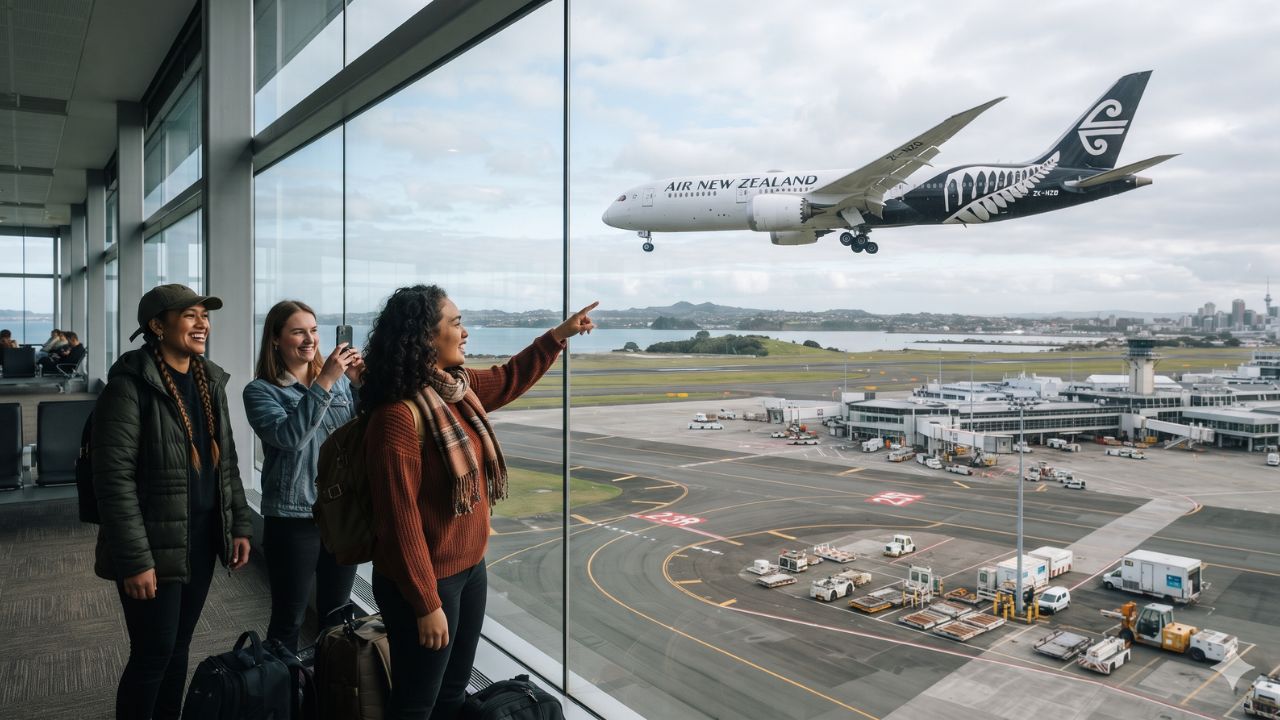
While 75% of local residents in the Queenstown Lakes District now report that unchecked tourism puts excessive pressure on local roads, power grids, and wastewater systems, New Zealand has quietly enacted one of the most progressive remote-work policies in the Pacific—permitting international visitors on standard visitor status to work for overseas clients legally without requiring a dedicated digital nomad visa. Rather than relying on viral travel myths or unverified fast-track tech visas, the country is reforming its visitor economy through concrete structural policies. Guided by the national Tourism Policy Statement released in June 2026, authorities are integrating satellite-guided descent corridors at Auckland Airport, investing millions in alpine civic infrastructure, and accommodating remote professionals while keeping local carrying capacity firmly in focus.
Smarter Skies: Satellite Navigation and Trans-Tasman Realignment
Aviation modernization across Aotearoa centers on precision flight routing rather than speculative software automation. Developed jointly by Airways New Zealand, the Board of Airline Representatives New Zealand, and airport authorities, Auckland Airport's SMART Approaches utilize performance-based navigation (PBN) satellite guidance. By allowing incoming aircraft to fly smooth, continuous-descent curved trajectories, these procedures reduce engine thrust adjustments, cut carbon emissions, and reduce low-altitude noise over residential neighborhoods.
In April 2026, Auckland Airport advanced this initiative through a targeted community trial assessing northern approach corridors. The trial was designed to evaluate residential noise impact rather than artificially boosting total runway capacity. On a broader scale, trans-Tasman air capacity between Australia and New Zealand is undergoing tactical recalibration. While overall premium capacity across the Tasman contracted by an estimated 5.5% as airlines realigned regional networks, direct point-to-point routes into the South Island expanded sharply.
Responding to intense Australian winter demand, Air New Zealand introduced 16,500 seats on a seasonal Queenstown–Brisbane summer route, alongside a 40% winter seat capacity increase linking Australia's east coast directly to Queenstown. Qantas followed suit by lifting frequencies between Sydney and Auckland while expanding scheduled services into Queenstown. These adjustments give travelers direct access to Southern Alps ski fields without congesting domestic transfers through Auckland.
Queenstown's Carrying Capacity Challenge: Protecting Alpine Communities
Queenstown and neighboring Wānaka represent the crown jewels of South Island adventure tourism, yet rapid growth has triggered acute growing pains. Business planning data published by the Queenstown Lakes District Council revealed that visitor days jumped 9% year-on-year through December 2025. Although tourism remains the economic heartbeat of the district, 75% of surveyed residents expressed deep concern regarding municipal infrastructure strain.
The pressure impacts everyday community systems: mountain highway bottlenecks along Frankton Road, wastewater processing overloads during winter ski peaks, and high demand on remote public amenities. To counter this footprint, the New Zealand Government allocated NZ$3.8 million in July 2026 to upgrade public toilet facilities and hygiene infrastructure across the Mackenzie and Queenstown Lakes districts.
Funded directly by the International Visitor Conservation and Tourism Levy (IVL)—a charge paid by international tourists upon entry—this capital injection reinforces destination management principles. Contrary to internet rumors, the state has not placed arbitrary visitor caps on luxury lodges inside national parks. Instead, it is using targeted infrastructure investments to ensure pristine alpine lakes and mountain valleys retain their ecological integrity.
Deconstructing the Remote Work Rule: NZeTA Regulations for Digital Nomads
A major source of confusion for international travelers concerns New Zealand's digital nomad regulations. Official policy verified through Immigration New Zealand establishes that since 27 January 2025, foreign visitors entering on a standard Visitor Visa or New Zealand Electronic Travel Authority (NZeTA) are legally authorized to work remotely for employers and clients located outside New Zealand.
This provision eliminates legal ambiguity, allowing traveling software engineers, writers, consultants, and digital creators to attend virtual meetings and code while touring the country. However, this policy does not establish a standalone "digital nomad visa" category, nor does it feature an expedited 12-hour processing portal. Visitors cannot provide services to New Zealand firms, participate in the local labor market, or violate their standard permitted stay limits (typically up to three months on an NZeTA or nine months on a Visitor Visa).
New Zealand Tourism Infrastructure, Air Capacity, and Remote Work Benchmarks
To help independent travelers, remote professionals, and conference organizers interpret verified national policies, the table below synthesizes the official benchmarks and operational facts:
| Tourism & Aviation Sector | Official Policy / Operational Action | Verified Benchmark / Metric | Practical Traveler Takeaway |
|---|---|---|---|
| Auckland Airspace Operations | Satellite-Guided SMART Approaches | Performance-based continuous descent paths | Cuts fuel burn, engine noise, and low-altitude turbulence |
| Trans-Tasman Winter Capacity | East Coast Australia to Queenstown | +40% Winter Capacity Lift (Air NZ) | Enables direct access to South Island ski fields |
| Trans-Tasman Route Network | Air New Zealand Queenstown–Brisbane | 16,500 Seasonal Seats Added | Direct holiday connections bypassing Auckland hub |
| Alpine Destination Strain | Queenstown Lakes District Council Data | Visitor Days +9% YoY; 75% Resident Concern | Plan around peak traffic; utilize local public transit |
| Civic Infrastructure Funding | International Visitor Levy (IVL) Allocation | NZ$3.8M for Public Facilities (July 2026) | Protects hygiene across Mackenzie and Queenstown Lakes |
| Remote Work Entry Policy | Visitor Visa & NZeTA Remote Work Rule | Effective since 27 January 2025 | Legal overseas remote work permitted; no local employment |
| Business Events Market | MEETINGS 2026 at NZICC Auckland | ~750 Participants; 3-Year Return Agreement | Reinforces Auckland as premier Pacific convention capital |
Visitor Insider Tips for Touring New Zealand
Experiencing New Zealand with local sensitivity unlocks extraordinary encounters while minimizing pressure on local communities:
- Embrace the Remote Work Allowance Legally: If utilizing the NZeTA remote work provision, carry documentation confirming that your employer and income source originate entirely outside New Zealand. Ensure your laptop and banking profiles reflect foreign employment to breeze through biosecurity and border interviews.
- Bypass Queenstown Highway Congestion via Public Transit: Avoid renting an oversized vehicle that spends hours idling on Frankton Road. The Queenstown Orbus public transit network offers flat NZ$2 fares with a Bee Card, connecting Queenstown Airport, Frankton, Central Queenstown, and Arrowtown efficiently.
- Base Yourself in Under-the-Radar Neighborhoods: In Auckland, skip corporate high-rises in the central business district. Base yourself in Devonport (connected by a scenic 12-minute ferry ride across Waitematā Harbour) or historic Ponsonby, known for independent coffee roasters, Victorian villas, and Pacific-fusion bistros.
- Practice Strict Tiaki Promise Environmental Etiquette: When hiking tracks maintained by the Department of Conservation (DOC), adhere strictly to the Tiaki Promise. Scrub your hiking boots at designated bio-sanitation stations to halt the spread of kauri dieback disease, pack out every scrap of rubbish, and use designated public facilities to protect mountain waterways.
- Savor Authentic Regional Food and Wine: Look beyond standard pub fare to explore regional specialties promoted by Tourism New Zealand. Taste world-renowned Central Otago Pinot Noir paired with South Island high-country lamb, fresh Bluff oysters caught in Foveaux Strait, and warm cheese rolls (Southland sushi) served in rural bakeries.
Cultural and Environmental Context: Kaitiakitanga and Sustainable Stewardship
At the core of New Zealand's tourism strategy lies the indigenous Māori philosophy of kaitiakitanga—the sacred duty of guardianship over the sky, land, and waters. Rather than treating nature as a commodity to be exploited, Māori worldviews recognize humans as kin to the natural environment. Tourism management under the 2026 policy framework actively partners with local iwi (tribes) to protect sacred wāhi tapu (sacred ancestral sites) from commercial encroachment.
This cultural ethos intersects directly with pressing environmental realities. Fragile braided river systems like the braided beds of the Rakaia and braided alpine lakes in the Mackenzie Basin provide critical habitats for endangered endemic bird species like the black stilt (kakī). Unregulated freedom camping and infrastructure deficits pose serious threats to these sensitive biomes.
By investing IVL funds directly into wastewater treatment, recycling stations, and responsible campsite facilities, New Zealand aims to shift its visitor economy from volume-driven tourism to high-value, regenerative travel. Travelers who honor local customs, slow down their itineraries, and respect delicate alpine ecosystems help ensure that Aotearoa's natural wonders endure for generations to come.
FAQ: Visiting and Working Remotely in New Zealand 2026–2027
Can I legally work remotely on an NZeTA in New Zealand? Yes. Under regulations effective since 27 January 2025, visitors holding an NZeTA or standard Visitor Visa may legally work remotely for employers and clients located outside New Zealand.
How is Queenstown addressing local overcrowding? Backed by the Queenstown Lakes District Council and NZ$3.8 million in IVL government funding, the region is modernizing public facilities and wastewater treatment to manage visitor pressures.
What direct flight options connect Australia to the South Island? Air New Zealand expanded east coast Australian flight capacity to Queenstown by 40% during winter, adding 16,500 seats on Brisbane flights alongside increased Qantas services from Sydney.
What is the International Visitor Conservation and Tourism Levy (IVL)? The IVL is a dedicated entry fee paid by most international visitors that directly funds national conservation projects, track maintenance, and essential civic visitor infrastructure across New Zealand.
As satellite flight corridors curve gently above the snowcapped Southern Alps, New Zealand demonstrates that protecting ancient alpine sanctuaries and embracing modern digital explorers can walk hand in hand.
Related Travel Guides
The 10 Best Wilderness Hikes and Alpine Huts in New Zealand, According To Reddit
This article is for informational purposes. Flight routes, passenger regulations, visa rules, and transit advisories are subject to change by airlines and aviation authorities. Readers are advised to verify schedules and travel documentation with relevant carriers and border agencies before departure.
Related Stories

Sri Lanka Inbound Tourism Surges as Jetstar Connects Melbourne to Colombo: Travel Dynamics and Local Guide

Vietnam Global Aviation Surge: UK, Germany, and Russia Drive Record Inbound Tourism and Flight Connectivity