
Iran War Forces Lufthansa, Swiss, Austrian, Malaysia Airlines, Norwegian Air Into Emergency Rerouting Operations
Iran War forces Lufthansa, Swiss, Austrian, Malaysia Airlines, Norwegian Air into emergency rerouting operations as Middle East airspace closures extend flight times and increase operational costs across global aviation routes.

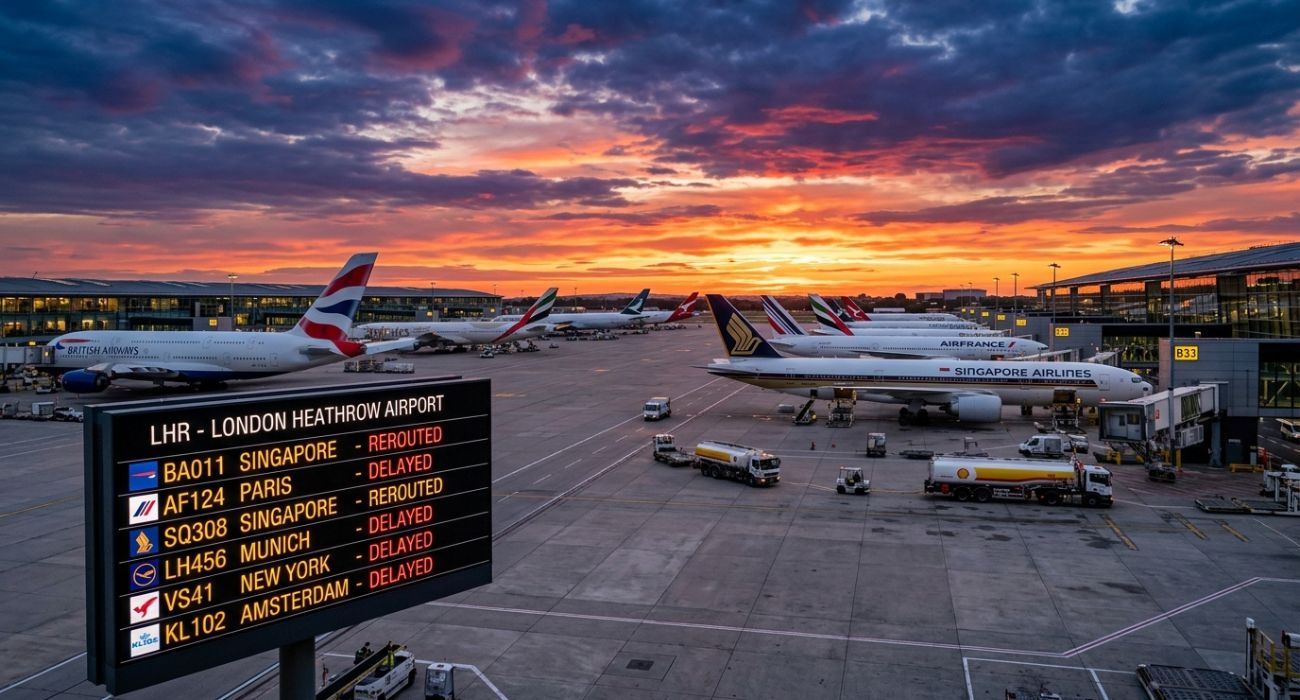
Airlines forced to execute emergency rerouting operations as Iranian airspace becomes restricted
**> Quick Summary
- Iran War has closed Iranian airspace, forcing major carriers to execute emergency rerouting
- Flight times extended by 1-3 hours on affected routes due to detour requirements
- Lufthansa, Swiss, Austrian, Malaysia Airlines, and Norwegian Air all implementing rerouting strategies
- Passengers face potential delays, rebookings, and possible itinerary changes
- Airlines absorbing additional fuel costs while maintaining safety standards
- Industry adapting to new operational realities with flexible travel planning**
Iran War Forces Lufthansa, Swiss, Austrian, Malaysia Airlines, Norwegian Air Into Emergency Rerouting Operations
Frankfurt — The escalating Iran conflict has unleashed a cascading aviation emergency that's reshaping global air travel patterns, with Lufthansa, Swiss International Air Lines, Austrian Airlines, Malaysia Airlines, and Norwegian Air now executing emergency rerouting protocols that extend flight times, increase operational costs, and leave passengers facing uncertainty across the world's busiest air corridors. As Middle East airspace becomes increasingly restricted, Europe's largest carriers are abandoning traditional flight paths that have served the industry for decades, forcing travelers to confront longer journeys, higher fares, and the reality that geopolitical instability can upend even the most carefully planned itineraries.
The collision of regional conflict and aviation infrastructure has created a perfect storm. Iranian airspace—once a critical transit corridor for flights connecting Europe with Asia, the Middle East, and beyond—has become effectively closed to commercial traffic. This geographical closure forces airlines to execute dramatic detours through Central Asia, the Arabian Peninsula, or alternative Mediterranean routes, adding 1-3 hours to flight durations and consuming significantly more fuel. The financial and operational consequences cascade through the entire aviation ecosystem, affecting everything from airline profitability to passenger experience.
The Aviation Industry's Emergency Response
The Iran War's impact on global aviation extends far beyond simple route adjustments. Governments across the United States, United Kingdom, European Union member states, and numerous other nations have issued travel advisories and airspace restrictions that fundamentally alter flight planning. Airlines operating through the Middle East corridor—particularly carriers with substantial traffic between Europe and Asia—face an impossible choice: maintain traditional routes through Iranian airspace and risk passenger safety, or execute costly rerouting that impacts schedules and profitability.
The five major carriers now navigating this crisis each face unique operational challenges. Lufthansa, with its extensive Asia-Europe network, has become the poster child for the industry's struggle. Swiss International Air Lines, Austrian Airlines (both part of the Lufthansa Group), Malaysia Airlines, and Norwegian Air have each implemented their own rerouting strategies, though all share the common burden of avoiding Iranian airspace entirely.
Lufthansa: Germany's Flagship Carrier Leads Rerouting Efforts
Re-routing Strategy: Lufthansa has executed the most comprehensive rerouting program among European carriers, fundamentally altering flight paths for destinations across Central Asia and Egypt. The carrier's long-haul fleet now executes dramatic detours that bypass Iranian airspace entirely, routing through Central Asian corridors or the Arabian Peninsula instead.
Why Passengers Choose Lufthansa: Despite the operational disruptions, Lufthansa maintains its reputation as a preferred carrier for business and leisure travelers. The airline's extensive network spanning Europe, Asia, and the Americas, combined with its commitment to exceptional in-flight service, continues to attract passengers even during geopolitical uncertainty. Lufthansa's safety record and regulatory compliance have earned trust that persists through turbulent times.
Premium Experience: Lufthansa's Business Class offerings—featuring lie-flat seats, gourmet dining, and access to premium airport lounges—remain major draws for travelers seeking comfort during extended journeys. The carrier's commitment to maintaining service quality despite operational challenges has earned loyalty from passengers who prioritize reliability and luxury.
Operational Specialty: Lufthansa stands out for its premium service standards, modern fleet composition, and exceptional safety protocols. The airline operates one of Europe's most extensive networks, serving both business and leisure markets. Its punctuality record and attention to passenger comfort have established a strong reputation that travelers recognize even during crisis conditions.
Swiss International Air Lines: Precision Engineering Meets Crisis Management
Re-routing Strategy: Swiss International Air Lines has adjusted flight paths to its Middle East and Asian destinations—including Dubai, Abu Dhabi, and Mumbai—by executing safer corridor routes that avoid conflict zones. Passengers on Swiss flights can expect modestly extended flight times as the carrier navigates around restricted airspace.
Why Passengers Choose Swiss: Swiss International Air Lines has built its reputation on exceptional punctuality, reliability, and high service standards. The carrier's fleet comprises modern aircraft equipped with state-of-the-art amenities designed to ensure passenger comfort. Travelers select Swiss for its renowned service quality, including spacious cabins, gourmet dining options, and extensive entertainment selections.
Safety Focus: Swiss International Air Lines' emphasis on safety has become particularly relevant during uncertain times. The carrier's excellent safety record, combined with seamless travel experiences, has cultivated a loyal customer base. For travelers accessing Europe, Switzerland, and beyond, Swiss International Air Lines remains a trusted option.
Operational Specialty: Swiss International Air Lines is recognized for exceptional punctuality, top-tier service, and strong safety emphasis. The carrier provides one of Europe's most comfortable flying experiences, with spacious cabins, gourmet meals, and extensive entertainment options. Its modern fleet and commitment to service standards have made it a popular choice for long-haul travelers, often lauded for maintaining on-time performance even under difficult circumstances.
Austrian Airlines: European Hospitality Navigates Geopolitical Challenges
Re-routing Strategy: Austrian Airlines, operating as part of the Lufthansa Group, has rerouted numerous flights to major Middle Eastern hubs including Doha and Abu Dhabi. The carrier has adjusted flight plans by avoiding Iranian airspace entirely, executing alternative routes that pass over Turkey, the Caucasus region, and the Mediterranean. These changes ensure passenger safety while minimizing delays.
Why Passengers Choose Austrian: Austrian Airlines has earned a reputation for punctuality, comfort, and service excellence. The carrier offers comprehensive service across cabin classes, from comfortable Economy to luxurious Business Class featuring fully flat beds and exclusive lounge access. Austrian Airlines' attention to detail and commitment to relaxing in-flight experiences make it popular across Europe and beyond.
Network Advantage: Austrian Airlines' extensive European network, paired with seamless connections to long-haul destinations, makes it convenient for travelers departing Austria to various global locations. The carrier's quality service commitment, particularly in premium cabins, ensures passengers receive excellent care even amid operational disruptions.
Operational Specialty: Austrian Airlines is recognized for excellent customer service and comfort. The carrier offers passengers a warm, friendly experience with meticulous attention to detail. Its premium services, including fully flat beds in Business Class, combined with Austrian hospitality traditions, make it a favorite among business travelers. The carrier's European route network and Lufthansa Group partnerships further enhance value for travelers seeking seamless international connections.
Malaysia Airlines: Southeast Asia's Premium Carrier Maintains Standards
Re-routing Strategy: Malaysia Airlines has significantly adjusted operations due to Middle East conflict. With substantial flight volumes to Asia passing through Iranian airspace, the carrier has modified flight plans to ensure passenger safety. Some routes to the Middle East and Europe now execute alternative paths avoiding Iranian and Iraqi regions.
Why Passengers Choose Malaysia: Malaysia Airlines has established itself as a renowned Southeast Asian carrier, known for excellent service, comfort, and hospitality. Despite regional turbulence, the carrier continues providing high comfort levels, with Economy Class offering ample legroom and Business Class delivering luxurious amenities including lie-flat beds and gourmet meals.
Regional Expertise: Malaysia Airlines' diverse network, particularly within Asia and Australia, has made it a popular choice for travelers seeking reliability and comfort. The carrier's commitment to excellent service during uncertain times has cultivated strong passenger loyalty.
Operational Specialty: Malaysia Airlines is well-regarded in Southeast Asia for stellar service and luxurious amenities. The carrier's Business Class offers lie-flat beds, exclusive lounge access, and gourmet dining experiences, making it a premium choice for long-haul flights. Malaysia Airlines combines competitive pricing with high service quality, allowing travelers to enjoy comfort without premium pricing. The carrier is particularly known for excellent in-flight entertainment and connectivity options, ensuring relaxing journeys for all passengers.
Norwegian Air: Low-Cost Carrier Adapts to Changing Aviation Landscape
Re-routing Strategy: Norwegian Air, known for transatlantic operations, has faced challenges from Middle East tensions. The carrier has adjusted long-haul flight routes by rerouting around affected regions. Norwegian Air has proactively communicated changes to passengers, offering rebookings and alternative travel options to minimize inconvenience.
Why Passengers Choose Norwegian: Norwegian Air offers travelers affordable yet comfortable flying experiences. As a low-cost carrier, the airline provides extensive services at competitive prices, including in-flight entertainment, Wi-Fi, and meal choices. Norwegian's commitment to offering value without compromising comfort has made it popular for travelers accessing Europe, the United States, and beyond.
Fleet Advantage: Norwegian's expansive fleet of Boeing 787 Dreamliners ensures smooth, comfortable flights with extra legroom in Premium Class cabins. The carrier's innovative approach to affordable long-haul travel has attracted diverse passengers, from budget-conscious travelers to those seeking enhanced comfort.
Operational Specialty: Norwegian Air has revolutionized low-cost travel with affordable transatlantic services. The carrier provides budget-conscious passengers with comfortable flying experiences, offering modern aircraft with extra legroom in Economy, Wi-Fi, and in-flight entertainment. Despite low-cost positioning, Norwegian offers great value with added perks including flexible fare options and convenient routes between Europe, the United States, and Latin America. For travelers seeking no-frills, affordable journeys, Norwegian Air remains the go-to choice.
Comparative Analysis: How Airlines Are Managing the Crisis
| Airline | Operational Specialty | Rerouting Strategy | Routes Affected |
|---|---|---|---|
| Lufthansa | Extensive network, premium service | Rerouted long-haul flights through Central Asia | Routes to Middle East |
| Swiss Air | Punctuality, top-notch service | Avoiding Iranian airspace, longer flight durations | Routes to Middle East, Southeast Asia |
| Austrian Airlines | Austrian hospitality, premium cabins | Avoiding Middle Eastern conflict zones | Flights to Doha, Abu Dhabi |
| Malaysia Airlines | Premium Southeast Asian carrier, comfort | Rerouted flights over alternative paths, avoiding Iran | Routes to Middle East |
| Norwegian Air | Affordable long-haul travel, extra legroom | Re-routing over safer corridors, avoiding affected regions | Transatlantic flights to Dubai |
Industry-Wide Implications and Passenger Impact
The disruption of flight routes due to the Iran War serves as a stark reminder of how geopolitical tensions can have far-reaching consequences on global travel. Airlines including Lufthansa, Swiss, Austrian Airlines, Malaysia Airlines, and Norwegian Air have faced the daunting task of rerouting flights while ensuring passenger safety and adhering to newly imposed regulations.
Extended Flight Times: The rerouting process adds 1-3 hours to flight durations across affected routes. This extended time in the air represents both an inconvenience and a financial burden, as airlines must burn additional fuel while passengers endure longer journeys.
Operational Costs: The added fuel costs associated with these reroutes are not merely inconveniences but significant financial burdens on airline operations. Many carriers are revising schedules and operating procedures to accommodate these changes, which may result in reduced frequency on certain routes or temporary service suspensions.
Passenger Experience: For travelers, this means unpredictable travel experiences, potential itinerary changes, and the need for flexible travel planning. Missed connections, overnight accommodations, and rebooking fees may become common as airlines adjust operations.
Looking Forward: Aviation Industry Resilience
While these disruptions are frustrating, they highlight the aviation industry's resilience and ability to adapt to rapidly changing global situations. Airlines will continue working to maintain safe and efficient travel despite challenges posed by the Iran War. The extended flight times and operational adjustments represent a temporary reality that passengers must navigate.
Key Takeaways:
- Iran War has closed Iranian airspace, forcing major carriers to execute emergency rerouting
- Flight times extended by 1-3 hours on affected routes due to detour requirements
- Lufthansa, Swiss, Austrian, Malaysia Airlines, and Norwegian Air all implementing rerouting strategies
- Passengers face potential delays, rebookings, and possible itinerary changes
- Airlines absorbing additional fuel costs while maintaining safety standards
- Industry adapting to new operational realities with flexible travel planning
- Geopolitical instability continues to impact global aviation operations
Disclaimer
This article is for informational and educational purposes only. It does not constitute legal, financial, or professional advice. While we strive to provide accurate and up-to-date information, travel policies, regulations, and conditions change rapidly. Always verify information with official sources before making travel decisions. Nomad Lawyer makes no representations about the accuracy, reliability, completeness, or suitability of the information provided. Readers should consult qualified professionals for advice specific to their circumstances. The views expressed in this article are those of the author and do not necessarily reflect the views of Nomad Lawyer.
Raushan Kumar
Founder & Lead Developer
Full-stack developer with 11+ years of experience and a passionate traveller. Raushan built Nomad Lawyer from the ground up with a vision to create the best travel and law experience on the web.
Learn more about our team →