Vietnam Global Aviation Surge: UK, Germany, and Russia Drive Record Inbound Tourism and Flight Connectivity

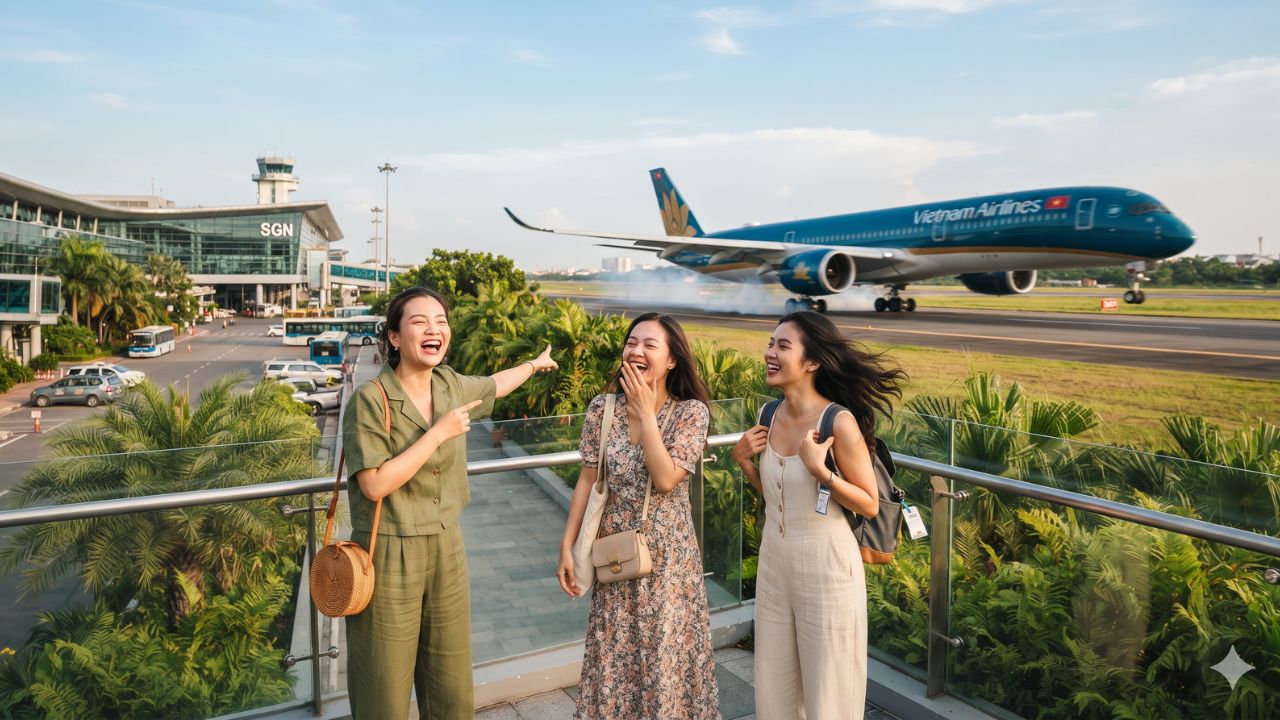
Outpacing regional expectations for Southeast Asia's post-pandemic travel recovery, Vietnam welcomed 17,680,714 international travelers during the first nine months of 2026—with an overwhelming 14,708,419 visitors arriving directly by air. Released by the National Statistics Office of Vietnam, the data confirms a commanding 14.5% year-on-year increase propelled by remarkable triple-digit surges from key European and transcontinental corridors: arrivals from the United Kingdom surged 108.1% to 299,643, Germany climbed 126.7% to 239,429, and the Russian Federation skyrocketed by an astonishing 227.5% to top 1,134,058 visitors. With national tourism receipts reaching VND 569 trillion in the first half of the year alone, Vietnam is actively transforming its airspace into the premier long-haul transit hub of Indochina.
The Transcontinental Aviation Boom: Long-Haul Corridors Fuel National Growth
The structural shift in Vietnam's aviation footprint represents a deliberate macroeconomic pivot away from reliance on short-haul regional neighbors toward high-yield intercontinental travelers. Under the leadership of national carrier Vietnam Airlines, the country now maintains twelve nonstop long-haul routes connecting Vietnamese hubs directly to eight major metropolitan centers across seven European nations. These high-frequency nonstops eliminate intermediate transfers in the Persian Gulf or East Asia, delivering European executives and leisure travelers into Hanoi and Ho Chi Minh City with minimal transit friction.
The expansion is producing historic passenger volumes. In the first half of 2026, the bilateral Vietnam-Russia air corridor transported approximately 1.07 million passengers and 2,800 tonnes of commercial cargo, underpinned by bilateral merchandise trade reaching US$4.77 billion in 2025. Following Russia's official reciprocal visa waiver announcement for Vietnamese travelers in October 2026 and ongoing group travel agreements, bilateral mobility has reached unprecedented density.
On the domestic ground front, airport infrastructure is undergoing rapid operational realignment. In October 2026, the Ho Chi Minh City Department of Tourism formalized a comprehensive 2026–2030 strategic alliance with the Airports Corporation of Vietnam (ACV). This joint initiative focuses on modernizing terminal processing, eliminating baggage retrieval bottlenecks, and expanding immigration lanes to handle surging long-haul arrivals. Looking forward, northern Vietnam is advancing the development of Gia Binh International Airport (GBIA)—which joined the Routes World 2026 summit in October—designed to feature connection transit windows of under sixty minutes and passenger terminal transfers of under fifteen minutes.
Meeting National Ambitions: The Path to 25 Million Visitors
The surge in European and Russian air arrivals forms the engine driving the Ministry of Culture, Sports and Tourism toward its official 2026 goal: welcoming 25 million international visitors and supporting 150 million domestic passenger journeys. The financial yield is already measurable. During the first six months of 2026, tourism revenues crossed VND 569 trillion, achieving 50.5% of the central government's annual economic target by mid-year. In the long term, Vietnam's Vision 2030 master plan targets 50 million international visitors annually, with Ho Chi Minh City projected to process 20 million of those arrivals.
This expansion has transformed domestic hospitality and internal transit networks. In October 2026, hotels throughout the historic Hanoi Old Quarter recorded consecutive weekend sell-outs, pushing urban occupancies to post-pandemic records. To disperse international visitors beyond saturated metropolitan corridors, national authorities are pairing aviation routes with upgraded ground transit:
- Premium Coastal Rail Services: In October 2026, Vietnam Railways inaugurated a premium tourist train service linking Saigon with the coastal beaches of Nha Trang, catering specifically to long-stay European travelers.
- Smart Urban Mobility: Ho Chi Minh City launched integrated digital transit ticketing on Metro Line 1 utilizing the national VNeID digital identification application.
- Digital Heritage Exploration: Authorities invested over VND 7.7 billion in an advanced virtual tour experience at the marine sanctuaries of Cham Island, enhancing sustainable cultural engagement.
Vietnam International Tourism and Key European Inbound Market Indicators 2026
To understand the scale of international visitor growth and market performance, the table below consolidates verified official statistics for the 2026 operational year:
| Inbound Source Market / Metric | Jan–Sept 2026 Arrival Volume | Year-on-Year Growth Rate | Key Aviation Gateways & Flight Links | Strategic Tourism & Economic Takeaway |
|---|---|---|---|---|
| Total International Arrivals | 17,680,714 Visitors | +14.5% Year-on-Year | 14,708,419 arrivals by air (~83.2% total) | Accelerates toward 25M annual target; Sept contributed 1,768,549 |
| Russian Federation | 1,134,058 Visitors | +227.5% Growth Surge | Moscow nonstops; 1.07M H1 passengers | Largest transcontinental market; bilateral trade hit $4.77B |
| United Kingdom | 299,643 Visitors | +108.1% Growth Surge | High-frequency London Heathrow nonstops | High-spending cultural and adventure travelers extending stays |
| Germany | 239,429 Visitors | +126.7% Growth Surge | Direct flights from Frankfurt and Munich | Long holiday durations favoring eco-tourism and cultural immersion |
| Half-Year Tourism Revenue | VND 569 Trillion (H1 2026) | 50.5% of Annual Target | Balanced across resorts, dining, and transit | Premium accommodation and dining expanding faster than transport costs |
| Long-Term Vision 2030 | 50,000,000 Target Arrivals | Long-Range Macro Plan | Supported by new Gia Binh Airport (GBIA) | Ho Chi Minh City projected to absorb 20M annual international arrivals |
Visitor Insider Tips for Touring Vietnam
Experiencing Vietnam through an insider lens allows travelers to navigate rapid tourism growth with ease and cultural grace:
- Navigate International Airports Strategically: Terminal processing at Tan Son Nhat (SGN) in Ho Chi Minh City and Noi Bai (HAN) in Hanoi can be active during late afternoon long-haul arrival banks. Pre-arrange an official airport transfer or use smartphone ride-hailing apps like Grab, following clearly marked directional signs to designated multi-story pickup structures rather than following curbside touts.
- Take the New Premium Train to the Coast: If traveling from Ho Chi Minh City to Nha Trang, skip congested highway buses and book a first-class compartment aboard the newly launched premium tourist train operated by Vietnam Railways. The daytime rail journey winds through dragon fruit plantations and coastal fishing lagoons.
- Account for Three Distinct Climate Zones: Vietnam spans over 1,600 kilometers from north to south, encompassing three distinct microclimates. While Hanoi and the northern mountains enter crisp, dry autumn weather in October and November, central coast hubs like Da Nang and Hoi An encounter seasonal rains, while southern Saigon and the Mekong Delta enjoy warm, dry sunshine.
- Base Yourself in Historic Neighborhoods: In Hanoi, venture beyond the crowded Old Quarter to stay in the French Quarter or Ba Dinh, where broad tamarind-shaded boulevards house historic diplomatic villas and quiet espresso bars. In Ho Chi Minh City, consider District 3 or Thao Dien in Thu Duc City for boutique hotels, contemporary art galleries, and riverside dining.
- Savor Authentic Regional Street Specialties: Move beyond standard pho bowls to explore regional street food. In Hanoi, seek out authentic bún chả (charcoal-grilled pork patties served in a bowl of warm dipping sauce with herbs and rice noodles) and traditional egg coffee (cà phê trứng) whipped with egg yolk, condensed milk, and robusta coffee. In the south, enjoy crisp bánh xèo (turmeric rice pancakes stuffed with wild shrimp and bean sprouts).
Cultural and Environmental Context: Sustainable Heritage Preservation
The rapid expansion of international aviation brings heightened responsibility to safeguard Vietnam's delicate natural sanctuaries and living heritage. Historic destinations like Hoi An Ancient Town, an exceptionally preserved traditional trading port dating from the 15th to the 19th centuries, face heavy physical wear from walking tours and commercial development. In response, local conservation bodies enforce motorized-vehicle-free hours throughout the ancient quarter to preserve centuries-old timber shophouses and assembly halls.
Simultaneously, the central government is leveraging community-based tourism through the national One Commune One Product (OCOP) initiative. Promoted by the Vietnam National Authority of Tourism, this framework directs foreign travelers toward rural artisan cooperatives in the Mekong Delta, organic pepper farms in Phu Quoc, and ethnic minority weaving villages in the northern highlands. By channeling tourism revenue directly to rural producers, the country prevents wealth concentration in urban centers while incentivizing the preservation of ancestral handicrafts.
Environmentally, protected biomes such as the marine reserves around Cham Island are pioneering single-use plastic bans, supported by recent digital virtual tour investments designed to manage physical visitor footfall. Responsible travelers who honor local temple dress codes, support certified OCOP artisans, and pack out plastic waste play a direct role in ensuring that Vietnam's natural beauty and rich cultural heritage thrive alongside its expanding global connections.
FAQ: Navigating Travel in Vietnam 2026–2027
How many international tourists visited Vietnam in the first nine months of 2026? Vietnam welcomed 17,680,714 international travelers between January and September 2026, marking a 14.5% year-on-year increase, with 14,708,419 passengers arriving by air.
What are the visa requirements for British, German, and European visitors? Citizens of the UK, Germany, and several European nations currently enjoy visa exemption privileges for short stays up to 45 days, while electronic visas (e-Visas) are available for longer stays up to 90 days.
What new domestic transport options have launched recently? In October 2026, Vietnam Railways introduced a premium tourist train linking Saigon with Nha Trang, while Ho Chi Minh City integrated digital ticketing on Metro Line 1 via the VNeID app.
When is the ideal time to travel across all regions of Vietnam? Spring (February to April) and autumn (October to November) provide the most comfortable weather nationwide, offering moderate temperatures and minimal rainfall across northern, central, and southern regions.
As modern widebody jets trace new aerial paths connecting London, Frankfurt, and Moscow to the Mekong, Vietnam steps confidently into its role as an indispensable crossroads of world travel.
Related Travel Guides
The 10 Best Street Food Alleys in Hanoi and Saigon, According To Reddit
This article is for informational purposes. Flight routes, passenger regulations, visa rules, and transit advisories are subject to change by airlines and aviation authorities. Readers are advised to verify schedules and travel documentation with relevant carriers and border agencies before departure.
Related Stories
Sri Lanka Inbound Tourism Surges as Jetstar Connects Melbourne to Colombo: Travel Dynamics and Local Guide
New Zealand Balances Tourism Pressure with Smarter Skies: Auckland Flight Routing, Queenstown Upgrades, and NZeTA Remote Work Rules