
The Anatomy of a 2,000-Flight Ground Stall: How Tech Outages and Rolling Delays Snarled American and Southwest
A third-party booking vendor glitch at American Airlines paired with widespread network delays at Southwest triggered more than 2,000 US flight delays on Friday, 23 October 2026.

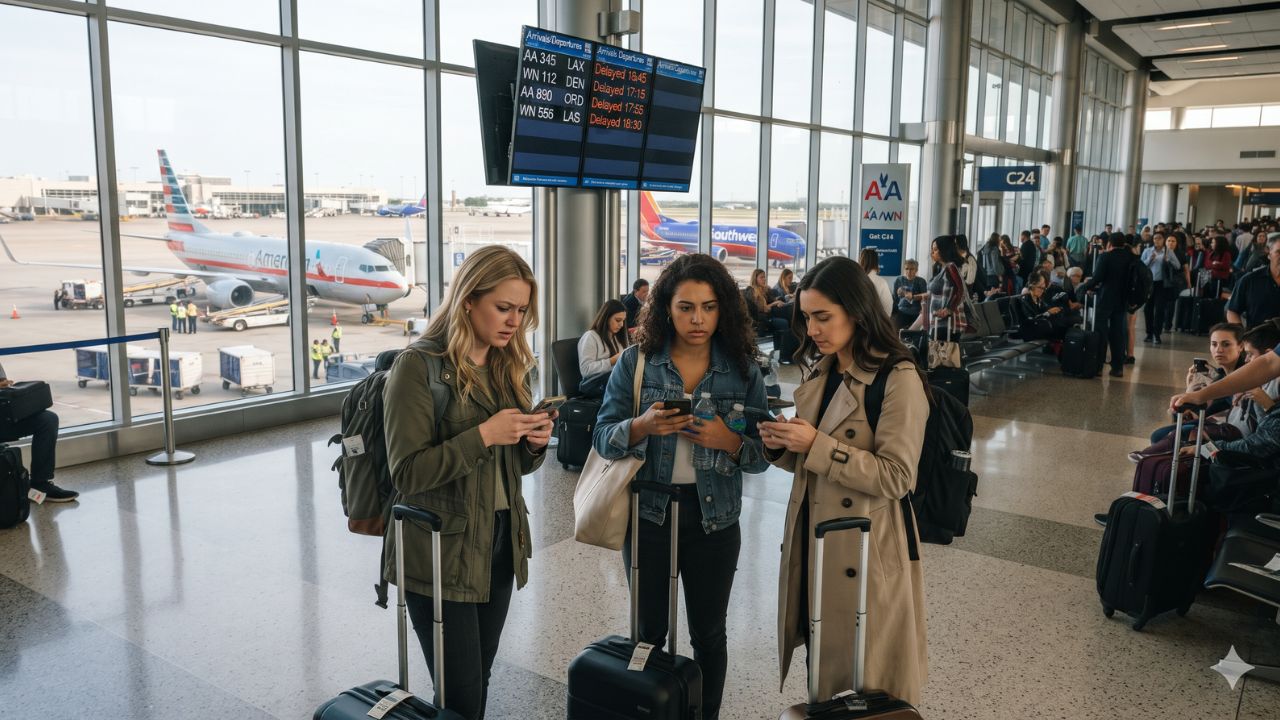
While passengers stranded on tarmac taxiways often blame unpredictable autumn weather or federal air traffic control throttles, an external software vendor outage at American Airlines collided with rolling operational schedule friction at Southwest Airlines to generate more than 2,000 delayed flights across the United States on Friday, 23 October 2026. Real-time flight tracking data compiled by FlightAware and reported by The Dallas Morning News captured an escalating operational bottleneck that snarled departure corridors from coast to coast. Yet despite the nationwide volume of flight delays, the two Texas carriers' primary home terminals at Dallas Fort Worth International Airport (DFW) and Dallas Love Field (DAL) avoided total gridlock, demonstrating how modernized terminal infrastructure can absorb severe schedule pressure.
The Friday disruption highlights an acute modern vulnerability in commercial aviation: the fragility of interconnected third-party digital infrastructure. Even when airframes, flight crews, and airport runways are physically ready for departure, an invisible failure in digital check-in and booking servers can bring an airline's front door to a temporary standstill.
Two Carriers, Two Separate Crises: Dissecting the October 23 Disruption
To understand why more than 2,000 flights fell behind schedule, travelers must distinguish between two completely independent operational events unfolding simultaneously on the same afternoon:
American Airlines: The External Technology Vendor Failure
Headquartered in Fort Worth, Texas, American Airlines faced an unexpected breakdown in passenger-facing digital architecture during morning and midday operations on 23 October. The issue stemmed from an unidentified third-party technology vendor whose platform suddenly disrupted customer ticket reservations and airport check-in functions.
Because passenger check-in feeds directly into aircraft weight-and-balance calculations, electronic boarding pass generation, and federal security manifests, gate agents were forced to process travelers manually. American immediately advised departing passengers across the country to arrive at terminals significantly earlier than normal while engineers worked to restore external server connections.
The carrier officially confirmed that the digital breakdown was resolved shortly after 2:30 pm local time, with core systems returning to normal operations. However, during the height of the outage, departure gates accumulated severe backlogs. By approximately 2:05 pm local time, American had logged more than 200 delayed flights at its primary global connecting hub at Dallas Fort Worth International Airport alone.
Southwest Airlines: Point-to-Point Rolling Network Strain
At the same time, Dallas-based Southwest Airlines was logging hundreds of delayed departures across its domestic network. However, Southwest management took immediate steps to clarify that its flight delays were completely unrelated to the third-party IT glitch plaguing American Airlines.
Southwest operates a distinct point-to-point flight model, where a single Boeing 737 aircraft often flies five to seven consecutive legs a day, zigzagging across regional airports, primary hubs, and leisure destinations. In this tight operational environment, a single forty-minute ground delay on a morning flight out of Chicago or Florida propagates compounding delay cascades down the line. By approximately 2:05 pm local time, Southwest recorded roughly 70 delayed flights at its home base of Dallas Love Field. The airline did not suffer an IT collapse; rather, it contended with standard Friday operational pressure that compounded nationwide delay tallies.
Dallas Hubs Hold the Line Against Wider Paralysis
What proved remarkable about the 23 October event was the operational resilience of North Texas aviation gateways. At Dallas Fort Worth International Airport—ranked among the premier aviation facilities in the world—American's more than 200 delayed flights represented a manageable fraction of the airport's massive daily flight bank. Similarly, Southwest's 70 delayed flights at Love Field remained localized, preventing the terminal gridlock that often accompanies system-wide winter storms.
What Makes Technology Disruptions Different from Weather Ground Stops
When severe thunderstorm fronts or blizzards ground aircraft, air traffic control mandates ground delay programs (GDPs) that hold aircraft at their departure gates, keeping airspaces clear. Passengers understand weather delays because they can look out the terminal windows and see wind and rain.
Digital vendor outages create a uniquely frustrating travel psychology. Outside, skies may be cloudless and aircraft parked at the jet bridge, yet passengers remain stranded in security lines because gate scanners cannot validate electronic barcodes or verify passenger seat assignments.
Furthermore, digital outages present unique recovery challenges. When an external booking vendor goes offline, gate staff lose visibility into real-time connecting itineraries. Passengers who miss flight connections cannot easily rebook via smartphone apps, leading to long physical queues at airport customer service desks that stretch through concourses.
Operational Breakdown: Flight Disruption Snapshot Across US Gateways October 23, 2026
The following data summary outlines the operational impact recorded during the height of the 23 October 2026 flight disruptions:
| Operational Metric | American Airlines Impact | Southwest Airlines Impact | Combined Industry Context |
|---|---|---|---|
| Nationwide Flight Delays | Part of >2,000 nationwide delays | Part of >2,000 nationwide delays | Over 2,000 total combined US delays tracked by FlightAware |
| Core Operational Cause | External technology vendor failure | Rolling point-to-point network friction | Independent operational events occurring simultaneously |
| Systems Impacted | Passenger reservations & check-in | Multi-leg aircraft rotations & turnarounds | Front-end ticketing vs schedule propagation |
| Primary Hub Recorded Delays | >200 delays at Dallas Fort Worth (DFW) | ~70 delays at Dallas Love Field (DAL) | Recorded at snapshot point of 2:05 pm local time |
| Disruption Resolution Time | Resolved shortly after 2:30 pm local time | Progressive evening schedule recovery | Core digital booking systems restored by mid-afternoon |
| Operational Operating Model | Hub-and-spoke international network | Dense domestic point-to-point routes | Hub banking vs multi-leg aircraft rotations |
Visitor Insider Tips
When technology breakdowns strike major domestic airlines, seasoned travelers deploy practical local tactics to protect their journeys:
- Download and Print Physical Boarding Passes 24 Hours Early: While digital mobile passes stored in Apple Wallet or Google Wallet are convenient, they rely on active carrier server connections to refresh seat changes or gate updates. Always print a physical boarding pass at home or your hotel, or save a high-resolution screenshot of your barcode immediately upon checking in online 24 hours prior to departure. If an airline app crashes at the airport checkpoint, TSA agents can still scan physical barcodes.
- Bypass Terminal Customer Service Lines via Phone Hacks: If your connection is severed during an airline IT glitch, avoid standing in a two-hour line at terminal transfer desks. Instead, call the airline's international customer service numbers (such as American Airlines' Spanish-language line, UK desk, or Australian support center). These desks connect to live international agents within minutes, bypassing domestic queue hold times.
- Leverage DFW's Skylink Train to Shift Concourses: If you are transiting Dallas Fort Worth during rolling delays, do not wait in crowded Concourse C or D departure areas. Board the bi-directional Skylink automated people-mover train, which circles the entire airport airside every two minutes. Take the train to Terminal D or Terminal A, where spacious gate areas, quiet business seating, and upscale dining provide comfortable waiting environments away from congested departure gates.
- Utilize Inter-Airport Ground Transfers Across North Texas: If your flight from Dallas Love Field (DAL) is severely delayed or canceled, inquire whether the airline can rebook you out of Dallas Fort Worth (DFW), or vice versa. A twenty-minute taxi or rideshare across the Trinity River basin separates the two facilities, often allowing you to catch alternative departures on competing carriers without overnight delays.
- Document Delays for Consumer Protection: Under standards enforced by the US Department of Transportation, airlines are responsible for meal vouchers and hotel accommodations when flight disruptions stem from carrier-controllable factors—which explicitly include airline software, IT vendor failures, and mechanical issues. Retain boarding pass receipts, meal expenses, and timestamped photos of departure board monitors to file reimbursement claims.
Cultural and Environmental Context
Modern commercial aviation represents a miracle of logistical coordination, yet its growing reliance on concentrated cloud computing and third-party IT contractors exposes fundamental systemic risks. When a single global software vendor experiences unexpected downtime, the ripple effect spans hundreds of airports, impacting tens of thousands of travelers who are traveling for weddings, family reunions, medical appointments, and business conferences.
Beyond the human frustration, flight delays carry an unavoidable environmental consequence. When aircraft engines idle at departure gates or wait on taxiway holding pads awaiting manual dispatch releases, wide-body and narrow-body airliners burn thousands of gallons of supplementary jet fuel on the ground.
As regional travelers explore North Texas heritage through Visit Dallas and the cultural stockyards of Fort Worth, the aviation community faces a clear mandate: building fault-tolerant digital redundancy is just as critical to sustainable, reliable travel as purchasing fuel-efficient modern airliners.
FAQ: US Airline Technology Disruptions and Flight Delays 2026
What caused the 2,000 flight delays on 23 October 2026?
Delays were driven by an external technology vendor outage that disabled American Airlines' booking and check-in platforms, occurring alongside separate operational network delays across Southwest Airlines.
Were American Airlines and Southwest experiencing the same IT outage?
No. Southwest Airlines officially confirmed that its operational delays were entirely separate and not connected to the third-party technology vendor issue that impacted American Airlines.
How quickly was American Airlines' technology issue resolved?
American Airlines confirmed that its third-party vendor glitch was identified, repaired, and returned to normal operation shortly after 2:30 pm local time on Friday afternoon.
Are passengers entitled to compensation when technology glitches delay flights?
Yes. IT failures are classified as airline-controllable disruptions under US Department of Transportation guidelines, requiring airlines to provide meal vouchers, alternative rebooking, or hotel accommodations during extended delays.
In an era where flights are guided as much by code as by wings, true travel resilience begins with patience and the foresight to navigate beyond the screen.
Related Travel Guides
- Bypassing the Mega-Hubs: How Seven New Asian Air Corridors Are Reshaping 2027 Regional Travel
- The Golden Age of Airport Hospitality: United's Record 54,000-Square-Foot Houston Club Anchors a Global Lounge Boom
- Escaping the LAX Horseshoe: Ontario International Eyes Seven Million Passengers as International Flights Surge 28%
- Cascading Airspace Delays Grip US Hubs: Chicago, Austin, and San Francisco Hit by 3,287 Flight Disruptions
Disclaimer
This article is for informational and educational purposes only. It does not constitute legal, financial, or professional advice. While we strive to provide accurate and up-to-date information, travel policies, regulations, and conditions change rapidly. Always verify information with official sources before making travel decisions. Nomad Lawyer makes no representations about the accuracy, reliability, completeness, or suitability of the information provided. Readers should consult qualified professionals for advice specific to their circumstances. The views expressed in this article are those of the author and do not necessarily reflect the views of Nomad Lawyer.
Preeti Gunjan
Contributor & Community Manager
A passionate traveller and community builder. Preeti helps grow the Nomad Lawyer community, fostering engagement and bringing the reader experience to life.
Learn more about our team →