
Mobility Rights Under Scrutiny: American Airlines Wheelchair Damage Rekindles Federal Pressure and Passenger Protections
A high-profile wheelchair damage incident at Dallas Fort Worth International Airport revives scrutiny on American Airlines following its landmark $50 million federal accessibility penalty.

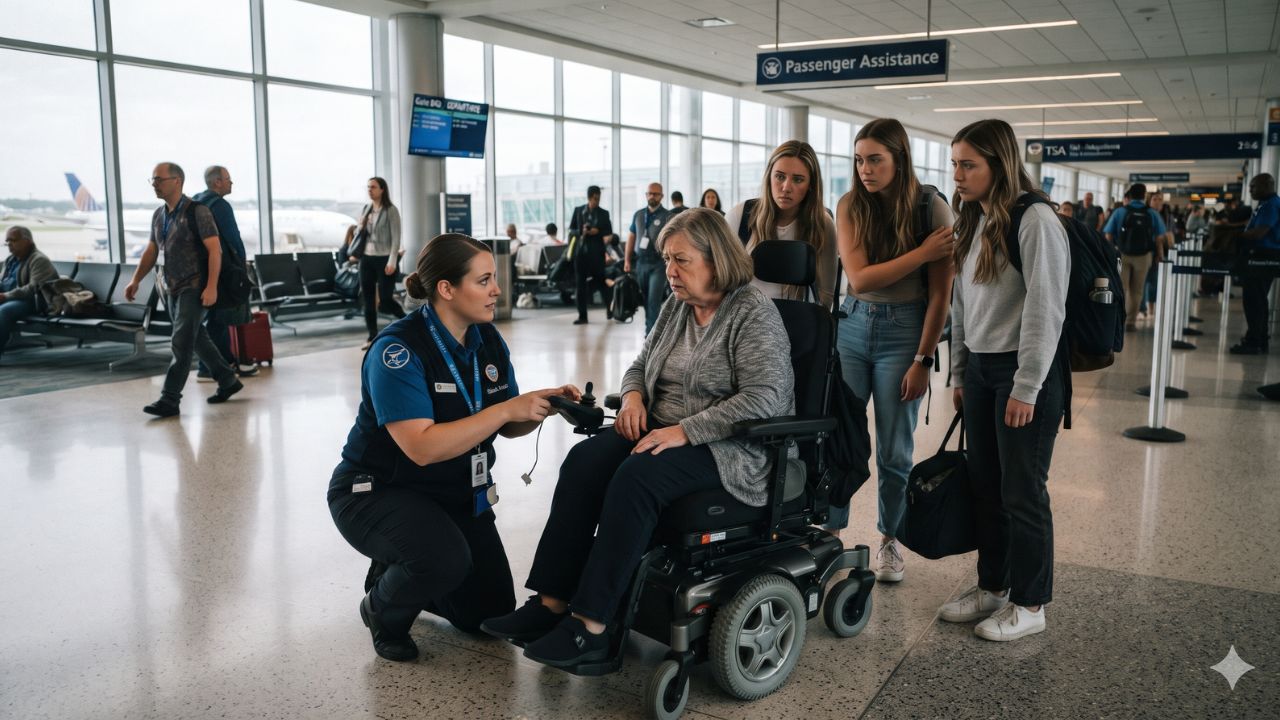
Across the ten largest US commercial airlines and their regional subsidiaries, ground handlers damaged, delayed, or mishandled 9,910 wheelchairs and motorized mobility devices during 2025 alone—an average of more than 27 broken mobility aids every single day out of 907,259 devices transported. While that figures represents a modest performance improvement from a 1.26% mishandling rate in 2024 to approximately 1.09% in 2025, a troubling incident at Dallas Fort Worth International Airport involving television personality Abby Lee Miller has thrust aviation accessibility back into intense national focus. Arriving on an American Airlines flight from the coastal resort city of Mazatlán, Mexico, at approximately 2 am, Miller received her custom-molded powered wheelchair in an unusable state, suffering extensive structural damage to its armrest, headrest, and electronic battery assembly.
The early-morning breakdown left the traveler stranded on the airport concourse, dependent on manual wheelchair assistance from terminal staff before she could reach ground transportation. For millions of disabled travelers, the incident highlights a persistent reality of commercial aviation: personal mobility devices are not oversized luggage, but prosthetic extensions of the traveler’s body, whose destruction instantly strips away physical independence and basic mobility.
Anatomy of the DFW Incident: Terminal Arrival and the Battery Handling Dispute
The controversy surrounding the Mazatlán-to-Dallas journey illustrates how quickly an international trip can deteriorate when ground operations mismanage specialized mobility equipment. In an interview broadcast on 22 October 2026, Miller shared video and photographic records documenting visible fractures along the chair’s structural frame, displaced headrest mountings, and broken arm components. Beyond the exterior physical breakage, the incident brought to light a serious technical dispute concerning the removal and handling of the wheelchair's high-capacity battery system during aircraft loading in Mexico.
Transporting powered wheelchairs requires precise adherence to international dangerous goods protocols and manufacturer specifications. In post-flight accounts, Miller described watching ramp personnel debate battery disconnection procedures while transporting the equipment between the aircraft cargo hold and terminal gates, alleging that written handling guidelines affixed to the machine were disregarded. While official investigative determinations regarding individual ramp responsibility remain open, American Airlines acknowledged the complaint, issuing a public apology while coordinating temporary rental equipment and pledging to finance comprehensive repairs or complete replacement.
However, disability rights advocates emphasize that offering a standard rental wheelchair hours or days after arrival fails to resolve immediate post-flight hazards. Highly configured power wheelchairs feature bespoke ergonomic seating, tilt-in-space posture supports, and calibrated electronic joysticks customized to an individual's specific neurological or spinal anatomy. Placing a passenger into a generic manual wheelchair can cause acute physical pain, skin breakdown, and safety risks, preventing them from transferring independently to hotel beds or vehicles.
The $50 Million Federal Precedent: Enforcement and Accountability at American Airlines
The latest allegations carry heightened regulatory weight because American Airlines remains under active monitoring by the U.S. Department of Transportation. In October 2024, federal authorities hit American Airlines with a historic US$50 million civil penalty following an extensive multi-year investigation into systemic disability violations between 2019 and 2023. The federal inquiry documented repeated failures to provide timely physical assistance, dangerous passenger transfer techniques that resulted in severe passenger injuries, and chronic mishandling of motorized wheelchairs.
The landmark fine represented the largest enforcement penalty in the history of global aviation accessibility oversight. In December 2025, the Department of Transportation restructured the payment mechanism, allowing American Airlines to redirect approximately US$16.8 million of remaining Treasury obligations directly into mandatory infrastructure upgrades, specialized ground equipment acquisitions, and enhanced passenger compensation programs.
Under the Air Carrier Access Act (ACAA) and the federal Airline Passengers with Disabilities Bill of Rights, commercial carriers operating to, from, or within the United States are legally required to transport mobility devices without counting them against standard baggage allowances. Furthermore, airlines must return gate-checked wheelchairs at the aircraft door immediately upon arrival and bear full financial liability for prompt repair or like-for-like replacement when devices are destroyed or damaged under their care.
US Airline Mobility Device Mishandling and Regulatory Benchmarks
The table below provides official Department of Transportation figures, enforcement actions, and statutory passenger rights governing the transportation of mobility equipment on commercial aircraft.
| Regulatory Category | Metric / Milestone | Operational Detail & Legal Standard |
|---|---|---|
| 2025 Industry Device Volume | 907,259 devices transported | Combined total across the 10 largest US carriers and regional partners |
| 2025 Industry Mishandling Count | 9,910 reported incidents | Incidents involving damage, significant delay, or total device destruction |
| 2025 Mishandling Rate | 1.09% | Modest improvement from the 1.26% rate recorded across 2024 |
| October 2024 DOT Penalty | US$50 million civil penalty | Assessed against American Airlines for systemic accessibility failures (2019–2023) |
| December 2025 Reallocation | US$16.8 million redirected | Funds shifted from Treasury fines into carrier accessibility infrastructure and compensation |
| Equipment Baggage Status | 100% Fee-Exempt | Mobility aids do not count toward carry-on or checked baggage limits under the ACAA |
| Carrier Repair Obligation | Full restoration or replacement | Airlines must cover 100% of costs to restore custom equipment to original function |
| Immediate Gate Return | Mandatory upon request | Carriers must deliver gate-checked wheelchairs to the jet bridge at the arrival gate |
Visitor Insider Tips: Safeguarding Motorized Mobility Devices on International Flights
Protecting a motorized wheelchair during international flights requires proactive preparation, assertive communication, and rigorous documentation before surrendering equipment:
- Laminate Bilingual Operating Instructions: Never assume airport baggage handlers know how to freewheel or isolate your specific chair model. Affix heavy-duty, laminated instruction sheets in English and the destination language (such as Spanish when flying to Mexican gateways like Mazatlán) directly to the back of the seat. Clearly identify freewheel levers, lifting points, and battery disconnection switches with fluorescent color-coded arrows.
- Detach Sensitive Flight Controls: Remove the electronic joystick controller, headrest cushion, side lateral supports, and specialized seat cushions before the wheelchair descends into the aircraft cargo hold. Under the Air Carrier Access Act, these components can be brought into the cabin inside a carry-on bag free of charge as exempt medical equipment.
- Capture Timestamped Video Evidence at the Gate: Record continuous 360-degree video footage of the wheelchair operating perfectly on the jet bridge minutes before boarding. Highlight the structural integrity of the frame, joy-stick responsive controls, and headrest fittings. This visual record establishes indisputable proof of working condition if damage occurs during flight handling.
- Demand an Immediate On-Site Complaint Resolution Official: If your wheelchair is delivered broken or unserviceable, do not exit the terminal baggage claim area. Request the immediate presence of the airline’s designated Complaint Resolution Official (CRO). File a formal damage report on the spot, insist on written file reference numbers, and demand an immediate rental power chair that matches your physical positioning needs.
Cultural and Environmental Context: Dignity, Mobility Rights, and Inclusive Tourism
The freedom to travel across borders without fear of physical harm or equipment destruction is a cornerstone of modern civil rights. Accessible tourism represents an expanding global economic force, connecting millions of travelers with international destinations like Mazatlán, renowned for its historic seaside Malecón, colonial architecture, and coastal gastronomy. However, the travel journey remains fraught with anxiety when transit corridors treat medical assistive equipment with the same rough handling as standard cargo containers.
When an airline destroys a powered wheelchair, the emotional and economic toll extends far beyond a broken piece of machinery. The traveler is often rendered bed-bound, unable to attend business conferences, explore cultural landmarks, or navigate basic restroom facilities. International hotel rooms and tour operations booked months in advance are instantly compromised, dealing severe financial losses to destination economies.
From an environmental and social sustainability perspective, inclusive tourism demands that aviation infrastructure evolve to serve all travelers equitably. Forward-looking airlines are beginning to invest in specialized cargo-hold restraint systems, robotic lifting platforms, and standardized battery storage containers. True sustainable travel cannot focus solely on carbon offsets and fuel efficiencies; it must champion universal accessibility, ensuring that every passenger journeys with dignity, safety, and uncompromised autonomy.
FAQ: Air Travel with Mobility Devices 2026
What should I do immediately if my wheelchair is damaged on an American Airlines flight?
Inspect the device at the arrival gate before leaving the airport. Request an airline Complaint Resolution Official (CRO), file an immediate written damage report, capture photographic proof, and demand an equivalent specialized rental.
Do airlines charge fees to transport powered wheelchairs or spare batteries?
No. Under the federal Air Carrier Access Act, airlines cannot charge baggage fees for personal mobility devices or medically necessary batteries, and they do not count against carry-on limits.
What compensation is an airline required to provide for a destroyed wheelchair?
Airlines must pay the full cost to repair the device to its previous functional condition or replace it entirely with an identical or functionally equivalent model, without standard domestic baggage liability caps.
Can airline personnel disconnect my wheelchair battery without my consent?
Airline ramp crews must follow FAA and manufacturer safety rules. Passengers should provide clear instructions on how the battery isolates or disconnects, preventing improper disassembly that causes mechanical damage.
Securing personal mobility rights in the skies requires clear advance documentation, assertive passenger advocacy, and holding airlines to the highest standards of dignity and care.
Related Travel Guides
- Oceania Skies Reimagined: Air New Zealand, Qantas, Jetstar, and Pacific Carriers Launch Direct Global Routes
- The Billion-Dollar Metamorphosis: Southwest Posts Record $8.42B Revenue and Reinvents Rapid Rewards
- Middle East Flight Disruptions: Security Protocols and Airspace Halts Trigger 183 Cancellations
Disclaimer
This article is for informational and educational purposes only. It does not constitute legal, financial, or professional advice. While we strive to provide accurate and up-to-date information, travel policies, regulations, and conditions change rapidly. Always verify information with official sources before making travel decisions. Nomad Lawyer makes no representations about the accuracy, reliability, completeness, or suitability of the information provided. Readers should consult qualified professionals for advice specific to their circumstances. The views expressed in this article are those of the author and do not necessarily reflect the views of Nomad Lawyer.
Raushan Kumar
Founder & Lead Developer
Full-stack developer with 11+ years of experience and a passionate traveller. Raushan built Nomad Lawyer from the ground up with a vision to create the best travel and law experience on the web.
Learn more about our team →