
American Airlines Flight AAL2939 Diverted to Washington Dulles Due to Severe Virginia Weather
A scheduled flight from Miami to Richmond was forced to divert to Washington Dulles International Airport after volatile

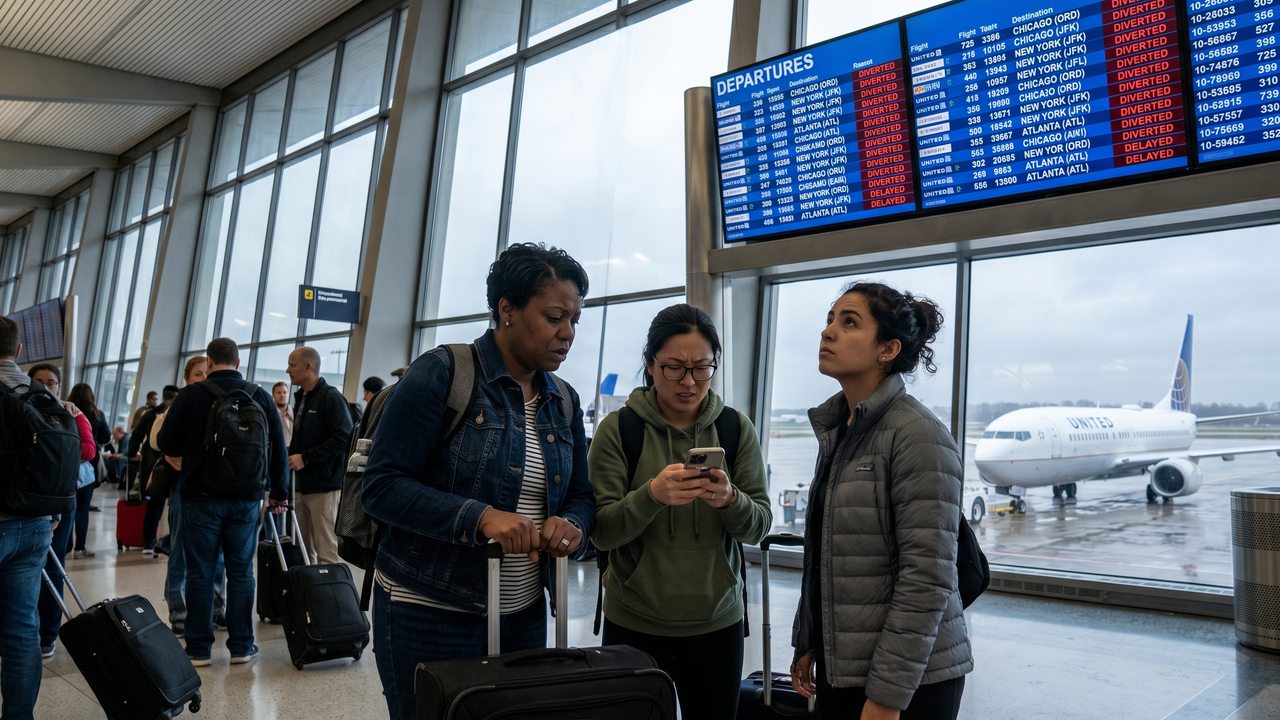
Image generated by AI
Severe Weather Forces Mid-Air Diversion
American Airlines flight AAL2939, an Airbus A319-112 traveling from Miami to Richmond, was forced to divert to Washington Dulles International Airport on June 29, 2026. The decision followed the rapid development of severe regional weather systems that closed the primary airspace over Virginia.
The flight crew executed a defensive landing approach to avoid intense thunderstorm cells. These weather patterns, common during hot summer afternoons along the Atlantic seaboard, created hazardous turbulence and reduced runway visibility to levels below safe operating minimums.
Strategic Role of Washington Dulles in Air Traffic Management
Washington Dulles International Airport served as the primary diversion sanctuary for the aircraft. Due to its expansive terminal footprint and multiple long, parallel runways, Dulles is equipped to handle displaced aircraft more efficiently than smaller community airfields.
The diversion required high-level coordination between the flight deck and regional air traffic control (ATC) centers. In the mid-Atlantic corridor, storm fronts often block arrival tracks, forcing ATC to implement spacing intervals that can impact an aircraft's contingency fuel reserves.
In this instance, dispatch teams and sector controllers collaborated to establish a routing profile that avoided cloud formations and turbulence, ensuring the Airbus A319-112 integrated smoothly into the capital's arrival sequence.
Passenger Impact and Recovery Efforts
The unplanned rerouting created immediate logistical challenges for travelers destined for Richmond. Upon landing at Dulles, American Airlines activated its passenger care protocols to manage the displacement.
Key recovery actions included:
- Ground Coordination: Ground handlers at Dulles worked to receive the unscheduled arrival.
- Travel Alternatives: Support agents coordinated local ground transportation and rebooking options.
- Passenger Welfare: The airline provided updates on baggage transfers and terminal connections to mitigate travel stress.
Flight Details and Diversion Summary
| Flight Number | Aircraft Type | Origin | Intended Destination | Diversion Airport | Primary Cause |
|---|---|---|---|---|---|
| AAL2939 | Airbus A319-112 | Miami | Richmond | Washington Dulles (IAD) | Severe Thunderstorms |
Key Takeaways
- Safety First: The flight crew prioritized airframe integrity and passenger safety by abandoning the final approach into Richmond.
- Infrastructure Importance: The capacity of major hubs like Washington Dulles is vital for maintaining safety during regional airspace saturation.
- Weather Volatility: Summer atmospheric conditions in the mid-Atlantic region continue to pose significant challenges for short-haul domestic flights.
FAQ
Why was American Airlines flight AAL2939 diverted? The flight encountered severe thunderstorms and volatile weather over Virginia, which reduced visibility and created unsafe flying conditions for a Richmond arrival.
Where did the flight land? The aircraft was diverted to Washington Dulles International Airport, which serves as a high-capacity alternative for flights in the region.
What happened to the passengers? Passengers were managed by American Airlines ground staff at Dulles, where the airline provided rebooking assistance and ground transportation options to reach their final destination.
Related Travel Guides
Disclaimer
This article is for informational and educational purposes only. It does not constitute legal, financial, or professional advice. While we strive to provide accurate and up-to-date information, travel policies, regulations, and conditions change rapidly. Always verify information with official sources before making travel decisions. Nomad Lawyer makes no representations about the accuracy, reliability, completeness, or suitability of the information provided. Readers should consult qualified professionals for advice specific to their circumstances. The views expressed in this article are those of the author and do not necessarily reflect the views of Nomad Lawyer.
Preeti Gunjan
Contributor & Community Manager
A passionate traveller and community builder. Preeti helps grow the Nomad Lawyer community, fostering engagement and bringing the reader experience to life.
Learn more about our team →