
Amazon Suspends 21 Air Flights After Fatal Miami Cargo Crash: NTSB Probe, Runway Safety, and Traveler Transit Realities

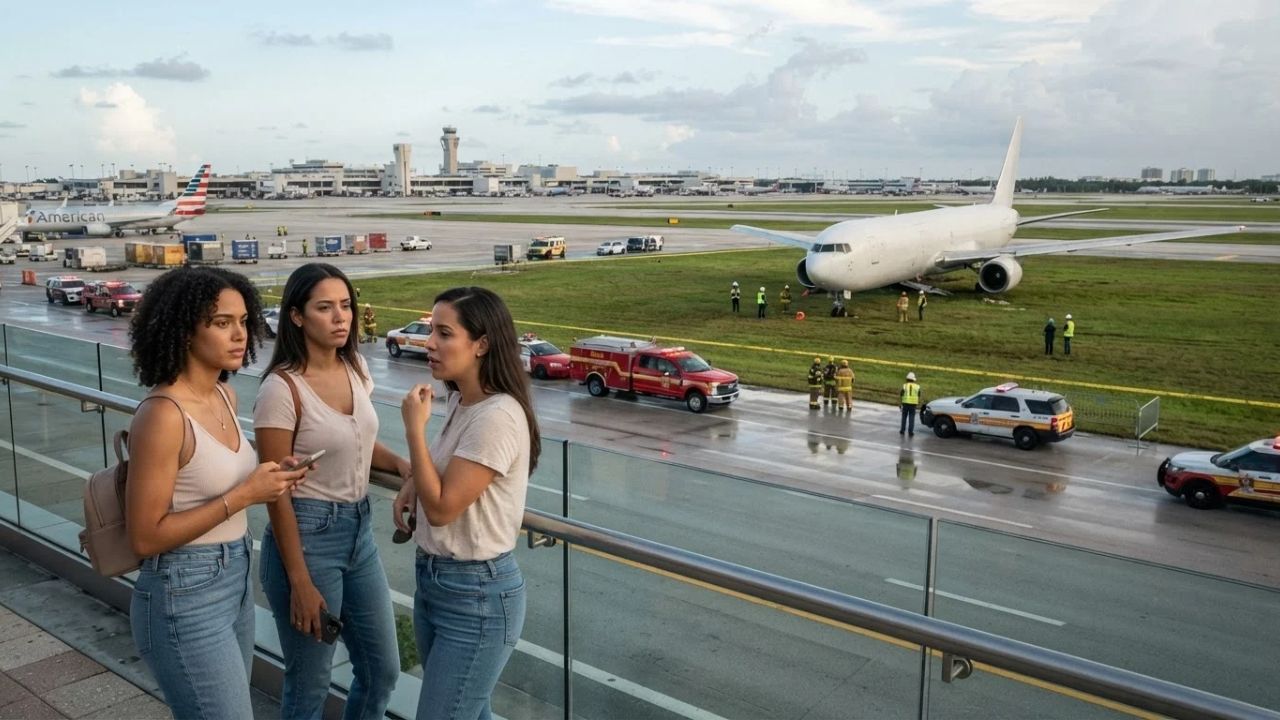
Following the fatal September 6, 2026 runway overrun of Amazon Air Flight 7598 at Miami International Airport that resulted in five deaths, Amazon has halted flight operations with contracted operator 21 Air as federal safety investigators review cockpit decision-making and landing approach speeds. The high-profile accident, which involved a Boeing 767-300 freighter arriving from San Juan, Puerto Rico, sent shockwaves through the aviation sector, prompting urgent scrutiny of third-party air freight carriers and highlighting how commercial freight logistics intersect with passenger flight operations at premier global transit hubs.
The National Transportation Safety Board (NTSB) has taken charge of the ongoing inquiry, mobilizing technical teams to reconstruct the final seconds of the flight using physical wreckage, flight data recorders, and air traffic control audio. For air travelers flying through South Florida, the incident underscores the interconnected nature of modern air hubs, where wide-body cargo operations share runways, approach corridors, and emergency services with thousands of daily commercial airline passengers.
The Local Trend Revealed: Shared Runways and Safety Scrutiny at Dual-Use Hubs
Miami International Airport (MIA) represents one of the busiest passenger and cargo crossroads in the Western Hemisphere. Ranking consistently as America's top gateway for international freight and perishable imports, MIA handles millions of passengers alongside continuous cargo operations that connect Latin America, the Caribbean, and North America.
When Amazon Air Flight 7598 crossed the airport boundary on September 6, 2026, it operated within a shared infrastructure system. The aircraft overran the paved surface during landing, breached airport perimeter boundaries, struck vehicles located in the immediate vicinity of the airfield, and came to rest beyond the designated runway safety area. The violent collision triggered an emergency response involving aviation rescue fire teams, severe structural damage to the aircraft, and five confirmed fatalities alongside multiple injuries among occupants in the struck ground vehicles.
The immediate operational aftermath sent ripple effects across South Florida airspace:
- Runway Closures and Flow Control: The temporary shutdown of the affected runway forced the Federal Aviation Administration (FAA) to implement ground delay programs, routing incoming passenger jets into holding stacks across the Everglades and Biscayne Bay.
- Passenger Flight Delays: Commercial flights operated by American Airlines, Delta Air Lines, United Airlines, and international carriers experienced gate holds, missed flight connections, and delayed departures as ground controllers prioritized emergency response corridors.
- Heightened Public Awareness: While passenger service was not directly involved in the crash itself, the accident renewed intense traveler focus on runway safety margins, perimeter buffer zones, and the regulatory oversight governing contracted cargo carriers.
Incident Anatomy: What Happened to Amazon Air Flight 7598
The aircraft involved in the accident was a twin-engine Boeing 767-300 freighter operated by 21 Air LLC under a long-term dedicated charter agreement for Amazon Air. The flight originated at Luis Muñoz Marín International Airport in San Juan, Puerto Rico, completing a standard transit route across the Caribbean Sea before beginning its final approach into Miami International Airport on September 6, 2026.
According to emergency dispatch records and initial airport reports, the flight encountered difficulties during the touchdown phase. The aircraft was unable to decelerate within the available runway length, departing the paved surface at high speed. The freighter continued past the runway end safety area, breaking through perimeter security fencing before striking several vehicles on an adjacent airport service roadway.
Emergency rescue teams from Miami-Dade Fire Rescue and airport crash-fire-rescue stations contained post-impact fires and secured hazardous materials, including aviation kerosene and packaged industrial cargo. Airport authorities immediately cordoned off the accident zone to preserve flight evidence, initiating temporary operational restrictions that disrupted flight schedules throughout the evening.
Federal Investigation: What the NTSB Is Examining
The National Transportation Safety Board (NTSB) is conducting a comprehensive investigation into the root causes of the accident. Federal safety investigators quickly recovered the aircraft’s two primary flight recorders: the Cockpit Voice Recorder (CVR) and the Flight Data Recorder (FDR), transporting them to the NTSB laboratory in Washington, D.C., for forensic readout and timeline alignment.
Initial findings made public by investigators highlight several critical operational phases under review:
- Approach Speed Anomalies: Telemetry data indicates that investigators are analyzing the aircraft's airspeed profile on final approach, evaluating whether the Boeing 767-300 was traveling above target landing speeds prior to touchdown.
- Go-Around Considerations: Preliminary cockpit voice recordings indicate that the flight crew discussed or initiated procedures consistent with an aborted landing (go-around) before the aircraft contacted the runway surface, prompting investigators to reconstruct the crew’s situational awareness and spatial orientation.
- Braking and Deceleration Systems: Investigators are evaluating mechanical components, including wheel brakes, anti-skid systems, thrust reversers, and ground spoiler deployment, to determine whether technical anomalies compromised stopping performance.
- Atmospheric and Surface Conditions: The inquiry is reviewing local wind components, convective weather patterns near the airfield at the time of arrival, and runway surface friction measurements.
- Company Operating Standards: Federal officials are examining 21 Air's flight training curricula, crew duty-rest logs, maintenance records, and operational safety management systems to establish compliance with federal aviation regulations.
The NTSB emphasized that its investigative process aims to identify systemic safety lessons rather than apportion immediate legal fault, noting that comprehensive final accident reports typically require twelve to twenty-four months to complete.
The Contracted Cargo Model: Why Amazon Paused 21 Air Operations
Amazon Air built its domestic and international delivery network around an asset-light ACMI (Aircraft, Crew, Maintenance, and Insurance) operational framework. Rather than holding an independent airline operating certificate, the retail giant contracts with specialized air cargo carriers to fly Amazon-branded aircraft on designated routes.
Carrier 21 Air LLC operates as one of these specialized partners, providing dedicated flight crews and aircraft management for Amazon's Boeing 767 freighter fleet. Following the September 6 crash, Amazon announced a temporary suspension of its flight services with 21 Air while federal safety investigations progress.
In an official statement, Amazon stated that safety remains its foundational operational priority, confirming its ongoing assistance to federal authorities and expressing profound sympathy for the families affected by the tragedy. Carrier 21 Air affirmed that it is cooperating transparently with the NTSB and FAA, providing all operational data while standing behind its established pilot training protocols and technical maintenance standards.
This pause illustrates how corporate logistics operators manage enterprise risk during serious safety incidents. Grounding or reassigning flights from a contracted partner allows parent logistics brands to review operating procedures, audit partner compliance, and ensure that network safety standards match strict corporate mandates.
Why Air Freight Safety Lessons Directly Benefit Passenger Travelers
To the casual vacationer, an air cargo accident might seem disconnected from commercial passenger aviation. In reality, commercial aviation operates as an unified safety ecosystem where regulatory lessons learned from cargo accidents directly protect passenger planes.
Aviation history proves that investigations into cargo incidents frequently produce vital safety upgrades across passenger fleets:
- Runway End Safety Areas (RESA): International standards requiring 1,000-foot overrun buffers and Engineered Materials Arresting Systems (EMAS)—collapsible concrete beds that safely stop runaway aircraft—originated from thorough reviews of transport aircraft runway excursions.
- Stabilized Approach Criteria: Strict airline guidelines mandating that pilots abort landings if their speed, descent rate, or flap settings deviate outside tight limits originated from studies of both freighter and passenger runway overruns.
- Pilot Fatigue and Duty Limits: Night cargo operations operate under intense circadian stress. Investigations into freight crew fatigue have spurred modern Part 117 flight duty and rest regulations that keep passenger pilots alert in cockpits worldwide.
- Cockpit Automation Training: Analysis of how flight crews interact with autopilot, autothrottle, and go-around modes during high-workload landings improves simulator training across all commercial airlines.
When regulatory bodies like the FAA implement safety directives following an NTSB cargo investigation, those directives apply across Boeing 767 passenger fleets operated by carriers worldwide, reinforcing safety for millions of travelers.
Cultural & Environmental Value: Urban Safety Buffers and Community Protection
Miami International Airport sits directly inside the urban heart of Miami-Dade County, bordered by residential and commercial neighborhoods including Virginia Gardens, Miami Springs, Doral, and the Blue Lagoon business district. This close proximity creates an ongoing need for balanced urban coexistence between massive aviation infrastructure and surrounding communities.
Airport Community Protection Zones
Municipal planners and the Miami-Dade Aviation Department maintain strict zoning buffers and safety corridors to protect neighboring populations:
- Perimeter Roadway Buffers: The physical roads surrounding MIA serve as vital logistics links, carrying airport employees, delivery vehicles, and local residents. Reinforcing safety buffers between active runway thresholds and public vehicular thoroughfares remains an active community priority.
- Stormwater Runoff and Environmental Containment: MIA operates adjacent to delicate canal networks connecting to Biscayne Bay. Airport emergency procedures mandate specialized drainage catchment systems that prevent unburned aviation kerosene, firefighting foams, and chemical contaminants from entering South Florida’s shallow aquifer system.
- Sound Insulation and Quiet Hours: Cargo movements often peak during overnight hours to meet morning delivery deadlines. Local noise mitigation programs work in tandem with flight path routing over industrial corridors to protect the peace and health of residential neighborhoods.
Visitor Insider Tips: Navigating Miami International Airport Efficiently
Miami International Airport is an exhilarating, high-energy travel hub, but operational irregulars, summer thunderstorms, or airfield incidents can create unexpected congestion. Use these practical strategies to navigate the facility with ease:
Terminal Architecture and Concourse Layout
MIA is shaped like a sprawling horseshoe divided into three main terminal regions:
- North Terminal (Concourse D): The dedicated mega-hub for American Airlines, featuring 50 gates. Concourse D is nearly a mile long; take advantage of the elevated SkyTrain to travel between Gate D1 and Gate D46 rather than walking the entire length.
- Central Terminal (Concourses E, F, and G): Houses a mix of domestic and international carriers, including select Latin American and Caribbean airlines. Concourse E connects airside to Concourse D, allowing seamless walking transfers without exiting security.
- South Terminal (Concourses H and J): The modern international gateway serving SkyTeam and Star Alliance carriers, including Delta Air Lines, LATAM, Air France, and Lufthansa. Concourse J features soaring glass architecture and spacious international boarding lounges.
Transit and Ground Transportation Connections
- MIA Mover to the Intermodal Center: Never hail a taxi directly outside baggage claim if you intend to rent a car or take public transit. Ride the free elevated MIA Mover train from the 3rd level between the Dolphin and Flamingo parking garages to the Miami Intermodal Center (MIC).
- Metrorail Orange Line: From the MIC, board the Metrorail Orange Line for an inexpensive, air-conditioned $2.25 train ride directly into Downtown Miami, the Brickell financial district, or Coconut Grove, bypassing heavy expressway traffic on the Dolphin Expressway (SR 836).
- Tri-Rail Commuter Service: Travelers heading north to Fort Lauderdale, Boca Raton, or West Palm Beach can catch Tri-Rail directly from the same intermodal facility.
Off-Peak Timing and Checkpoint Logistics
- Peak Congestion Windows: MIA experiences heavy outbound crowds between 5:30 AM and 8:30 AM (morning domestic banks) and between 4:00 PM and 7:30 PM (European and South American departure waves).
- Smooth Transit Hours: Mid-mornings (10:30 AM to 1:00 PM) and late evenings offer shorter security queues.
- Digital Travel Prep: Download your operating carrier's mobile app to receive real-time push alerts regarding gate switches, terminal changes, and runway hold times. When unexpected airfield delays occur, airline mobile apps often offer self-service rebooking tools before airport customer service counters can process waiting crowds.
Authentic Flavors of Miami: Little Havana and Airport Dining Highlights
A layover in Miami offers an extraordinary introduction to the city's rich Cuban and Latin American culinary traditions. Whether you step outside the terminal into Little Havana or enjoy authentic dining before boarding, seek out these signature local specialties:
Signature Miami Specialties
- The Traditional Cuban Sandwich (Sándwich Cubano): A masterpiece of pressed comfort food. Authentic Cuban bread brushed with lard is piled with tender mojo-marinated slow-roasted pork, glazed sweet ham, Swiss cheese, thinly sliced dill pickles, and yellow mustard. Pressed flat on a heated plancha until the crust turns golden and the cheese melts into the savory meats, it is the defining taste of South Florida.
- Croquetas de Jamón: Crispy, golden-brown cylinders filled with a velvety, seasoned béchamel paste studded with finely minced cured Spanish ham, deep-fried until crisp on the outside and molten on the inside.
- Vaca Frita (Crispy Shredded Beef): Flank steak simmered with aromatics until tender, shredded, and then pan-fried on a smoking flat top with sliced white onions, minced garlic, and fresh lime juice until the meat edges turn delightfully crisp. Served with seasoned black beans, white rice (moros y cristianos), and sweet fried ripe plantains (maduros).
- Guava and Cheese Pastelitos: Delicate, flaky puff pastries filled with tangy tropical guava paste and sweet cream cheese, baked until golden and glazed with sugar syrup.
The Ventanita Ritual: Cuban Coffee Etiquette
One of Miami’s most cherished social rituals centers on the ventanita—the walk-up coffee window found at neighborhood bakeries and inside the airport terminal:
- The Colada Protocol: Order a colada—a potent, double-strength Cuban espresso brewed with dark-roast beans and whipped vigorously with raw sugar to create a frothy, caramel-colored crema known as espumita.
- Sharing Is Caring: A colada is served in a small styrofoam cup accompanied by four to six miniature plastic thimble cups (tacitas). A colada is never meant to be consumed alone; pour shots for your travel companions or strike up a friendly conversation with the person standing beside you at the counter.
- Airport Authenticity: If you cannot leave the airport, visit the authentic branch of Cafe Versailles located in Concourse D near Gate D20 or Concourse E, where fresh pastelitos, warm empanadas, and steaming cafecitos are prepared around the clock.
Aviation and Tourism Outlook: Strengthening Systems for Global Travelers
The tragic events of September 6, 2026 at Miami International Airport serve as a solemn reminder that aviation safety requires unrelenting vigilance, transparent investigation, and continuous structural evolution. Amazon’s prompt decision to halt operations with 21 Air reflects the growing intolerance for operational ambiguity in modern supply chain partnerships.
As the National Transportation Safety Board gathers flight data, inspects aircraft wreckage, and interviews operational personnel, the global aviation community will absorb the lessons of Flight 7598. From runway perimeter engineering and advanced braking automation to strengthened oversight of contracted cargo operators, every improvement that emerges from this inquiry will help build a safer travel environment.
For the international travelers, tourists, and business professionals who pass through Miami International Airport each day, the commitment of federal safety regulators, airport authorities, and airline crews guarantees that commercial aviation remains the safest, most resilient transit network in human history.
Related Travel Guides
Disclaimer
This article is for informational and educational purposes only. It does not constitute legal, financial, or professional advice. While we strive to provide accurate and up-to-date information, travel policies, regulations, and conditions change rapidly. Always verify information with official sources before making travel decisions. Nomad Lawyer makes no representations about the accuracy, reliability, completeness, or suitability of the information provided. Readers should consult qualified professionals for advice specific to their circumstances. The views expressed in this article are those of the author and do not necessarily reflect the views of Nomad Lawyer.
Raushan Kumar
Founder & Lead Developer
Full-stack developer with 11+ years of experience and a passionate traveller. Raushan built Nomad Lawyer from the ground up with a vision to create the best travel and law experience on the web.
Learn more about our team →