
UK Airport Disruption Advisory: Heathrow Delays, UK261 Compensation Rights, and Digital Rebooking Tactics

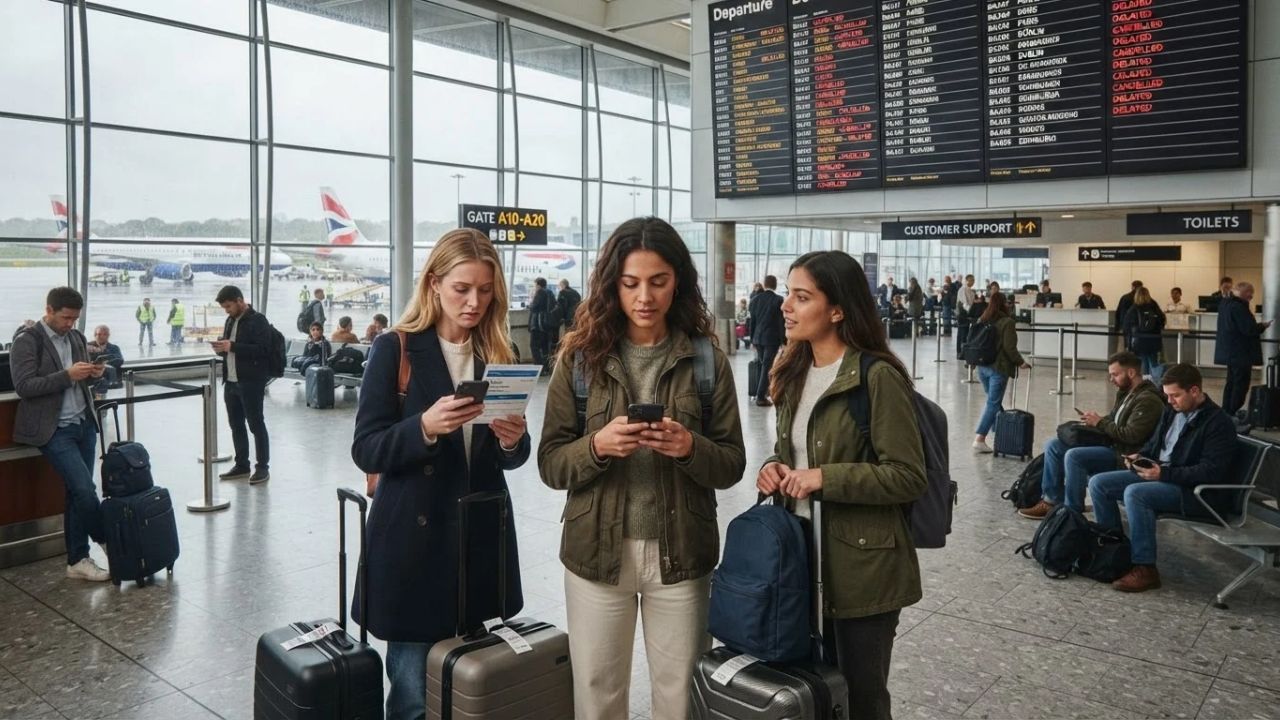
Major UK aviation gateways—led by London Heathrow, Gatwick, and Manchester—issued urgent passenger advisories on September 14, 2026, warning travelers to verify flight status before departing for terminals as operational recovery efforts continue across the country's airspace. With rolling schedule adjustments, aircraft rotation bottlenecks, and air traffic flow restrictions impacting domestic, European, and transatlantic departures, airport authorities have urged ticket holders without confirmed operating flights to stay away from terminal buildings to prevent severe passenger concourse gridlock.
Aviation consumer specialists and travel technology analysts emphasize that navigating widespread British airport disruption requires proactive digital management rather than passive terminal queueing. By combining rapid self-service rebooking through mobile airline applications, understanding statutory compensation rights under UK261 passenger protection frameworks, and securing independent mobile data connections to bypass congested public airport Wi-Fi, travelers can minimize travel friction and protect their onward itineraries.
The Aviation Trend: Terminal Decongestion and Digital-First Passenger Care
During major operational disruptions across the United Kingdom, airport authorities face a recurring challenge: thousands of stranded travelers descending simultaneously on check-in halls in hopes of securing immediate face-to-face rebooking.
Terminal management teams at London Heathrow have reiterated that travelers should travel to the airport only when their flight is officially confirmed as operating. Terminal customer service desks possess finite staffing and quickly become overwhelmed during multi-flight cancellations. Passengers who join physical queues stretching through departure halls frequently discover that replacement seats on subsequent flights are claimed by travelers rebooking remotely through digital channels while they were waiting in line.
The modern paradigm of travel disruption management is fundamentally remote and mobile. Airlines dynamically allocate replacement inventory directly into their mobile apps and centralized web portals minutes before airport ground agents can manually re-ticket passengers at physical desks. Remaining in a quiet location with high-speed internet connectivity gives passengers a significant competitive advantage when limited replacement seats appear on the booking grid.
Statutory Protections: Understanding UK261 Passenger Rights
Travelers flying from any UK airport, or arriving at a UK airport on a British or European carrier, are protected by the Civil Aviation Authority (CAA) through retained UK261 legislation (the post-Brexit domestic version of EU Regulation 261/2004).
When flights are cancelled or significantly delayed, airlines have non-negotiable legal responsibilities:
1. The Statutory Right to Care
Regardless of whether a flight cancellation is caused by an airline operational failure (such as an aircraft mechanical snag) or extraordinary circumstances (such as adverse weather or National Air Traffic Services computer glitches), the operating carrier must provide:
- Meals and Refreshments: Vouchers for food and drink appropriate to the length of the waiting time (typically triggered after a 2-hour delay for short-haul flights or a 4-hour delay for long-haul routes).
- Communication Access: Means to make two telephone calls, send emails, or access internet services.
- Complimentary Hotel Accommodations: Free hotel lodging and return ground transportation if the rebooked flight departs the following day, regardless of the cause of the disruption.
2. Re-Routing on Competitor Airlines
Under UK CAA enforcement guidelines, if an airline cancels a flight and cannot offer a replacement service on its own metal within a reasonable timeframe (typically within 24 hours of the original departure), it is legally obligated to rebook the passenger on a competing carrier—including British Airways, Virgin Atlantic, easyJet, Ryanair, or international operators—or via alternative surface transit such as Eurostar rail links to mainland Europe.
3. Financial Compensation Tiers
If a cancellation is announced less than 14 days before departure and the cause is within the airline's operational control (such as crew rostering failures or routine maintenance delays), passengers are entitled to fixed cash compensation:
- £220: For all flights of 1,500 kilometers or fewer (e.g., London to Edinburgh, Dublin, or Paris).
- £350: For flights between 1,500 and 3,500 kilometers (e.g., London to Rome, Athens, or Cairo).
- £520: For flights exceeding 3,500 kilometers (e.g., London to New York, Los Angeles, Dubai, or Singapore).
Operational Protocol: What to Do When a UK Flight Is Cancelled
To protect your travel investment and secure onward passage, follow this disciplined operational sequence:
- Step 1: Check Flight Status Before Leaving Home: Monitor your flight via the airline's official app or the live flight departure tracker on the airport's website (e.g., heathrow.com) at least three to four hours prior to leaving your residence or hotel. Do not rely on third-party aggregators or social media commentary, which frequently circulate unverified rumors.
- Step 2: Act Immediately Upon Cancellation Notice: The moment an automated cancellation SMS or email arrives, open your airline mobile app immediately. Most carrier systems present pre-selected rebooking choices or alternative routing options. Select preferred replacement flights immediately before other passengers claim remaining inventory.
- Step 3: Secure Comprehensive Documentation: Preserve a digital and physical trail of the disruption:
- Take screenshots of the cancellation notice on your smartphone, ensuring the timestamp and flight number are visible.
- Retain all electronic boarding passes and original e-ticket confirmations.
- Save all itemized VAT receipts for airport meals, coffee, water, rideshare transit, and independent hotel bookings incurred as a direct consequence of the delay.
- Step 4: Contact Onward Service Providers: A canceled flight creates cascading impacts across your itinerary. Immediately contact onward hotel properties, car rental agencies, and intercity train operators (such as LNER, Avanti West Coast, or Great Western Railway) to inform them of your delay and request fee-free booking amendments under travel disruption policies.
The Role of Independent Mobile Connectivity
A recurring vulnerability during widespread airport disruption is the total saturation of public airport Wi-Fi networks. When tens of thousands of passengers are stranded inside terminal concourses, public Wi-Fi access points experience severe bandwidth choking, dropped connections, and security timeouts.
Travel technology specialists emphasize that maintaining independent mobile data access is vital during irregular operations:
- Dedicated UK and Regional Europe eSIMs: Utilizing a pre-activated digital travel eSIM provides travelers with direct, unthrottled access to local UK 5G mobile cellular networks (such as EE, Vodafone, or O2) without depending on congested terminal Wi-Fi.
- Uninterrupted Communication: Independent cellular data enables passengers to monitor live air traffic flow on flight-tracking tools, make VoIP internet calls to foreign customer service centers, adjust hotel bookings, and message travel companions while moving through terminals or transit stations.
- Multi-Country Coverage: For international visitors touring multiple European destinations, regional Europe eSIM profiles eliminate the friction of purchasing separate physical SIM cards when crossing international borders, ensuring seamless navigation and banking access across the entire journey.
Local Insider Tips for Navigating UK Airport Terminals
For travelers encountering operational friction at British airports, local aviation specialists provide these field-tested recommendations:
- Navigating London Airport Ground Transit:
- Heathrow (LHR): If your flight is canceled and you need to return to central London, avoid expensive private black cabs at terminal taxi ranks. The Elizabeth Line provides fast, direct, air-conditioned transit from Heathrow Terminals 2, 3, 4, and 5 into central London stations (Paddington, Tottenham Court Road, Liverpool Street) for approximately £13.30 using contactless card payment.
- Gatwick (LGW): Use regular Thameslink trains rather than the Gatwick Express to reach central London (London Bridge, Blackfriars, St Pancras) at half the cost and comparable transit times.
- The "Call Overseas" Contact Trick: When domestic UK telephone helplines display hold times exceeding 60 to 90 minutes during major disruptions, use internet calling to dial the airline's customer service call center in Australia, New Zealand, or Singapore. Because those regions are operating in opposite daylight hours with lower call volumes, inquiries are answered in minutes by English-speaking agents with full access to global ticketing systems.
- Terminal Lounges as Transit Sanctuaries: If facing extended holding delays before an evening departure, consider purchasing day-pass access to independent airport lounges (such as Plaza Premium, Clubrooms, or Aspire Lounges across Heathrow, Gatwick, and Manchester). Lounges provide guaranteed seating, private high-speed Wi-Fi, shower facilities, and complimentary hot food that costs less than dining at concourse restaurants during prolonged waits.
- National Rail "Delay Repay" Rules: If your flight delay causes you to miss an Advance train ticket purchased through National Rail, visit the airport railway station ticket office before boarding. Station master staff can endorse your ticket or issue a disruption certificate permitting travel on the next available train without purchasing an expensive new open-fare ticket.
Aviation Outlook: The Modernization of Passenger Care
The recurrent operational pressures facing British airports highlight the intricate complexity of post-pandemic international air travel. With European airspace heavily congested and ground handling systems operating at capacity, temporary disruptions remain an inevitable reality of global mobility.
Ultimately, traveler resilience is defined by information and autonomy. By refusing to join blind queues at airport departure desks, asserting statutory rights under UK261, and utilizing mobile travel technology to re-route itineraries in real time, modern passengers can transform unexpected airport disruptions from chaotic travel disasters into smoothly managed detours.
Related Travel Guides
- South Africa Launches Digital ETA System: How Visa Modernization Across Africa Is Reshaping Safari Travel
- Spain and EU Join Luzon Economic Corridor: Infrastructure Leap to Transform Philippines Travel Across Subic, Clark, Manila, and Batangas
- Malaysia Airlines Signs Seven Asia-Pacific Tourism Pacts at MATTA Fair 2026 to Boost Regional Travel
Disclaimer
This article is for informational and educational purposes only. It does not constitute legal, financial, or professional advice. While we strive to provide accurate and up-to-date information, travel policies, regulations, and conditions change rapidly. Always verify information with official sources before making travel decisions. Nomad Lawyer makes no representations about the accuracy, reliability, completeness, or suitability of the information provided. Readers should consult qualified professionals for advice specific to their circumstances. The views expressed in this article are those of the author and do not necessarily reflect the views of Nomad Lawyer.
Raushan Kumar
Founder & Lead Developer
Full-stack developer with 11+ years of experience and a passionate traveller. Raushan built Nomad Lawyer from the ground up with a vision to create the best travel and law experience on the web.
Learn more about our team →