
Albania Follows Montenegro and More as Underrated European Holidays Tempt Tourists to Choose Hidden Gems Over Crowded Spanish Destinations
Albania Follows Montenegro and More as Underrated European Holidays Tempt Tourists to Choose Hidden Gems Over Crowded Spanish Destinations

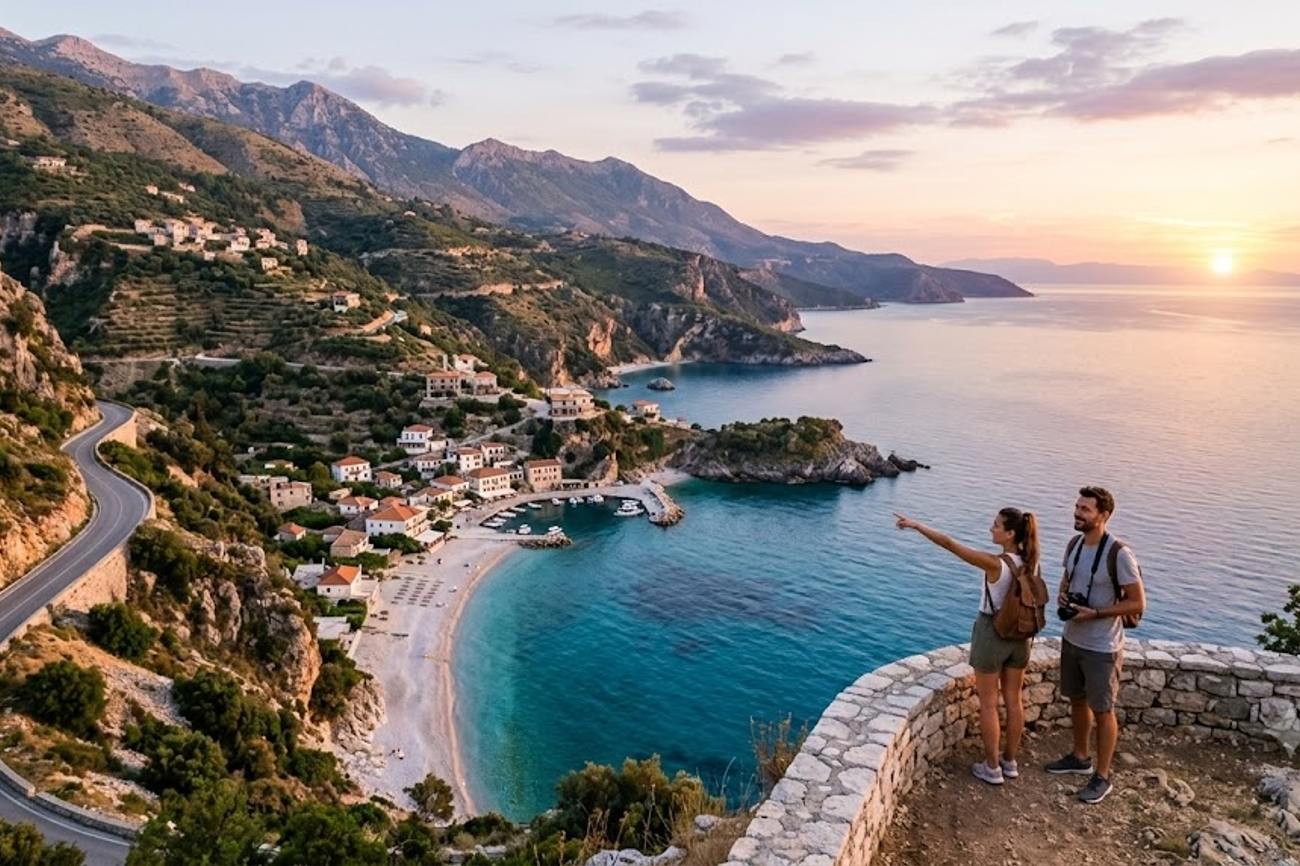
Image generated by AI
Looking to escape the crushing crowds of Spain's coastal resorts? Here is how to pivot your European itinerary toward the emerging hubs of the Balkans and the Baltics for a slower, more authentic experience.
The Shift Toward Underrated European Hubs
While Spain continues to dominate the Mediterranean market—recording 96.8 million international tourists in 2025—a growing segment of seasoned travelers is diverting toward "hidden gem" destinations. The data shows a clear trend: Spain's growth from 31.2 million visitors in 2021 to nearly 97 million in 2025 has created a saturation point that is pushing logistics-savvy travelers toward Albania, Montenegro, Slovenia, and the Baltic states of Lithuania, Latvia, and Estonia.
These alternatives offer a distinct travel proposition. Instead of the high-density tourism infrastructure of the Spanish coast, these regions provide a blend of Adriatic coastlines, Alpine lakes, and Baltic forests. For the nomad or the long-term traveler, this shift means moving away from mass-market hubs and toward regions where the pace of travel is slower and the cultural immersion is deeper.
Route and Schedule Details
The following table outlines the primary travel profiles for these emerging alternatives, providing a baseline for planning your duration of stay and primary transit focuses.
| Destination | Primary Appeal | Optimal Stay | Key Transit Route | Status |
|---|---|---|---|---|
| Albania | Riviera & Heritage | 8–11 Nights | Tirana $\rightarrow$ Vlora $\rightarrow$ Saranda $\rightarrow$ Berat | Emerging |
| Montenegro | Adriatic & Mountains | 7–9 Nights | Bay of Kotor $\rightarrow$ Durmitor | Stable |
| Slovenia | Alps & Caves | 6–9 Nights | Bled $\rightarrow$ Soča $\rightarrow$ Piran | Stable |
| Lithuania | Baltic Culture | 6–8 Nights | Vilnius $\rightarrow$ Kaunas $\rightarrow$ Curonian Spit | Stable |
| Latvia | Forests & History | 5–7 Nights | Riga $\rightarrow$ Cēsis $\rightarrow$ Kuldīga | Stable |
| Estonia | Islands & Wellness | 6–8 Nights | Tallinn $\rightarrow$ Tartu $\rightarrow$ Saaremaa | Stable |
Traveler Logistics Guide
Navigating these less-conventional routes requires a different tactical approach than booking a package holiday to Mallorca or Barcelona. To optimize your transit through these regions, follow these logistics protocols.
Albania: The Mediterranean Alternative
Albania has seen a massive surge in border arrivals, growing from 5,688,649 in 2021 to 11,696,111 in 2024. Because the infrastructure is still evolving, your transport strategy is the most critical part of the trip.
1. Ground Transport Strategy: Avoid relying solely on public buses for the Riviera route. The most efficient way to navigate from Vlora toward Saranda and Ksamil—passing through Palasa, Dhërmi, Vuno, Himara, Qeparo, Borsh, and Lukova—is via a private rental car or a vetted local driver. The roads are scenic but can be challenging.
2. The Heritage Loop: If your goal is cultural immersion, prioritize a loop that includes Butrint, Gjirokastër, and Berat. In Berat, focus your logistics on the Mangalem, Gorica, and Castle districts. Ensure you allocate a full day for the Onufri Museum.
3. Accommodation Logistics: Do not book a "hotel-a-night" itinerary. To avoid transit fatigue, select boutique hotels or locally run guesthouses in three primary hubs: one on the coast (near Himara or Saranda), one in the south (Gjirokastër), and one in the center (Berat).
4. Digital and Entry Tools: Check the latest entry requirements via the Republic of Albania Official Portal. While visa-free for many, always carry a digital copy of your passport and travel insurance.
Montenegro: Compact Adriatic Transit
Montenegro is ideal for those who dislike long transit times. With tourist arrivals growing from 1,660,000 in 2021 to 2,730,000 in 2025, the country remains manageable.
1. Route Optimization: The primary logistical draw is the proximity of the coast to the mountains. A highly efficient route involves starting in the Bay of Kotor for maritime scenery and transitioning quickly to the Durmitor region for highland trekking.
2. Transport Modes: Given the compact geography, car rentals are the gold standard here. This allows you to bypass the limited schedule of regional buses and access remote national park entrances.
The Baltic Corridor (Lithuania, Latvia, Estonia)
For those moving through the Baltics, the logistics are more streamlined but require specific regional knowledge.
1. Cross-Border Transit: The most efficient way to move between Vilnius, Riga, and Tallinn is via luxury coach services or regional flights. For a slower pace, consider the Curonian Spit in Lithuania or the islands of Saaremaa in Estonia.
2. Urban Logistics: In cities like Tallinn and Riga, utilize digital transit apps and ride-sharing services. For the Estonian islands, check ferry schedules in advance, as these are the primary bottlenecks in the itinerary. You can find updated transit information through Visit Estonia.
Regional Connectivity Impact
The rise of these destinations is fundamentally altering the flow of European tourism. Spain’s trajectory—rising from 85.1 million visitors in 2023 to 93.8 million in 2024 and 96.8 million in 2025—has created a "spillover effect." Travelers are no longer just looking for a beach; they are looking for "low-density" experiences.
In the Balkans, this has led to a rapid professionalization of the tourism sector. Albania's jump to over 11.6 million border arrivals in 2024 indicates that the country is no longer a "secret" but a viable systemic alternative to the Western Mediterranean. Similarly, the Baltic states are positioning themselves as "slow travel" hubs, focusing on wellness and nature rather than high-volume sightseeing.
For the logistics consultant, this means a shift in recommendation: instead of suggesting the high-speed rail networks of Spain (AVE), we are now advising on regional car rentals in Montenegro and boutique guesthouse clusters in Albania. The value has shifted from "convenience and speed" to "discovery and depth."
FAQ: Underrated Europe Transit 2025
Do I need a transit visa for Albania or Montenegro? Visa requirements depend on your nationality. Many EU and US citizens enter visa-free for short stays. Always verify current status via the official embassy website or the IATA Travel Centre before booking.
How long should I spend in the Albanian Riviera? For a comprehensive experience covering Vlora to Saranda, including stops in Dhërmi and Himara, allocate 8 to 11 nights. This allows for a slower pace and visits to heritage sites like Butrint.
Is it better to fly or drive in Montenegro? Fly into Podgorica or Tivat, then rent a car. Montenegro's small size makes driving the most efficient way to connect the Bay of Kotor with the Durmitor mountains.
Can I visit all three Baltic states in one trip? Yes. A 15-21 day itinerary is ideal. Use coach services to connect Vilnius, Riga, and Tallinn, and allocate extra time for the Curonian Spit (Lithuania) and Saaremaa (Estonia).
Stop following the crowds to the same three Spanish beaches and start mapping the Adriatic and Baltic frontiers.
#AlbaniaRiviera2025 #MontenegroTransit #BalticSlowTravel #BalkanLogistics #SpainTourismAlternatives #IonianCoastTravel
Related Travel Guides
Disclaimer
This article is for informational and educational purposes only. It does not constitute legal, financial, or professional advice. While we strive to provide accurate and up-to-date information, travel policies, regulations, and conditions change rapidly. Always verify information with official sources before making travel decisions. Nomad Lawyer makes no representations about the accuracy, reliability, completeness, or suitability of the information provided. Readers should consult qualified professionals for advice specific to their circumstances. The views expressed in this article are those of the author and do not necessarily reflect the views of Nomad Lawyer.
Kunal K Choudhary
Co-Founder & Contributor
A passionate traveller and tech enthusiast. Kunal contributes to the vision and growth of Nomad Lawyer, bringing fresh perspectives and driving the community forward.
Learn more about our team →