
Australia Coincide Canada, UAE and Others Lead Global MICE Growth Through Events, Sustainability and Infrastructure
Australia Coincide Canada, UAE and Others Lead Global MICE Growth Through Events, Sustainability and Infrastructure
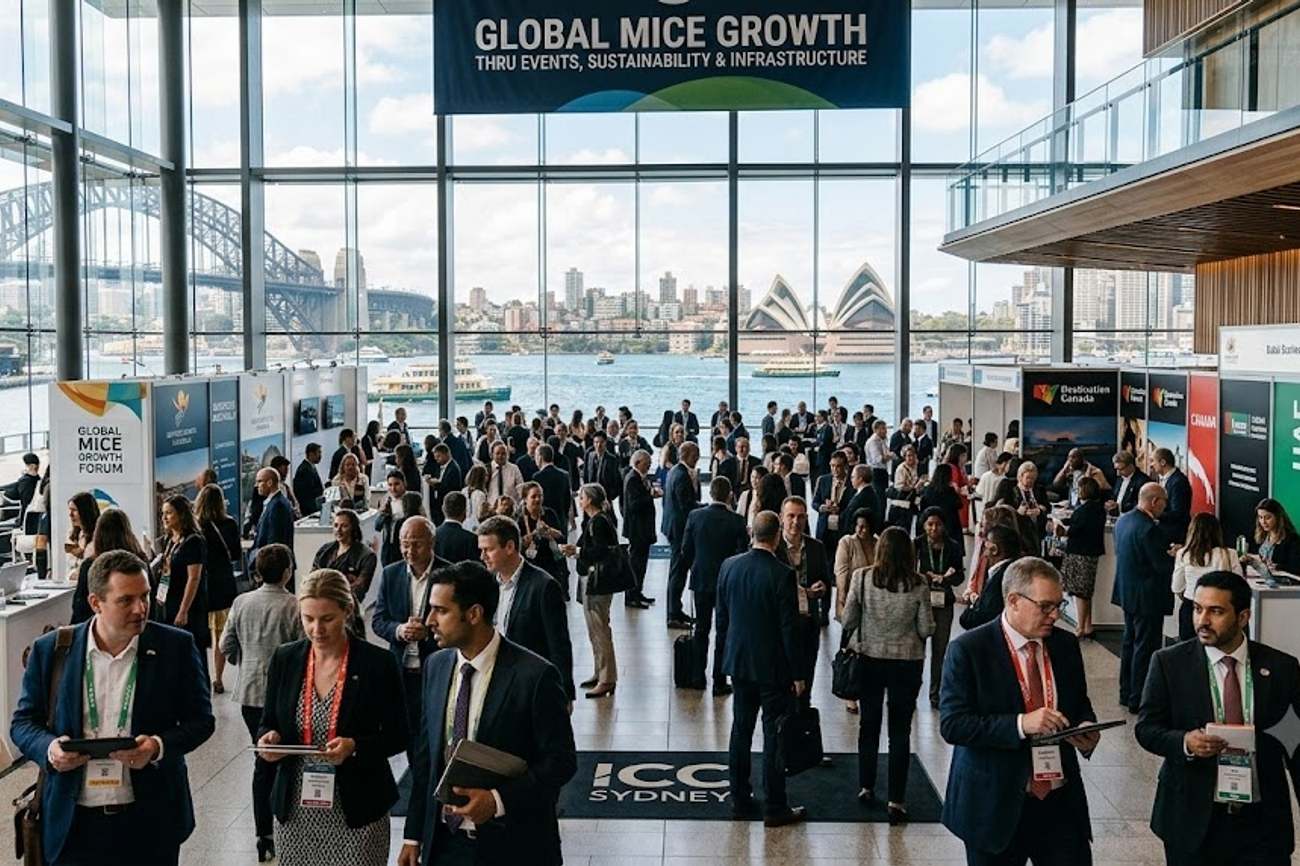
Image generated by AI
Since 2018, a single strategic bid fund has helped Australia secure 221 international events, pumping $1.5 billion directly into the visitor economy. This isn't just about hosting a few conferences; it is a calculated move to reposition the continent as a global powerhouse for high-value business tourism, using massive sporting spectacles as the primary hook.
The Shift Toward Event-Driven Business Tourism
Australia is currently pivoting its entire tourism identity to move beyond the "sun and surf" stereotype. The strategy is now centered on the MICE sector—Meetings, Incentives, Conferences, and Exhibitions. By leveraging high-profile global milestones, the country is creating a pipeline of visibility that encourages international corporate planners to look past the flight distance and focus on the infrastructure.
The roadmap is anchored by three massive pillars: the Rugby World Cup 2027, the T20 Cricket events, and the crowning jewel, the Brisbane 2032 Olympic and Paralympic Games. For the local business community, these aren't just sporting events; they are massive lead-generation exercises. The goal is to use the global spotlight of 2032 to prove that Australia can handle large-scale event delivery and premium hospitality at a world-class level. This vision is formalized in the Tourism 2035 strategy, which treats the next decade as a runway for long-term economic growth through business partnerships.
What Makes Australia Different in the MICE Market
While many destinations offer luxury hotels and convention centers, Australia is differentiating itself through a concept called "Green Is Our Gold." In the modern corporate world, delegates no longer view sustainability as a "nice to have"—it is a mandatory requirement. Australia has leaned into this by integrating environmental certification directly into its value proposition.
The distinction lies in the certification of the venues themselves. By prioritizing EarthCheck certification and ensuring convention centers are environmentally certified, Australia is removing the risk for international planners who must report on the carbon footprint of their events. This shift transforms sustainability from a moral obligation into a competitive business advantage.
Australia isn't alone in this aggressive pursuit of the business traveler. It is operating in a high-stakes league alongside Singapore, Canada, the UAE, Japan, and South Korea. While the UAE leverages aviation connectivity and Singapore focuses on its MICE Sustainability Roadmap, Australia is betting on the synergy between its natural environment and its urban infrastructure. The "Team Australia" approach mimics the coordinated national strategies seen in Singapore, where government-backed bidding processes make the destination an easy "yes" for global organizers.
Visitor Insider Tips
For those traveling to Australia for business or attending one of these major upcoming events, navigating the country requires a shift in perspective.
Timing Your Visit Avoid the peak December and January window unless your event is specifically timed for it. The heat in Brisbane and Sydney can be oppressive, and the city centers become clogged with domestic tourists. The "sweet spot" for business travel is September through November (Spring) or March through May (Autumn). During these windows, the weather is mild, and the city's infrastructure operates more smoothly.
The "Bleisure" Hack The current trend in Australian business travel is "bleisure"—combining a conference with a leisure extension. If your event is in Brisbane, don't stay confined to the CBD. Use the city as a base to explore the Sunshine Coast or the Gold Coast, both of which are highly accessible. For those attending events in Sydney, prioritize staying in neighborhoods like Surry Hills or The Rocks to experience the local rhythm away from the sterile hotel districts.
Local Etiquette and Rhythms Business culture in Australia is famously egalitarian. While the events may be high-profile, the interactions are generally less formal than in Japan or the UAE. A "smart casual" approach often wins over a rigid suit-and-tie requirement, unless specified. Additionally, remember that the "coffee culture" is a religion here. Much of the real networking happens over a flat white at a local cafe, not in the boardroom.
Transport Strategies Avoid relying solely on ride-shares during major event windows like the 2027 Rugby World Cup or 2032 Olympics. The traffic congestion will be immense. Invest in the local transport cards (like the Opal card in NSW or Go Card in Queensland) and utilize the rail networks. For inter-city travel, book domestic flights via Qantas or Virgin Australia well in advance, as prices spike aggressively during MICE events.
Cultural and Environmental Context
The push toward the 2032 Olympics brings a complex intersection of growth and preservation. While the $1.5 billion injection from the bid fund program is a win for the economy, it places a significant strain on local infrastructure and environment. The "Green Is Our Gold" initiative is an attempt to mitigate this by ensuring that the growth is not predatory.
There is a delicate balance between attracting millions of international delegates and preserving the unique biodiversity that makes Australia attractive in the first place. The reliance on EarthCheck certifications shows a move toward accountability, but the real challenge lies in the "last mile" of sustainability—how delegates move, what they consume, and the waste generated by massive exhibitions.
Furthermore, the focus on Brisbane 2032 is driving a massive urban transformation. This isn't just about building stadiums; it's about upgrading public transport and housing. For the local resident, this means a city in flux. For the visitor, it means a destination that is rapidly evolving into a more connected, modern hub, though often at the cost of some old-world charm. To understand the broader impact of these heritage sites and their protection, visitors should consult the UNESCO World Heritage listings for Australia to see which areas are being protected amidst this rapid development.
FAQ: Visiting Australia 2024-2032
What is the best time to visit for business events? The ideal windows are Spring (September to November) and Autumn (March to May). These seasons offer the most stable weather and avoid the extreme summer heat and the peak December holiday crowds.
Do I need a visa for a business trip to Australia? Yes, most international visitors require a visa. Depending on your nationality, you may be eligible for an eVisitor (subclass 651) or an Electronic Travel Authority (ETA). Check the official Australian Government website for the latest requirements.
How do I get to Brisbane from major hubs? Brisbane is served by Brisbane Airport (BNE). From there, the Airtrain is the most efficient way to reach the CBD, bypassing city traffic. For those coming from Sydney or Melbourne, short-haul flights are the only practical option.
Is Australia safe for solo business travelers? Australia is exceptionally safe for solo travelers. Major cities have well-lit business districts and reliable public transport. Standard urban precautions apply, but the country is generally welcoming and low-risk.
The road to 2032 is less about the gold medals and more about the gold standard of global business.
#AustraliaBusinessEvents #Brisbane2032 #MICEAustralia #VisitAustralia2027 #GreenIsOurGold #AustraliaTourismStrategy
Related Travel Guides
Disclaimer
This article is for informational and educational purposes only. It does not constitute legal, financial, or professional advice. While we strive to provide accurate and up-to-date information, travel policies, regulations, and conditions change rapidly. Always verify information with official sources before making travel decisions. Nomad Lawyer makes no representations about the accuracy, reliability, completeness, or suitability of the information provided. Readers should consult qualified professionals for advice specific to their circumstances. The views expressed in this article are those of the author and do not necessarily reflect the views of Nomad Lawyer.
Naina Thakur
Contributor & Travel Specialist
Travel enthusiast and legal writer covering visa regulations, responsible tourism, and cultural journeys across global destinations.
Learn more about our team →