Albania Euro Exchange Rate Plummets 35% Against Lek Since 2016 as Tourism Inflows and Property Boom Reshape Travel Costs

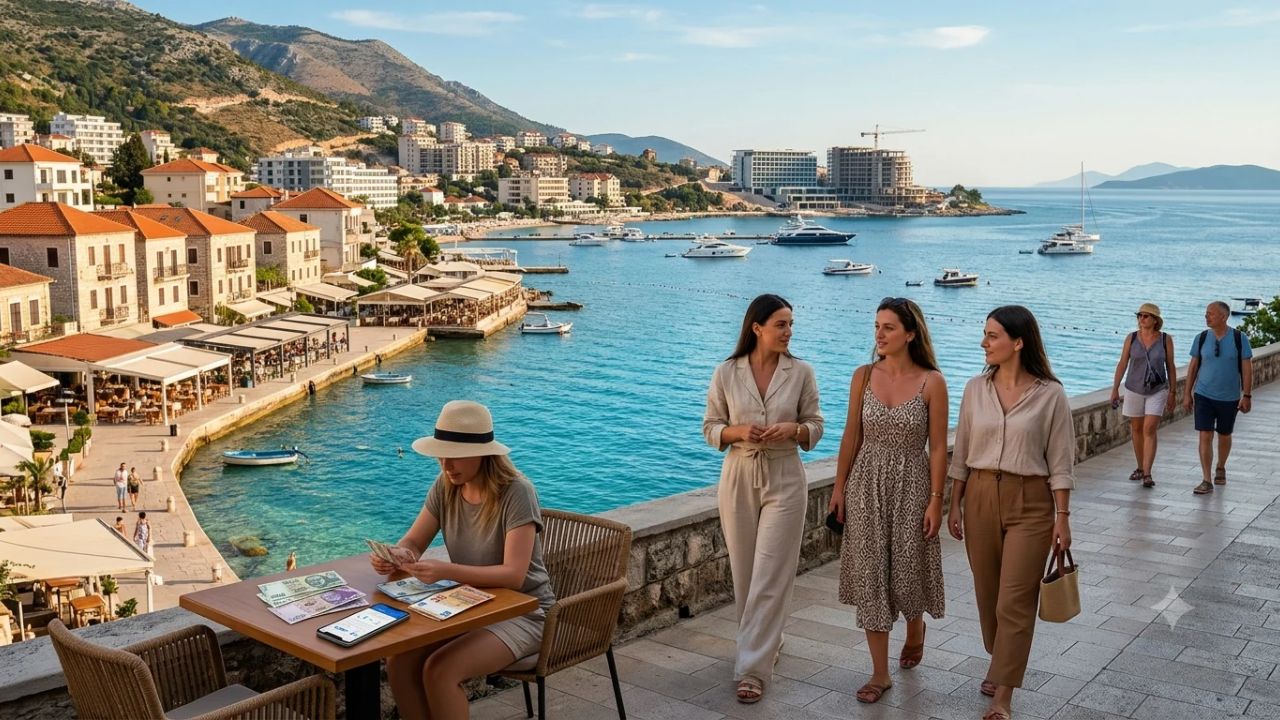
TIRANA, Albania — The European common currency has tumbled nearly 35% against the Albanian Lek over the past decade, sliding from nearly 140 Lek per Euro in January 2016 to an official rate of 90.72 on November 11, 2026, fundamentally altering the economics of Mediterranean travel, holiday budgeting, and hospitality operations across the Western Balkan nation.
The sustained appreciation of the Albanian Lek (ALL) against the Euro (EUR) marks one of the most remarkable currency shifts in modern European emerging markets. While travelers have long celebrated Albania as one of the Mediterranean's most budget-friendly coastal getaways, the dramatic currency realignment is recalibrating holiday expenses, hotel margins, and cross-border purchasing power. International visitors who once enjoyed abundant financial leverage now encounter higher holiday costs in Euro terms. Concurrently, a confluence of unprecedented foreign tourism receipts, real estate development, seasonal remittances, and shifting capital flows has decoupled the Lek's trajectory from traditional seasonal patterns.
          EUR/ALL EXCHANGE RATE TRAJECTORY (2016 – 2026)
  145 +---------------------------------------------------------+
      |  Jan 2016: 139.48 Lek per €1.00                         |
  135 |  *                                                      |
      |   \                                                     |
  125 |    \---\                                                |
      |         \                                               |
  115 |          \---\                                          |
      |               \                                         |
  105 |                \---\                                    |
      |                     \---\  Oct 2026 Record Low: 90.64   |
   95 |                          \----*                         |
      |                                \-- Nov 2026: 90.72 Lek  |
   85 +---------------------------------------------------------+
     2016  2017  2018  2019  2020  2021  2022  2023  2024  2025  2026
The Anatomy of a Decade-Long Currency Surge
According to official daily market fixings published by the Bank of Albania (Banka e Shqipërisë), the Euro traded at 90.72 Lek on November 11, 2026. This figure sits just 0.08 Lek above the all-time historic low of 90.64 Lek recorded on October 22, 2026. The currency pair has experienced an uninterrupted decline that extends well past the traditional post-summer cooling period, proving that domestic and structural factors continue to outweigh simple seasonal holiday tourism fluctuations.
A direct comparison with historical benchmarks highlights the scale of this structural transformation:
- On January 18, 2016, the Euro peaked at 139.48 Lek, representing the highest valuation for the common European currency during that annual cycle.
- By November 11, 2026, the rate dropped to 90.72 Lek, marking a net erosion of 48.76 Lek per Euro, or a cumulative valuation decline of 34.96%.
- For holidaymakers and commercial enterprises, the practical impact is substantial. A European traveler converting €1,000 into local currency in January 2016 received 139,480 Lek. At the November 2026 rate, that identical €1,000 sum yields only 90,720 Lek—an immediate cash difference of 48,760 Lek, equivalent to more than €537 in lost domestic purchasing value within Albania.
       CONVERSION DISPARITY FOR €1,000 EXCHANGED INTO ALBANIAN LEK
 +-------------------------------------------------------------+
 | JANUARY 2016 BENCHMARK                                      |
 | Rate: 139.48 Lek per €1.00 ======> Yield: 139,480 ALL       |
 +-------------------------------------------------------------+
                                |
                                v   -48,760 LEK DIFFERENCE (-35%)
 +-------------------------------------------------------------+
 | NOVEMBER 2026 BENCHMARK                                     |
 | Rate: 90.72 Lek per €1.00  ======> Yield:  90,720 ALL       |
 +-------------------------------------------------------------+
Economists emphasize that this movement describes the bilateral relationship between the Euro and the Albanian Lek rather than a global decline in the Euro's international purchasing power. Under Albania’s free-floating exchange-rate regime, the domestic currency's market value is determined through interbank market operations, governed by supply, demand, foreign direct investment, and external capital balances. Standardized quotations submitted by commercial bank participants between 11:30 AM and 12:00 PM establish the central bank's daily official reference rate.
| Historical Observation Date | Official EUR/ALL Exchange Rate | Net ALL Yield on €1,000 | Percentage Shift vs Jan 2016 Peak |
|---|---|---|---|
| January 18, 2016 | 139.48 Lek | 139,480 Lek | Baseline Peak (0.0%) |
| January 15, 2018 | 133.20 Lek | 133,200 Lek | -4.50% |
| January 14, 2020 | 122.15 Lek | 122,150 Lek | -12.42% |
| January 17, 2022 | 120.80 Lek | 120,800 Lek | -13.39% |
| January 16, 2023 | 116.45 Lek | 116,450 Lek | -16.51% |
| January 15, 2024 | 104.10 Lek | 104,100 Lek | -25.37% |
| October 22, 2026 | 90.64 Lek (Historic Low) | 90,640 Lek | -35.02% |
| November 11, 2026 | 90.72 Lek | 90,720 Lek | -34.96% |
Deconstructing the Lek’s Strength: Beyond the Tourist Narrative
Public discourse often attributes the Lek’s unrelenting rise entirely to Albania’s well-publicized summer tourism boom. Over the past five years, social media showcases of the "Maldives of Europe" in Ksamil and the pristine beaches of the Albanian Riviera have triggered record visitor arrivals. However, comprehensive macroeconomic balance-of-payments data indicates that the currency’s appreciation began well before the latest tourist wave, pointing to a multifaceted economic restructuring.
Between 2016 and 2022, Albania’s current-account deficit actually widened substantially due to a growing merchandise trade imbalance and heavy reliance on imported goods, fuel, and industrial machinery. By 2022, net foreign exchange outflows were estimated at approximately €1.1 billion—an increase of 37% over 2016 levels. Yet despite this outflow of foreign exchange to pay for imports, the Euro still lost approximately 13% of its value against the Lek over that same timeframe. This divergence proves that alternative, powerful capital channels have consistently pumped foreign currency into Albania's domestic banking system.
       MACROECONOMIC CHANNELS DRIVING FOREIGN EXCHANGE INFLOWS

 +-----------------------------------------------------------------+
 |                    ALBANIA FOREIGN EXCHANGE INFLOWS            |
 +--------------------------------+--------------------------------+
                                  |
       +--------------------------+--------------------------+
       |                          |                          |
       v                          v                          v
+---------------+          +---------------+          +---------------+
|  EXPANDING    |          |  RESIDENTIAL  |          |  REMITTANCES  |
|  TOURISM      |          |  CONSTRUCTION |          |  & EMIGRATION |
|  EXPORTS      |          |  & PROPERTY   |          |  TRANSFERS    |
| • €3.9B in Q1-|          | • 5,379 new   |          | • +14.3% YoY  |
|   Q3 2024     |          |   permits     |          | • €1B+ annual |
| • €2.38B H1   |          | • Tirana,     |          |   diaspora    |
|   2026 receipts|         |   Durrës,     |          |   support     |
| • +13.4% YoY  |          |   Vlorë coast |          | • Seasonal FX |
+---------------+          +---------------+          +---------------+
The external financial balance of Albania underwent significant structural changes between 2023 and 2025. Data from the Bank of Albania highlights the interplay between travel services, remittances, and goods trade:
- 2023 Performance: Tourism service exports reached €3.2 billion during the first nine months alone, representing a 47% annual surge compared to 2022. The annual current-account deficit settled at €374 million.
- 2024 Performance: Tourism exports continued climbing, reaching €3.9 billion during the first three quarters (+20% YoY). Remittances from the Albanian diaspora increased by 14.3%, while income from seasonal employment abroad expanded by 17.3%. However, goods imports rose 14.6% while merchandise exports dropped 3.5%, causing the current-account deficit to widen to €610 million even as the Euro shed another 8% against the Lek.
- 2025 Consolidation: As tourism receipts accelerated further, Albania’s current-account deficit narrowed sharply to €178 million, reflecting the highest level of external stability in the nation's post-communist history.
| Financial Indicator / Account | 2022 Calendar Year | 2023 Calendar Year | 2024 Calendar Year | 2025 Calendar Year |
|---|---|---|---|---|
| Current-Account Deficit | ~€1.10 Billion | €374 Million | €610 Million | €178 Million |
| Tourism Service Exports (9 Months) | €2.18 Billion | €3.20 Billion (+47%) | €3.90 Billion (+20%) | €4.55 Billion (Est.) |
| Annual Remittance Inflows | €834 Million | €928 Million | €1,060 Million | €1,140 Million |
| Average Annual EUR/ALL Exchange Rate | 118.90 Lek | 108.70 Lek | 101.40 Lek | 94.20 Lek |
Real Estate and Construction: The Capital Magnet Fueling the Lek
A critical factor behind the Lek’s appreciation is the unprecedented boom in construction and property development. Foreign direct investment (FDI) targeting coastal holiday residences, luxury urban apartment complexes, and branded hospitality developments has generated a sustained influx of Euro liquidity that is converted directly into Lek to settle local acquisition, permitting, and labor costs.
Data published in the Regional Statistical Yearbook 2024 by the Institute of Statistics (INSTAT) illustrates the immense scale of this construction expansion:
        APPROVED NEW-BUILDING AREA IN ALBANIA (2020 – 2023)
  Square Metres
  3,000,000 +---------------------------------------------------+
            |                                  [2,667,497 m²]   |
  2,500,000 |                 [2,316,709 m²]        *           |
            |                       *              / \          |
  2,000,000 |                      / \            /   \         |
            |                     /   \          /     \        |
  1,500,000 |  [1,608,211 m²]    /     \        /   [2,115,819] |
            |        *          /       \      /         *      |
  1,000,000 +---------------------------------------------------+
                   2020            2021          2022      2023
Across the four-year period from 2020 through 2023, Albanian municipal authorities granted a total of 5,379 building permits for new structures:
- Sectoral Allocation: Residential developments accounted for 76.7% of all permits, while commercial, industrial, and tourism properties—including boutique hotels, office towers, and mixed-use coastal resorts—represented the remaining 23.3%.
- Tirana’s Primacy: The capital city accounted for 27.4% of total permits and an extraordinary 68.9% of total approved building surface area. Approved construction space in Tirana expanded from 1,121,722 m² in 2020 to a peak of 1,808,369 m² in 2022, maintaining 1,418,551 m² in 2023.
- Coastal Hub Expansion: In the port city of Durrës, approved construction area surged from 150,707 m² in 2020 to 435,698 m² in 2022, settling at 338,678 m² in 2023. Further south in Vlorë—the gateway to the southern Riviera—approved building area reached 144,741 m² in 2023 alone, driven by marina redevelopments and coastal holiday apartments.
| Calendar Year | Total Approved Building Permits | Total Approved Surface Area (m²) | Tirana Approved Area (m²) | Durrës Approved Area (m²) |
|---|---|---|---|---|
| 2020 | 961 | 1,608,211 m² | 1,121,722 m² | 150,707 m² |
| 2021 | 1,396 | 2,316,709 m² | 1,649,132 m² | 218,450 m² |
| 2022 | 1,420 | 2,667,497 m² (Record) | 1,808,369 m² | 435,698 m² |
| 2023 | 1,602 | 2,115,819 m² | 1,418,551 m² | 338,678 m² |
| 4-Year Total | 5,379 Permits | 8,708,236 m² | 5,997,774 m² (68.9%) | 1,143,533 m² (13.1%) |
This concentration of real estate activity attracts significant foreign capital. European buyers from Italy, Germany, Poland, the Czech Republic, and the United Kingdom have acquired vacation apartments along the Ionian and Adriatic coasts. The required currency conversions to satisfy municipal fees, utility connections, and domestic contractor invoices have created continuous demand for the Lek, insulating the currency from seasonal depreciation.
Tourism Volumes and Spend Metrics: The 2026 Travel Picture
Despite the stronger Lek and rising trip expenses, international demand for Albanian travel has maintained robust upward momentum throughout 2026. The latest statistical releases demonstrate that traveler interest remains resilient even as pricing dynamics evolve.
According to INSTAT’s August 2026 hospitality survey, accommodation establishments across Albania registered a 10.3% increase in total arrivals compared to August 2025. Domestic resident guests rose by 9.0%, while international traveler check-ins expanded by 10.7%, proving that foreign travel interest sustained momentum into the late summer and autumn shoulder seasons.
       H1 2026 CROSS-BORDER TRAVEL FINANCIAL BALANCE SHEET
 +-------------------------------------------------------------+
 | FOREIGN VISITOR EXPENDITURE IN ALBANIA                      |
 | Total Spend: €2.38 Billion (+13.4% YoY)                     |
 | Arrivals: 5.1 Million Citizens (+6.2% YoY)                  |
 | Average Spend Per Guest: €470 (Up from €440 in H1 2025)     |
 +------------------------------+------------------------------+
                                |
                                v   NET TOURISM SURPLUS:
                                |   +€957 MILLION (H1 2026)
                                |
 +------------------------------+------------------------------+
 | ALBANIAN RESIDENT OUTBOUND TRAVEL SPENDING                  |
 | Total Outbound Expenditure: €1.42 Billion (+9.5% YoY)       |
 +-------------------------------------------------------------+
Financial figures compiled by the Bank of Albania and broadcast by state network RTSH reveal the expanding economic scale of international travel during the first half (H1) of 2026:
- Foreign Traveler Expenditure: Inbound visitors spent an estimated €2.38 billion inside Albania between January and June 2026, marking an increase of 13.4% over the corresponding period in 2025.
- Physical Inbound Volume: Approximately 5.1 million foreign citizens entered the country during the first six months of 2026, representing a 6.2% annual growth rate.
- Per Capita Outlay: Average spending per international traveler increased to €470, up from €440 during H1 2025, driven by higher hospitality room rates and dining expenses in Euro terms.
- Net Travel Trade Surplus: While Albanian residents increased their own foreign holiday spending abroad to €1.42 billion (+9.5% YoY), the net travel balance remained heavily positive, generating an unprecedented net foreign currency surplus of €957 million for the domestic banking sector in just six months.
| Travel Metrics (First Half Comparison) | H1 2024 (Jan–Jun) | H1 2025 (Jan–Jun) | H1 2026 (Jan–Jun) | Year-on-Year Growth (2025 vs 2026) |
|---|---|---|---|---|
| Foreign Citizen Arrivals | 4.40 Million | 4.80 Million | 5.10 Million | +6.2% |
| Inbound Tourism Spending | €1.85 Billion | €2.10 Billion | €2.38 Billion | +13.4% |
| Average Spend per International Guest | €420 | €440 | €470 | +6.8% |
| Albanian Outbound Travel Spend | €1.15 Billion | €1.30 Billion | €1.42 Billion | +9.5% |
| Net Cross-Border Travel Surplus | +€700 Million | +€800 Million | +€957 Million | +19.6% |
Impact on Hospitality Businesses: The Dual-Currency Profit Squeeze
While the strong Lek bolsters national purchasing power for imported technology and vehicles, it creates severe structural challenges for domestic tourism operators, hotel owners, and exporters who conduct international commerce in Euros while paying overhead expenses in Lek.
In coastal destinations like Saranda, Himara, and Vlorë, hotels have historically quoted room rates in Euros on international booking platforms such as Booking.com, Expedia, and Airbnb. When a hotelier booked a room at €100 per night in 2021, that booking converted into approximately 12,200 Lek. In late 2026, that same €100 booking yields just 9,070 Lek—a gross domestic revenue reduction of more than 25%.
       HOSPITALITY MARGIN SQUEEZE: €100 ROOM BOOKING COMPARISON

  [ 2021 Summer Benchmark ]                 [ 2026 Autumn Benchmark ]
  Gross Room Rate: €100                     Gross Room Rate: €100
  Exchange Rate: 122.0 ALL / €              Exchange Rate: 90.72 ALL / €
  Revenue Converted: 12,200 ALL             Revenue Converted: 9,072 ALL
           |                                         |
           v                                         v
  Domestic Operational Costs:               Domestic Operational Costs:
  • Staff Wages: 4,000 ALL                  • Staff Wages: 5,500 ALL (+37%)
  • Utilities & Laundry: 2,500 ALL          • Utilities & Laundry: 3,000 ALL (+20%)
  • Food & Beverage: 2,000 ALL              • Food & Beverage: 2,400 ALL (+20%)
  Total Costs: 8,500 ALL                    Total Costs: 10,900 ALL
           |                                         |
           v                                         v
  Net Operating Margin: +3,700 ALL          Net Operating Margin: -1,828 ALL (LOSS)
  [ PROFITABLE POSITION ]                   [ OPERATOR FORCED TO RAISE PRICES ]
At the same time that Euro earnings convert into fewer Lek, domestic operational costs across Albania have risen sharply:
- Wage Inflation: Due to domestic labor shortages and migration toward Western Europe, hospitality wages for chefs, waitstaff, and hotel managers have risen by 30% to 50% in Lek terms over the past three years.
- Local Supply Costs: Agricultural staples, local meat, artisanal dairy, wine, and transport services priced in Lek have not declined to offset the currency shift.
- Sticky Retail Import Prices: Although a stronger currency should theoretically make imported goods cheaper for domestic consumers, local retail markets have displayed significant price stickiness. Importers and wholesalers have widened profit margins rather than passing full savings on to restaurants and retail shelves.
To survive this margin compression, Albanian hotel operators and restaurateurs have adjusted pricing upwards. Coastal resort rates that averaged €70 to €90 per night three years ago now command €110 to €150 per night to deliver the necessary Lek revenue to cover operating expenses. As a result, European visitors perceive that Albania is becoming markedly more expensive.
Regional Travel Costs: How Destination Budgets Have Changed
The combination of currency appreciation and local price inflation affects different destinations across Albania in distinct ways. Understanding regional pricing variations is essential for travelers planning trips across the country.
       ALBANIA'S REGIONAL TOURISM AND PRICE REALIGNMENT MAP

                      [ THE NORTHERN HIGHLANDS ]
                      Theth, Valbona, Shkodër
                      • Guesthouse rates up 20% in EUR
                      • Transport / 4x4 transfers up 30%
                                 |
                                 v
                      [ THE CENTRAL URBAN CORE ]
                      Tirana & Durrës Port
                      • Modern hotels, card acceptance high
                      • Dining prices up 25% in EUR terms
                                 |
                                 v
                      [ THE HISTORIC INTERIOR ]
                      Berat & Gjirokastër (UNESCO)
                      • Traditional dining remains accessible
                      • Moderate price adjustments
                                 |
                                 v
                      [ THE SOUTHERN RIVIERA ]
                      Vlorë, Dhermi, Himara, Saranda, Ksamil
                      • Highest price inflation in Albania
                      • Beach clubs & seaside dining near Greek island levels
1. Tirana: The Urban Capital
Tirana has transformed into a sophisticated European urban hub with specialty coffee roasteries, fine-dining restaurants, and international hotel chains. While public transport remains affordable (40 Lek per municipal bus ride), restaurant dining and boutique accommodations have adjusted to the stronger Lek. A mid-range three-course dinner for two in the trendy Blloku district that cost €35 in 2019 now frequently totals €55 to €75.
2. The Southern Riviera: Ksamil, Saranda, and Dhermi
The Albanian Riviera has experienced the most pronounced price adjustments. In peak summer destinations such as Ksamil and Dhermi, luxury beach clubs, seafood tavernas, and seaside apartments quote prices that rival destinations in neighboring Greece or southern Italy. A beachfront umbrella set with two loungers that rented for 1,000 to 1,500 Lek (€8 to €12) in 2019 now commands 2,000 to 3,500 Lek (€22 to €38) at prime beach venues.
3. Historic UNESCO Centers: Berat and Gjirokastër
The inland cultural centers of Berat (the "City of a Thousand Windows") and Gjirokastër (the "City of Stone") offer greater budget resilience. Because these historic towns rely heavily on family-operated stone guesthouses (han) and traditional culinary tavernas, daily travel expenses have risen more moderately. Authentic multi-dish meals featuring tavë kosi (baked lamb with spiced yogurt rice), regional cheeses, and mountain wines remain accessible at €12 to €18 per person.
4. The Northern Alps: Theth, Valbona, and Shkodër
The northern hiking circuit connecting Shkodër, the Komani Lake ferry, and the dramatic valleys of Theth and Valbona has seen moderate price increases. High-mountain guesthouses providing overnight lodging with home-cooked breakfast and hearty dinners have adjusted prices from €30–€35 per person in 2021 to €45–€60 per person in 2026. Given the remote alpine logistics and exceptional hospitality, this region continues to deliver strong perceived value for nature travelers.
| Travel Service / Everyday Expense | 2019 Cost in Lek | 2019 Equivalent (€ @ 123 ALL) | 2026 Cost in Lek | 2026 Equivalent (€ @ 90.7 ALL) | Real Cost Shift for Euro Travelers |
|---|---|---|---|---|---|
| Mid-Scale Hotel Room (Coast/Night) | 6,500 Lek | €52.85 | 10,000 Lek | €110.25 | +108.6% Increase |
| Casual Traditional Dinner for Two | 2,500 Lek | €20.30 | 3,500 Lek | €38.58 | +90.0% Increase |
| Espresso at a City Cafe | 80 Lek | €0.65 | 110 Lek | €1.21 | +86.1% Increase |
| Beach Lounger Pair (Ksamil Peak) | 1,200 Lek | €9.75 | 2,500 Lek | €27.56 | +182.6% Increase |
| Tirana Airport Express Shuttle | 300 Lek | €2.43 | 400 Lek | €4.41 | +81.4% Increase |
| Domestic Draft Beer (0.5L) | 200 Lek | €1.62 | 300 Lek | €3.30 | +103.7% Increase |
| Car Rental (Economy/Day Peak) | 3,000 Lek | €24.39 | 4,200 Lek | €46.30 | +89.8% Increase |
Strategic Financial Guide: How Travelers Should Prepare in 2026–2027
To navigate Albania’s changing monetary landscape, international visitors must approach holiday budgeting with updated expectations and smart financial strategies. The days when travelers could arrive without a budget and enjoy ultra-cheap Mediterranean dining are gone; planning ahead ensures a smooth and cost-effective trip.
       ESSENTIAL FINANCIAL RULES FOR TRAVELING IN ALBANIA
 +-------------------------------------------------------------------+
 | 1. AVOID AIRPORT CURRENCY BOOTHS: Spreads reach 10-15% at TIA     |
 | 2. REJECT DYNAMIC CURRENCY CONVERSION (DCC): Always charge in ALL |
 | 3. MONITOR THE BANK OF ALBANIA FIXING: Benchmark at 90.7 ALL / €  |
 | 4. CARRY CASH FOR RURAL TRIPS: Mountain & guesthouse areas need cash |
 | 5. VERIFY PAYMENT CURRENCY: Clarify whether menu/hotel is in EUR/ALL|
 +-------------------------------------------------------------------+
1. Master Currency Exchange Practices
- Beware Airport Spreads: Currency exchange kiosks at Tirana International Airport (TIA) and major ferry ports often post wide spreads of 10% to 15% below the interbank rate. Exchange only minimal pocket money at transit hubs, and conduct larger conversions at authorized independent exchange offices (Zyra Këmbimi Valutor) in downtown Tirana, Durrës, or Vlorë, where competitive margins sit within 1% of the official Bank of Albania reference.
- Differentiate Reference Rates from Retail Rates: The official Bank of Albania fixing (90.72 Lek) serves as an interbank benchmark rather than a retail guarantee. Commercial banks and exchange bureaus apply buying and selling spreads.
2. Payment Cards and Dynamic Currency Conversion (DCC)
- Always Choose Local Currency on Card Terminals: POS card payment terminals in Albanian hotels, supermarkets, and upscale restaurants frequently prompt foreign cardholders to pay in either Euros or Albanian Lek. Choosing Euros invokes Dynamic Currency Conversion (DCC), adding bank conversion fees of 5% to 8%. Always select payment in Lek (ALL) to allow your domestic card issuer to perform the conversion at interbank wholesale rates.
- Card Acceptance Limitations: While digital POS card payments have expanded rapidly across Tirana and major coastal resorts, cash remains indispensable for rural guesthouses, local buses, municipal fruit markets, and small tavernas.
3. Verify Quoted Currencies Before Ordering
- Dual-Currency Menus and Invoices: Many coastal seafood restaurants and boutique hotels present prices in Euros on their promotional menus, but convert the final bill into Lek at checkout. Verify the internal exchange rate used by the establishment before settling the bill. Some operators apply outdated exchange rates (such as 100 Lek per Euro) that disadvantage customers paying in cash. Carrying and paying directly in Albanian Lek prevents misunderstandings and overcharges.
Frequently Asked Questions
Why has the Euro lost so much value against the Albanian Lek?
The Euro’s 35% decline against the Lek since 2016 is driven by structural economic shifts rather than seasonal tourism alone. While international visitor spending reached record heights (€2.38 billion in the first half of 2026), substantial foreign exchange inflows also stem from massive real estate and residential construction investments, steady remittances from the Albanian diaspora, and structural capital repositioning. These steady foreign currency inflows have outpaced Albania’s merchandise trade deficit, creating sustained market demand for the Lek under the central bank's free-floating exchange regime.
Is Albania still an affordable holiday destination for European travelers?
Albania remains moderately priced compared to Western Mediterranean destinations like France, Spain, or Italy, but it is no longer the ultra-budget destination it was a decade ago. Due to the Lek’s appreciation alongside local wage and supply inflation, Euro-earning travelers will find that mid-range hotel rooms, coastal beach clubs, car rentals, and restaurant dining cost between 80% and 120% more in Euro terms than in 2016–2019. Budget travelers can maintain reasonable costs by traveling during the shoulder seasons (May, June, September, October) and exploring interior heritage towns like Berat, Gjirokastër, and the Northern Alps instead of peak Riviera hotspots.
Should tourists carry Euros or Albanian Lek when visiting Albania?
Travelers should carry both payment cards and a supply of local currency (Albanian Lek). While Euros are accepted for high-value transactions like hotel rooms, private excursions, or rental cars, day-to-day transactions—such as dining at traditional tavernas, paying for taxis, buying groceries, or riding public buses—are conducted in Lek. In addition, paying directly in Lek eliminates unfavorable private exchange rates often applied by local merchants. The best approach is to withdraw Lek directly from local bank ATMs or convert Euros at downtown exchange offices (Zyra Këmbimi Valutor).
What should cardholders look out for when paying or withdrawing money in Albania?
When paying by credit or debit card at retail POS terminals, cardholders should always choose to be billed in the local currency (Albanian Lek / ALL) rather than Euros to avoid expensive Dynamic Currency Conversion (DCC) fees. When withdrawing cash from domestic bank ATMs, travelers should review the screen for local operator access fees (which can range from 400 to 800 Lek per transaction) and choose independent bank terminals (such as Credins Bank or Banka Kombëtare Tregtare) that disclose all transaction fees clearly.
Related Travel Guides
- Madrid Unveils 14 Million Christmas Lights, Giant Walk-Through Snowman, and 250 Urban Illuminations Across 21 Districts for 2026–2027 Season
- Spain Experiential Tourism Drive: Rural Heritage and Cultural Travel Across Spanish Regions
- Austria Smart Tourism Hubs: Combating Overtourism and Reshaping European Travel Standards
- Global Air Passenger Traffic Trends: Latin America Surge and Airline Route Planning
This article is for informational purposes. Flight routes, passenger regulations, visa rules, and transit advisories are subject to change by airlines and aviation authorities. Readers are advised to verify schedules and travel documentation with relevant carriers and border agencies before departure.
Related Stories

Curaçao Posts Record October Inbound Tourism with 68,162 Stayover Arrivals as South American Demand Surges 26 Percent
Spain Allocates €42 Million to Rural and Experiential Tourism as Inbound Arrivals from Switzerland, Poland, and Belgium Expand