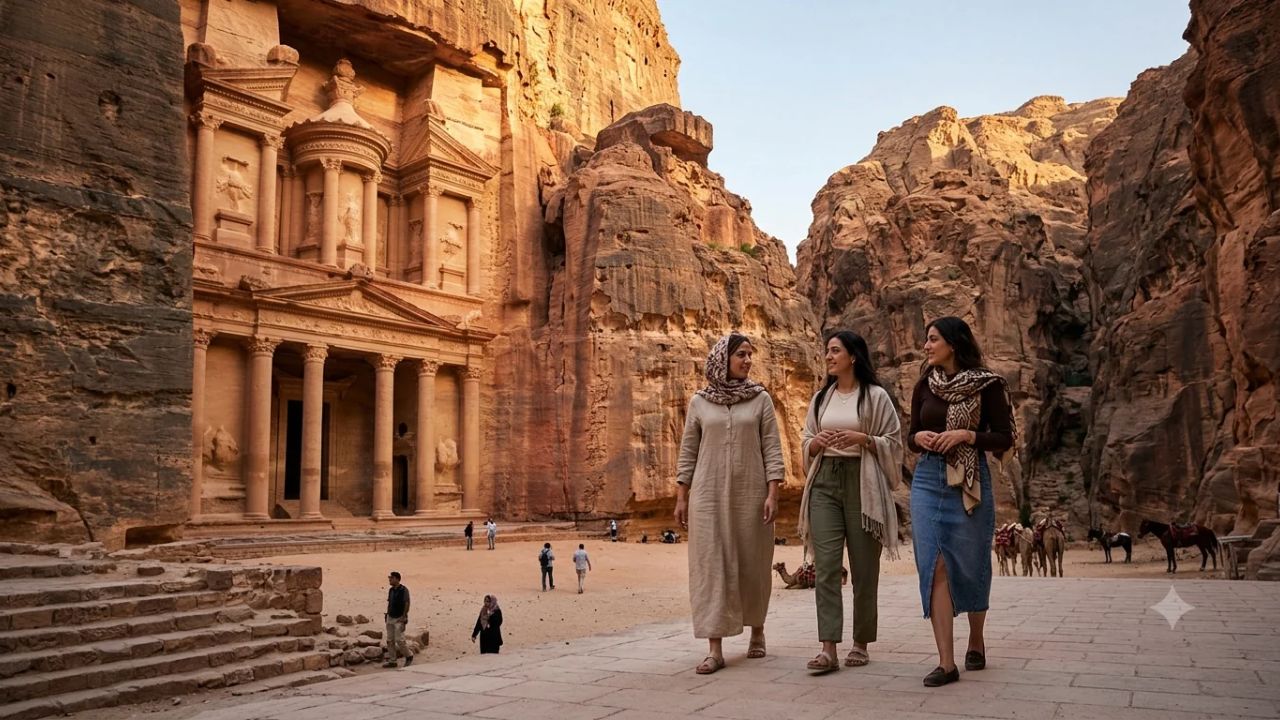
Jordan Tourism Receipts Climb to Record $6.35 Billion as UAE and Asian Inbound Markets Drive 2026 Economic Modernisation Vision

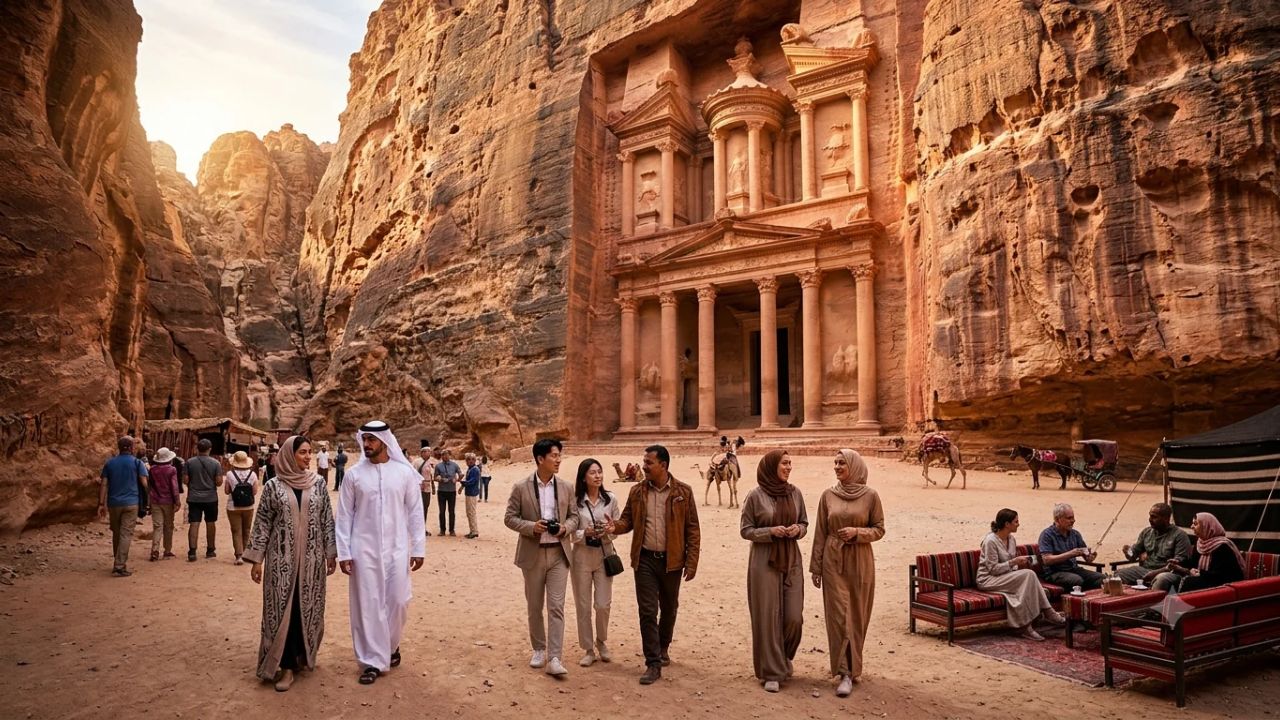
Amman, Jordan — Jordan's tourism sector achieved historic financial performance during the first nine months of 2026, generating a record JD 4.50 billion ($6.35 billion USD) in total tourism income as high-spending travelers from the United Arab Emirates, Saudi Arabia, and broader Asian markets offset softening demand from Western long-haul corridors. According to official performance data released by the Government Performance and Achievement Monitoring Unit at the Prime Ministry tracking the Executive Programme of the Economic Modernisation Vision (2026–2029), national tourism receipts increased by 4.9% year-on-year between January and September 2026, bolstered by a 21.5% single-month revenue surge in September to $794.3 million. Welcoming 5.66 million international arrivals alongside 1.25 million visiting Jordanian expatriates, the Hashemite Kingdom simultaneously narrowed its net travel deficit by 4.9% through reduced resident outbound expenditures, validating strategic state investments in religious heritage infrastructure, luxury Red Sea coastal leisure, and nationwide eco-tourism initiatives.
The strong macroeconomic results demonstrate Jordan's strategic agility in recalibrating its inbound travel pipeline amid complex regional geopolitical realities. While traditional leisure travel from Western Europe and North America registered double-digit contractions due to regional security perceptions, aggressive promotional campaigns by the Jordan Tourism Board across the Gulf Cooperation Council (GCC) and major Asian economic centers successfully captured premium cultural, corporate MICE, and religious pilgrimage demand. Supported by 1.93 million registered visits across iconic heritage landmarks including Petra, Jerash, and Wadi Rum, Jordan's tourism economy continues to serve as the foundational pillar of national economic modernization.
JORDAN TOURISM MACROECONOMIC SCORECARD: JAN - SEP 2026
| Entity / Route | Metrics | Operational Status |
|---|---|---|
| PERFORMANCE INDICATOR | JAN - SEP 2026 VALUE | YOY CHANGE & STATISTICAL CONTEXT |
| Total Tourism Income (9 Months) | JD 4.50 Billion ($6.35B USD) | +4.9% increase over 2025 baseline |
| September Standalone Receipts | $794.3 Million (~JD 563M) | +21.5% single-month surge |
| Total International Visitors | 5.66 Million arrivals | Resilient overall inbound volume |
| Jordanian Expatriate Arrivals | 1.25 Million entries | 22.1% share of total entries |
| Resident Outbound Expenditures | JD 1.07 Billion ($1.51B USD) | -4.9% drop (Deficit contraction) |
| Arab Source Market Receipts | Regional inbound revenue | +18.8% year-on-year expansion |
| Asian Source Market Receipts | Eastern inbound revenue | +12.3% year-on-year expansion |
| European Source Market Revenue | Western long-haul revenue | -23.7% year-on-year contraction |
| Americas Source Market Revenue | Transatlantic inbound revenue | -16.3% year-on-year contraction |
| Total Heritage Site Footfall | 1.93 Million visits | Across national parks and reserves |
Economic Modernisation Vision Drives Record Third-Quarter Performance
The primary policy architecture guiding Jordan's tourism resurgence is the Executive Programme of the Economic Modernisation Vision (2026–2029). Initiated to diversify national income, attract foreign direct investment, and create private-sector employment across the governorates, the multi-year framework identifies high-value tourism as a strategic growth engine.
Data published in the third-quarter 2026 progress report by the Prime Ministry's Government Performance and Achievement Monitoring Unit reveals that the tourism sector accelerated sharply during late summer. While cumulative receipts across the first eight months maintained steady upward trajectory, September generated an extraordinary 21.5% year-on-year expansion, yielding $794.3 million (approximately JD 563 million) in foreign exchange earnings.
This revenue expansion coincided with a healthy contraction in Jordan's net external travel balance. Outbound spending by Jordanian citizens and foreign residents vacationing abroad dropped by 4.9% during the first nine months of the year, totaling JD 1.07 billion ($1.51 billion USD). By retaining domestic consumer purchasing power within local governorates while expanding international inbound receipts, the kingdom strengthened its macro-fiscal stability and foreign currency reserves.
JORDAN NET TRAVEL BALANCE CONVERGENCE
| Column 1 |
|---|
| Inbound Foreign Receipts: [JD 4.50B / $6.35B] ===============================> (+4.9% YoY Gain) |
| Outbound Resident Spend: [JD 1.07B / $1.51B] <=============== (-4.9% Outflow Contraction) |
| NET MACROECONOMIC IMPACT: Expanded foreign reserves and fortified domestic capital circulation |
The Gulf Inbound Catalyst: United Arab Emirates and Regional Arab Expansion
The defining demographic driver of Jordan's revenue growth in 2026 was an 18.8% year-on-year increase in receipts generated by travelers from Arab nations. Within this regional segment, visitors from the Gulf Cooperation Council exhibited the highest average daily expenditure and the strongest booking consistency across five-star resorts and specialized medical facilities.
GCC & REGIONAL ARAB SOURCE MARKET DYNAMICS
| Entity / Route | Metrics | Operational Status |
|---|---|---|
| SOURCE NATION / SECTOR | PRIMARY TRAVEL PREFERENCES | IMPACTED REGIONS & ASSETS |
| United Arab Emirates | Luxury wellness retreats, | Five-star Amman hotels, Dead Sea |
| high-end culture, Red Sea | mineral spas, Ayla coastal resort | |
| Saudi Arabia | Family holidays, medical | Overland transit hubs, Amman |
| tourism, retail, summer breaks | shopping, Ajloun highland cabins | |
| Kuwait, Qatar, and Oman | Experiential luxury, diving, | Wadi Rum VIP glamping domes, |
| private archaeological tours | Aqaba marine reserves, Petra | |
| Wider Levant & North Africa | Short-stay commerce, business | Central Amman commercial districts, |
| (Iraq, Egypt, Palestine) | trips, family reunification | Regional overland border crossings |
The United Arab Emirates: Luxury Wellness and Coastal Retreats
Travelers originating from the UAE established a dominant presence across Jordan's premium hospitality sector. Benefiting from high-density flight schedules connecting Dubai International (DXB), Abu Dhabi (AUH), and Sharjah (SHJ) directly to Queen Alia International Airport (AMM) in Amman and King Hussein International Airport (AQJ) in Aqaba, Emirati visitors frequently booked luxury weekend getaways and extended wellness holidays:
- Dead Sea Wellness Hubs: UAE visitors represented the primary consumer demographic at five-star Dead Sea spa properties, utilizing specialized dermatological, mineral, and therapeutic treatments.
- The Coastal Enclave of Ayla: In Aqaba, the sustainable mixed-use development of Ayla recorded high occupancy among UAE vacationers, driven by its 18-hole championship golf course, private beach clubs, and luxury marina facilities.
- High-End Cultural Escapes: Affluent travelers from the Emirates paired urban fine dining in Amman's Abdali district with private helicopter charters to Petra and Wadi Rum.
Saudi Arabia: Volume Anchor and Cross-Border Transit
Saudi Arabia maintained its status as the single largest foreign volume driver for Jordanian tourism. The geographic proximity of the two kingdoms supported massive overland border traffic through the Mudawwara, Durra, and Omari border crossings, supplemented by daily nonstop flights between Riyadh, Jeddah, Dammam, and Amman:
- Family Tourism: Saudi families concentrated stays in upscale serviced apartments in western Amman and scenic mountain chalets in Ajloun and Jerash to escape summer desert heat.
- Therapeutic and Medical Travel: Jordan's accredited private hospitals and specialized clinics attracted thousands of Saudi patients seeking elective surgeries, rehabilitation therapy, and thermal wellness treatments at Ma'in Hot Springs.
Kuwait, Qatar, and Oman: Experiential Luxury in Southern Jordan
Visitors from Kuwait, Qatar, and Oman generated substantial revenue for experiential and adventure operators:
- Wadi Rum Martian Domes: High-spending Gulf tourists prioritized luxury geodesic dome camps and bespoke Bedouin hospitality in Wadi Rum, combining off-road desert safaris with private stargazing lectures.
- Red Sea Marine Tourism: Deep-sea diving expeditions, private yacht charters, and coral reef conservation tours across the Gulf of Aqaba saw consistent bookings from Qatari and Kuwaiti marine enthusiasts.
Asian Market Expansion: Cultural Tourism, MICE, and Pilgrimage Circuits
Complementing the regional Gulf surge, Asian source markets delivered a robust 12.3% year-on-year increase in inbound tourism revenue during the first nine months of 2026. Strategic marketing by the Jordan Tourism Board across South and East Asia successfully opened high-yield leisure, corporate, and faith-based travel channels.
ASIAN SOURCE MARKET CONTRIBUTION PROFILE
| Entity / Route | Metrics | Operational Status |
|---|---|---|
| SOURCE MARKET | DOMINANT TRAVEL SEGMENTS | KEY DESTINATIONS VISITED |
| India | Corporate MICE events, luxury | Amman conference centers, Petra, |
| weddings, leisure itineraries | Dead Sea resort convention venues | |
| China | Organized archaeological group | Petra, Jerash Roman ruins, |
| tours, cultural expeditions | Amman Citadel, Mount Nebo | |
| South Korea | Biblical pilgrimage groups, | Bethany Beyond the Jordan, Madaba |
| Christian heritage touring | mosaic churches, Mount Nebo | |
| Malaysia and Indonesia | Islamic religious circuits, | Shrines of the Sahaba (Karak), |
| Sahaba shrines, regional tours | Mu'tah battlefields, Amman mosques |
India: Destination Events and Corporate MICE
Indian arrivals expanded significantly across metropolitan corporate tiers:
- Incentive Programs: Corporate incentive trips organized by Indian enterprises favored five-star Dead Sea resort properties equipped with convention centers, pairing formal business meetings with excursions to nearby biblical sites.
- Destination Celebrations: High-net-worth Indian families increasingly selected Jordan's dramatic desert backdrops in Wadi Rum and luxury coastal ballrooms in Aqaba for multi-day destination weddings.
China: Cultural Heritage and Archaeological Expeditions
Following the reactivation and expansion of authorized destination status for organized Chinese tour groups, arrivals from Beijing, Shanghai, and Guangzhou surged:
- Archaeological Focus: Chinese visitors prioritized comprehensive classical itineraries, spending extended dwell times exploring the Greco-Roman colonnades of Jerash, the Roman Theater in downtown Amman, and the rock-cut facades of Petra.
- Digital Payment Integration: Key tourist sites expanded acceptance of digital payment platforms such as WeChat Pay and Alipay, facilitating retail transactions for local handicraft vendors.
South Korea and Southeast Asia: Faith-Based Pilgrimage Networks
Religious travel emerged as a major stabilizing factor across central and northern Jordan:
- Christian Heritage Circuits (South Korea): Korean pilgrimage delegations journeyed extensively between the Baptism Site (Bethany Beyond the Jordan), the Byzantine mosaic map at Madaba's Saint George Church, and the summit of Mount Nebo where Moses viewed the Promised Land.
- Islamic Heritage Pathways (Malaysia and Indonesia): Muslim pilgrimage groups traveling on combined Umrah-plus-Jordan itineraries visited the historic battlefields of Mu'tah and the sacred shrines of the Prophet Muhammad's venerable companions (Sahaba) in the Karak and Tafilah governorates.
Balancing Contractions in Western Long-Haul Markets
The remarkable performance of Arab and Asian visitor segments provided an essential economic buffer against severe contractions across traditional Western outbound source markets during the first nine months of 2026.
WESTERN LONG-HAUL DOWNTURN VS. EXPATRIATE BEDROCK
| SOURCE SECTOR | FINANCIAL VARIATION | UNDERLYING STRUCTURAL CAUSES |
|---|---|---|
| European Union & UK | -23.7% revenue contraction | Geopolitical security concerns, |
| (UK, France, Germany, Italy) | Year-on-year decline | reduced low-cost carrier rotations |
| United States & Americas | -16.3% revenue contraction | Cancellation of regional multi- |
| (USA, Canada, Latin America) | Year-on-year decline | country Holy Land group tours |
| Jordanian Expatriates Abroad | -4.1% spend variation | 1.25 million arrivals; vital core |
| (GCC, Europe, North America) | Remained #1 volume bedrock | supporting national aviation seats |
European and Transatlantic Headwinds
Heightened regional geopolitical volatility across the Middle East triggered widespread consumer caution among Western leisure travelers:
- European Revenue Drop (-23.7%): European travelers, historically the mainstay of spring and autumn cultural group tours to Petra and Jerash, cut bookings significantly. Several low-cost and chartered carriers reduced scheduled flight rotations into Amman and Aqaba, impacting budget and mid-tier tour operators.
- American Market Contraction (-16.3%): Classic transatlantic itineraries that previously combined Israel, the Palestinian territories, and Jordan experienced sweeping cancellations. In response, the Jordan Tourism Board initiated focused marketing campaigns across North America to rebrand Jordan as an independent, secure, and standalone oasis of stability.
The Expatriate Anchor
Despite a modest 4.1% reduction in total monetary expenditure, Jordanians residing abroad (Al-Mughtaribeen) remained the foundational anchor of the tourism economy:
- Volume Significance: Approximately 1.25 million expatriate arrivals were recorded between January and September 2026, constituting 22.1% of the total 5.66 million international arrivals.
- Economic Stability: Returning expatriates traveling home from Saudi Arabia, the UAE, Kuwait, the United States, and Europe filled scheduled flights, patronized retail and dining establishments in urban centers, and supported extended family hospitality across every municipality.
Footfall Analysis Across Historic and Natural Landmarks
The physical flow of travelers across Jordan's designated archaeological parks, nature reserves, and coastal resorts totaled 1.93 million registered visits during the first nine months of 2026.
PRIMARY TOURISM DESTINATION VISITOR FOOTFALL
| Entity / Route | Metrics | Operational Status |
|---|---|---|
| DESTINATION COMPLEX | REGISTERED VISITOR COUNT | KEY DEMOGRAPHIC DRIVERS |
| Aqaba Coastal Resort Zone | 656,600 Overnight Visitors | Red Sea diving, regional family |
| getaways, Ayla development stays | ||
| Petra Archaeological Park | 362,000 Registered Visitors | Inbound Asian tour groups, Gulf |
| (UNESCO World Heritage Site) | luxury travelers, day excursions | |
| Wadi Rum Protected Area | 219,100 Adventure Travelers | Luxury glamping domes, off-road |
| (Desert Nature Reserve) | desert treks, film tourism | |
| Regional Cultural Monuments | ~692,300 Combined Visits | Jerash, Mount Nebo, Ajloun Castle, |
| (Northern & Central Sites) | Umm Qais, Downtown Old Salt |
Aqaba Leads the Nation (656,600 Overnight Visitors)
Aqaba emerged as Jordan's most visited destination, welcoming 656,600 overnight guests:
- Diversified Appeal: The Special Economic Zone Authority (ASEZA) leveraged tax-free shopping, international cruise calls, and marine sports to capture domestic, regional, and European travelers.
- Aviation Feeder: Direct charter and low-cost flights into King Hussein International Airport allowed international visitors to bypass Amman and access southern beach resorts directly.
Petra's Resilience (362,000 Visitors)
While visitor volumes at the ancient Rose City of Petra remained below historic peaks due to European tour cancellations, the site recorded 362,000 visits:
- Asian Group Influx: Inbound groups from China, India, and South Korea, combined with regional Arab travelers, helped sustain independent tour guides, local bedouin transport operators, and handicraft cooperatives across Wadi Musa.
Wadi Rum Adventure Boom (219,100 Visitors)
The dramatic desert expanse of Wadi Rum registered 219,100 visitors:
- Experiential Accommodation: The proliferation of high-end, climate-controlled desert camps offering panoramic glass-walled domes provided a strong revenue stream, insulated from broader regional booking slumps.
Domestic Tourism Mobilization: The Success of "Urdunna Jannah"
To ensure that tourism revenues permeated rural communities outside traditional Golden Triangle tourist zones (Amman, Petra, Aqaba), the Ministry of Tourism and Antiquities expanded its flagship domestic travel program, "Urdunna Jannah" (Our Jordan Is a Garden):
- Subsidized Citizen Journeys: The initiative subsidized bus transportation, guided tours, and local meals, enabling more than 202,000 Jordanian citizens to explore historical and natural sites across all twelve governorates.
- 6,430 Dispatched Trips: More than 6,430 individual group excursions were deployed between January and September 2026.
- Decentralized Wealth Distribution: The program directed capital into family-owned restaurants, artisanal handicraft workshops, agricultural cooperatives, and community-managed homestays in northern and central regions such as Umm Qais, Pella, Dana Biosphere Reserve, and the Jordan Valley.
Event-Led Tourism and Digital Aggregation via calendar.jo
Entertainment, cultural festivals, and international sporting events played a prominent role in attracting regional high-spending visitors under the Economic Modernisation Vision:
- International Performances: Jordan hosted nine major international musical and theatrical productions during the nine-month period, drawing over 42,000 attendees. Remarkably, more than 24,000 ticket holders traveled from outside the kingdom specifically to attend these productions in Amman and Jerash.
- Centralized Event Platform: The Ministry of Tourism deployed the centralized digital portal
calendar.jo, listing 189 officially sanctioned events spanning culinary street festivals, artisanal bazaars, endurance marathons, and contemporary art exhibitions.
CULTURAL EVENT AND DOMESTIC TRAVEL IMPACT
| Category / Entity | Details / Impact |
|---|---|
| "Urdunna Jannah" Participants: | Over 202,000 domestic travelers exploring rural governorates |
| Total Organized Trips Run: | 6,430 chartered excursions supporting small community businesses |
| Major International Shows: | 9 large-scale artistic productions convening 42,000+ attendees |
| Cross-Border Ticket Buyers: | 24,000+ international attendees traveling specifically for events |
| Digital Event Aggregation: | 189 verified cultural, culinary, and sporting listings on calendar |
Infrastructure Upgrades, Sacred Heritage, and Environmental Standards
To protect historic monuments and enhance long-term visitor capacity, the Jordanian government completed substantial capital improvement and environmental conservation initiatives across primary tourism corridors:
- Baptism Site Master Plan (Bethany Beyond the Jordan): Formal land allocation and private development agreements were finalized on designated plots adjacent to the sacred site. The master plan establishes specialized pilgrim accommodation villages, conference halls for international ecclesiastical gatherings, and contemplative retreat centers designed for extended faith-based stays.
- Old Salt Heritage Regeneration: Urban conservation and trail development works were concluded across historic downtown As-Salt. The UNESCO World Heritage-listed city has established pedestrianized heritage corridors, restored 19th-century yellow limestone Ottoman architecture, and trained local youth as community storytellers.
- Site Enhancements in Jerash, Dead Sea, and Ajloun: Visitor reception centers, interpretive signage, accessible wooden walkways, and emergency services infrastructure underwent comprehensive rehabilitation. At Ajloun Forest Reserve, progress advanced on a state-of-the-art eco-tourism center integrated with the operational Ajloun cable car (Teleferique).
- Nationwide Water and Waste Conservation: Demonstrating responsible resource stewardship, water-saving fixtures were installed across sanitary facilities at 46 primary archaeological sites, while 88 multi-stream waste-sorting and recycling kiosks were deployed across public parks and nature reserves.
Why This Matters (Information Gain)
The macroeconomic trajectory of Jordan's tourism sector carries profound implications for global travel economics and regional destination marketing. For decades, international destination management organizations operated under the assumption that Middle Eastern cultural tourism was completely reliant on Western long-haul travel markets. Jordan's 2026 performance dismantles this dependency.
By generating a record $6.35 billion in tourism receipts despite a 23.7% collapse in European travel, Jordan has proven that proactive source-market diversification can insulate a national economy against external geopolitical shocks. The rapid expansion of luxury wellness links with the UAE, high-volume family travel from Saudi Arabia, corporate incentive travel from India, and heritage group travel from China provides a resilient blueprint for emerging destinations worldwide. Supported by domestic capital retention through "Urdunna Jannah" and rigorous environmental site management, Jordan enters the final quarter of 2026 with a diversified, financially resilient tourism foundation.
Frequently Asked Questions
What were Jordan's total tourism receipts for the first nine months of 2026?
Jordan generated a record JD 4.50 billion ($6.35 billion USD) in total tourism income between January and September 2026. This represents a 4.9% increase year-on-year compared to the same period in 2025. Growth was accelerated by an extraordinary 21.5% single-month surge in September, which generated $794.3 million (approximately JD 563 million) in receipts.
Which countries drove the increase in Jordan's tourism revenue in 2026?
The revenue growth was driven primarily by an 18.8% increase in receipts from Arab nations—led by luxury wellness and coastal travelers from the United Arab Emirates, family and medical tourists from Saudi Arabia, and luxury desert glamping visitors from Kuwait, Qatar, and Oman. In addition, Asian source markets expanded by 12.3%, powered by corporate MICE delegations from India, organized archaeological group tours from China, and religious pilgrimage travelers from South Korea, Malaysia, and Indonesia.
How did Jordan compensate for declining European and American tourist numbers?
Revenues from European travelers dropped by 23.7% and American visitors fell by 16.3% due to regional geopolitical sensitivities. Jordan successfully compensated for these declines by pivoting marketing campaigns toward high-spending Gulf and Asian demographics, welcoming 1.25 million visiting Jordanian expatriates (representing 22.1% of all entries), and reducing resident outbound travel expenditure by 4.9% to JD 1.07 billion ($1.51 billion USD), which contracted the national travel deficit.
Which tourist attractions recorded the highest visitor footfall in Jordan in 2026?
Jordan's archaeological parks, natural reserves, and resort hubs registered 1.93 million visits during the first nine months of 2026. The coastal city of Aqaba topped the national roster with 656,600 overnight visitors, followed by the ancient Nabataean capital of Petra with 362,000 registered visitors, and the desert protected area of Wadi Rum with 219,100 adventure travelers.
Related Travel Guides
- Siem Reap-Angkor International Airport Advances Digital Immigration and SmartGates as Cambodia Expands Asian Flight Routes and Sustainable MICE Tourism
- Netherlands Walks Alongside 42 European Nations Facing Spain Travel Hurdles as Valencia Enforces €3,000 Tourist Fines and Tour Limits
- London Heathrow Airport Issues Urgent Travel Advisory for 48-Hour Rail Closure: Heathrow Express and Elizabeth Line Suspended November 28-29, 2026
- China Inbound Tourism Expansion: Visa-Free Reforms, Viral Creator Campaigns, and $470 Billion Target
This article is for informational purposes. Flight routes, passenger regulations, visa rules, and transit advisories are subject to change by airlines and aviation authorities. Readers are advised to verify schedules and travel documentation with relevant carriers and border agencies before departure.
Related Stories

Spain Allocates €42 Million to Rural and Experiential Tourism as Inbound Arrivals from Switzerland, Poland, and Belgium Expand