
Alaska's Kobuk Valley and Arctic Destinations Transform Roadless Travel Logistics: 2026 Global Traveler Guide
Exploring Kobuk Valley via Kotzebue and Bettles, alongside new 2026 Arctic travel regulations in Canada, Svalbard, and Greenland.

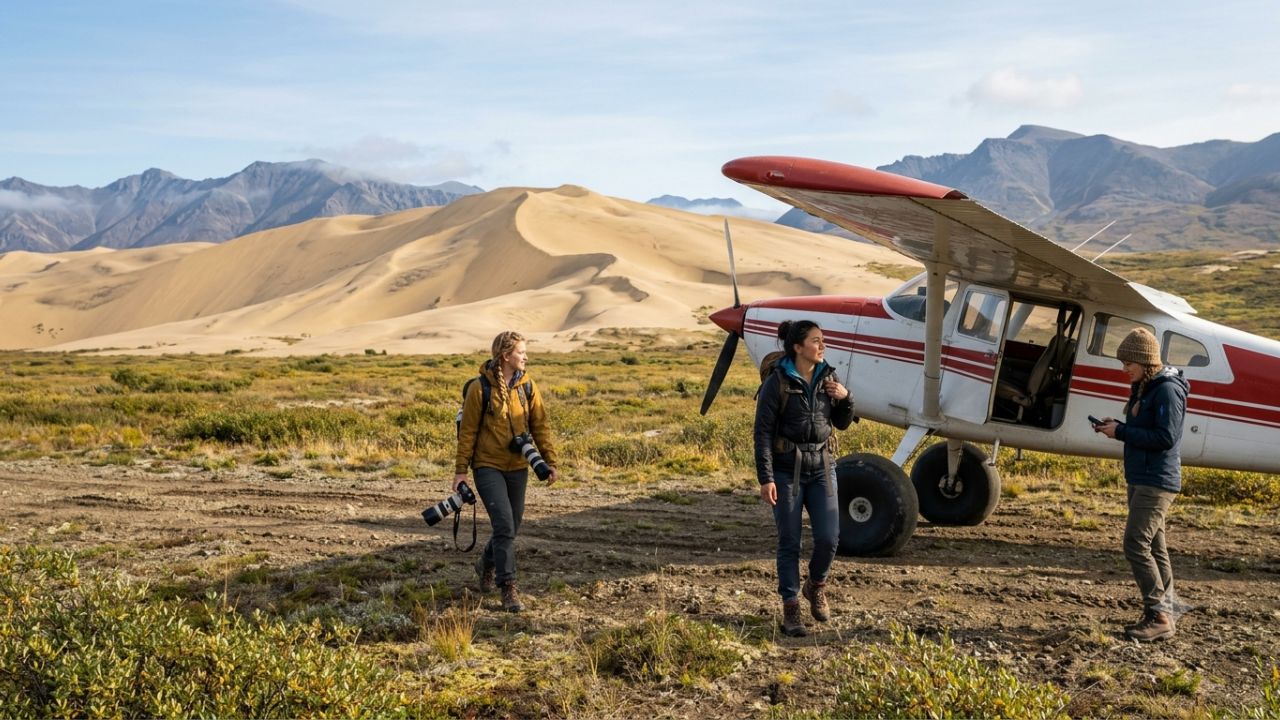
Image generated by AI
Bush aviation logistics, mandatory permit lead times, and regulatory compliance are replacing traditional hotel availability as the primary limiting factor for Arctic wilderness tourism. From Alaska's roadless Kobuk Valley to remote polar parks in Canada, Norway, and Greenland, strict operational oversight is redefining how travelers access extreme wilderness environments.
[ANCHORAGE, Alaska] — In Alaska’s Kobuk Valley National Park, where zero roads, developed trails, or public campgrounds exist, Kotzebue and Bettles serve as essential bush aviation staging hubs for incoming visitors. This reliance on small-aircraft charters mirrors operational constraints across polar destinations in Canada, Norway, and Greenland, where 2026 regulatory updates require advance landing permits, satellite communications equipment, and strict weather contingency buffers before setting foot in protected landscapes.
Across these roadless northern destinations, access is governed not merely by geography, but by authorized air taxi operators, limited aircraft seat capacity, mandatory search-and-rescue insurance, and tight administrative windows.
Global Infrastructure Matrix: Comparing Roadless Polar Destinations
Commercial travel operators and wilderness adventurers across North America and Northern Europe encounter similar operational models despite differing national jurisdictions. In roadless Arctic zones, transport capacity and regulatory compliance form the core of the travel product.
+------------------------------------+--------------------------------+-----------------------------------+-----------------------------------+-------------------------------------+
| Destination                        | Gateway or Staging Point       | Infrastructure Reality            | Current Access Control            | Critical B2B & Travel Implication   |
+------------------------------------+--------------------------------+-----------------------------------+-----------------------------------+-------------------------------------+
| Kobuk Valley, United States        | Kotzebue, Bettles              | No roads, trails, or campgrounds  | Commercial NPS authorization;     | Aircraft seat capacity caps         |
|                                    |                                |                                   | authorized air taxis required     | overall destination inventory       |
+------------------------------------+--------------------------------+-----------------------------------+-----------------------------------+-------------------------------------+
| Aulavik, Canada                    | Inuvik                         | No roads, facilities, or trails   | Aircraft landing permit & national| Operators must coordinate air       |
|                                    |                                |                                   | park business license required    | charters & permits before departure |
+------------------------------------+--------------------------------+-----------------------------------+-----------------------------------+-------------------------------------+
| Ivvavik, Canada                    | Inuvik                         | Zero road access into park        | Charter aircraft primary access;  | Weather delay buffers and flight    |
|                                    |                                |                                   | aircraft permits apply            | coordination are mandatory          |
+------------------------------------+--------------------------------+-----------------------------------+-----------------------------------+-------------------------------------+
| Svalbard, Norway                   | Longyearbyen                   | No roads linking communities      | 2026 field-safety rules require   | 8-week permit lead time;            |
|                                    |                                |                                   | advance operational permits       | compliance shapes product design    |
+------------------------------------+--------------------------------+-----------------------------------+-----------------------------------+-------------------------------------+
| Northeast Greenland National Park  | Expedition-based access        | Sparse public infrastructure      | Category A/B expedition permits   | 12-week lead time, DKK 4,000 fee,   |
|                                    |                                |                                   | and national park clearance       | mandatory satellite communications  |
+------------------------------------+--------------------------------+-----------------------------------+-----------------------------------+-------------------------------------+
Bush Aviation Economics Transform Kobuk Valley Travel Costs
Data from the U.S. National Park Service (NPS) confirms that Kobuk Valley National Park maintains zero road infrastructure. Scheduled commercial air routes carry travelers from Anchorage to Kotzebue, or from Fairbanks to Bettles. From these regional hubs, authorized commercial air taxis operate onward flights into the park hinterland. While summer boat travel and strenuous foot treks remain alternative options, aircraft conduct the vast majority of visitor transport.
NPS flightseeing guidelines indicate that authorized air charter operators fly small aircraft carrying three to ten passengers. Charter pricing averages $1,000 or more per hour. Day trips combining aerial flightseeing with wilderness ground landings—such as touch-downs near the 25-square-mile Great Kobuk Sand Dunes—represent the primary mode of visitor access.
Consequently, Kobuk Valley operates under a distinct cost structure: while entry into the protected wilderness involves no park entrance gates, charter air transportation represents the primary financial expenditure for visiting travelers.
Kotzebue and Bettles Gateway Logistics Replace Standard Park Entrances
Kotzebue houses the Northwest Arctic Heritage Center, serving as the official NPS park headquarters and primary visitor center. Before venturing into backcountry terrain, travelers receive vital orientation briefings covering Arctic weather forecasts, wildlife safety protocols, fire hazards, and emergency communication procedures.
Bettles performs a complementary gateway role for journeys originating in Fairbanks. Together, Kotzebue and Bettles function as the operational substitutes for highway junctions, parking plazas, and visitor complexes found in high-density national parks.
Interpreting 2026 NPS Kobuk Valley Visitor Data Methodological Shift
Updated federal statistics require careful interpretation by travel analysts. The National Park Service recorded 1,782 preliminary recreation visits to Kobuk Valley between January and August 2026, compared with 6,522 visits during the equivalent period in 2025. August 2026 recorded 431 recreation visits versus 1,546 in August 2025.
| Kobuk Valley Visitation Period | Reported Visitor Count | Statistical Benchmark & Notes |
|---|---|---|
| Jan – Aug 2025 (Legacy Baseline) | 6,522 recreation visits | Recorded under previous estimation formula |
| Jan – Aug 2026 (Updated Count) | 1,782 recreation visits | First full year under revised counting model |
| August 2025 Baseline | 1,546 recreation visits | Peak summer legacy count |
| August 2026 Revised Count | 431 recreation visits | Peak summer revised count (-72.7% shift) |
NPS visitation notes confirm that December 2025 marked the implementation of a new visitor counting methodology for Kobuk Valley. The agency previously flagged in December 2024 that winter recreation estimates required recalibration. Consequently, the apparent 72.7 percent year-to-date statistical drop reflects a reporting methodology change rather than a sudden decline in actual traveler demand.
Canadian Arctic Aviation Constraints at Aulavik and Ivvavik National Parks
Canada enforces parallel aviation constraints across its northern park system. Parks Canada reports that Aulavik National Park on Banks Island contains no road access, public facilities, or developed trails. Commercial aircraft charters originating in Inuvik—located approximately 750 kilometers southwest of the park boundary—serve as the primary transport method.
Visitors must obtain a Parks Canada aircraft landing permit, while commercial air carriers are required to hold a valid National Parks Business Licence. Parks Canada explicitly instructs travelers to carry minimum 48-hour emergency supply buffers, as sudden polar weather shifts routinely delay pickup flights.
Ivvavik National Park follows a matching operational pattern. Operating without road access, the park relies on charter flights from Inuvik, 200 kilometers to the east. Updated Parks Canada guidance issued in April 2026 reinforces mandatory weather contingency windows for all commercial itineraries.
Norway Enforces 2026 Svalbard Field Safety Regulations
Norway presents a matching regulatory approach across the Svalbard archipelago. The Norwegian Government maintains a roadless framework between settlements, positioning Longyearbyen as the central administrative and transit hub.
On January 1, 2026, updated Field Operation Safety Regulations took effect across Svalbard. According to the Governor of Svalbard, commercial tour operators and field expeditions must secure operational permits at least eight weeks prior to commencing activities. The framework mandates comprehensive search-and-rescue insurance and formal safety management protocols.
A secondary regulatory phase begins on July 1, 2027, requiring all commercial guided activities outside established settlements to utilize certified Svalbard nature guides.
+------------------------------------+--------------------------------------------------+
| Svalbard Visitor Metric (July 2026)| Official Statistics Norway Data                  |
+------------------------------------+--------------------------------------------------+
| Total Commercial Guest Nights      | 20,063 Guest Nights                              |
| Foreign Commercial Guest Nights    | 16,382 Foreign Guest Nights                      |
| Norwegian Domestic Guest Nights    | 3,681 Domestic Guest Nights                      |
+------------------------------------+--------------------------------------------------+
Despite tightening regulatory oversight, Statistics Norway reported 20,063 commercial accommodation guest nights in Svalbard during July 2026, demonstrating sustained international demand across polar travel markets.
Greenland Expedition Protocols Enforce 12-Week Lead Times and Safety Equipment
Greenland enforces some of the Arctic's most stringent advance planning requirements. Under the Government of Greenland expedition framework, travel in remote areas requires formal expedition permits, alongside specialized permits for Northeast Greenland National Park.
Official expedition portal guidelines updated on July 1, 2026, mandate:
- 12-Week Application Window: Commercial tour expeditions (Category A) and cruise operations within the national park (Category B) must submit applications at least 12 weeks before departure, accompanied by a non-refundable DKK 4,000 application fee.
- Mandatory Safety Equipment: Expeditions must carry a Personal Locator Beacon (PLB), maritime VHF radio, and satellite telephone.
- Rescue Center Protocols: Operators must notify Greenlandic search-and-rescue authorities immediately prior to departure and upon safe expedition completion.
Strategic Operational Roadmap for Arctic Travel Agents and Outfitters
To navigate evolving regulatory frameworks across roadless Arctic destinations, travel planners must adopt key operational protocols:
- Secure Aircraft Seats early: Treat small-aircraft charter capacity as primary inventory rather than secondary add-on transport.
- Verify Supplier Authorizations: Confirm that air taxis and guides hold current NPS commercial authorizations or Parks Canada business licenses.
- Build Flexible Itineraries: Incorporate 48-to-72 hour weather buffers around remote bush aircraft pickups.
- Contextualize Data Trends: Distinguish between administrative methodology updates (such as Kobuk Valley's 2026 visitor count change) and actual market demand shifts.
- Honor Regulatory Lead Times: Allow a minimum of eight weeks for Svalbard field permits and 12 weeks for Greenland expedition clearances.
- Audit Satellite Communications: Ensure field teams carry functional PLBs, satellite phones, and VHF radios for off-grid operations.
Why This Matters: Experienced Perspective for Travelers and Outfitters
For the traveler, accessing roadless Arctic parks like Kobuk Valley requires shifting expectations away from traditional park entrances and paved roads. Adventure travelers must account for small-aircraft seat limits, variable flight weather, and mandatory safety orientations at gateways like Kotzebue or Inuvik.
For tour operators and industry outfitters, managed remoteness defines the commercial value of Arctic wilderness travel. Success relies on navigating complex compliance rules—such as Svalbard's 8-week permit window or Greenland's 12-week expedition process—while communicating weather risks clearly to clients. Restricting access through licensed charters and strict environmental permits protects fragile polar ecosystems while sustaining a high-value, low-impact travel model.
Frequently Asked Questions
How do visitors access Kobuk Valley National Park without roads?
Visitors access Kobuk Valley National Park primarily via authorized bush air taxis operating from gateway communities in Kotzebue (connected via commercial flights from Anchorage) or Bettles (connected via Fairbanks).
Why did Kobuk Valley's reported visitor numbers drop in 2026?
The reported drop in 2026 recreation visits (1,782 visits Jan–Aug 2026 vs 6,522 in 2025) results from a new National Park Service counting methodology introduced in December 2025, rather than a decline in actual travel demand.
Related Travel Guides
Disclaimer
This article is for informational and educational purposes only. It does not constitute legal, financial, or professional advice. While we strive to provide accurate and up-to-date information, travel policies, regulations, and conditions change rapidly. Always verify information with official sources before making travel decisions. Nomad Lawyer makes no representations about the accuracy, reliability, completeness, or suitability of the information provided. Readers should consult qualified professionals for advice specific to their circumstances. The views expressed in this article are those of the author and do not necessarily reflect the views of Nomad Lawyer.
Kunal K Choudhary
Co-Founder & Contributor
A passionate traveller and tech enthusiast. Kunal contributes to the vision and growth of Nomad Lawyer, bringing fresh perspectives and driving the community forward.
Learn more about our team →