
Global Airline Tech Failures Trigger Mass Summer Travel Chaos and Infrastructure Vulnerabilities in 2026
A convergence of unrelated technology outages across major aviation hubs has led to widespread cancellations and delays during the 2026 peak summer travel season.

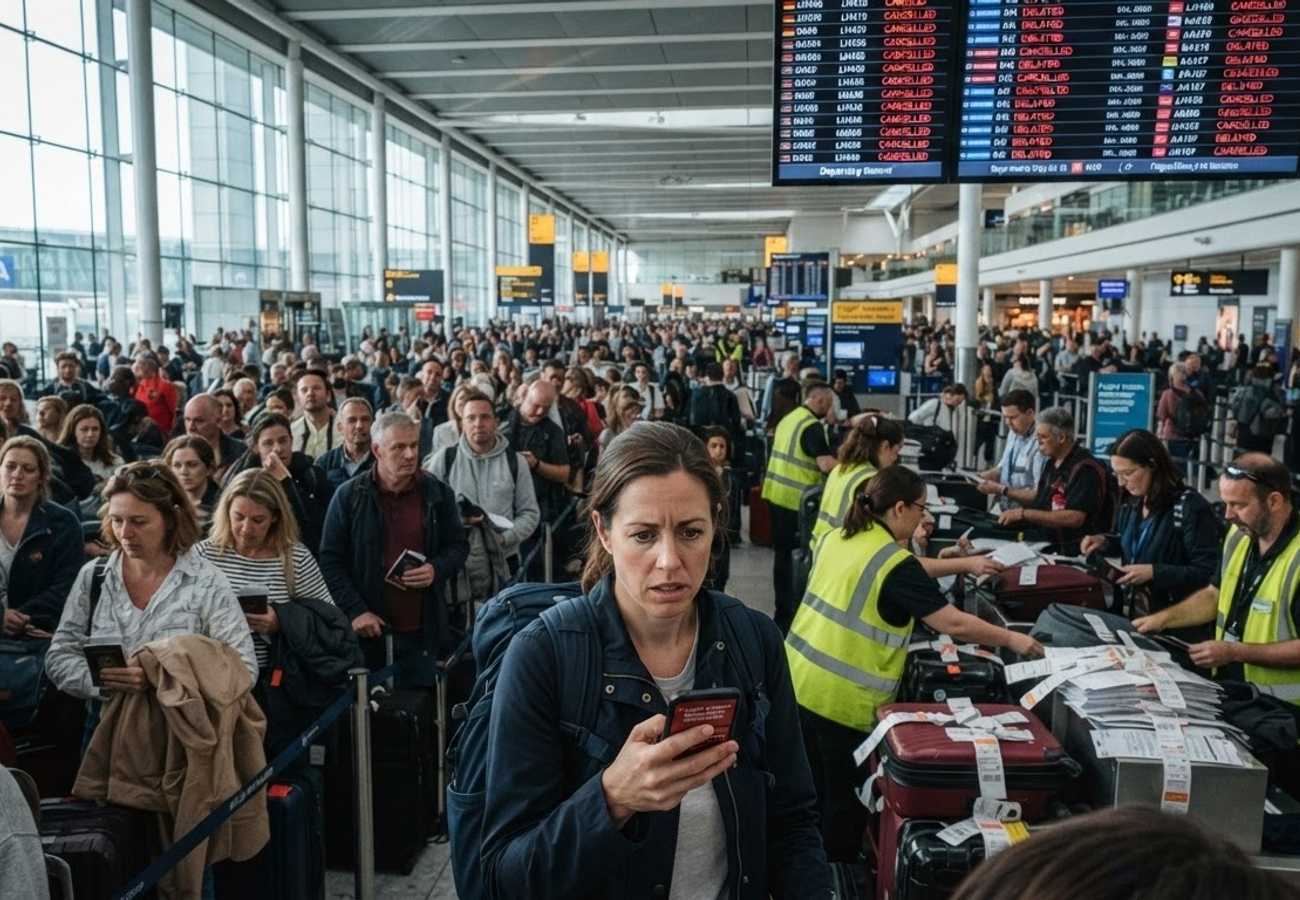
Image generated by AI
A series of unrelated technology failures across global airlines and airport operators has converged with peak vacation demand, stranding passengers and exposing the fragility of modern digital aviation infrastructure.
Systemic Failures at Major Global Hubs
The 2026 peak summer travel window has been severely disrupted by a cluster of technology outages affecting check-in systems, boarding platforms, and crew scheduling tools. These failures have triggered sudden ground stops and rolling delays across key international hubs.
In several major airports, interruptions to reservation and departure-control systems forced ground staff to revert to manual processing for baggage tags and boarding passes. While some outages were brief, the resulting operational backlogs persisted long after the technical issues were resolved, leaving aircraft and crews out of position for subsequent flight legs.
Data indicates that carriers are currently prioritizing long-haul flights and routes with low daily frequencies during recovery efforts. Short-haul and regional services have faced the highest rate of late-notice cancellations, particularly where alternative ground transportation is available.
Digital Infrastructure Vulnerabilities
The current instability highlights a critical dependence on interconnected software for weight and balance calculations, ticketing, crew rostering, and air traffic coordination. A fault in a single component now frequently triggers cascading effects across the entire network.
Industry analysis points to three primary drivers of these failures:
- Legacy Infrastructure: Continued reliance on aging hardware and proprietary platforms that are difficult to patch without service interruptions.
- Integration Gaps: Friction between new cloud-based tools—implemented for contactless travel and dynamic pricing—and established on-premise systems.
- Capacity Constraints: High load factors mean there is virtually no spare capacity to absorb displaced passengers, lengthening standby lists and complicating rebooking.
While redundancy measures exist, they often operate in "fallback modes" that maintain essential functions but significantly reduce processing efficiency, leading to the massive terminal queues observed this season.
Operational Impact Summary
| Affected System | Primary Impact | Recovery Priority | Resulting Passenger Experience |
|---|---|---|---|
| Departure Control | Manual boarding/baggage tagging | High (Long-haul) | Terminal congestion, long queues |
| Crew Scheduling | Aircraft/Crew displacement | Medium | Rolling delays, cancellations |
| Check-in Kiosks | App/Kiosk error messages | Low (Regional) | Diversion to in-person counters |
| Border Gates | Security/Customs bottlenecks | Medium | Compressed boarding windows |
Traveler Logistics Guide: Navigating System Outages
From a ground-level perspective, the best way to navigate these disruptions is to decouple your reliance on a single digital channel. When airline apps fail, the information lag between the app and the physical departure board can be significant.
Connection and Layover Strategies
- Buffer Zones: In the current environment, avoid connections shorter than three hours at major hubs. System glitches often lead to "compressed" boarding, where the window to reach a connecting gate is drastically reduced.
- Early Departures: Prioritize the first flight of the day. These have a statistically higher probability of operating on schedule before the day's cumulative technical delays compound.
- Independent Tracking: Use third-party flight tracking tools alongside official airline channels to identify disruptions before they are officially announced on the app.
Customs and Digital Transit Policies If you are utilizing digital transit identities (such as Digi Yatra or similar biometric systems), ensure you have a physical backup of your passport and visa. When automated border gates malfunction, the transition back to manual passport control creates immediate bottlenecks.
Documentation for Compensation Consumer advocates emphasize the importance of a "paper trail" for claims. If stranded:
- Take screenshots of all error messages on airline apps.
- Save digital timestamps of cancellation notices.
- Retain all physical receipts for essential lodging and meals.
Infrastructure Impact Assessment
The current crisis is forcing a pivot in how airport authorities and airlines approach maintenance. There is a growing shift toward mirrored platforms and regional data centers to eliminate single points of failure.
However, meaningful upgrades to legacy stacks require sustained investment and cannot be implemented mid-season. In the immediate term, operators are relying on contingency staffing and targeted travel waivers to manage the remaining peak period. The long-term outlook suggests a move away from "just-in-time" scheduling toward a model that incorporates more operational slack to absorb digital shocks.
The convenience of digital-first aviation now demands a corresponding investment in systemic resilience.
Related Travel Guides
Disclaimer
This article is for informational and educational purposes only. It does not constitute legal, financial, or professional advice. While we strive to provide accurate and up-to-date information, travel policies, regulations, and conditions change rapidly. Always verify information with official sources before making travel decisions. Nomad Lawyer makes no representations about the accuracy, reliability, completeness, or suitability of the information provided. Readers should consult qualified professionals for advice specific to their circumstances. The views expressed in this article are those of the author and do not necessarily reflect the views of Nomad Lawyer.
Preeti Gunjan
Contributor & Community Manager
A passionate traveller and community builder. Preeti helps grow the Nomad Lawyer community, fostering engagement and bringing the reader experience to life.
Learn more about our team →