FAA Predicts Sunday Recovery After Nationwide US Aviation Shutdown Disrupted 4,100 Flights in 2026


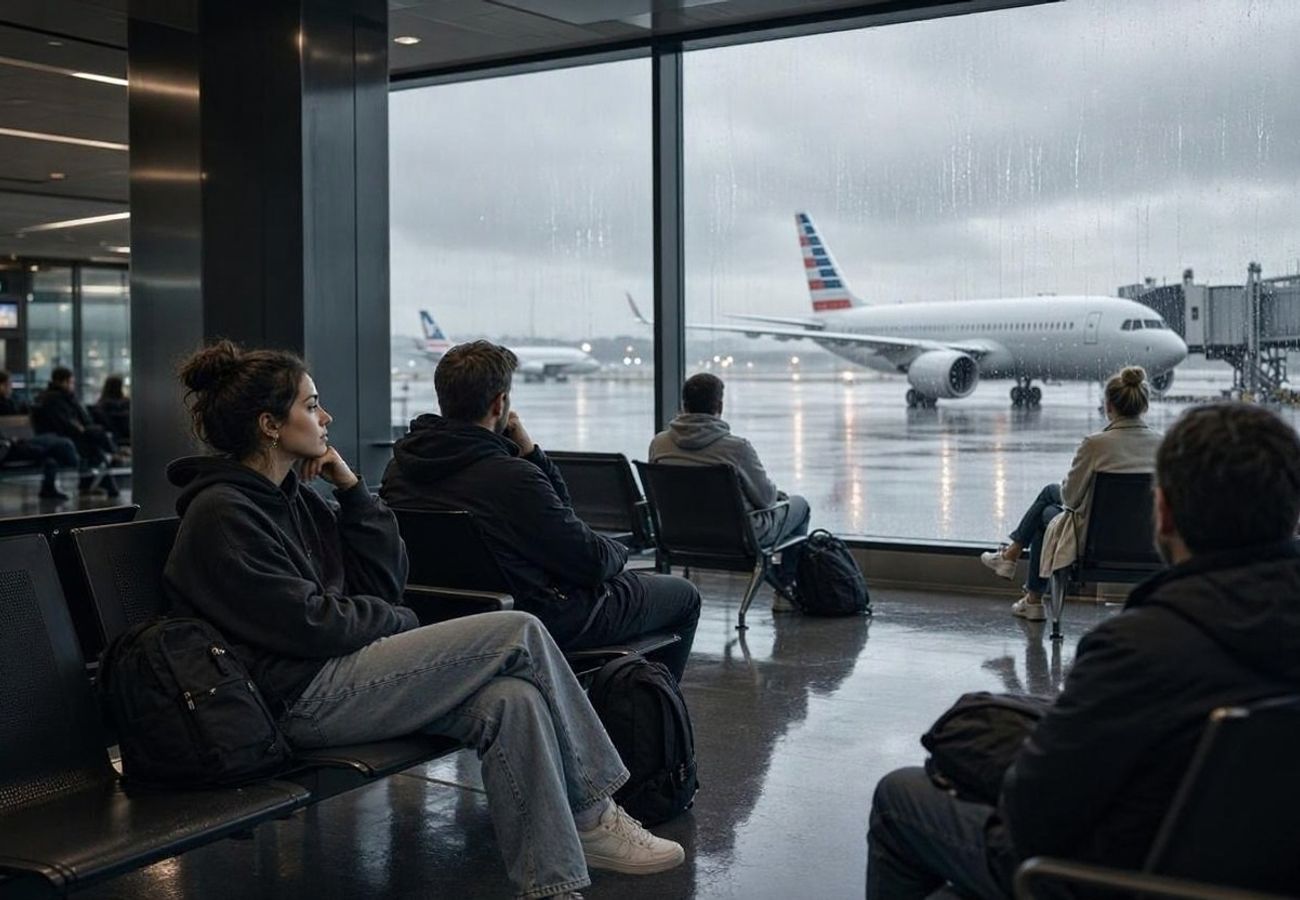
Image generated by AI
Nationwide flight cancellations peaked at over 4,100 on November 14, 2026, following a systemic communications collapse that froze US airspace for over four hours on Friday. This disruption represents one of the most severe technical failures in recent history, contrasting sharply with the January 2023 NOTAM system malfunction, as it targeted the very hardware—routers and switches—that facilitate real-time air traffic coordination.
The Infrastructure Collapse in Numbers
The crisis began at 3:36 pm Eastern Time on Friday, November 13, 2026. A technical instability in communications and radar data forced the Federal Aviation Administration (FAA) to implement a total nationwide ground stop. This emergency measure lasted until approximately 8:15 pm Eastern Time, a four-hour window that effectively severed the departure pipeline for the entire United States.
The scale of the aftermath is evident in the data provided by aviation analytics firms. While the FAA managed to land aircraft already in the air safely, the ripple effect on ground operations was massive. Discrepancies in reporting highlight the chaos: FlightAware logged more than 4,100 cancellations, whereas Cirium reported over 3,200. These figures are not cumulative but reflect different data collection windows during the Saturday recovery phase.
Comparative Analysis of US Aviation Disruptions
This event is categorized by its origin: hardware instability. Unlike the 2023 software-based NOTAM failure or the 2001 security-driven shutdown, the November 2026 event was a failure of physical infrastructure. Transportation Secretary Sean Duffy attributed the crash to overloaded routers and switches, specifically within legacy systems where copper wiring is being phased out for fibre-optic technology.
The following table compares the current disruption against historical benchmarks to illustrate the severity of the 2026 event.
| Metric | Jan 2023 Incident | Nov 2026 Incident | Primary Cause |
|---|---|---|---|
| Scope | System-wide (NOTAM) | Nationwide Ground Stop | Hardware/Comm Failure |
| Duration of Stop | Several Hours | 4+ Hours | Router/Switch Overload |
| Reported Cancellations | Thousands | 3,200 - 4,100+ | Infrastructure Instability |
| Infrastructure Focus | Software/Notice System | Copper to Fibre Transition | Ageing Hardware |
| Recovery Window | 24-48 Hours | Predicted by Nov 15 | Crew/Aircraft Repositioning |
According to data from the International Air Transport Association (IATA), such systemic failures in a primary hub nation create global volatility. The 2026 shutdown impacted not only domestic routes but also transatlantic corridors, with noted disruptions at London Heathrow as airlines scrambled to adjust schedules.
What This Means for Travelers
For those currently caught in the recovery window, the data suggests that "returning to normal" by Sunday does not mean an immediate absence of delays. Airlines are currently battling "positioning lag"—the time required to move aircraft and crews back to their original starting points.
Actionable Booking and Rights Guidance:
- Refund Eligibility: Under US Department of Transportation (DOT) regulations, you are entitled to a full refund if the airline cancels your flight and you choose not to accept an alternative.
- Significant Delay Thresholds: The DOT defines a "significant change" as a delay of 3+ hours for domestic flights and 6+ hours for international flights. If your itinerary shifted by this margin, you have the legal right to request a refund rather than a voucher.
- Waiver Utilization: American Airlines, Delta, United, and JetBlue have issued travel waivers. Check your email or the airline app specifically for "waiver codes" to rebook for free without paying fare differences.
- Connection Strategy: If you are connecting through a major US hub in the next 72 hours, allow a minimum of 4 hours between flights. The current "crew-hour" restrictions mean that even if a plane is available, a legal crew may not be.
The $30 Billion Modernization Gap
The November 13 failure has placed the US aviation budget under a microscope. While Congress allocated $12.5 billion in 2025 for modernization, the current crisis proves that the transition from copper to fibre-optic cabling is a high-risk operation. The administration is now requesting an additional $30 billion to accelerate these upgrades.
The trajectory of US aviation suggests a period of "unstable transition." As old systems are ripped out and new ones installed, the risk of "overloaded switches"—as seen in this event—remains high. Until the remaining legacy copper nodes are replaced, travelers should expect sporadic, high-impact technical outages during peak travel windows.
FAQ: US Aviation Recovery 2026
Will flight prices increase due to this shutdown? Short-term spikes are likely on specific routes where aircraft are displaced. However, since this was a technical failure and not a demand surge, prices should stabilize by mid-week as schedules normalize.
Is it safe to fly now that the ground stop is lifted? Yes. The FAA confirmed that the ground stop was a precaution to ensure safe coordination. All aircraft airborne during the event landed safely, and current operations are following standard safety protocols.
Which airlines are offering the best recovery options? Delta, United, American, and JetBlue have all implemented travel waivers. The "best" option depends on your specific route, but checking the airline's official "Travel Alerts" page is the fastest way to find rebooking options.
The transition from copper to fibre is a necessary evolution, but the cost of this upgrade is currently being paid in passenger hours.
Related Travel Guides
This article is for informational purposes. Flight routes, passenger regulations, visa rules, and transit advisories are subject to change by airlines and aviation authorities. Readers are advised to verify schedules and travel documentation with relevant carriers and border agencies before departure.
Related Stories
US Aviation Crisis: FAA Nationwide Shutdown Sparks Push for $30.1 Billion Modern Skies Act
FAA Infrastructure Failure: 4,476 Flights Cancelled Across US Hubs in November 2026