
AI Takes Centre Stage as Rural and Tribal Transport Safety Webinar Explores New Technology
AI Takes Centre Stage as Rural and Tribal Transport Safety Webinar Explores New Technology

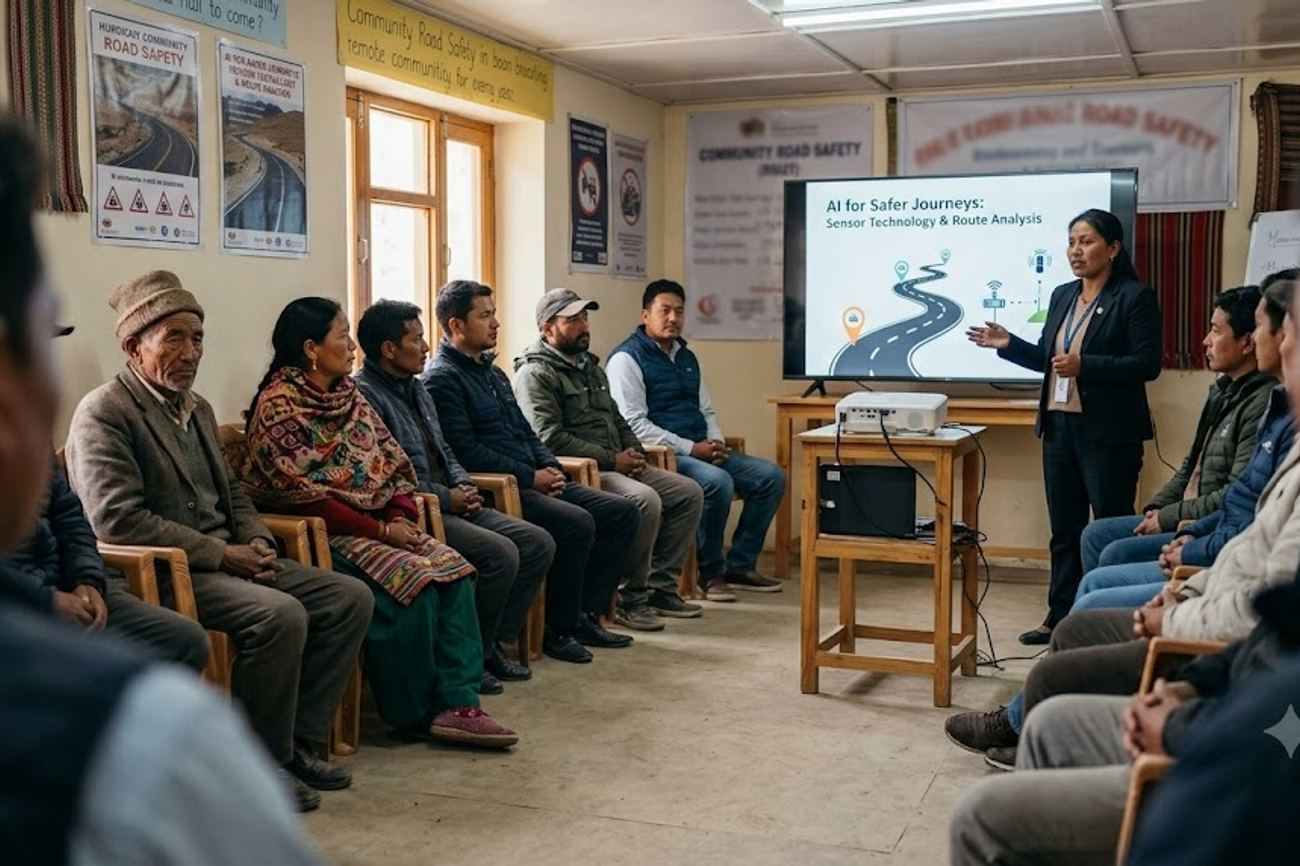
Image generated by AI
[Washington, D.C., September 2026] — Artificial intelligence is being integrated into rural and Tribal transportation networks across the United States to automate risk detection, monitor road conditions, and enhance construction site safety.
The National Center for Rural Road Safety and the NLTAPA Safety Work Group are coordinating a 1.5-hour technical briefing on Thursday, September 24, 2026, to showcase these operational deployments. The session, scheduled from 11:00 am to 12:30 pm Mountain Time (1:00 pm to 2:30 pm Eastern Time), shifts the conversation from theoretical AI capabilities to active, real-world applications currently being tested by state and Tribal agencies.
The Catalyst for AI Integration
The push toward AI-driven safety stems from the unique challenges of rural and Tribal infrastructure, where transportation networks often span massive geographical areas that are impossible to monitor manually in real-time. By leveraging data-driven systems, agencies can now process vast quantities of environmental and behavioral data to identify hazards that previously went unnoticed until an accident occurred.
The U.S. Department of Transportation (DOT) has long emphasized the need for innovative safety solutions in underserved regions. This initiative represents a move toward "responsive transportation," where the infrastructure itself can detect a safety event and trigger an immediate communication chain to both officials and the public.
Agencies and Applications Impacted
The webinar focuses on three distinct operational pillars: behavioral analysis, real-time environmental monitoring, and construction safety.
| Agency | AI Application Focus | Specific Objectives |
|---|---|---|
| Wyoming DOT | Behavioral Safety Risks | Detecting speeding and distracted driving patterns via data processing. |
| Yakama Nation | Road & Traffic Monitoring | Identifying safety events and deploying real-time alerts via SMS, email, and signs. |
| Iowa DOT | Construction Safety | Managing changing road layouts, worker safety, and temporary traffic flow. |
The Federal Highway Administration (FHWA) oversees much of the funding and regulatory guidance for these types of rural safety improvements, ensuring that new technologies integrate with existing federal safety standards.
What This Means for Travelers
For the average driver or passenger traversing rural and Tribal lands, the shift toward AI-managed roads translates to a significant change in how safety information is delivered and how roads are policed.
1. Hyper-Local Real-Time Alerts Travelers will see a move away from static warning signs toward dynamic communication. Through the Yakama Nation's model, AI will identify a road hazard—such as a washout, animal crossing, or accident—and push that data immediately to variable message signs and mobile alerts. This reduces the "information gap" that often leads to secondary accidents in remote areas.
2. Increased Behavioral Surveillance The Wyoming DOT's focus on AI-detected speeding and distracted driving suggests a future where enforcement is less about random patrols and more about data-driven hotspots. AI can identify specific stretches of road where distracted driving is prevalent, leading to targeted safety interventions or increased law enforcement presence in those exact zones.
3. Safer Construction Zones Construction in rural areas often involves unpredictable traffic patterns. The Iowa DOT's application of AI means that temporary traffic-management arrangements will be more responsive. For the traveler, this means fewer bottlenecks and a reduced likelihood of collisions between civilian vehicles and construction equipment.
The Roadmap for Rural Infrastructure
The immediate goal of these agencies is not to replace human oversight but to provide "analytical resources" that complement traditional safety practices. The integration of AI allows small agencies with limited staffing to maintain a "digital eye" over thousands of miles of roadway.
Following the September 24 webinar, the industry expects a broader push toward standardized AI safety protocols for Tribal lands. The focus will likely shift toward interoperability—ensuring that an AI alert generated on Tribal land can be seamlessly communicated to state-level DOTs and federal agencies to coordinate emergency responses.
As these technologies scale, the emphasis will remain on "informed innovation," ensuring that the digital tools are used to improve outcomes for the most isolated communities, where the distance to the nearest emergency responder can often be the difference between life and death.
FAQ: Rural AI Transportation 2026
Will AI replace human traffic controllers in rural areas? No. The current implementations by agencies like the Wyoming and Iowa DOTs are designed as supplemental tools. AI processes the data and identifies patterns, but transportation professionals still make the final operational decisions and safety interventions.
How are AI alerts delivered to drivers in remote regions? The Yakama Nation is utilizing a multi-channel approach. This includes traditional variable message signs (VMS) on the roadside, as well as digital notifications sent via text messages and email to ensure travelers receive warnings regardless of their location.
Does AI monitoring increase privacy concerns for rural drivers? The focus of these programs is on behavioral safety risks—such as speeding and distraction—and environmental hazards. The goal is the identification of safety events and patterns rather than individual surveillance, though specific data privacy protocols vary by agency.
Can these AI tools help during natural disasters in Tribal lands? Yes. By monitoring road conditions in real-time, AI can identify safety events—such as flooding or landslides—much faster than manual reporting, allowing Tribal agencies to close roads and redirect traffic immediately.
Digital intelligence is finally closing the safety gap between urban corridors and the American frontier.
#WyomingDOT #IowaDOT #YakamaNation #RuralRoadSafety2026 #AIInfrastructure #TribalTransportation
Related Travel Guides
- Australia’s Digital Border Disruption Puts Travel Resilience and Manual Processing Under Scrutiny
- Wuhan Municipal Culture and Tourism Bureau Introduces Heartbeat Weekend Passes and Digital Passports
- US Tourism Websites Face New Accessibility Era as ADA Digital Rules Raise Stakes for Public Travel Platforms
Disclaimer
This article is for informational and educational purposes only. It does not constitute legal, financial, or professional advice. While we strive to provide accurate and up-to-date information, travel policies, regulations, and conditions change rapidly. Always verify information with official sources before making travel decisions. Nomad Lawyer makes no representations about the accuracy, reliability, completeness, or suitability of the information provided. Readers should consult qualified professionals for advice specific to their circumstances. The views expressed in this article are those of the author and do not necessarily reflect the views of Nomad Lawyer.
Raushan Kumar
Founder & Lead Developer
Full-stack developer with 11+ years of experience and a passionate traveller. Raushan built Nomad Lawyer from the ground up with a vision to create the best travel and law experience on the web.
Learn more about our team →