
Adventure Canada Overhauls Arctic Fleet With Ocean Nova and Ocean Victory Deployment
Adventure Canada replaces the 200-passenger Ocean Endeavour with the 75-guest Ocean Nova and 150-guest Ocean Victory for Greenland expeditions.

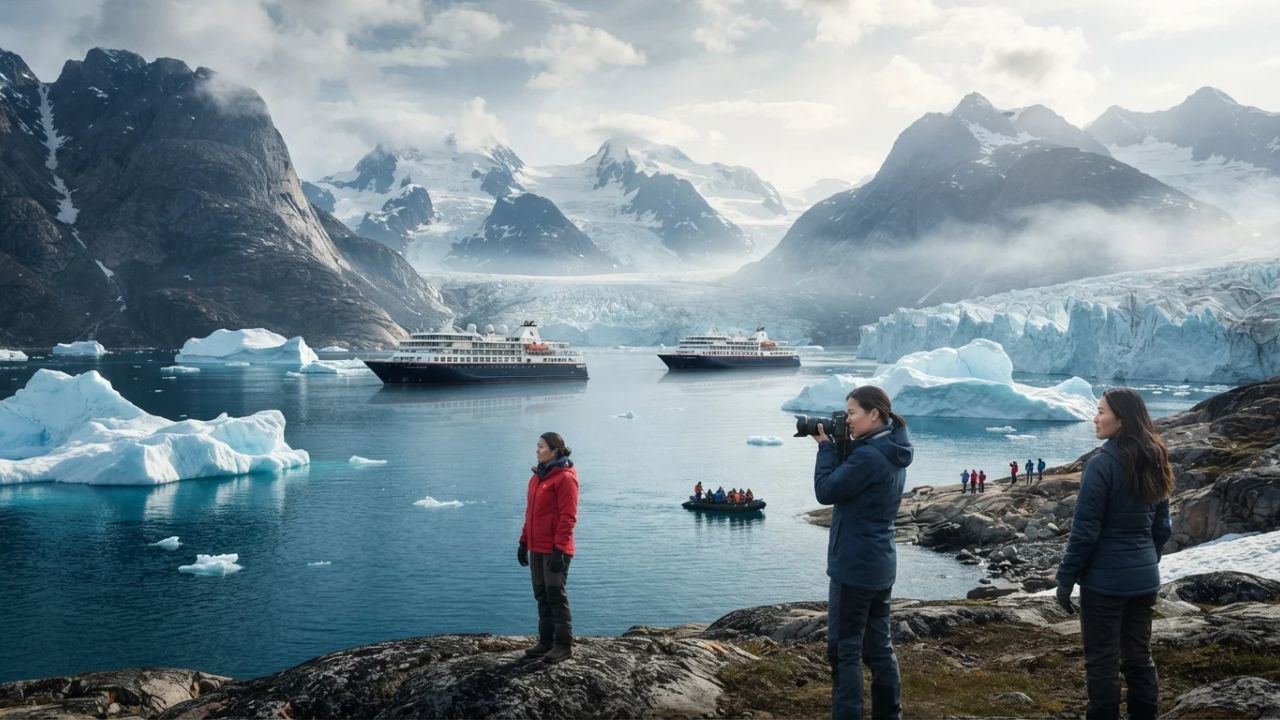
Image generated by AI
A decisive 62.5% reduction in single-landing passenger volume—transitioning from the retired 200-guest Ocean Endeavour to the intimate 75-passenger Ocean Nova alongside the modern 150-passenger Ocean Victory—signals a fundamental fleet transformation for Adventure Canada as high-latitude polar tourism enters an era of strict environmental oversight. Following the delivery and June 2026 operational debut of the Ocean Nova, the family-owned Canadian expedition pioneer is dividing its polar operations across two specialized hardware profiles. Under the strategic direction of managing director and co-owner Matthew James Swan, the fleet overhaul abandons the traditional single-vessel operating model in favor of a dual-track strategy. By offering travelers a direct choice between compact, field-first maritime exploration and upscale, contemporary expedition comforts, the company is directly addressing the logistical complexities of navigating Greenland, the Canadian Arctic, and North Atlantic island ecosystems.
The Retirement of Ocean Endeavour and the Dual-Platform Pivot
For more than a decade, the 200-passenger Ocean Endeavour served as the primary workhorse of Adventure Canada’s polar exploration program. While the vessel earned a loyal following across the Canadian Arctic and Greenland, shifting industry standards, rising fuel costs, and stricter polar regulations necessitated a comprehensive fleet rethink. Managing a single mid-sized ice-class ship forced the operator into operational compromises, balancing high passenger volumes against the logistical constraints of fragile Arctic landing sites.
Under conservation guidelines established by the Association of Arctic Expedition Cruise Operators (AECO), environmental protection protocols enforce strict limits on the number of passengers permitted ashore simultaneously in sensitive wilderness areas. Typically capped at 100 individuals on land at any given moment, operations on 200-passenger ships require dividing the ship’s manifest into alternating shifts. One group tours the shoreline while the other remains aboard or tours in Zodiacs, cutting individual shore time in half.
By acquiring the compact 75-passenger Ocean Nova—originally built in 1992 and comprehensively renovated in 2006—Adventure Canada removes shore-side queuing entirely. Every guest can disembark simultaneously, maximizing field time for wildlife photography and tundra hikes. In contrast, the chartering of the 150-passenger Ocean Victory, an advanced expedition vessel delivered in 2021 featuring patented Ulstein X-Bow technology, caters to a different traveler demographic seeking private balconies, onboard spas, and smooth open-ocean transits across the Davis Strait.
Comparative Fleet Metrics: Ocean Nova Versus Ocean Victory
The two-vessel fleet strategy provides prospective expedition travelers with two distinct operational approaches to high-latitude cruising. Understanding the mechanical, logistical, and amenities trade-offs between the two ships is vital for travelers planning Arctic voyages.
| Operating Parameter | Ocean Nova (Compact Explorer) | Ocean Victory (Modern Expedition) | Strategic Traveler Consideration |
|---|---|---|---|
| Guest Capacity | 75 passengers maximum | 150 passengers maximum | Shore landing efficiency vs social breadth |
| Vessel Heritage | Built 1992, refit in 2006 | Built 2021 (New-generation build) | Classic polar ice-ship vs contemporary eco-design |
| Hull Architecture | Traditional ice-strengthened bow | Ulstein X-Bow inverted hull design | Enhanced wave-piercing open-water stability |
| Zodiac Operations | Simultaneous deployment (~20 min) | Staggered deployment waves | Speed of accessing remote wildlife sites |
| Onboard Wellness | Functional gym & library | Full Nordic spa, sauna & heated pool | Post-excursion relaxation options |
| Kayaking Program | Discontinued onboard | Active guided sea kayaking offered | Access to silent paddle-based exploration |
| Stateroom Amenities | Functional exterior-view cabins | Balcony staterooms & luxury suites | Cabin comfort during multi-week voyages |
| Target Itineraries | Ellesmere Island & High Greenland | Northwest Passage & Atlantic Islands | Navigational reach into restricted ice zones |
The physical contrast between the two ships directly alters daily expedition life. On a documented Ocean Nova voyage through western Greenland, the manifest comprised just 53 passengers supported by an expedition team of 13 naturalists, geologists, and cultural interpreters. This four-to-one traveler-to-expert ratio created an informal seminar environment where guests interacted directly with field scientists throughout the sailing.
Zodiac boarding logistics highlight the mechanical advantages of smaller hulls. By organizing departures into simple odd- and even-numbered cabin blocks, the entire complement of 53 guests moved from cabin to water in approximately 20 minutes. This operational speed allowed the expedition leader to schedule two distinct shore excursions per day without exhausting passengers or violating AECO daylight guidelines.
Expanded Itinerary Geography and Route Restorations
The transition to a multi-ship fleet unlocks significant route flexibility that was previously unattainable with a single vessel. For 2026 and 2027, Adventure Canada is expanding beyond traditional transit corridors like the Northwest Passage and southern Greenland to introduce high-latitude, specialized itineraries.
Among the flagship journeys is the Ellesmere Island and North Greenland expedition, an extreme-latitude itinerary exploring the ice-choked waters of Smith Sound and Nares Strait. The Ocean Nova’s shallow draft and compact length make it exceptionally nimble when threading through uncharted fjord systems and grounding near tidewater glaciers. The vessel’s maneuverability allows it to anchor in shallow bays where larger expedition hulls cannot safely navigate.
Simultaneously, the additional fleet capacity enables the restoration of beloved North Atlantic itineraries that had been retired during the single-ship era. Travelers can once again book expedition voyages to Nova Scotia’s remote Sable Island, famous for wild horses and massive grey seal colonies, as well as cultural voyages exploring the rugged archipelagos of Scotland, the Shetland Islands, and the Faroe Islands.
Expert Analysis: The Polar Fleet Bifurcation and Arctic Regulatory Squeeze
The polar expedition cruise sector is experiencing a structural bifurcation driven by escalating regulatory oversight, localized environmental policies, and evolving traveler demographics. Across the Arctic basin, destination authorities are moving aggressively to manage the impacts of maritime tourism.
According to regional economic policy updates from Visit Greenland, municipal councils in towns such as Ilulissat, Nuuk, and Sisimiut are evaluating localized port limits and environmental taxes to prevent infrastructure strain. For travelers booking this route, the direct consequence is that larger expedition cruise ships carrying 300 to 500 passengers will face increasing landing restrictions, designated time slots, and exclusion from pristine, unmonitored wilderness anchorages.
The pricing pressure this creates means that small-ship expedition cruising will command widening premium margins. Operating a 75-passenger vessel like the Ocean Nova carries high per-passenger fixed costs. Expenses for ice pilots, specialized expedition staff, environmental permits, and maritime fuel must be distributed across a tiny passenger manifest. Consequently, per-diem fares on boutique micro-expeditions are rising significantly faster than fares on 150-to-200-passenger contemporary vessels.
However, high-net-worth travelers are proving willing to pay this premium to secure operational agility. When a pod of beluga whales or a polar bear is sighted on an ice floe, a 75-passenger vessel can alter its heading, launch Zodiacs, and place all guests on the water within 20 minutes. Conversely, larger ships require complex logistical approvals and extended staging windows that frequently result in missed wildlife encounters. By maintaining both the intimate Ocean Nova and the amenity-rich Ocean Victory, Adventure Canada has constructed a commercial hedge: capturing hardcore wildlife photographers who prioritize field time while retaining luxury-oriented adventure travelers who refuse to sacrifice stateroom comfort.
Key Takeaways
- Dual-Ship Strategy: Adventure Canada has retired the 200-passenger Ocean Endeavour, replacing it with the 75-guest Ocean Nova and the 150-guest Ocean Victory.
- Micro-Expedition Intimacy: The Ocean Nova, which debuted in June 2026, offers an intimate 75-passenger setting optimized for rapid 20-minute Zodiac boarding and extensive daily shore landings.
- Luxury Expedition Amenities: The 150-passenger Ocean Victory features modern amenities including private balconies, a Nordic spa, and an active sea kayaking program not offered on the Ocean Nova.
- High-Latitude Itineraries: Fleet expansion facilitates extreme Arctic exploration, including new routes to Ellesmere Island and North Greenland alongside the return of Sable Island and the Faroe Islands.
- Regulatory Immunity: Sub-100-passenger capacities on the Ocean Nova completely bypass AECO shore-landing caps, ensuring all travelers can explore pristine Arctic terrain simultaneously.
FAQ: Adventure Canada Arctic Expeditions 2026
What are the main differences between the Ocean Nova and Ocean Victory?
The 75-passenger Ocean Nova focuses on intimate, rugged exploration with rapid Zodiac landings, while the 150-passenger Ocean Victory offers contemporary comforts, private balconies, spa facilities, and onboard sea kayaking.
Is sea kayaking offered on both Adventure Canada vessels?
No. Guided sea kayaking is exclusively offered aboard the Ocean Victory. Due to operational and equipment constraints, kayaking is not available on the Ocean Nova.
When did the Ocean Nova enter service with Adventure Canada?
The Ocean Nova entered commercial service under the Adventure Canada banner in June 2026, deploying immediately to high-latitude Greenland and Arctic itineraries.
How does ship size impact shore landings in Greenland?
AECO regulations limit simultaneous shore landings to 100 passengers. On the 75-passenger Ocean Nova, all guests can land together, whereas ships carrying over 100 guests must split landings into shifts.
In an era where Arctic horizons are increasingly regulated, Adventure Canada’s dual-ship strategy demonstrates that true polar luxury is defined not by the size of the vessel, but by the speed and intimacy with which travelers can step ashore.
Related Travel Guides
easyJet Restores Berlin Ljubljana Flights With Fifth Route For Summer 2027 Travel Expansion
Bahamas Travel Connectivity Surges as Tropic Air Charters Adds Tecnam Traveller Fleet
Disclaimer
This article is for informational and educational purposes only. It does not constitute legal, financial, or professional advice. While we strive to provide accurate and up-to-date information, travel policies, regulations, and conditions change rapidly. Always verify information with official sources before making travel decisions. Nomad Lawyer makes no representations about the accuracy, reliability, completeness, or suitability of the information provided. Readers should consult qualified professionals for advice specific to their circumstances. The views expressed in this article are those of the author and do not necessarily reflect the views of Nomad Lawyer.
Raushan Kumar
Founder & Lead Developer
Full-stack developer with 11+ years of experience and a passionate traveller. Raushan built Nomad Lawyer from the ground up with a vision to create the best travel and law experience on the web.
Learn more about our team →