
UnCruise Adventures 2026-2027 Expedition Guide: Small-Ship Rights and Wildlife Costs
An analysis of UnCruise Adventures' small-ship expedition model across Hawaii, Galapagos, and Alaska, detailing 2027 pricing, vessel capacities, and the legal regulatory frameworks governing wildlife tourism.

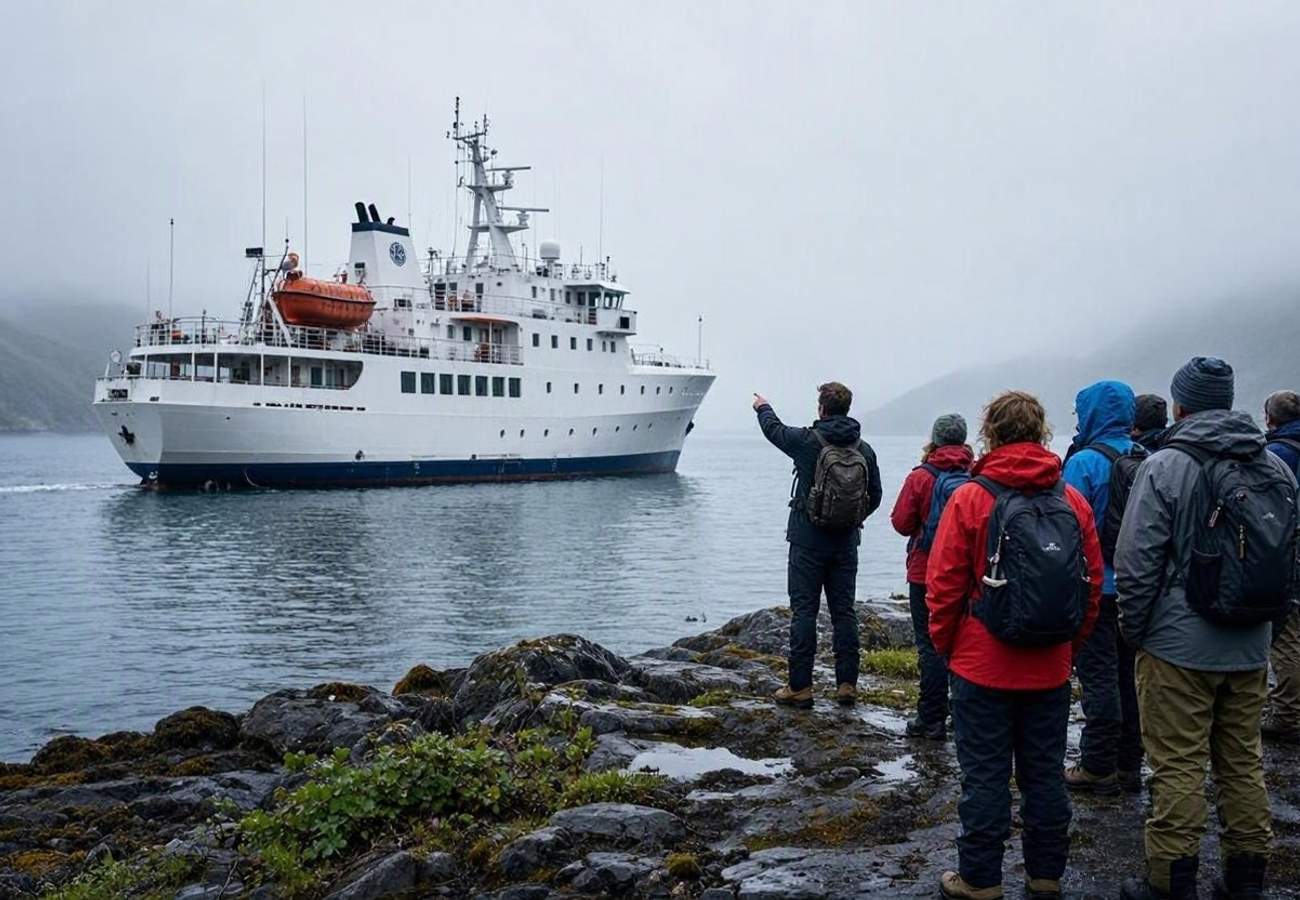
Image generated by AI
A traveler booking a 2027 voyage to the Galapagos Islands expects an intimate encounter with nature, but upon arrival, discovers that every movement is dictated by strict National Park mandates. Unlike a standard Caribbean cruise where the ship is a floating resort, an expedition with UnCruise transforms the vessel into a mobile basecamp, where the legal right to access a beach is contingent upon the presence of a licensed naturalist guide.
The Small-Ship Expedition Model: UnCruise Logistics
UnCruise Adventures operates on a fundamental departure from mass-market cruising. By capping guest counts between 36 and 86 passengers, the line prioritizes destination penetration over onboard entertainment. This scale allows vessels to enter remote fjords, protected lagoons, and narrow channels that are physically inaccessible to mega-ships.
The operational focus is shifted entirely toward active exploration. Instead of casinos or theaters, the value is placed on skiff trips, kayaking, and hiking. This shift in scale fundamentally alters the passenger experience, reducing the crowds sharing expedition equipment and shore excursions, though it places the traveler in a more regulated environment regarding environmental compliance.
Vessel Capacity and Deployment Matrix
The efficiency of an expedition depends on the vessel's size relative to the destination's environmental restrictions. The following table outlines the UnCruise fleet and their primary operational zones.
| Vessel | Guest Capacity | Primary Destinations |
|---|---|---|
| Safari Explorer | 36 | Hawaii, Alaska |
| La Pinta | 48 | Galapagos |
| Wilderness Adventurer | 60 | Alaska |
| Safari Voyager | 66 | Costa Rica, Mexico |
| Safari Endeavour | 84 | Alaska |
| Wilderness Legacy | 86 | Alaska |
Regional Analysis and 2027 Pricing Structures
Hawaii: Volcanic Exploration
The Hawaiian Seascapes itinerary runs for seven nights between Kona and Molokai. Utilizing the 36-passenger Safari Explorer, the journey covers Hawaii Island, Maui, Lanai, and Molokai. Activities are centered on natural phenomena, such as Hualalai hiking and lava tube exploration.
For 2027, entry-level Navigator cabins start at US$8,700 per person (double occupancy), averaging US$1,243 per night. Premium categories scale up to US$14,300 per person.
Costa Rica and Baja California: Biodiversity Hubs
In Costa Rica, the "Pure Life Adventure" operates roundtrip from Liberia via the Safari Voyager (66 guests). The itinerary leverages the fact that 25% of Costa Rica's land is protected, housing roughly 6% of global biodiversity. 2027 fares start at US$7,700 per person.
The Baja California "Whales & Sealife" route focuses on the Bahía de Loreto National Park, a World Heritage and Ramsar Site spanning 206,580.75 hectares. This eight-night journey (seven on ship, one in San José del Cabo) starts at US$7,400 per person.
The Galapagos: High-Regulation Cruising
The "Darwin’s Discoveries" program aboard the La Pinta (48 guests) is the most legally restrictive. Under Galapagos National Park regulations, passengers are prohibited from independent exploration. All visitors must be accompanied by licensed naturalist guides and maintain a minimum distance of two meters from wildlife. Failure to comply can lead to immediate expulsion or fines. 2026 pricing for this seven-night journey is listed at US$11,600 per person.
Alaska: The Expedition Core
Alaska remains the primary market, with routes spanning Juneau, Sitka, and the Aleutian region. The "Glacier Wilderness" (7 nights) starts at US$9,900, while "Coastal Treasures" (13 nights) begins at US$10,800. Access to Glacier Bay is strictly controlled by the National Park Service, requiring VHF radio contact for all vessel entries between May 1 and September 30.
Your Rights as an Expedition Passenger
When booking premium expedition cruises, passengers often confuse "adventure" with a waiver of consumer rights. Whether you are sailing in US, Mexican, or Ecuadorian waters, specific protections apply:
1. Contract of Carriage and Cancellations Expedition cruises often have stricter cancellation windows than standard cruises due to the high per-passenger cost of small ships. Review your contract for "Force Majeure" clauses, especially regarding environmental closures (e.g., a National Park closing a bay due to whale migrations).
2. Duty of Care and Safety Under maritime law, the operator is responsible for providing qualified guides in high-risk environments (e.g., volcanic tubes or rainforests). If a licensed guide is not provided in a region where it is legally mandated (like the Galapagos), the operator is in breach of local law and their own service contract.
3. Refund Eligibility If an itinerary is significantly altered due to weather or regulation, you may be entitled to a partial refund or future cruise credit. For US-based bookings, the US Department of Transportation provides guidelines on consumer protections, though cruise-specific disputes often fall under the jurisdiction of the port of embarkation or the cruise line's registered headquarters.
Rebooking and Booking Strategy
Because UnCruise vessels have extremely low capacity (some as low as 36 guests), they sell out faster than traditional cruises.
- The Trade-off: You are paying a premium for "access" rather than "amenities." If you prefer luxury suites and Broadway shows, a small-ship expedition is the wrong choice.
- Alternative Carriers: For those seeking similar wildlife-centric travel but with different price points, consider comparing options via Flightradar24 to track the movement of expedition fleets or checking specialized expedition aggregators.
- Booking Window: For 2027 dates, booking at least 12-18 months in advance is recommended due to the limited berth availability on ships like the Safari Explorer.
FAQ: UnCruise Expeditions 2027
Am I entitled to a refund if a National Park closes a site? Usually, no. Most expedition contracts list environmental regulations as "uncontrollable events." However, the operator must provide a comparable alternative activity to fulfill the itinerary's value.
Are gratuities included in the published 2027 fares? No. Published fares for Hawaii, Alaska, and Costa Rica typically include port charges and taxes but exclude gratuities and transport to the embarkation point.
Do I need a special permit for the Galapagos? The cruise operator handles the National Park entry permits, but you must pay the required entrance fees (often separately) and adhere to the strict guide-led movement rules.
What is the difference between a Navigator cabin and higher categories? Navigator cabins are the entry-level pricing tier. Higher categories offer more square footage, better views, or more privacy, with prices in Hawaii reaching up to US$14,300.
Adventure is a luxury, but knowing your legal standing is a necessity.
Related Travel Guides
Disclaimer
This article is for informational and educational purposes only. It does not constitute legal, financial, or professional advice. While we strive to provide accurate and up-to-date information, travel policies, regulations, and conditions change rapidly. Always verify information with official sources before making travel decisions. Nomad Lawyer makes no representations about the accuracy, reliability, completeness, or suitability of the information provided. Readers should consult qualified professionals for advice specific to their circumstances. The views expressed in this article are those of the author and do not necessarily reflect the views of Nomad Lawyer.
Preeti Gunjan
Contributor & Community Manager
A passionate traveller and community builder. Preeti helps grow the Nomad Lawyer community, fostering engagement and bringing the reader experience to life.
Learn more about our team →