
Boeing B-52 and Lockheed C-130: Military Aircraft Defying Decades of Obsolescence
Breaking airline news and aviation industry updates for 2026.

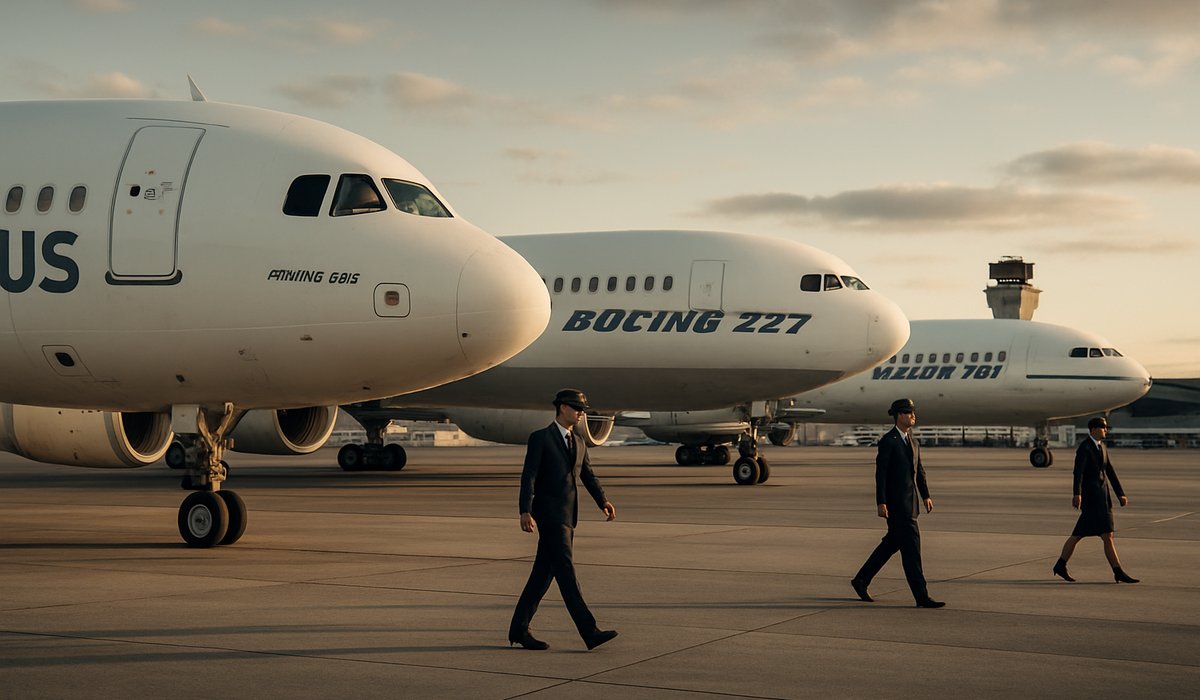
Image generated by AI
Boeing B-52 and Lockheed C-130: Military Aircraft Defying Decades of Obsolescence
How two Cold War-era workhorses became the longest-serving aircraft in aviation history, reshaping expectations for military aircraft longevity
A Radical Departure From Aviation's Rapid Obsolescence Cycle
The aerospace industry has historically operated on a principle of constant technological disruption—military aircraft typically fade from active service within 20 to 30 years as newer designs render their predecessors strategically obsolete. Yet two remarkable exceptions have shattered this timeline, remaining operationally critical for more than five decades and fundamentally challenging conventional wisdom about aircraft lifecycle management.
The Boeing B-52 Stratofortress and Lockheed C-130 Hercules represent an extraordinary anomaly in defense aviation, each logging service records that span generations of military personnel, geopolitical shifts, and technological revolutions.
The B-52: Seven Decades and Counting
The Boeing B-52 Stratofortress entered service during the Cold War and continues to form the backbone of the U.S. Air Force's strategic bombing capabilities. Originally conceived in the 1950s, this intercontinental bomber was engineered with such structural and mechanical robustness that successive generations have invested billions in modernization rather than replacement. Recent upgrades have equipped the aging platform with contemporary avionics, propulsion systems, and weapons integration—essentially creating a 21st-century aircraft wrapped in a 1950s fuselage.
Military planners project the B-52 will remain operational into the 2050s, meaning individual aircraft may accumulate more than a century of service life across multiple upgrade cycles.
The C-130 Hercules: The Workhorse That Wouldn't Retire
The Lockheed C-130 Hercules followed a parallel trajectory, becoming the world's longest-serving military transport aircraft. Introduced in 1956, the C-130 has been continuously produced and modified across more variants than perhaps any military aircraft in history. From humanitarian airlifts to combat logistics, the Hercules' modular design and exceptional payload capacity have rendered it irreplaceable across global militaries.
Over 2,500 C-130s have been manufactured, with hundreds still flying today across more than 70 nations.
Why These Aircraft Defy Retirement
Both platforms succeeded because of foundational engineering excellence, adaptable designs, and sustained institutional commitment to modernization. Rather than pursuing complete replacement programs—prohibitively expensive undertakings—military branches chose incremental upgrades, extending service life economically.
FAQs: Military Aircraft Service Life
Why don't the B-52 and C-130 need to be replaced? Both aircraft feature modular, upgradeable designs that allow contemporary systems to be integrated into proven airframes, eliminating the need for complete replacement.
How long will the B-52 actually stay in service? Military projections extend B-52 operations through the 2050s, potentially 100+ years after initial production.
Why is the C-130 used by so many countries? Its exceptional reliability, cargo flexibility, and availability on the international market make it the preferred transport aircraft globally.
What would it cost to replace these aircraft? Complete replacement programs would exceed $500 billion collectively, making modernization far more economical.
Are there newer transport aircraft replacing the C-130? While newer designs exist, the C-130's unmatched operational track record and ecosystem keep it preferred despite age.
Related Travel Guides
Flight Delay Compensation Guide 2026
Understanding Airline Route Changes
Airport Security Process Updated (2026)
External Resources
Disclaimer
This article is for informational and educational purposes only. It does not constitute legal, financial, or professional advice. While we strive to provide accurate and up-to-date information, travel policies, regulations, and conditions change rapidly. Always verify information with official sources before making travel decisions. Nomad Lawyer makes no representations about the accuracy, reliability, completeness, or suitability of the information provided. Readers should consult qualified professionals for advice specific to their circumstances. The views expressed in this article are those of the author and do not necessarily reflect the views of Nomad Lawyer.
Raushan Kumar
Founder & Lead Developer
Full-stack developer with 11+ years of experience and a passionate traveller. Raushan built Nomad Lawyer from the ground up with a vision to create the best travel and law experience on the web.
Learn more about our team →