The Most Challenging US Airports for Connecting Flights: Layover Risks and Survival Guide 2026

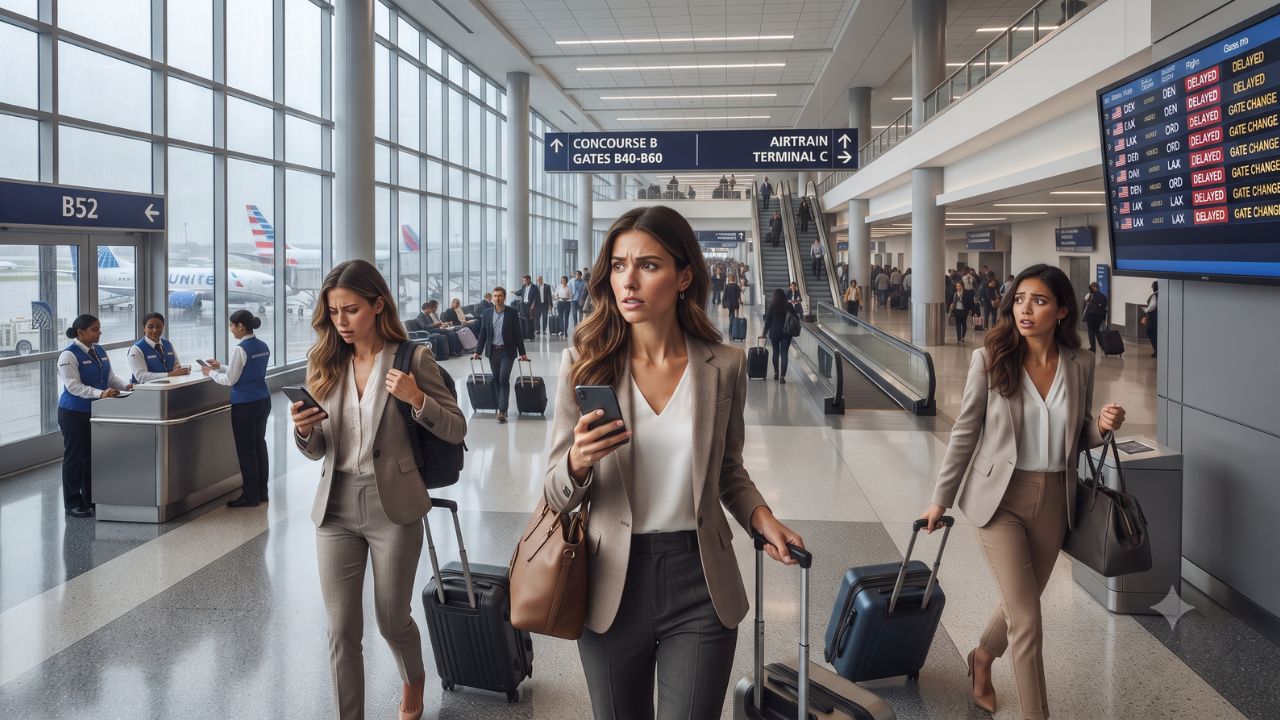
At Los Angeles International Airport, walking between Terminal 1 and Terminal 8 covers roughly two full miles of post-security corridors, turning a standard 45-minute domestic connection into a grueling Olympic sprint. According to official 2026 punctuality datasets compiled by the Bureau of Transportation Statistics (BTS), navigating connections across America's mega-hubs is no longer just about ticket prices; it is determined by terminal geometry, regional air traffic management bottlenecks, and mandatory customs re-screening procedures.
Under federal performance criteria where a flight is classified as on-time only if it departs or arrives within 15 minutes of schedule, major connecting hubs consistently struggle. Facilities like Chicago O'Hare (70% departure on-time performance) and Atlanta Hartsfield-Jackson (77% departure on-time performance) process tens of thousands of connecting passengers daily, meaning a 20-minute incoming delay can trigger cascading missed connections across an entire itinerary.
The Top Connection Risk Hubs: Punctuality and Infrastructure Breakdown
A flight connection introduces multiple moving variables. Analysis of BTS performance metrics and Federal Aviation Administration (FAA) traffic management advisories highlights distinct operational profiles across the nation's 13 most complex transfer hubs:
- Dallas/Fort Worth International (DFW): While DFW operates an automated Skylink train connecting all five terminals every two minutes with average ride times of five minutes (maximum nine minutes), its sheer flight volume makes it vulnerable to severe knock-on delays during severe Texas thunderstorms.
- Newark Liberty International (EWR): Located in the heavily congested New York metropolitan airspace, Newark faces recurring FAA ground delays. During August 2026, airborne holding delays averaged up to 30 minutes, while an FAA telecommunications failure in Philadelphia on September 21, 2026, triggered hundreds of regional flight cancellations.
- Chicago O'Hare International (ORD): With 70% departure punctuality, transfers between domestic Terminals 1, 2, and 3 are linked airside, but moving to or from Terminal 5 requires taking the Terminal Transfer Bus or exiting security entirely to board the Airport Transit System.
- Denver International (DEN): Spanning 53 square miles, Denver's automated underground train links Concourses A, B, and C. High altitude wind gusts and heavy winter snowfall frequently compound ground operations.
- John F. Kennedy International (JFK): Multiple disconnected passenger terminals require landside AirTrain transfers and complete TSA re-screening for interline connections.
- LaGuardia (LGA): Subject to crowded New York slot limits, where single runway holds cascade into lengthy departure queues.
- Hartsfield-Jackson Atlanta (ATL): The world's busiest airport by passenger count operates with 77% on-time departure performance, where midday convective weather disrupts multi-concourse plane swaps.
- Miami International (MIA): Serves as the primary Latin American gateway, where high volumes of international arrivals must clear border control before rechecking luggage.
- Los Angeles International (LAX): Spans two miles of walkways between T1 and T8, supplemented by crowded terminal shuttle buses.
- San Francisco International (SFO): Coastal marine layer fog regularly cuts parallel runway arrival rates by half.
- Boston Logan International (BOS): Exposed to volatile Atlantic nor'easters and New England airspace congestion.
- Philadelphia International (PHL): Key regional radar nexus where over 200 flights were cancelled during the September 2026 FAA system outage.
- Ronald Reagan Washington National (DCA): Perimeter-restricted airport with high historical flight cancellation percentages.
What Makes International-to-Domestic Connections Particularly Demanding
Domestic connections allow passengers to walk straight from an arrival gate to a departure gate without leaving the secure airside zone. However, international arrivals into the United States follow an entirely different legal protocol.
Under regulations enforced by U.S. Customs and Border Protection (CBP), all passengers arriving on international flights—regardless of final destination—must complete passport control, collect all checked luggage from baggage carousels, pass through agricultural customs inspection, deposit luggage at transfer recheck belts, and undergo full TSA security screening before accessing domestic gates.
At hubs like Denver, Miami, and Chicago O'Hare, completing this international arrival sequence during peak international arrival banks (typically 13:00 to 17:00) requires a minimum of 90 to 120 minutes. Booking a 60-minute international-to-domestic layover almost guarantees a missed connecting flight.
Visitor Insider Tips for Booking and Navigating US Airport Layovers
Smart itinerary planning transforms stressful airport transfers into predictable transitions:
- Enforce the 90-Minute Rule for Domestic Connections: Never book domestic layovers under 60 minutes at DFW, ORD, ATL, or DEN. A 90-minute buffer absorbs standard 20-minute tarmac taxiing delays and gives you adequate time to ride inter-terminal trains.
- Allow Three Hours for International Transfers: When flying into the US from Europe, Asia, or South America, schedule at least two and a half to three hours between your international arrival and domestic connection to clear CBP and TSA checkpoints calmly.
- Check Same-Terminal Airline Operations: When purchasing flights with codeshare partners (e.g., Delta and Virgin Atlantic at JFK, or United and Lufthansa at Chicago O'Hare), verify whether inbound and outbound flights operate out of the same physical terminal to avoid unnecessary security exits.
- The Chicago O'Hare Terminal 5 Airside Bus: If transferring between Terminal 5 and Terminals 1, 2, or 3 at O'Hare, look for signs for the airside Terminal Transfer Bus near Gates M13 and B1 to stay inside security and avoid landside TSA lines.
- Use Mobile Passport Control (MPC): Eligible US citizens and Canadian visitors can download the free CBP Mobile Passport Control app to utilize dedicated expedited processing lanes at major international gateways like Miami, JFK, and San Francisco.
Cultural and Environmental Context: Hub Concentration and Passenger Infrastructure
The American "hub-and-spoke" aviation network was designed to maximize airline fleet efficiency, allowing carriers to funnel travelers from hundreds of small regional airports through central mega-hubs. While economically efficient for airlines, this concentration places enormous strain on physical airport facilities and regional air traffic control sectors.
Hub airports are investing billions of dollars in modernization programs—such as post-security connector bridges at LAX, automated people-mover overhauls at Newark, and gate expansion projects in Denver—to streamline passenger flows. Simultaneously, reducing airport ground idling and implementing continuous-descent flight arrivals helps lower jet fuel emissions, supporting sustainable long-term aviation growth across the United States.
FAQ: Navigating US Connecting Flights 2026
What is the minimum recommended connection time for domestic flights in the US?
At major hubs like DFW, Denver, Atlanta, and Chicago O'Hare, allow at least 75 to 90 minutes to account for tarmac taxiing and gate changes.
Do I have to collect my luggage during an international layover in the US?
Yes. All passengers arriving on international flights must collect checked baggage, clear CBP customs, recheck bags at transit counters, and pass TSA screening.
What happens if I miss my connection due to a flight delay?
If booked on a single ticket, the operating airline is responsible for rebooking you onto the next available flight to your destination without charging change fees.
How does the Skylink train work at Dallas/Fort Worth (DFW)?
The airside Skylink train runs 24 hours a day, connects all five terminals inside security, arrives every two minutes, and takes an average of five minutes per trip.
In the vast skies of North American travel, a well-padded layover is the quiet secret to arriving with peace of mind.
Related Travel Guides
This article is for informational purposes. Flight routes, passenger regulations, visa rules, and transit advisories are subject to change by airlines and aviation authorities. Readers are advised to verify schedules and travel documentation with relevant carriers and border agencies before departure.
Related Stories
US Aviation Crisis 2026: 1,685 Flight Delays Hit Chicago O'Hare and LAX on October 28

Phuket Luxury Tourism Surge 2026: High-Net-Worth Arrivals and New Aviation Routes