
Why the Royal Palaces of Seoul Are Facing an Unprecedented Visitor Misconduct Crisis Right Now
Why the Royal Palaces of Seoul Are Facing an Unprecedented Visitor Misconduct Crisis Right Now

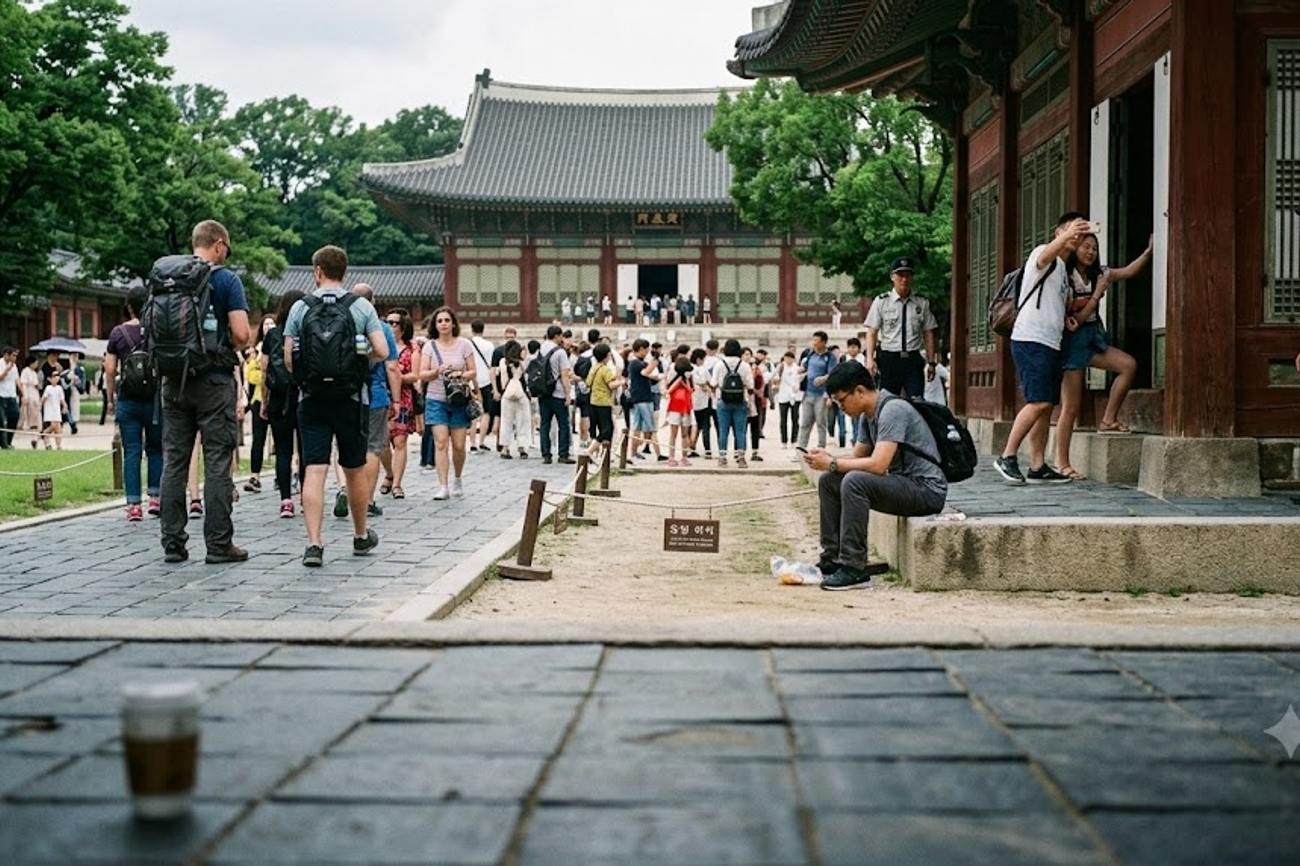
Image generated by AI
Are you planning a visit to Seoul's royal palaces and wondering how to avoid strict administrative penalties or security confrontations? With the Cultural Heritage Administration (CHA) significantly ramping up enforcement due to a surge in visitor misconduct, understanding the logistical boundaries of these sites is now a requirement for a smooth trip.
The Enforcement Shift at Seoul's Heritage Sites
The South Korean government has transitioned from passive crowd management to active enforcement across the city's primary historical complexes. This shift follows a documented increase in rule violations, including unauthorized smoking, littering, public urination, and the breaching of boundary ropes. The CHA reports that post-pandemic tourist volumes have exceeded pre-2020 levels, leading to a higher frequency of security interventions at Gyeongbokgung, Changdeokgung, and Deoksugung palaces.
To combat this, the authorities have deployed high-definition CCTV systems and increased the presence of bilingual security patrols. For the traveler, this means that infractions which may have been overlooked in previous years are now being recorded and penalized. Under the Cultural Heritage Protection Act, the consequences for defacing or damaging these sites are severe, ranging from heavy financial fines to criminal prosecution or immediate deportation for foreign nationals.
Site Access and Regulation Summary
The following table outlines the current operational status and regulatory environment for the primary royal complexes in Seoul.
| Site Name | Primary Access Point | Enforcement Level | Key Restriction | Status |
|---|---|---|---|---|
| Gyeongbokgung | Gyeongbokgung Station | High | No climbing on stone structures | Active |
| Changdeokgung | Anguk Station | High | Restricted pavilion access | Active |
| Deoksugung | City Hall Station | Moderate | Strict no-smoking zones | Active |
Traveler Logistics Guide
Navigating these sites requires more than just a ticket; it requires a strategy to avoid friction with security and ensure your entry is seamless.
1. Digital Planning and Entry
Before arriving, check the official Visit Korea portal for real-time closures. Many pavilions within the palaces are restricted or require separate, timed bookings. I recommend arriving 30 minutes before the gates open to avoid the peak crowd density that often triggers stricter security screenings and more aggressive crowd-control measures.
2. On-Site Movement and Boundaries
The most common point of conflict between tourists and security is the boundary rope. In your logistics planning, assume that any cordoned-off area is strictly prohibited.
- Pathways: You must remain on designated stone pathways. Stepping onto grass or wooden verandas is a violation.
- Photography: While photography is encouraged, climbing onto historic stone structures for a better angle is now a primary target for security interventions.
- Waste Management: Do not carry open food or drinks into the inner courtyards. Use the designated bins located near the main entrances and exits.
3. Interaction with Security Personnel
Security guards at these sites are contracted to protect irreplaceable wooden architecture. If you are asked to move or stop a specific activity, comply immediately. The CHA has noted a rise in verbal altercations; in South Korea, arguing with a government-authorized official can escalate a simple warning into a formal administrative penalty.
4. Legal and Visa Implications
For those traveling on a K-ETA or a standard tourist visa, be aware that violations of the Cultural Heritage Protection Act are recorded. Severe misconduct can lead to a permanent mark on your travel record, potentially complicating future entry into the country. If you are stopped, keep your passport or a digital copy of your visa ready to avoid delays in identification.
The Cultural Heritage Administration has reported a surge in prohibited behaviors, including unauthorized photography and physical damage to historic structures, as visitor numbers peak. To mitigate these risks, the Korea Tourism Organization is implementing stricter guidelines and enhanced monitoring to preserve the integrity of the Joseon Dynasty sites.
5. Ground Transport Connections
To reach these sites without the stress of navigating heavy traffic, utilize the Seoul Metro system.
- For Gyeongbokgung: Take Line 3 to Gyeongbokgung Station (Exit 5).
- For Changdeokgung: Take Line 3 to Anguk Station (Exit 3).
- For Deoksugung: Take Line 1 or 2 to City Hall Station.
Regional Connectivity Impact
The tightening of rules at the royal palaces is part of a broader national strategy to balance record-breaking tourism numbers with site preservation. This affects how travelers move through the Jongno-gu district. Because the palaces are now more strictly regulated, visitors are spending more time in the surrounding traditional villages, such as Bukchon Hanok Village, which is also seeing increased regulation regarding noise and privacy.
The integration of high-definition surveillance across these sites means that the "tourist bubble" is shrinking. The CHA is collaborating with local law enforcement to ensure that the behavior inside the palace walls reflects the laws of the city. For the logistics-minded traveler, this means your itinerary should account for slower movement through these sites, as security checkpoints and bilingual patrols are now more frequent.
FAQ: Seoul Palace Logistics 2024
Do I need a special permit to visit the royal palaces? Standard entry tickets are sufficient for general areas. However, specific secret gardens or private royal quarters require separate, pre-booked timed entries. Check the official palace websites for booking windows.
What happens if I am caught smoking on palace grounds? Smoking is strictly prohibited under national heritage laws. You will be approached by security and may face an immediate administrative fine. Repeated or defiant behavior can lead to removal from the site.
Can I bring large luggage into the palace complexes? While not explicitly banned, large suitcases hinder crowd flow and may be flagged by security during high-traffic periods. Use the lockers available at the nearest metro stations to ensure mobility.
Are there English-speaking guides available to help with rules? Yes, the CHA has intensified bilingual security patrols. Additionally, official audio guides are available at the entrance of each palace to explain both the history and the conduct codes.
Respect the boundary ropes today to ensure the gates remain open tomorrow.
Related Travel Guides
Disclaimer
This article is for informational and educational purposes only. It does not constitute legal, financial, or professional advice. While we strive to provide accurate and up-to-date information, travel policies, regulations, and conditions change rapidly. Always verify information with official sources before making travel decisions. Nomad Lawyer makes no representations about the accuracy, reliability, completeness, or suitability of the information provided. Readers should consult qualified professionals for advice specific to their circumstances. The views expressed in this article are those of the author and do not necessarily reflect the views of Nomad Lawyer.
Raushan Kumar
Founder & Lead Developer
Full-stack developer with 11+ years of experience and a passionate traveller. Raushan built Nomad Lawyer from the ground up with a vision to create the best travel and law experience on the web.
Learn more about our team →