
F-22 Raptor's Staggering Operating Costs Exceed F-35A Despite Superior Combat Capabilities
Breaking airline news and aviation industry updates for 2026.

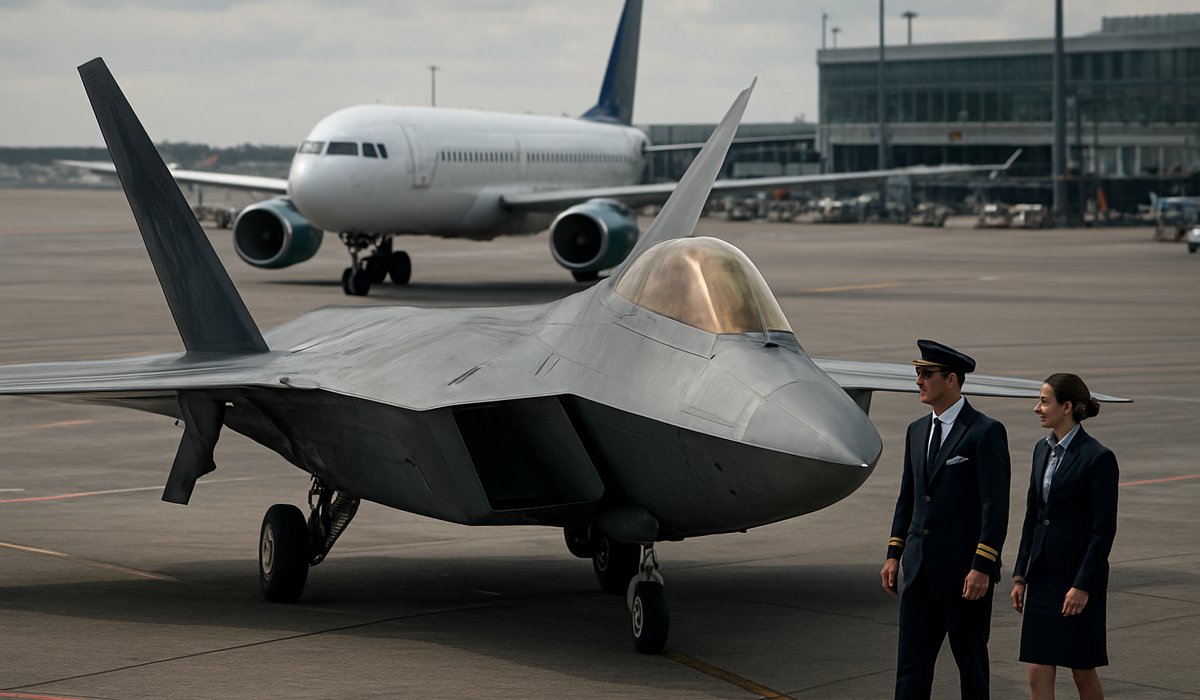
Image generated by AI
F-22 Raptor's Staggering Operating Costs Exceed F-35A Despite Superior Combat Capabilities
Military aviation's most advanced stealth fighter demands premium price tag for sustained operations
The Cold War Legacy Comes at a Price
The F-22 Raptor stands as one of the most formidable air superiority platforms ever fielded, yet its operational economics tell a cautionary tale about military procurement and sustained aircraft maintenance. Developed during the twilight years of the Cold War and achieving operational status in 2005, the Lockheed Martin-manufactured fighter was engineered with an uncompromising mandate: absolute dominance in contested airspace against peer-level adversaries.
Nearly two decades into service, the aircraft remains unmatched in pure combat capability. Its advanced avionics, supercruise capability, and revolutionary stealth architecture have positioned it as the gold standard for fifth-generation fighter operations. However, this technological sophistication carries a substantial penalty in terms of per-flight-hour operating costs—a metric that has sparked ongoing debate within defense procurement circles about the long-term viability of maintaining such technologically advanced platforms.
Cost Comparison Reveals Operational Reality
The per-flight-hour expense differential between the F-22 and its younger counterpart, the Lockheed Martin F-35A, underscores a fundamental challenge facing modern military aviation: balancing capability with fiscal sustainability. The Raptor's complex systems, specialized maintenance requirements, and limited production run contribute to significantly higher operational expenses compared to the more widely produced F-35A variant.
This cost disparity has become increasingly relevant as defense budgets face scrutiny and military planners evaluate the optimal force structure for 21st-century air operations. While the F-22 excels in specific mission profiles—particularly air-to-air engagement and high-threat penetration—the F-35A's multi-role flexibility and lower operational costs have made it the preferred platform for allied nations building modern fighter fleets.
Implications for Military Aviation Strategy
The financial burden of operating legacy fifth-generation platforms raises critical questions about force composition and modernization strategies. As adversaries develop counter-stealth capabilities and air defense systems mature, the premium costs associated with maintaining elite fighter squadrons require increasingly rigorous justification in budget-constrained environments.
The distinction between the F-22 and F-35A cost profiles reflects broader trends in military aviation: the tension between exquisite, highly capable systems and affordable, sustainably deployable platforms. This dynamic will likely shape procurement decisions and operational doctrine for years to come.
FAQ: F-22 vs F-35 Operating Costs
Why does the F-22 Raptor cost more per flight hour than the F-35A? The F-22's limited production numbers, advanced materials requiring specialized maintenance, and complex avionics systems drive higher per-unit operational expenses compared to the more widely manufactured F-35A.
What is the F-22 Raptor's primary combat role? The F-22 is optimized for air superiority and contested airspace penetration, leveraging unmatched stealth characteristics and sensor fusion capabilities for high-threat environments.
How does the F-35A differ operationally from the F-22? The F-35A functions as a multi-role fighter with strike, reconnaissance, and air defense capabilities, prioritizing flexibility and interoperability over specialized air-to-air dominance.
Are F-22 Raptors still considered viable in modern air combat? Yes—the F-22 remains highly capable, though emerging counter-stealth technologies and evolving threat environments continue to inform strategic assessments of its long-term role.
How do operating costs affect military procurement decisions? Sustainability of per-flight-hour expenses significantly influences force structure planning, with budget constraints increasingly favoring more affordable, mass-producible platforms alongside limited numbers of specialized aircraft.
Related Travel Guides
Disclaimer
This article is for informational and educational purposes only. It does not constitute legal, financial, or professional advice. While we strive to provide accurate and up-to-date information, travel policies, regulations, and conditions change rapidly. Always verify information with official sources before making travel decisions. Nomad Lawyer makes no representations about the accuracy, reliability, completeness, or suitability of the information provided. Readers should consult qualified professionals for advice specific to their circumstances. The views expressed in this article are those of the author and do not necessarily reflect the views of Nomad Lawyer.
Raushan Kumar
Founder & Lead Developer
Full-stack developer with 11+ years of experience and a passionate traveller. Raushan built Nomad Lawyer from the ground up with a vision to create the best travel and law experience on the web.
Learn more about our team →