
US Air Force's 100-Bomber B-21 Raider Fleet Faces Critical Production Bottleneck at Northrop Grumman
Breaking airline news and aviation industry updates for 2026.

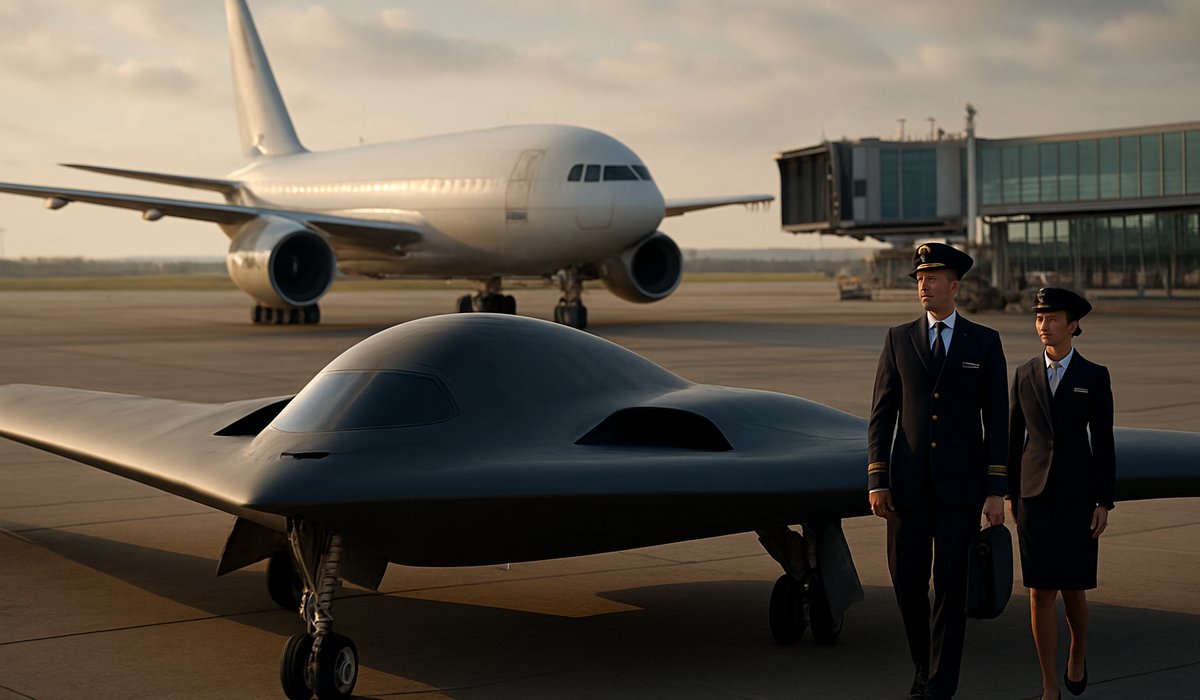
Image generated by AI
US Air Force's 100-Bomber B-21 Raider Fleet Faces Critical Production Bottleneck at Northrop Grumman
Defense contractor must dramatically ramp up manufacturing capacity to meet ambitious Air Force timeline for next-generation stealth bomber deployment
Historic First Flight Masks Urgent Production Challenge
The maiden flight of Northrop Grumman's B-21 Raider represents a watershed moment in military aviation—the world's first operationally viable sixth-generation stealth bomber has successfully demonstrated its revolutionary capabilities. Yet behind this achievement lies an increasingly pressing challenge: the aircraft manufacturer must substantially accelerate production rates to fulfill the US Air Force's aggressive modernization strategy, which hinges on rapidly retiring legacy bomber fleets and transitioning to the new platform.
The Air Force has committed to a comprehensive overhaul of its strategic bombing force, with plans to entirely decommission the 45-aircraft B-1 Lancer fleet while simultaneously phasing out the 19 remaining B-2 Spirit bombers. This dual retirement scheme creates an urgent operational gap that only Northrop Grumman's new platform can fill—amplifying pressure on the defense contractor to accelerate its manufacturing timeline.
Production Demands Outpacing Current Capacity
The initial procurement contract specifies 100 B-21 Raiders, yet internal Air Force assessments already suggest this figure may prove insufficient for long-term strategic requirements. Military officials have signaled that the ultimate fleet size could potentially double to 200 aircraft, fundamentally reshaping Northrop Grumman's production roadmap and facility requirements.
Current manufacturing schedules, however, appear ill-equipped to support such an expansion without significant capital investment and workforce scaling. The complexity of sixth-generation technology, combined with supply chain constraints affecting the broader defense industrial base, has created a critical bottleneck that threatens the Air Force's stated timeline for operational deployment.
Strategic Implications and Industry Pressure
The stakes extend beyond mere production metrics. A delayed transition from legacy bombers to the B-21 risks leaving critical gaps in America's strategic deterrent capabilities during a period of heightened geopolitical tension. Meanwhile, Northrop Grumman faces mounting pressure to demonstrate its capacity to deliver on one of the largest defense contracts of the decade.
Industry analysts warn that without immediate action, production delays could cascade throughout the entire modernization program, potentially requiring the extended operational service of aging B-1 and B-2 platforms—a costly and strategically suboptimal scenario.
The convergence of technological sophistication, production capacity constraints, and strategic urgency now defines the B-21 program's near-term trajectory, with Northrop Grumman's manufacturing decisions poised to shape American air power for decades to come.
Frequently Asked Questions
What is the B-21 Raider and why does it matter? The B-21 Raider is Northrop Grumman's next-generation stealth bomber and the world's first operational sixth-generation aircraft. It represents a revolutionary advancement in military aviation technology designed to replace aging B-1 Lancer and B-2 Spirit bombers in the US Air Force fleet.
How many B-21 Raiders does the Air Force plan to purchase? The current contract specifies 100 aircraft, though the Air Force has indicated the fleet size could potentially expand to 200 bombers as strategic requirements are reassessed.
Why is production capacity critical to the Air Force's plans? The Air Force intends to retire its entire 45-aircraft B-1 Lancer fleet and phase out 19 B-2 Spirits relatively quickly. Without accelerated B-21 production, this creates operational capability gaps during the transition period.
What challenges does Northrop Grumman face in ramping up production? Manufacturing sixth-generation technology is inherently complex, and broader defense supply chain constraints limit the availability of critical components. Significant capital investment and workforce expansion are required to meet Air Force timelines.
What are the geopolitical implications of production delays? Slower-than-planned B-21 deployment could weaken America's strategic deterrent capabilities during a period of increased global tensions, potentially requiring extended operation of less capable legacy platforms.
Related Travel Guides
-
EgyptAir Unveils First Boeing 737 MAX: A New Era for Sustainable Short-Haul Travel
-
United States: Transavia Puts Passenger & Child in Cockpit on 6-Hour Flight
-
Why Mega US Carriers May Be Circling JetBlue for a Blockbuster Airline Takeover
External Resources
Disclaimer
This article is for informational and educational purposes only. It does not constitute legal, financial, or professional advice. While we strive to provide accurate and up-to-date information, travel policies, regulations, and conditions change rapidly. Always verify information with official sources before making travel decisions. Nomad Lawyer makes no representations about the accuracy, reliability, completeness, or suitability of the information provided. Readers should consult qualified professionals for advice specific to their circumstances. The views expressed in this article are those of the author and do not necessarily reflect the views of Nomad Lawyer.
Preeti Gunjan
Contributor & Community Manager
A passionate traveller and community builder. Preeti helps grow the Nomad Lawyer community, fostering engagement and bringing the reader experience to life.
Learn more about our team →