
Lufthansa's Hidden Lavatories: Why the A340-600 Has Restrooms in Its Cargo Hold
Breaking airline news and aviation industry updates for 2026.

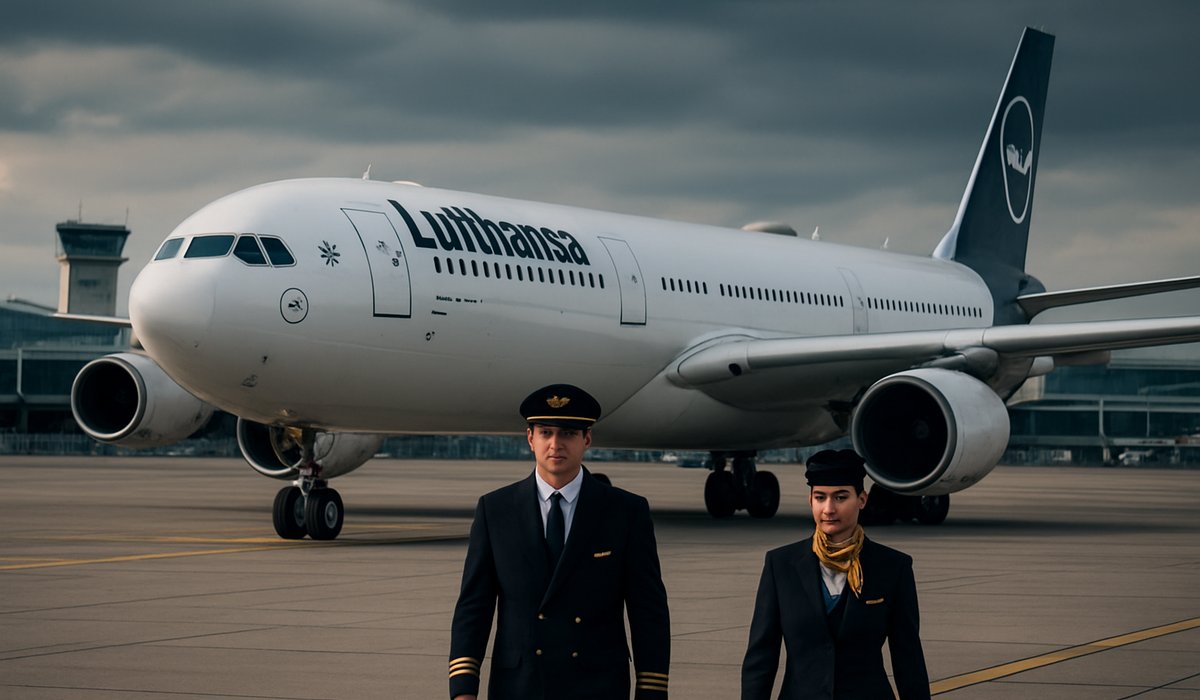
Image generated by AI
Lufthansa's Hidden Lavatories: Why the A340-600 Has Restrooms in Its Cargo Hold
Aviation engineers explain the logic behind one of aviation's most unusual cabin design choices
The Unconventional Design Choice
Lufthansa's Airbus A340-600 fleet operates with a feature that has mystified aviation enthusiasts for years: functional lavatories situated beneath the main passenger cabin within the cargo hold area. While the concept appears baffling at first glance, this unconventional architectural choice reflects broader strategic decisions about aircraft utilization, passenger capacity optimization, and long-haul flight efficiency that define modern wide-body operations.
Understanding the Engineering Logic
The placement of auxiliary restroom facilities in lower-deck sections stems from several interconnected factors. On extended international routes—where A340-600 aircraft typically operate—passenger comfort and operational flexibility become paramount concerns. By strategically positioning additional lavatory access points, carriers can distribute traffic flow more effectively across the aircraft, reducing queuing congestion during cruise phases and improving overall passenger experience on flights exceeding 14 hours.
From a design perspective, the Airbus A340-600's fuselage architecture provides substantial cargo hold volume that would otherwise remain underutilized. German carrier Lufthansa's engineering teams recognized this spatial opportunity, converting segments of lower-deck infrastructure into functional passenger amenities while maintaining necessary freight and baggage capacity. This dual-purpose approach maximizes revenue potential without sacrificing operational capability.
Implications for Modern Aircraft Design
This solution highlights a critical challenge facing aviation manufacturers and operators: balancing passenger comfort with economic efficiency on ultra-long-range aircraft. The A340-600 currently operates some of the world's longest commercial routes, including transatlantic and transpacific services where extended flight duration creates higher demand for facilities.
Lufthansa's implementation demonstrates how legacy wide-body aircraft can be retrofitted or configured with innovative interior solutions that contemporary designs—such as the Boeing 787 or Airbus A350—address through advanced cabin pressure systems and ergonomic planning from conception.
The Broader Aviation Context
This design approach reflects the complex trade-offs inherent in modern aviation. Airlines continuously seek methods to enhance passenger experience while operators and manufacturers work within structural and regulatory constraints. The A340-600's lower-deck lavatories represent practical engineering rather than luxury—a functional solution addressing genuine passenger needs on marathon flight routes.
The feature underscores how aircraft design innovation extends beyond aerodynamics and fuel efficiency into cabin operations, where human factors and comfort directly influence airline competitiveness and passenger loyalty on premium long-haul services.
FAQ: Lufthansa A340-600 Lavatories and Aircraft Design
Why would an airline put lavatories in a cargo hold? Maximizing aircraft utilization on ultra-long-range routes requires creative space allocation. Lufthansa's A340-600 uses lower-deck infrastructure for passenger amenities while maintaining freight capacity, serving dual operational purposes.
How do passengers access lower-deck lavatories? Service staircases connect main cabin areas to below-deck facilities, allowing crew to direct passenger flow during cruise phases and distribute restroom demand across multiple locations.
Is this design common on other wide-body aircraft? Most modern aircraft like the Boeing 787 and Airbus A350 integrate similar functionality through integrated cabin design rather than retrofitting. The A340-600 represents an earlier engineering approach adapted for contemporary long-haul demands.
Does this lower-deck feature affect baggage capacity? No. Lufthansa's configuration maintains full cargo hold functionality while incorporating passenger facilities, optimizing space through multi-purpose design rather than sacrificing freight revenue.
Which airlines operate A340-600 aircraft with this configuration? Lufthansa is primarily known for this implementation, though other carriers operating the A340-600 have pursued different cabin configurations based on their specific route networks and passenger demographics.
Related Travel Guides
External Resources
Disclaimer
This article is for informational and educational purposes only. It does not constitute legal, financial, or professional advice. While we strive to provide accurate and up-to-date information, travel policies, regulations, and conditions change rapidly. Always verify information with official sources before making travel decisions. Nomad Lawyer makes no representations about the accuracy, reliability, completeness, or suitability of the information provided. Readers should consult qualified professionals for advice specific to their circumstances. The views expressed in this article are those of the author and do not necessarily reflect the views of Nomad Lawyer.
Raushan Kumar
Founder & Lead Developer
Full-stack developer with 11+ years of experience and a passionate traveller. Raushan built Nomad Lawyer from the ground up with a vision to create the best travel and law experience on the web.
Learn more about our team →