
United States: Transavia Puts Passenger & Child in Cockpit on 6-Hour Flight
A Transavia flight from Hurghada to Amsterdam sparked a safety uproar after a woman and her child sat in cockpit jump seats for an entire six-hour journey due to overbooking.

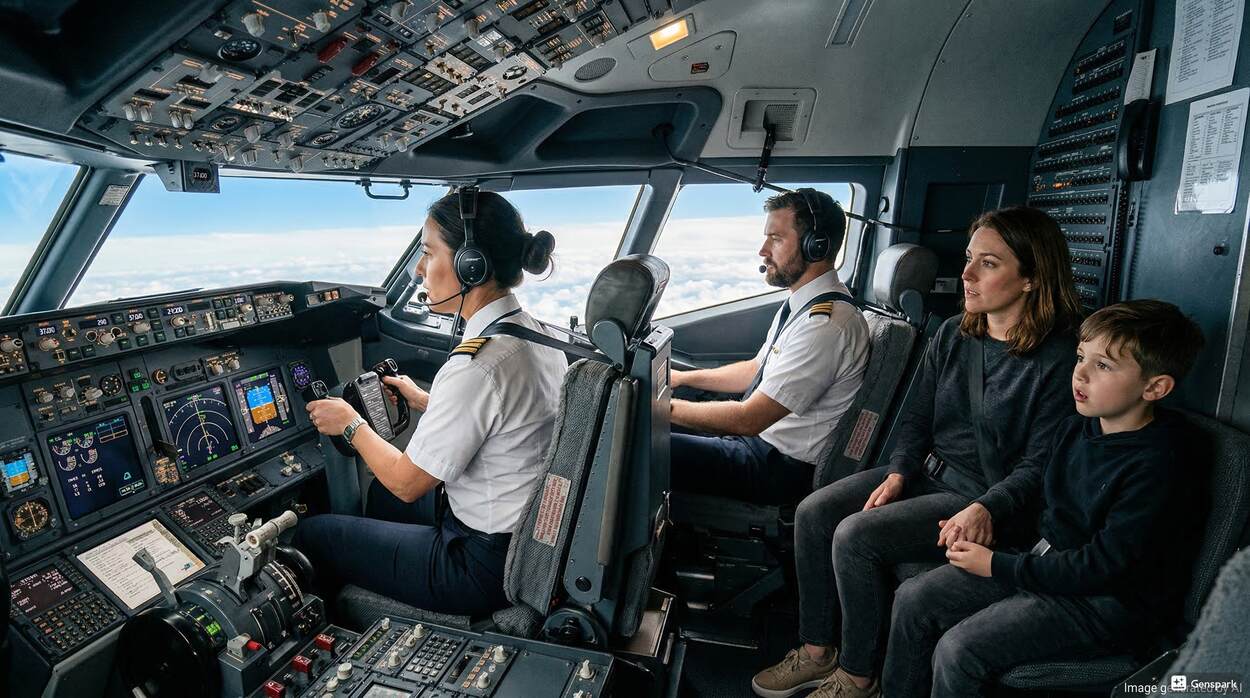
Image generated by AI
Quick Summary
- A Transavia flight (February 21, 2026) placed a woman and child in cockpit jump seats for a full 6-hour journey from Hurghada to Amsterdam due to overbooking.
- Jump seats are reserved for flight crew and authorized personnel — not passengers.
- The Dutch aviation authority (ILT) has acknowledged the incident and hinted the practice is "undesirable."
- Transavia has launched an internal investigation; a formal passenger complaint has been filed.
Transavia Seats Woman and Child in Cockpit for Entire Hurghada–Amsterdam Flight
A Transavia flight has triggered a wave of aviation safety concerns after a woman and her young child were placed in cockpit jump seats for the full duration of a six-hour journey. The flight, operating as HV123 from Hurghada International Airport (HRG) in Egypt to Amsterdam Schiphol Airport (AMS) in the Netherlands, took place on February 21, 2026, with the unusual seating arrangement stemming from an overbooked cabin.
Instead of denying boarding or offering alternative travel arrangements — the industry-standard response to overbooking — airline staff reportedly asked for volunteers willing to sit inside the cockpit. The mother and her child, believed to be around 10 years old, agreed. What followed was six hours seated in positions normally reserved exclusively for trained crew members.
What Are Cockpit Jump Seats — And Why Does This Matter?
Cockpit jump seats are fold-down seats inside the flight deck, designed for use by authorized personnel only — typically check airmen, regulators conducting route audits, or off-duty crew in specific circumstances. They are not passenger seats by any regulatory definition.
Under European Union Aviation Safety Agency (EASA) regulations, access to the cockpit is strictly controlled. Only individuals with a legitimate operational reason and appropriate authorization may occupy these positions. Allowing a paying passenger — let alone a child — to sit there for six consecutive hours falls well outside these guidelines.
The concern isn't merely procedural. In an emergency or sudden turbulence event, unrestrained or improperly briefed individuals in the cockpit could actively hinder a crew's ability to respond. Evacuation routes from the flight deck are also more complicated when the space is occupied by unauthorized persons.
Key Facts at a Glance
| Detail | Information |
|---|---|
| Flight | Transavia HV123 |
| Route | Hurghada (HRG) → Amsterdam Schiphol (AMS) |
| Date | February 21, 2026 |
| Duration in Cockpit | ~6 hours (full flight) |
| Passengers Involved | Adult woman + child (~10 years old) |
| Cause | Overbooked passenger cabin |
| Regulator | EASA / Dutch ILT |
| Investigation | Transavia internal probe underway |
Transavia's Official Position
Transavia confirmed it is conducting a thorough internal investigation into the February 21 incident. In a statement, the carrier maintained that its captain carries the ultimate authority for onboard safety decisions and that all procedures are conducted in line with the airline's operational guidelines.
The airline also reiterated that passenger safety is its highest priority — though critics note that this response falls short of addressing whether the cockpit placement was ever appropriate in the first place.
Dutch Aviation Authority Weighs In
The Dutch Human Environment and Transport Inspectorate (ILT), which oversees aviation safety in the Netherlands, has acknowledged the incident. While the ILT has not yet announced a formal investigation, it has signaled that the practice could be considered "undesirable" — a significant word choice that suggests regulatory scrutiny is forthcoming.
That ambiguity has not satisfied the passenger who first raised the alarm. A formal complaint has now been filed, describing the situation as both a potential safety violation and a breach of the passenger's contract with the airline. The complainant is also seeking compensation for all individuals affected by the incident.
Why Overbooking Led Here — and Why That's a Problem
Overbooking is a standard airline practice. Carriers routinely sell more seats than physically exist, banking on a predictable percentage of no-shows. When all passengers do show up, airlines are required by EU regulations to offer compensation, rebooking on the next available flight, or — in some cases — upgrades.
What airlines are not supposed to do is improvise solutions that compromise cockpit security.
Aviation safety experts stress that no operational inconvenience, including a full aircraft, justifies bypassing the strict access controls that govern the flight deck. The Transavia case is particularly alarming because the workaround involved a minor and lasted the entire duration of an international six-hour flight — not a brief, closely monitored exception.
What This Could Mean for Travelers
For passengers, this incident is a reminder that overbooking situations carry rights. Under EU Regulation 261/2004, if you are denied boarding on an overbooked flight, you are entitled to:
- Compensation of €250–€600 depending on the flight distance
- A choice between a full ticket refund or re-routing to your destination
- Care provisions including meals, refreshments, and hotel accommodation if needed
You should never feel pressured into an unofficial arrangement — especially one that places you inside a restricted area of the aircraft.
Possible Legal and Regulatory Consequences
If regulators conclude that Transavia breached EASA cockpit access rules, the airline could face:
- Fines or penalties from the Dutch ILT or EASA
- Mandatory policy reviews and revised crew training
- Increased audit scrutiny on future flights
Beyond Transavia itself, this case may prompt a broader European review of how airlines handle overbooking — particularly whether existing EU compensation rules create enough incentive for carriers to find safe, compliant solutions rather than creative ones.
What This Means for Travelers Planning Flights
If you're flying with any low-cost European carrier on a popular route, here's what to keep in mind:
- Know your EU261 rights before you travel — save the regulation number in your notes
- If asked to give up your seat, always ask for compensation in writing before agreeing
- You have the right to refuse any seating arrangement that feels unsafe or non-standard
- Report concerns to the relevant national aviation authority if your airline fails to follow proper procedure
A Precedent-Setting Case
This incident is unlikely to fade quietly. Whether or not Transavia is found to have formally violated EASA rules, the optics of placing a child in a cockpit on a long-haul international flight have already generated significant public and media attention. The outcome of the internal probe — and any subsequent ILT action — could establish a precedent for how European aviation bodies handle overbooking incidents that venture into safety-critical territory.
Further updates are expected as both Transavia's investigation and any regulatory review progress. Passengers affected by the February 21 flight may be eligible for compensation once the findings are released.
Related News & Resources
- 20 Flights Cancelled: VivaAerobus, Delta, WestJet Hit Mexico Routes
- Middle East Travel Disrupted: Dubai Luxury Hotels Face Airspace Restrictions
FAQ
Was it legal for Transavia to seat passengers in the cockpit? Under EASA regulations, cockpit jump seats are reserved for authorized personnel only. Seating paying passengers — particularly for an entire six-hour flight — is widely considered a breach of these guidelines, though a formal regulatory ruling is still pending.
What happened to the passengers who sat in the cockpit? A woman and her child, approximately 10 years old, sat in the cockpit jump seats for the full duration of the Hurghada-to-Amsterdam flight on February 21, 2026. They accepted the offer voluntarily when airline staff asked for volunteers due to overbooking.
Is Transavia being investigated for the incident? Yes. Transavia has launched an internal investigation. The Dutch aviation authority (ILT) has acknowledged the incident and described the practice as potentially "undesirable," though no formal external investigation has been announced as of publication.
What are my rights if a flight is overbooked? Under EU Regulation 261/2004, passengers denied boarding due to overbooking are entitled to financial compensation (€250–€600), re-routing, or a full refund — plus meals and accommodation if there is a significant delay.
Could this happen on other airlines? While cockpit jump seat usage by non-crew is extremely rare across the industry, this incident highlights the need for clearer enforcement of existing EASA policies. Aviation regulators may use this case to reinforce cockpit access protocols across all European carriers.
Disclaimer: Information accurate as of March 24, 2026. Regulatory findings and compensation outcomes are subject to change as investigations progress.
Disclaimer
This article is for informational and educational purposes only. It does not constitute legal, financial, or professional advice. While we strive to provide accurate and up-to-date information, travel policies, regulations, and conditions change rapidly. Always verify information with official sources before making travel decisions. Nomad Lawyer makes no representations about the accuracy, reliability, completeness, or suitability of the information provided. Readers should consult qualified professionals for advice specific to their circumstances. The views expressed in this article are those of the author and do not necessarily reflect the views of Nomad Lawyer.
Kunal K Choudhary
Co-Founder & Contributor
A passionate traveller and tech enthusiast. Kunal contributes to the vision and growth of Nomad Lawyer, bringing fresh perspectives and driving the community forward.
Learn more about our team →