
EgyptAir Unveils First Boeing 737 MAX: A New Era for Sustainable Short-Haul Travel
EgyptAir takes delivery of its first Boeing 737 MAX aircraft, marking a major fleet modernization effort aimed at boosting sustainable short-haul travel.

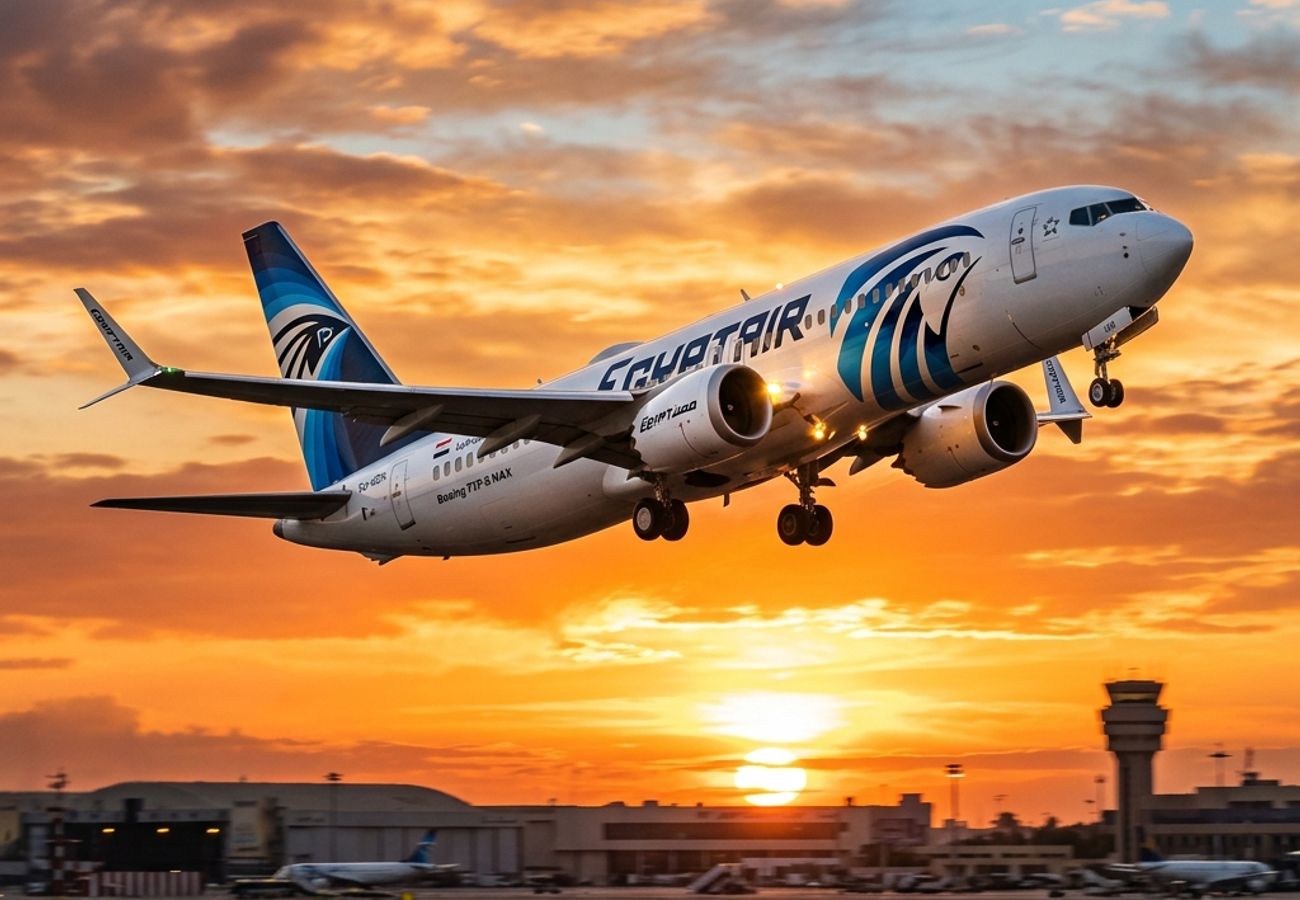
Image generated by AI
In a landmark achievement for regional aviation, EgyptAir has officially taken delivery of its very first Boeing 737-8 MAX aircraft. This highly anticipated integration signals a bold new chapter in the national carrier’s extensive fleet modernization strategy, deliberately targeting enhanced operational efficiency and passenger comfort across its short and medium-haul networks.
A Strategic Fleet Overhaul
The newly delivered Boeing 737 MAX is the first of 18 state-of-the-art aircraft leased via SMBC Aviation Capital. This delivery marks the official entry of the MAX family into EgyptAir’s fleet, positioning the airline to compete aggressively with fast-growing Middle Eastern and European carriers.
For Egypt’s booming tourism sector—a critical pillar of the national economy—this fleet upgrade is not just a corporate milestone; it is an economic necessity. As travel demand surges toward iconic destinations like Cairo, Luxor, and Sharm El-Sheikh, deploying modern, efficient aircraft is essential for capturing capacity and ensuring elite visitor satisfaction.
Breaking Down the Passenger Impact
The introduction of the Boeing 737-8 MAX brings a tangible, immediate upgrade to the passenger experience. EgyptAir plans to aggressively deploy this aircraft across high-traffic routes connecting Cairo with primary European and Middle Eastern nodes.
| Target Markets | Key Destinations |
|---|---|
| Europe | Paris, Brussels, Vienna, Istanbul |
| Middle East | Dubai, Riyadh, Jeddah |
Passengers stepping aboard will immediately notice the implementation of the Boeing Sky Interior. This design architecture sets a new standard for narrow-body aircraft, featuring modern LED cabin lighting, larger window profiles, and significantly expanded overhead storage bins, fundamentally reducing boarding stress.
What This Means for Travelers and the Environment
- Greener Travel: The 737 MAX boasts a massive 20% reduction in fuel consumption and carbon emissions compared to the airline's older narrow-body jets. This allows environmentally conscious travelers to lower their carbon footprint without sacrificing convenience.
- Increased Reliability: The integration of brand-new airframes dramatically improves on-time performance and minimizes the mechanical delays frequently associated with aging fleets.
- The Next Phase: EgyptAir's modernization isn't stopping with narrow-body jets. The airline is actively advancing its wide-body fleet renewal program, incorporating Airbus A350s to radically expand its long-haul intercontinental footprint.
FAQ: EgyptAir's Boeing 737 MAX Delivery
How many Boeing 737 MAX aircraft is EgyptAir receiving? EgyptAir is integrating a total of 18 Boeing 737-8 MAX aircraft into its fleet, secured through a leasing agreement with SMBC Aviation Capital.
Where will the new EgyptAir 737 MAX fly? The aircraft will be deployed on short and medium-haul routes, prominently serving European capitals like Paris and Brussels, as well as high-traffic Middle Eastern corridors.
How does the 737 MAX improve sustainability? The Boeing 737-8 MAX utilizes advanced engine technology and aerodynamics to reduce fuel burn and CO2 emissions by up to 20% compared to previous generations of narrow-body aircraft.
Related Travel Guides
Disclaimer
This article is for informational and educational purposes only. It does not constitute legal, financial, or professional advice. While we strive to provide accurate and up-to-date information, travel policies, regulations, and conditions change rapidly. Always verify information with official sources before making travel decisions. Nomad Lawyer makes no representations about the accuracy, reliability, completeness, or suitability of the information provided. Readers should consult qualified professionals for advice specific to their circumstances. The views expressed in this article are those of the author and do not necessarily reflect the views of Nomad Lawyer.
Kunal K Choudhary
Co-Founder & Contributor
A passionate traveller and tech enthusiast. Kunal contributes to the vision and growth of Nomad Lawyer, bringing fresh perspectives and driving the community forward.
Learn more about our team →