
LAX Opens Remote Satellite Concourse a Mile Away: How One Airport Solved Terminal Expansion Without Operational Chaos
Breaking airline news and aviation industry updates for 2026.

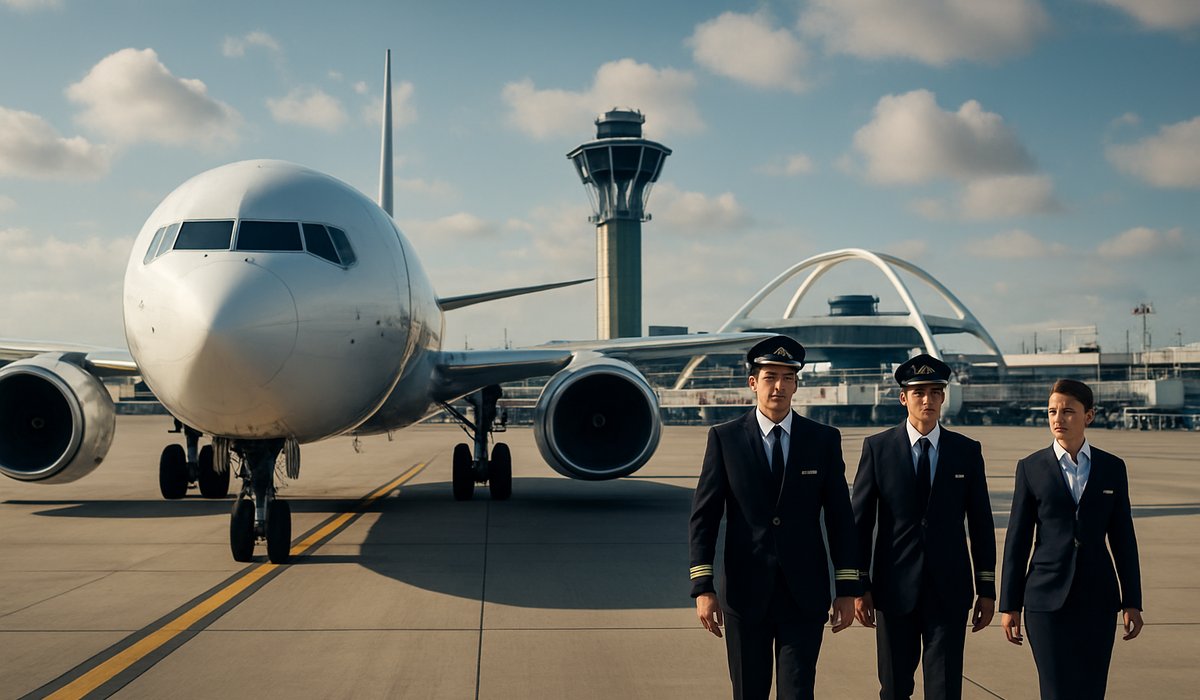
Image generated by AI
LAX Opens Remote Satellite Concourse a Mile Away: How One Airport Solved Terminal Expansion Without Operational Chaos
Los Angeles International Airport's innovative $421 million solution sidesteps the traditional airport construction gridlock that typically disrupts air traffic for years
A Bold Infrastructure Solution Takes Flight
Los Angeles International Airport has fundamentally reimagined how major aviation hubs can expand capacity without grinding daily operations to a halt. The newly opened Midfield Satellite Concourse South, which welcomed its first commercial flight on September 30, 2025, represents a departure from conventional terminal expansion strategies that often force airports to choose between construction delays and operational disruption.
The $421 million facility, which opened to the public on October 21, 2025, adds eight narrowbody gates and 150,000 square feet of terminal space to LAX's infrastructure. Rather than attempting to squeeze the new concourse into the congested core airport footprint, project planners made an unconventional decision: construct the facility over a mile away in a former parking lot area, connected via an automated people mover system.
Why Distance Became an Asset
Traditional airport expansions present an impossible dilemma for aviation hubs. Extending existing terminals while maintaining uninterrupted aircraft movements, baggage handling, and passenger flow requires either accepting years of operational gridlock or accepting severe project delays that extend timelines indefinitely.
LAX's approach circumvents both obstacles. By locating the Midfield Satellite Concourse South at the western edge of the airport property, construction crews avoided interfering with active runways, taxiways, and the West Gates area of the Tom Bradley International Terminal. The remote location transformed what would have been an operational nightmare into a manageable infrastructure project.
Industry Context: Airport Expansion in an Era of Capacity Constraints
The decision reflects broader challenges facing major aviation hubs worldwide. As jet fuel prices remain elevated and airlines face pressure to maximize fleet utilization, airport capacity limitations have become a critical bottleneck for growth. Rising travel costs, driven partly by fuel surcharges and increased airline fees, have made passenger throughput more valuable to terminal operators and airlines alike.
The satellite concourse concept also addresses contemporary aviation industry demands. With baggage charges, seat selection fees, and ancillary revenue generation now central to airline business models, airports must provide sufficient gate inventory to accommodate carrier growth without forcing them elsewhere.
Opening Positions LAX for Future Growth
The new facility extends LAX's total gate capacity and provides a template for other international hubs facing similar expansion constraints. For passengers, the remote location necessitates enhanced ground transportation connectivity—a factor that may influence operational efficiency and passenger satisfaction metrics moving forward.
The concourse demonstrates how strategic infrastructure planning can deliver meaningful capacity additions while preserving existing airport operations, offering a potential blueprint for other congested aviation hubs navigating their own expansion challenges.
FAQ: LAX Satellite Concourse and Airport Expansion
Why did LAX build a satellite concourse over a mile away instead of at the main terminal? Remote construction avoided disrupting active runways, taxiways, and passenger operations at the primary terminal. This approach eliminated years of construction-related operational chaos while maintaining normal flight schedules.
How do passengers reach the satellite concourse? An automated people mover system connects the remote facility to the main terminal, ensuring seamless passenger transfer between the satellite concourse and LAX's core infrastructure.
What impact will this expansion have on airline fees and ticket prices? Increased gate capacity may reduce bottlenecks that airlines use to justify fuel surcharges and baggage fees, though pricing remains subject to broader jet fuel price fluctuations and competitive pressures.
Could other airports replicate LAX's satellite concourse model? Yes. The strategy offers a viable alternative for congested aviation hubs lacking space for traditional terminal expansion, particularly those with available land near but outside the primary airport footprint.
How does this relate to global aviation industry challenges? The expansion addresses capacity constraints limiting airline growth and passenger throughput at major international hubs, directly supporting the industry's ability to absorb rising travel demand amid elevated jet fuel costs.
Related Travel Guides
-
Hawaiian Airlines Permanently Retires A321neo on Honolulu-Oakland Route
-
China Travel Singapore: Singapore Airlines Launches Daily Hangzhou Route
External Resources
Disclaimer
This article is for informational and educational purposes only. It does not constitute legal, financial, or professional advice. While we strive to provide accurate and up-to-date information, travel policies, regulations, and conditions change rapidly. Always verify information with official sources before making travel decisions. Nomad Lawyer makes no representations about the accuracy, reliability, completeness, or suitability of the information provided. Readers should consult qualified professionals for advice specific to their circumstances. The views expressed in this article are those of the author and do not necessarily reflect the views of Nomad Lawyer.
Kunal K Choudhary
Co-Founder & Contributor
A passionate traveller and tech enthusiast. Kunal contributes to the vision and growth of Nomad Lawyer, bringing fresh perspectives and driving the community forward.
Learn more about our team →