
North American Thunderstorms Trigger Flight Cancellations and Power Outages Across BC and Mid-South 2026
Severe thunderstorms from British Columbia to the Mid-South caused over 100 flight disruptions at YVR and widespread power outages, highlighting systemic aviation and infrastructure vulnerabilities.

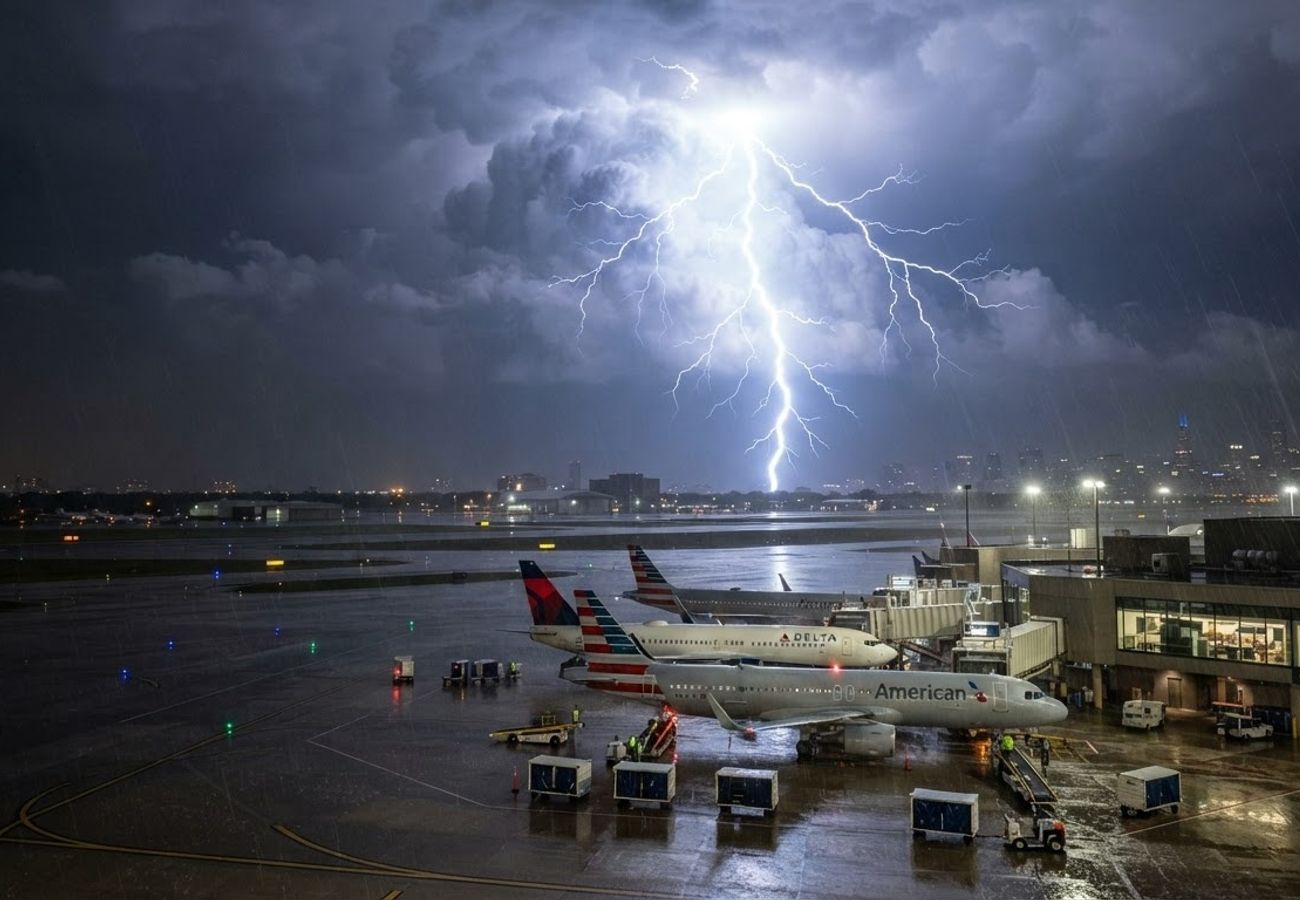
Image generated by AI
Severe weekend thunderstorms spanning from British Columbia to the Mid-South triggered significant flight cancellations, widespread power outages, and flooded roadways, severely impacting late-summer travel corridors.
Aviation Gridlock: Lightning and Ground Stops
The most acute aviation impact occurred at Vancouver International Airport (YVR). Lightning and heavy precipitation on Saturday night forced a total suspension of airside activity. From approximately 9 p.m. Saturday to 3 a.m. Sunday local time, aircraft were prohibited from departing, and arriving flights were unable to taxi to gates due to mandatory ramp safety protocols during lightning events.
The operational recovery on Sunday was slow. By midday, YVR reported:
- More than 50 flight cancellations.
- At least 50 additional flight delays.
The disruption extended well beyond the storm window as airlines struggled with displaced aircraft and crew rotation imbalances.
Simultaneously, U.S. hubs faced similar volatility. Detroit Metropolitan Wayne County Airport implemented a ground stop on Saturday to manage passing storm cells. These interruptions occur within a broader trend of increased operational pressure on air traffic control centers and airline staffing levels.
Mid-South Infrastructure Failure
In the Mid-South, a powerful bow echo storm system struck the Memphis region Saturday afternoon. The system produced straight-line winds exceeding 70 miles per hour in parts of Shelby County, resulting in significant structural damage and utility failures.
The impact on local transit and infrastructure included:
- Power Outages: Thousands of customers in Memphis and neighboring Mississippi communities lost electricity due to lightning strikes and downed transmission lines.
- Road Blockages: Toppled trees and debris rendered several neighborhood streets and major roadways impassable.
- Traffic Control: Darkened traffic signals at major intersections created hazardous driving conditions and forced widespread detours.
Regional utilities warned that full restoration in the hardest-hit areas would take multiple days due to the necessity of line-by-line safety inspections.
Regional Flooding and Severe Weather Patterns
A stalled frontal boundary across the Great Lakes, Mid-South, and Appalachians created a high risk of flash flooding. This followed a week of "training thunderstorms" in southeast Missouri and western Kentucky, where some areas recorded several inches of rain within 24 hours.
This saturated soil increased runoff risks during the weekend's storms. Further east, the frontal zone triggered a tornado in Dover, Delaware, which caused building damage and downed power lines. These scattered systems caused intermittent ground delays at airports from the Ohio Valley to the Eastern Seaboard.
Operational Impact Summary
| Location | Primary Event | Immediate Impact | Recovery Status |
|---|---|---|---|
| Vancouver (YVR) | Lightning/Heavy Rain | 50+ Cancellations, 50+ Delays | Slow (Crew/Aircraft repositioning) |
| Detroit (DTW) | Thunderstorms | Temporary Ground Stop | Resolved |
| Memphis/Shelby Co. | 70mph Straight-line Winds | Mass Power Outages, Road Blocks | Multi-day restoration |
| Dover, Delaware | Tornado | Building/Utility Damage | Localized recovery |
Why This Matters: The Resilience Gap
From a logistical perspective, these events reveal a critical "resilience gap" in North American travel infrastructure. The situation at YVR demonstrates that airport capacity can drop to near zero almost instantly when safety protocols (like lightning ramp closures) are triggered.
For the modern traveler, the real impact is not the storm itself, but the cascading failure that follows. When a hub like YVR or DTW freezes for six hours, the ripple effect lasts for 48 to 72 hours because crews and aircraft are physically out of position. Our analysis suggests that as convective storms become more frequent and intense, the "buffer" in airline scheduling has vanished, meaning a single afternoon of weather now creates a weekend of chaos.
Furthermore, the Mid-South experience highlights a vulnerability in "last-mile" travel. When power grids fail and traffic signals go dark, the transition from airport to final destination becomes a primary point of failure for travelers, often resulting in stranded passengers despite successful flights.
Industry Outlook
Market trends suggest that aviation networks will continue to struggle with "climate-induced volatility." We expect to see:
- Increased Ground Delay Programs: More frequent use of federal diversion tools to prevent hub congestion during storm cells.
- Infrastructure Hardening: Greater investment in grid resilience in the Mid-South to prevent total transit collapses during bow echo events.
- Dynamic Scheduling: A shift toward more flexible crew rotations to mitigate the "out-of-position" effect seen at YVR.
Travelers are advised to maintain high flexibility and monitor real-time radar products during the volatile late-summer window.
Related Travel Guides
Disclaimer
This article is for informational and educational purposes only. It does not constitute legal, financial, or professional advice. While we strive to provide accurate and up-to-date information, travel policies, regulations, and conditions change rapidly. Always verify information with official sources before making travel decisions. Nomad Lawyer makes no representations about the accuracy, reliability, completeness, or suitability of the information provided. Readers should consult qualified professionals for advice specific to their circumstances. The views expressed in this article are those of the author and do not necessarily reflect the views of Nomad Lawyer.
Raushan Kumar
Founder & Lead Developer
Full-stack developer with 11+ years of experience and a passionate traveller. Raushan built Nomad Lawyer from the ground up with a vision to create the best travel and law experience on the web.
Learn more about our team →