
Watson Lake Opens a Hidden Yukon World of Signs Wild Trails and Northern Skies
Watson Lake Opens a Hidden Yukon World of Signs Wild Trails and Northern Skies

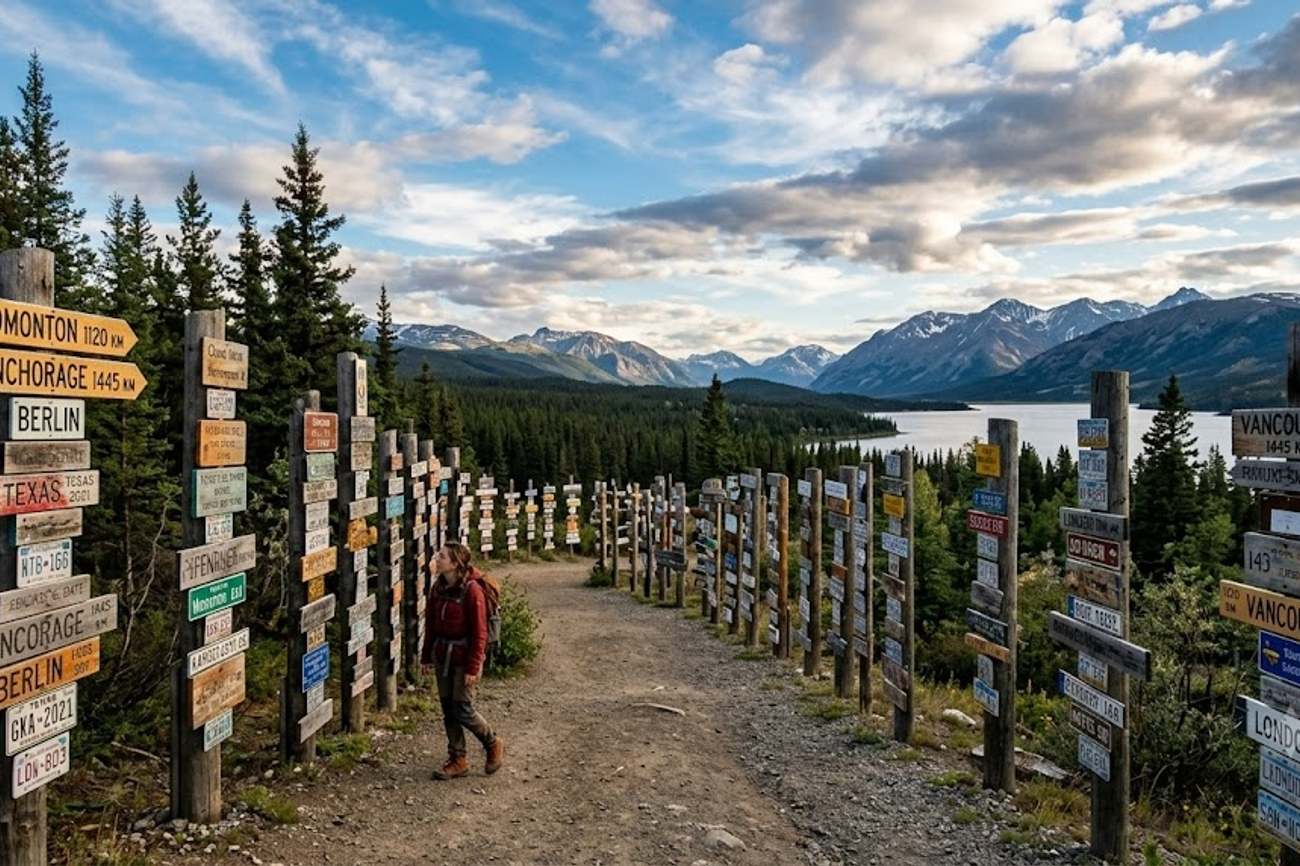
Image generated by AI
Visitor volume to the Yukon territory has seen a steady climb as "slow travel" replaces traditional checklist tourism, with Watson Lake evolving from a mere refueling stop into a destination anchor. This shift is evidenced by the Sign Post Forest, which has expanded from a single marker in 1942 to a global archive of nearly 100,000 signs, signaling a transition in traveler behavior from transient passage to active participation.
The Boreal Transit Economy in Numbers
Watson Lake operates as a critical node in the Alaska Highway ecosystem, where the value proposition has shifted from basic utility to experiential heritage. The data points to a diversified tourism product that leverages both historical infrastructure and natural assets. The Sign Post Forest serves as the primary lead generator, boasting a collection of approximately 100,000 markers. This is not merely a curiosity but a data-driven indicator of the highway's global reach, as signs originate from every continent.
The town's infrastructure supports this influx through a network of over 65 kilometers of multi-use trails. These trails facilitate a low-impact tourism model that distributes visitor foot traffic across diverse sites, including Wye Lake and the Liard River Canyon. The integration of the Northern Lights Centre provides a strategic solution to the "seasonal visibility gap." Because Yukon summer nights are characterized by prolonged brightness, the centre's dome theatre allows the town to maintain aurora-related engagement year-round, effectively decoupling the aurora experience from the strict requirements of the winter solstice.
Furthermore, the aviation history of Watson Lake, centered on the 1942 airport terminal, connects the town to the Northwest Staging Route. This historical layer adds a "heritage premium" to the visit, transforming a road trip into a chronological study of wartime logistics and northern expansion.
Regional Benchmarks and Transit Patterns
When comparing Watson Lake to other transit hubs along the Alaska Highway, we see a distinct move toward "destination-based stopping." Historically, towns in northern British Columbia and the Yukon served as fuel and lodging depots. However, Watson Lake has successfully pivoted toward a multi-day stay model.
The following table illustrates the shift in recommended visitor engagement patterns based on the current available infrastructure and attraction density:
| Visitor Profile | Previous Pattern (Transit Stop) | Current Pattern (Destination Stay) | Primary Value Driver |
|---|---|---|---|
| Short-Stay Driver | 2-4 hours (Fuel/Food) | 24 hours (1 Night) | Sign Post Forest & Northern Lights Centre |
| Adventure Tourist | Pass-through to Whitehorse | 48 hours (2 Nights) | 65km Trail Network & Wye Lake |
| Heritage Traveler | Generic highway interest | 48+ hours (2+ Nights) | 1942 Airport Terminal & Kaska Dena Territory |
| Winter Sports | Avoidance of region | Seasonal Visit | Mount Maichen Ski Hill |
This shift aligns with broader trends reported by the World Tourism Organization (UNWTO), which highlight a global increase in "rural dispersion," where travelers seek out smaller communities to avoid over-tourism in primary hubs. By leveraging the Kaska Dena traditional territory and the specific wartime history of the 1942 Alaska Highway construction, Watson Lake is capturing a market share of travelers who prioritize authenticity over luxury.
What This Means for Travelers
For those planning a trajectory through the Yukon, the data suggests that the "stop-and-go" method of highway travel is no longer the most efficient way to experience the region. To maximize the value of a visit to Watson Lake, travelers should adopt the following data-backed strategies:
1. Buffer Your Timeline: The transition from a one-night to a two-night stay is the threshold for accessing the town's secondary assets. A 24-hour stay covers the "essential" circuit (Sign Post Forest and the Northern Lights Centre), but a 48-hour window is required to utilize the 65km trail system and visit the historic airport terminal.
2. Sync with the 511 Yukon Data: Road conditions in the Yukon are volatile. Travelers should treat the 511 Yukon service as a mandatory pre-departure checklist. Given the remote nature of the Alaska Highway, maintaining a full fuel tank and carrying emergency supplies is a requirement, not a suggestion, particularly when venturing toward the Liard River Hot Springs in northern British Columbia.
3. Seasonal Planning for the Aurora: If visiting during the summer months, do not rely on natural visibility for the northern lights. Instead, prioritize the Northern Lights Centre's dome theatre to gain the scientific context of the aurora borealis, as the midnight sun effectively masks the lights during the peak of summer.
4. Logistics for the Liard River Extension: While the hot springs are located in British Columbia, Watson Lake serves as the primary logistical base. Ensure all refueling and provisioning are completed in Watson Lake before heading toward the provincial park to avoid supply shortages in more remote stretches.
Projection: The Future of Northern Gateway Tourism
The current trajectory of Watson Lake suggests it will move further toward becoming a "basecamp" model. As more travelers seek "off-grid" experiences, the demand for the 65km trail network and the volunteer-run Mount Maichen Ski Hill will likely increase. We expect to see a rise in "slow-travel" itineraries that integrate Watson Lake as a multi-day hub rather than a waypoint.
The growth of the Sign Post Forest—now approaching a critical mass of 100,000 signs—creates a powerful psychological incentive for new visitors to contribute their own markers. This "participation loop" ensures a steady stream of returning or first-time visitors who feel a personal stake in the town's growth. According to trends tracked by IATA, while air travel remains dominant for international arrivals into Whitehorse, the "road-trip economy" of the Alaska Highway is seeing a resurgence among demographics seeking immersive, long-form travel.
As the town continues to highlight its connection to the Kaska Dena people and its wartime aviation roots, it is positioning itself as a cultural custodian of the North. This shift from "service stop" to "cultural destination" is the blueprint for other small northern communities looking to stabilize their tourism revenue.
FAQ: Watson Lake Tourism 2025
Is Watson Lake a good place to stay for more than one night? Yes. While a one-night stay covers the Sign Post Forest and Northern Lights Centre, a two-night stay is necessary to explore the 65km trail network, visit Wye Lake, and tour the 1942 airport terminal.
Can I see the Northern Lights in Watson Lake during the summer? Natural visibility is low due to bright summer nights. However, the Northern Lights Centre uses a dome theatre and digital imagery to provide the experience and scientific education regardless of the season.
What is the best way to reach Watson Lake? Driving is the primary method via the Alaska Highway. While limited regional air service exists from Whitehorse, road travel allows for the full experience of the Sign Post Forest and surrounding boreal wilderness.
Are there activities for families in Watson Lake? Yes. The Sign Post Forest is highly interactive for children, and Wye Lake offers an accessible boardwalk and picnic areas suitable for all ages.
The evolution of Watson Lake proves that in the modern travel economy, the smallest dots on the map often hold the most significant data on human connection.
Tags: WatsonLakeTourism2025, AlaskaHighwayTransit, YukonBorealEconomy, SignPostForestData, KaskaDenaTerritory, NorthernBCTravel
Related Travel Guides
- Philippines Tourism Surges From Within as Filipinos Turn 100 Million Domestic Trips Into a Powerful Travel Boom
- Lord Howe Island in NSW or Freycinet Peninsula in Tasmania are Showing Visitor Caps the Future of Travel Across Micro-Destinations in Australia
- Thailand Launches Nihao Month 2026 To Boost Chinese Travel Demand With Culture, Deals And Premium Experiences
Disclaimer
This article is for informational and educational purposes only. It does not constitute legal, financial, or professional advice. While we strive to provide accurate and up-to-date information, travel policies, regulations, and conditions change rapidly. Always verify information with official sources before making travel decisions. Nomad Lawyer makes no representations about the accuracy, reliability, completeness, or suitability of the information provided. Readers should consult qualified professionals for advice specific to their circumstances. The views expressed in this article are those of the author and do not necessarily reflect the views of Nomad Lawyer.
Naina Thakur
Contributor & Travel Specialist
Travel enthusiast and legal writer covering visa regulations, responsible tourism, and cultural journeys across global destinations.
Learn more about our team →