
Lord Howe Island in NSW or Freycinet Peninsula in Tasmania are Showing Visitor Caps the Future of Travel Across Micro-Destinations in Australia
Lord Howe Island in NSW or Freycinet Peninsula in Tasmania are Showing Visitor Caps the Future of Travel Across Micro-Destinations in Australia

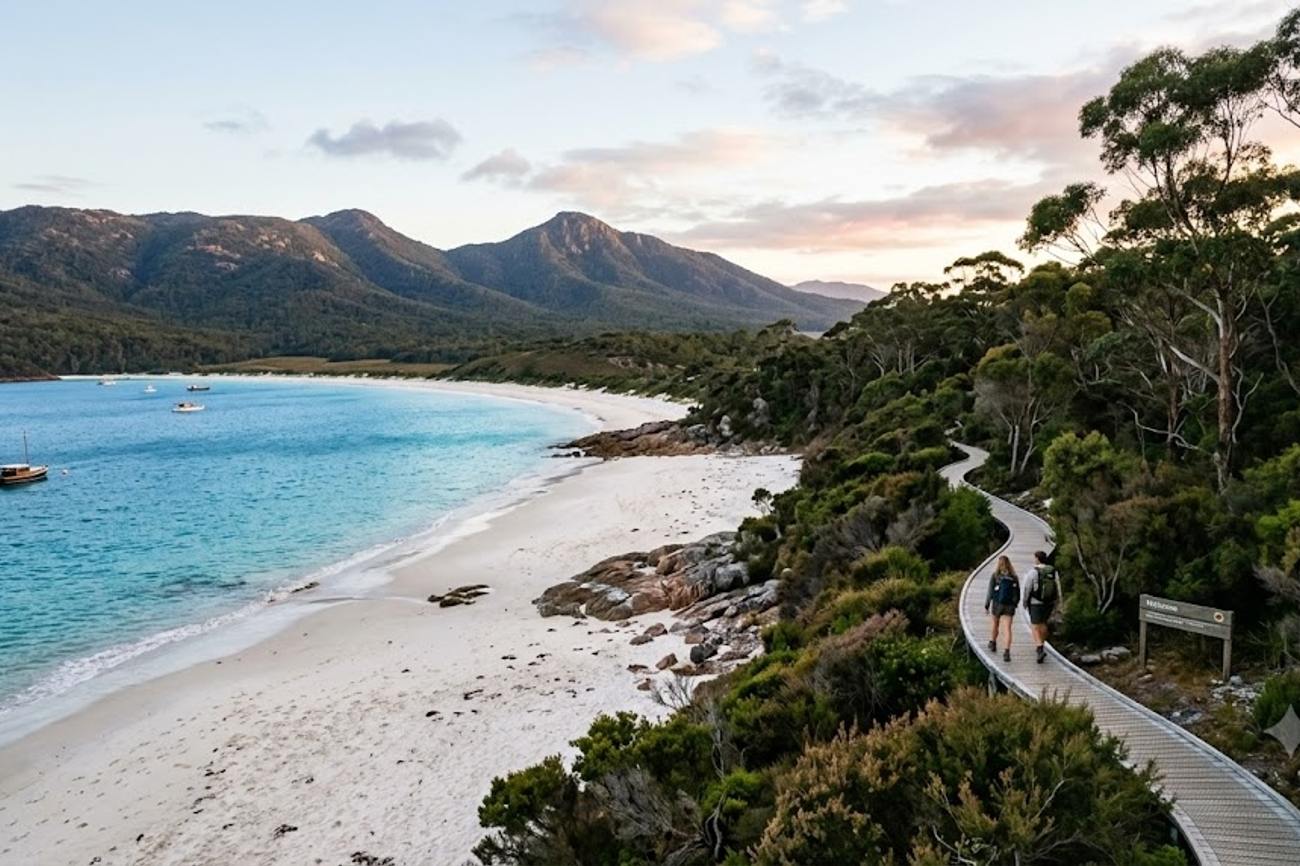
Image generated by AI
[Canberra, August 2026] — The Australian government has implemented a rigorous new regulatory framework to decouple regional economic growth from visitor volume, prioritizing high-yield, low-impact tourism over mass-market arrivals. This strategic pivot transforms previously obscure "micro-destinations" into highly regulated ecological sanctuaries, shifting the national tourism model away from saturated urban centers toward isolated regional hubs.
The policy shift, finalized in the third quarter of 2026, mandates strict visitor caps and increased access fees to fund conservation. These measures are designed to protect preserved ecosystems from the pressures of overtourism while maximizing the revenue generated per individual traveler. The initiative is being led by the Department of Infrastructure, Transport, Regional Development, Communications and the Arts in coordination with state-level environmental bodies.
The Catalyst for Micro-Destination Regulation
The surge in demand for remote, pristine environments has forced a total overhaul of how Australia manages its regional visitor economy. Travelers are increasingly rejecting traditional metropolitan itineraries in favor of isolated spots that offer untouched biological integrity. This behavioral shift created an immediate risk of ecological collapse in areas that lacked the infrastructure to support sudden influxes of people.
To counter this, policymakers have abandoned the outdated model of unrestricted public access. The current strategy treats exclusivity as a primary economic asset. By limiting the number of permitted visitors, the government ensures that the intrinsic value of these locations—their silence, purity, and rarity—remains intact. This approach transforms the tourism experience from a commodity into a curated, premium service where environmental preservation is the prerequisite for commercial operation.
Market Shift and Regional Impact
The transition toward niche, ecologically sensitive travel is redistributing wealth across the Australian continent. While traditional gateways like Sydney and Melbourne continue to operate, the highest growth in per-capita expenditure is now found in remote micro-hubs.
The following sectors and regions are experiencing the most significant shifts:
- Regional Hubs: Small coastal and rural outposts are transitioning into "managed sanctuaries" with strictly limited carrying capacities.
- Commercial Operators: Tour providers must now adhere to net-zero emissions targets and provide independent scientific modeling to prove their operations do not disrupt endemic species.
- Local Municipalities: Local boards now possess the legislative power to enforce heavy penalties for environmental breaches.
- Infrastructure Development: New grants are exclusively funding zero-emission transport, advanced wastewater treatment, and renewable energy grids.
According to data from Tourism Research Australia (TRA), the 2024–2025 financial period revealed a stark disparity between visitor volume and economic output. While total headcounts in these regions remain artificially low due to legislation, expenditure per capita has reached record-breaking highs. Visitors to these capped destinations stay longer and spend more than the average urban tourist, proving that profitability can be maintained without increasing passenger numbers.
What This Means for Travelers
For the average traveler, the era of spontaneous, unrestricted exploration of Australia's remote wilderness is ending. The "micro-destination" model introduces several immediate practical changes:
Higher Costs of Entry Expect significant increases in permit fees and access costs. These funds are directly earmarked for conservation and the maintenance of the fragile ecosystems you are visiting.
Strict Booking Requirements Because visitor numbers are capped, "walking in" to these destinations is becoming impossible. Travelers must now secure permits and bookings well in advance through official government channels.
Limited Infrastructure Do not expect the expansion of large hotels or resorts. Government directives strictly limit the physical expansion of commercial infrastructure to prevent "urban sprawl" in the wilderness. Accommodations will remain small-scale and high-end.
Real-Time Access Restrictions The introduction of digital monitoring systems means that access is now fluid. Park rangers and tourism boards can instantaneously close specific beaches, hiking trails, or marine zones if real-time data shows that visitor thresholds have been breached or if wildlife breeding patterns are at risk.
The 2026 Sustainability Roadmap
The federal government's objective for the remainder of 2026 is to establish a global benchmark for environmental stewardship. By aggressively decoupling profit from volume, Australia is testing a model where the tourism industry functions as a funding mechanism for conservation rather than a threat to it.
Upcoming directives include a comprehensive ecological footprint audit for every major remote destination. Any commercial entity failing to meet the new net-zero mandates will face the revocation of their operating licenses. Furthermore, the government is expanding the use of advanced tracking systems to ensure that human presence does not overlap with critical wildlife cycles.
This shift is not merely about environmentalism; it is a calculated economic move. By positioning these micro-destinations as the "pinnacle of sustainable, premium travel," Australia is targeting the highest-spending tier of global tourists who prioritize exclusivity and ecological ethics over convenience.
FAQ: Australian Micro-Destinations 2026
How do I visit a capped micro-destination? You must apply for permits through the official state environmental or tourism portals. Because of strict carrying capacities, these are often distributed via lottery or first-come, first-served windows.
Why have the costs of visiting remote areas increased? Increased fees fund the "conservation-first" framework, including renewable energy grids and wastewater treatment, ensuring the destination remains pristine for future generations.
What happens if a trail is closed while I am visiting? Digital monitoring systems allow rangers to close zones instantly to protect wildlife. Travelers must check real-time updates via official apps or park headquarters during their stay.
Can I still find budget accommodation in these regions? Likely not. The government is prioritizing high-yield, low-impact visitation, which naturally favors premium, small-scale eco-lodges over mass-market budget housing.
The era of mass tourism in the wilderness is over; the era of the curated sanctuary has begun.
#AustraliaTourism2026 #EcoTourismRegulation #RegionalAustralia #SustainableTravel #TourismResearchAustralia #MicroDestinations
Related Travel Guides
- Thailand Launches Nihao Month 2026 To Boost Chinese Travel Demand With Culture, Deals And Premium Experiences
- Grosseto Joins Cecina and More Italian Cities Face Unusual Severe Lightning as Mesocyclone Developed Over Tuscany with Over 200 Emergency Interventions
- New Zealand Travel Boom As Overseas Visitors Beat Pre COVID Records For First Time In July 2026
Disclaimer
This article is for informational and educational purposes only. It does not constitute legal, financial, or professional advice. While we strive to provide accurate and up-to-date information, travel policies, regulations, and conditions change rapidly. Always verify information with official sources before making travel decisions. Nomad Lawyer makes no representations about the accuracy, reliability, completeness, or suitability of the information provided. Readers should consult qualified professionals for advice specific to their circumstances. The views expressed in this article are those of the author and do not necessarily reflect the views of Nomad Lawyer.
Preeti Gunjan
Contributor & Community Manager
A passionate traveller and community builder. Preeti helps grow the Nomad Lawyer community, fostering engagement and bringing the reader experience to life.
Learn more about our team →