Washington State Autumn Travel Yakima Valley Harvest Guide 2026

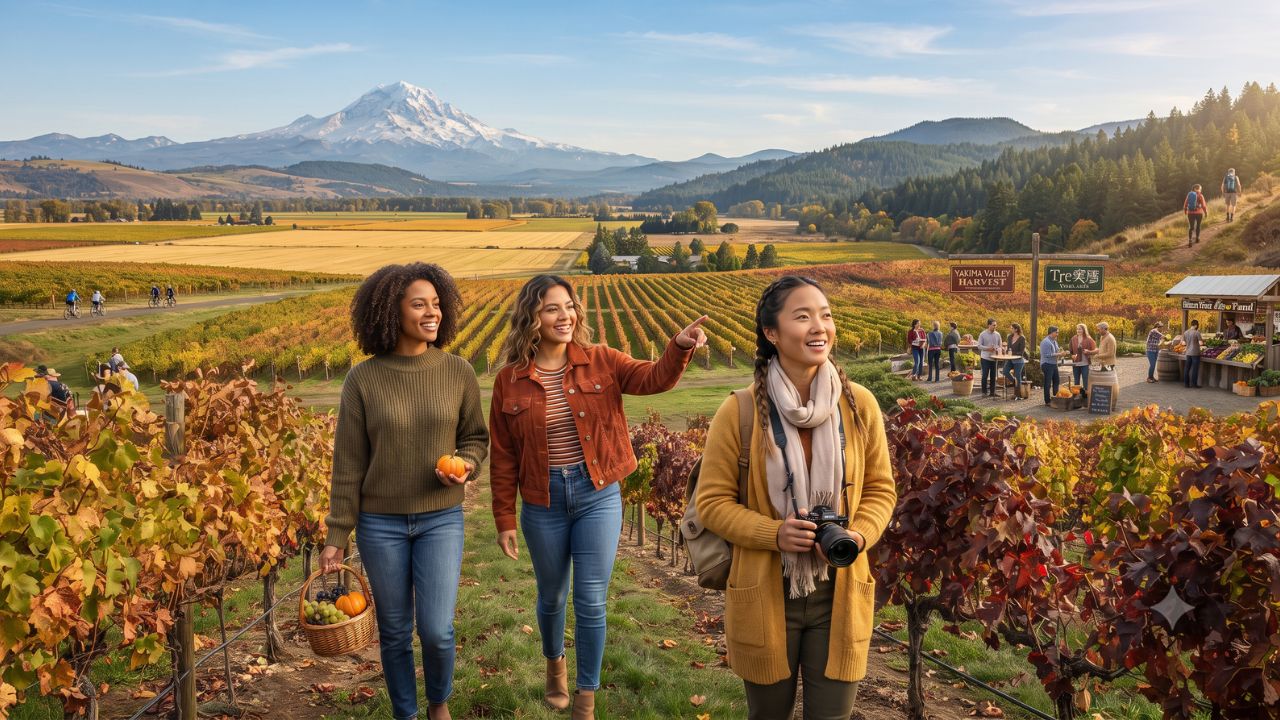
The Yakima Valley produces over 75% of the total hop yield in the United States, yet most autumn travelers rush past this fertile agricultural corridor without realizing September and October bring the world's most concentrated fresh-hop brewing and vineyard crush season. Following summer wildfire challenges and localized smoke disruptions across the Pacific Northwest, communities throughout central and eastern Washington are welcoming travelers back to crisp mountain air, vibrant foliage, and active harvest festivals.
Rather than concentrating solely on peak summer coastal travel, shoulder-season visitors are discovering how cooler temperatures create ideal conditions for hiking the Cascade foothills, navigating the Columbia River Gorge, and exploring family-run fruit orchards. The statewide rebound illustrates a shift toward flexible, low-impact travel that supports rural businesses recovering from seasonal disruptions.
Washington Autumn Travel Rebounds Across Central Valleys
Seasonal wildfire events across western North America have transformed how regional tourism boards and park rangers communicate with travelers. As high summer heat gives way to brisk autumn weather, trail access stabilizes and visual clarity returns across the mountains. Communities across central Washington are channeling this momentum into seasonal tourism initiatives.
| Region | Primary Autumn Attraction | Signature Harvest or Activity | Recommended Itinerary Focus |
|---|---|---|---|
| Yakima Valley | Agricultural heartland & vineyards | Fresh-hop craft brewing & grape crush | Winery touring, farm stands, hop field visits |
| Cascade Range Foothills | Golden larch foliage & alpine passes | Mountain trekking & scenic byways | High-elevation day hikes, historic mountain towns |
| Columbia River Corridor | Deep basalt canyons & waterways | Kayaking, wind sports, orchard cycling | Gorge overlooks, fruit loops, scenic drives |
| Chelan & Methow Valleys | Glacial lakes & river basins | Apple harvesting & cidery routes | Lakeside stays, quiet trail networks, local dining |
This renewed focus on autumn travel helps spread visitor spending across lodging providers, tasting rooms, independent farm stands, and backcountry outfitters throughout the shoulder season.
What Makes the Yakima Valley Harvest Season Distinctive
Positioned in the rain shadow of the Cascade Mountains, the Yakima Valley receives roughly 300 days of sunshine each year, creating an agricultural climate distinct from the rainy coastal forests of Puget Sound.
During early autumn, the valley undergoes a rapid agricultural transformation:
- The Fresh Hop Phenomenon: Yakima's hop bines reach peak maturity in September. Breweries from around the globe converge on the valley to brew fresh-hop ales within hours of harvest, a time-sensitive brewing style celebrated at regional taprooms and festivals.
- Wine Grape Crush: As Washington's oldest federally recognized American Viticultural Area (AVA), the valley's south-facing slopes yield Cabernet Sauvignon, Syrah, and Riesling grapes harvested throughout October.
- Historic Tree Fruit Orchards: Roadside stands along Highway 12 and Highway 97 overflow with crisp Honeycrisp apples, heirloom pears, and late-season peaches straight from local growers.
Travelers coordinating trips through State of Washington Tourism and regional partners like Yakima Valley Tourism can easily assemble self-guided agricultural driving loops linking organic farms, historic downtowns, and estate tasting rooms.
Outdoor Recreation and Mountain Trail Renewal
Beyond agricultural valleys, Washington's alpine corridors enter their most visually striking phase between late September and late October. Higher elevations in the Cascade Range witness the annual turning of the subalpine larches, deciduous conifers whose needles shift from bright green to vibrant gold before shedding for winter.
Popular trail networks across the Central Cascades and around federally managed lands monitored by the National Park Service provide reliable day-hiking opportunities. As summer wildfire risks subside, cooler daytime temperatures reduce heat exhaustion risks for hikers ascending steep switchbacks. Travelers can alternate between strenuous mountain climbs and relaxed afternoons in valley tasting rooms, combining physical adventure with regional dining.
Visitor Insider Tips
- Track Real-Time Air Quality with Smoke Monitors: Keep the Washington Department of Ecology's Air Quality Map or the Washington Smoke Blog bookmarked on mobile devices. If wind patterns shift localized smoke into one valley, mountain passes or adjacent river corridors just 30 miles away often remain completely clear.
- Visit Wineries on Weekday Afternoons: Harvest season brings regional weekend crowds to popular tasting rooms in Zillah and Prosser. Plan vineyard visits between Tuesday and Thursday to meet winemakers directly during active pressings.
- Pack Technical Cold-Weather Layers for Hikes: High-elevation trails in the Cascades can experience 30-degree temperature swings between trailhead parking lots and exposed alpine ridges. Carry windproof shells, thermal base layers, and microspikes as early snow dustings begin in October.
- Sample Unfiltered Fresh-Hop Releases on Site: Fresh-hop beers have a delicate flavor profile that degrades rapidly after packaging. Order fresh-hop pints on draft directly at brewery taprooms in Yakima and Selah within two weeks of harvest.
- Secure Northwest Forest Passes in Advance: Trailheads across Mount Baker-Snoqualmie and Okanogan-Wenatchee National Forests require valid parking passes. Purchase digital passes online or pick up physical permits at local ranger stations before losing cellular reception.
Cultural and Environmental Context
Wildfires form a natural ecological process in western dry forests, but climate pressures have expanded fire intensity and duration in recent years. For agricultural communities in the Yakima Valley and mountain towns in the Cascades, resilience relies on community-led forestry management, controlled burns, and rapid restoration of public trail networks.
Sustainable travel plays an important role in post-fire environmental recovery. Visitors contribute by adhering strictly to seasonal campfire bans, packing out all waste, staying on marked trail paths to prevent soil erosion on recovering hillsides, and spending travel funds directly with independent orchardists, tribal-owned enterprises, and family businesses affected by summer travel slowdowns.
FAQ: Traveling in Washington During Autumn 2026
What is the best month to experience the Yakima Valley harvest?
Late September through mid-October represents peak harvest, coinciding with active hop processing, grape crushing, and apple picking across the valley.
How can travelers check trail accessibility after wildfire seasons?
Consult official trail condition reports on the US Forest Service and Washington Trails Association websites, which provide real-time updates on active closures and reopened paths.
Do visitors need specialized permits for Cascade autumn foliage hikes?
Certain high-demand wilderness areas like the Enchantments require seasonal lottery permits, while most general alpine trailheads require a standard Northwest Forest Pass or America the Beautiful Interagency Pass.
Is public transportation available to Washington wine country?
Regional shuttle services and charter bus routes connect Seattle to Yakima, but renting a vehicle is strongly recommended for exploring dispersed rural tasting rooms and mountain trailheads.
Related Travel Guides
This article is for informational purposes. Flight routes, passenger regulations, visa rules, and transit advisories are subject to change by airlines and aviation authorities. Readers are advised to verify schedules and travel documentation with relevant carriers and border agencies before departure.
Related Stories
EEA Photo Awards 2026: Spain, Türkiye, and Iceland Reveal the Fragile State of European Nature Tourism

Alabama Tourism Surge: 29.22 Million Visitors Drive $24.87 Billion in State Spending for 2026