
Mid-Air Engine Emergency Forces Virgin Australia Boeing 737 to Abort Perth Journey and Execute High-Stakes Return to Melbourne, Triggering Immediate Airport Disruptions: Latest Airline News
A Virgin Australia Boeing 737 was forced into a tense holding pattern before executing an emergency return to Melbourne after suffering a critical engine issue shortly after takeoff.

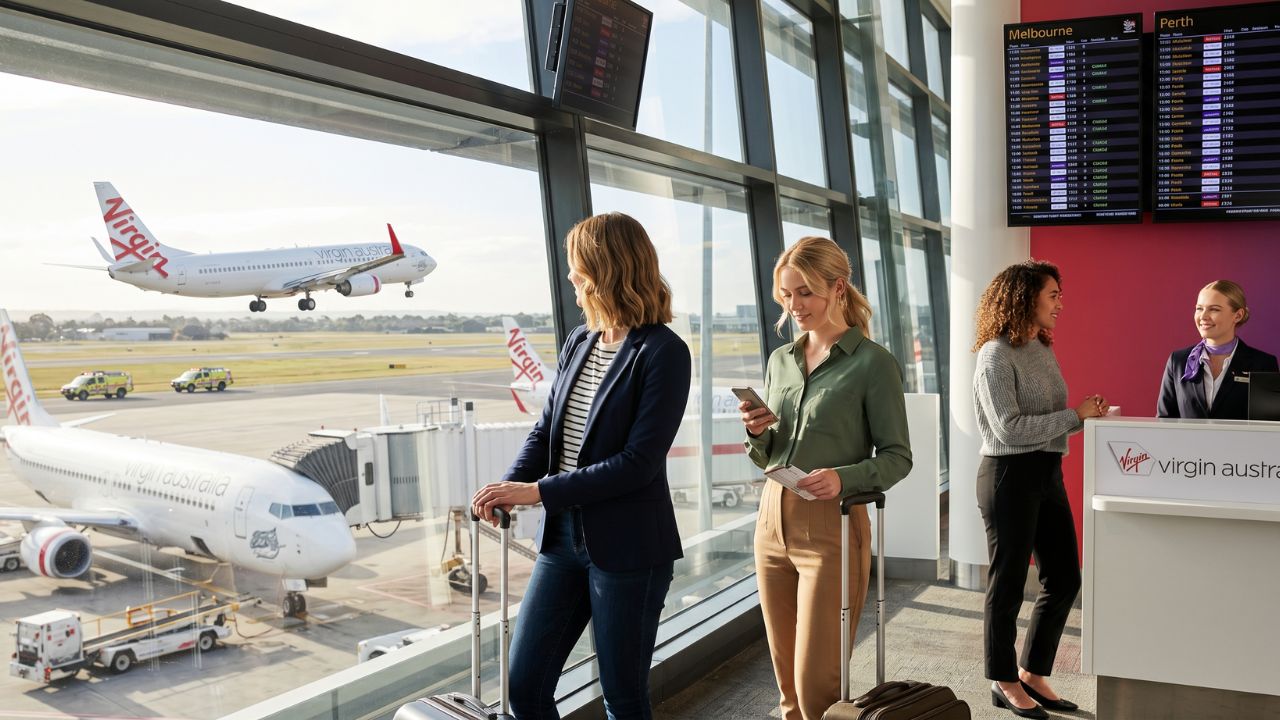
Image generated by AI
In a highly dramatic structural breakdown that instantly fractured one of the country's most vital domestic transit corridors, a Virgin Australia passenger flight bound for Perth was forced to execute a high-stakes, mid-air diversion back to Melbourne Airport on June 15, 2026. Shortly after a seemingly routine takeoff, the flight crew on the massive Boeing 737 was alerted to a severe technical engine issue during the critical climb phase. Rather than risking a massive failure over the desolate expanse of the Australian outback, the pilots decisively aborted the transcontinental journey, plunging the aircraft into a tense holding pattern before executing a highly controlled return landing under the watchful eyes of emergency fire crews. While a catastrophic disaster was averted, the sudden aircraft grounding triggered severe localized airport disruptions and immediate flight cancellations for the affected passengers, representing the premier headline in today's breaking airline news and global aviation updates.
By introducing direct passenger coordination and dynamic scheduling backups, the regional aviation hubs target growing passenger demand across vital commerce sectors. The choice to coordinate flight departures in phases helps to manage gate capacity, supporting the country's broader regional transportation network.
Context: The Nightmare of a Mid-Air Engine Anomaly
Operating the massive, highly congested domestic corridor between Melbourne and Perth requires absolute mechanical perfection. When an engine alert triggers shortly after takeoff, the physical and psychological stakes are immense.
Upon detecting the critical performance variation, the Virgin Australia flight crew instantly activated their emergency protocols. Before the Boeing 737 could safely return to the tarmac, the pilots were forced to trap the massive jet in a controlled holding pattern directly over Melbourne airspace. This highly tense maneuver was essential to stabilize flight conditions, rapidly burn off heavy transcontinental fuel loads, and allow air traffic control (ATC) to clear a secure descent path. While the aircraft ultimately touched down safely without plunging the wider airport into sprawling travel chaos, the incident serves as a terrifying reminder of the absolute fragility of commercial flight.
To view live flight schedules, real-time terminal maps, or check-in rules at the massive Australian hub, travelers can consult the official Melbourne Airport (MEL) directory. For direct booking access, specific passenger rebooking policies, and safety protocols, passengers can check the official Virgin Australia portal. To explore live flight tracking, check delay maps, or monitor exact Boeing 737 fleet routing, passengers can consult the official FlightAware tracking service.
Section-Wise Breakdown of the Virgin Australia Emergency
The Mid-Air Abort and Holding Pattern
The crisis commenced mere minutes into the flight. During the initial, high-thrust climb phase, onboard diagnostic systems triggered a severe engine-related alert. Operating under strict, non-negotiable aviation safety frameworks, the Virgin Australia crew immediately discontinued the ascent. Placed into a holding pattern, the crew executed complex diagnostic checks while communicating directly with Virgin operations and national aviation authorities to orchestrate a safe return.
The Melbourne Airport Emergency Response
As the crippled Boeing 737 circled the airspace, Melbourne Airport initiated full emergency preparedness protocols. Air traffic controllers ruthlessly cleared the arrival sequence to ensure the aircraft had maximum separation from other flights. Simultaneously, heavy airport fire and rescue units were fully deployed, staging themselves alongside the runway in preparation for a worst-case scenario. Ultimately, the aircraft executed a flawless, controlled landing and taxied directly to the terminal under its own power.
Aircraft Grounded for Intense Diagnostics
Following the safe disembarkation of all passengers, the specific Boeing 737 involved in the incident was immediately stripped from the active fleet. It is currently undergoing a massive, highly invasive technical assessment by engineering teams. Under Australia’s rigorous national aviation safety frameworks, this mandatory inspection includes deep engine performance analysis, system diagnostics, and physical component teardowns to identify the root cause of the failure.
Technical Roster: Virgin Australia Flight Incident Details
To ensure absolute factual accuracy regarding this high-stakes aviation incident, the following table details the specific operational parameters and emergency procedures executed during the aborted flight on June 15, 2026:
| Operational Parameter | Incident Details & Technical Response |
|---|---|
| Operating Airline | Virgin Australia |
| Aircraft Type | Boeing 737 (Equipped with dual-engine redundancy) |
| Flight Route | Melbourne (MEL) to Perth (PER) |
| Phase of Incident | Climb Phase (Shortly after takeoff) |
| Emergency Action | Mid-air holding pattern; safe diversion back to Melbourne |
| Passenger Status | All safely disembarked; zero injuries reported; passengers rebooked |
Passenger Impact: The Psychological Toll of an Aborted Flight
For the everyday traveler trapped onboard the aircraft, the psychological impact of an aborted flight is profoundly disturbing.
Passengers who had settled in for the four-hour journey to Perth were suddenly informed that their massive jet had suffered an engine issue and was being forced back to the origin airport. The grueling minutes spent circling in a holding pattern—knowing that fire trucks were waiting on the ground—induce massive anxiety. Upon landing, passengers found their original itineraries completely destroyed. Fortunately, Virgin Australia’s operational teams acted with ruthless efficiency, coordinating massive rebooking efforts to secure alternative seats on subsequent flights to Perth, successfully mitigating the threat of prolonged, multi-day delays.
Industry Analysis: Redundancy Prevents Catastrophe
Aviation industry analysts view this specific Virgin Australia incident as a textbook demonstration of modern safety protocols functioning flawlessly.
The Boeing 737 aircraft is explicitly designed with dual-engine redundancy systems, granting it the physical capability to operate safely even if one engine suffers a catastrophic, uncontained malfunction. However, under standard Australian aviation regulations, pilots are never expected to "push through" a technical anomaly. The deliberate decision to abort the flight, burn off fuel, and return to base prioritizes absolute safety over commercial continuity. By acting defensively, the flight crew ensured that a manageable technical fault did not escalate into a fatal disaster.
Actionable Advice for Passengers Facing a Mid-Air Diversion
If you are ever onboard a commercial flight that suffers a technical issue and is forced to divert or return to base, follow this highly practical checklist to survive the ordeal:
- Maintain Absolute Calm: Listen strictly to the flight crew. Mid-air diversions due to sensor anomalies or engine alerts are highly practiced scenarios; do not incite panic among your fellow passengers.
- Prepare for a Heavy Landing: If the aircraft is forced to land shortly after takeoff, it will likely be incredibly heavy due to unburned fuel. The landing may feel significantly harder and faster than normal; brace accordingly.
- Do Not Retrieve Luggage: If an emergency evacuation is ordered upon landing, absolutely leave all carry-on bags behind. Attempting to pull a suitcase from an overhead bin can cause fatal bottlenecks in an emergency.
- Exploit Airline Rebooking Immediately: Once safely back inside the terminal, do not wait for a gate agent to rebook your flight. Instantly open the Virgin Australia app (or the app of your respective carrier) and secure a seat on the next available flight yourself.
- Understand Safety Frameworks: Recognize that airlines prioritize safety over your personal schedule. A delay caused by a precautionary return is vastly preferable to an uncontained engine failure at 35,000 feet.
FAQ: Virgin Australia's Melbourne-Perth Engine Emergency
Why did the Virgin Australia flight return to Melbourne?
The Boeing 737 experienced a critical technical engine issue during the initial climb phase shortly after takeoff on June 15, 2026, forcing the crew to safely abort the journey to Perth.
Were any passengers injured during the emergency landing?
No. The aircraft safely entered a holding pattern, landed under controlled conditions, and all passengers were safely disembarked with absolutely zero injuries reported.
What is happening to the aircraft now?
The specific Boeing 737 has been completely removed from service and is undergoing a massive, highly detailed engineering inspection in accordance with strict Australian aviation safety frameworks.
Surviving the Skies
The highly dramatic return of the Virgin Australia Boeing 737 to Melbourne Airport serves as a stark, visceral reminder that modern aviation relies on incredibly complex, highly volatile machinery. While the sudden engine anomaly temporarily shattered the itineraries of dozens of passengers, the flawless execution of emergency holding patterns, ATC coordination, and ground response protocols proved that Australia's safety frameworks are impenetrable. As passengers safely rebook their flights and engineering teams tear down the crippled engine, the incident stands as proof that in the hostile environment of the sky, extreme caution is the ultimate lifesaver.
Key Takeaways
- Mid-Air Emergency: A Virgin Australia Boeing 737 was forced to abort its flight to Perth on June 15, 2026, due to an engine issue during the climb phase.
- Tense Holding Pattern: The aircraft entered a holding pattern to burn fuel and stabilize before safely returning to Melbourne.
- Emergency Ground Response: Melbourne Airport activated standard emergency protocols, placing massive fire and rescue units on standby for the landing.
- Zero Injuries: All passengers were safely disembarked with no required emergency evacuation, and were immediately rebooked onto alternative flights.
- Mandatory Inspections: The Boeing 737 has been fully grounded for a deep technical assessment under strict national aviation safety regulations.
Related Travel Guides
Canada Paralyzed by Massive Travel Chaos Across Toronto and Vancouver
Emirates Weaponizes the A380 to Eradicate Global Travel Chaos
Virgin Australia Engine Issue Flight Diversion Review on Reddit in 2026
Disclaimer
This article is for informational and educational purposes only. It does not constitute legal, financial, or professional advice. While we strive to provide accurate and up-to-date information, travel policies, regulations, and conditions change rapidly. Always verify information with official sources before making travel decisions. Nomad Lawyer makes no representations about the accuracy, reliability, completeness, or suitability of the information provided. Readers should consult qualified professionals for advice specific to their circumstances. The views expressed in this article are those of the author and do not necessarily reflect the views of Nomad Lawyer.
Kunal K Choudhary
Co-Founder & Contributor
A passionate traveller and tech enthusiast. Kunal contributes to the vision and growth of Nomad Lawyer, bringing fresh perspectives and driving the community forward.
Learn more about our team →