
U.S. Air Force Commits $7 Billion to Keep B-2 Spirit Flying While Phasing Out B-1 Lancer Bombers
Breaking airline news and aviation industry updates for 2026.

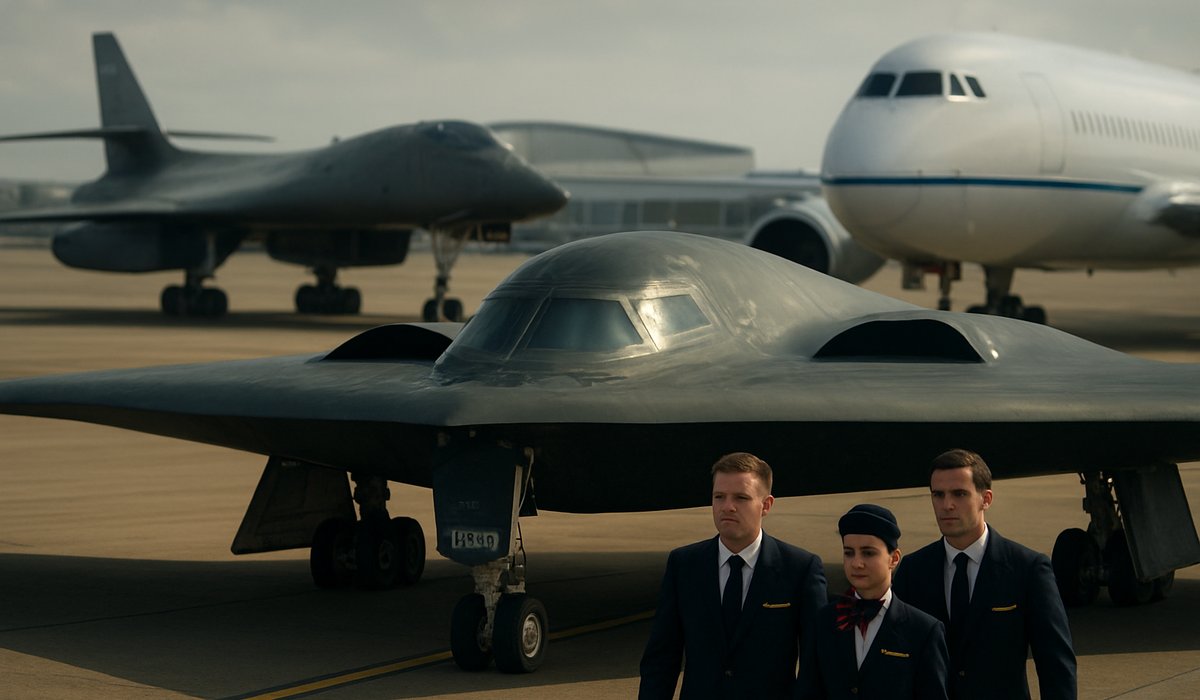
Image generated by AI
U.S. Air Force Commits $7 Billion to Keep B-2 Spirit Flying While Phasing Out B-1 Lancer Bombers
Strategic shift reveals why stealth technology trumps speed in modern aerial warfare
Air Force Doubles Down on Stealth Over Supersonic Power
The U.S. Air Force is undertaking a dramatic recalibration of its strategic bomber fleet, investing $7 billion to extend the operational life of its Northrop Grumman B-2 Spirit stealth bombers while simultaneously retiring its fleet of Rockwell B-1 Lancer supersonic aircraft. The decision underscores a fundamental shift in military aviation strategy, where advanced stealth capabilities now outweigh the raw speed and performance metrics that defined Cold War-era bomber design.
The B-1 Lancer's Intensive Service Takes Its Toll
The B-1 Lancer—nicknamed "the Bone" for its distinctive swing-wing configuration—has borne the brunt of decades of high-intensity operational demands. The aircraft's sophisticated variable-geometry design, while enabling supersonic performance, has subjected its airframe to extreme stresses during sustained combat missions across multiple theaters. This relentless deployment schedule has accelerated structural fatigue and maintenance requirements, making continued operation increasingly costly and logistically challenging.
In contrast, the B-2 Spirit's sustained-operations profile has been more measured, allowing its airframe to remain in comparatively better structural condition despite its age. The stealth bomber's primary strength—its revolutionary radar-evading design—remains undiminished by time, making it increasingly valuable as adversaries develop sophisticated air defense systems.
Strategic Investment in Next-Generation Deterrence
The Air Force's seven-billion-dollar modernization initiative reflects confidence in the B-2's continued relevance in 21st-century conflict scenarios. Advanced sensor systems, updated avionics, and enhanced offensive capabilities are being incorporated to maintain the platform's edge against emerging threats. Pentagon planners argue that stealth penetration remains superior to supersonic speed when confronting modern integrated air defense networks.
Military analysts suggest this budget allocation represents a pragmatic recognition that the B-1's high-performance design—optimized for low-level penetration and speed—has become tactically obsolete in an era where satellite surveillance and advanced radar systems can detect conventional aircraft regardless of velocity.
Broader Implications for Strategic Aviation
This transition signals the Air Force's commitment to sustaining its aging bomber force until next-generation platforms mature. As the B-21 Raider stealth bomber enters service, the B-2 will likely serve as a bridge platform, maintaining strategic bombing capacity while newer aircraft development continues. Meanwhile, the B-1's retirement will consolidate maintenance expertise and supply chain resources toward fewer airframe types.
FAQ: Understanding U.S. Bomber Fleet Modernization
Why is the B-2 Spirit outlasting the B-1 Lancer despite being older? The B-1's intensive operational tempo over decades of continuous deployment has accelerated structural wear on its variable-geometry airframe, while the B-2's more limited deployment schedule has preserved its airframe integrity.
What does the $7 billion modernization include for B-2 bombers? The investment covers sensor upgrades, avionics modernization, and enhanced offensive systems designed to maintain the aircraft's stealth advantage against emerging air defense technologies.
When will the B-1 Lancer be completely retired? The Air Force has not announced a fixed retirement date, but the phased decommissioning is expected to accelerate as B-2 modernization and B-21 Raider deliveries progress.
How does stealth compare to speed in modern air defense scenarios? Contemporary integrated air defense systems prioritize detection over interception speed, making radar evasion more valuable than supersonic performance.
What replaces the B-1 Lancer's capabilities in the future? The B-21 Raider stealth bomber is designed to fulfill strategic bombing requirements while maintaining advanced stealth and sensor capabilities superior to both existing platforms.
Related Travel Guides
Disclaimer
This article is for informational and educational purposes only. It does not constitute legal, financial, or professional advice. While we strive to provide accurate and up-to-date information, travel policies, regulations, and conditions change rapidly. Always verify information with official sources before making travel decisions. Nomad Lawyer makes no representations about the accuracy, reliability, completeness, or suitability of the information provided. Readers should consult qualified professionals for advice specific to their circumstances. The views expressed in this article are those of the author and do not necessarily reflect the views of Nomad Lawyer.
Raushan Kumar
Founder & Lead Developer
Full-stack developer with 11+ years of experience and a passionate traveller. Raushan built Nomad Lawyer from the ground up with a vision to create the best travel and law experience on the web.
Learn more about our team →