Poland and Mexico Fuel Spain’s November Flight Surge to 9.1 Million Seats: Autumn Travel Guide

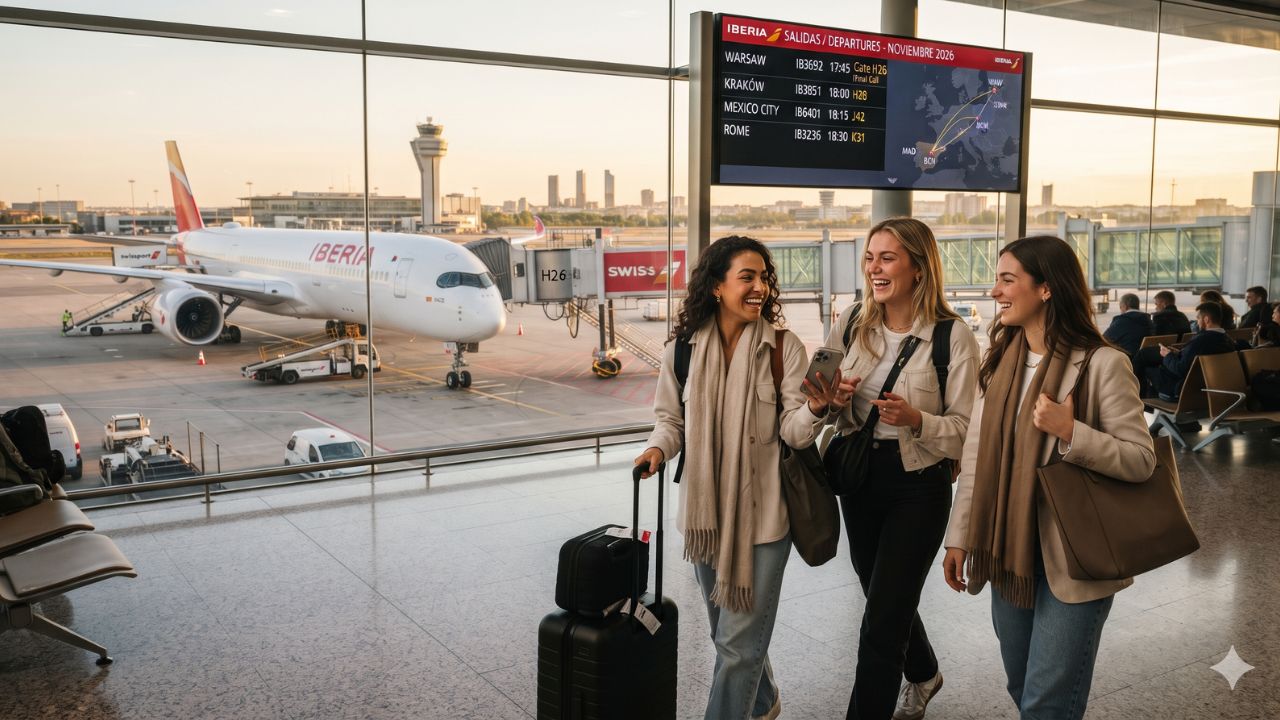
While traditional Western European origin markets like France, Germany, and the United Kingdom are scaling back scheduled flight capacity to Spain this November, an unprecedented 29 percent surge from Poland and a 22.1 percent jump from Mexico have propelled Spain's total international airline seat volume to 9.1 million. According to official air capacity data published by national tourism institute Turespaña in late October 2026, scheduled international flight seats will expand 1.3 percent year-on-year compared to the approximately 9.0 million seats available in November 2025. For independent explorers, cultural travelers, and winter sun-seekers, this shifting geographic connectivity opens rich opportunities to experience Spain's historic cities, southern olive groves, and Atlantic islands without the suffocating summer crowds.
Turespaña Capacity Report Reveals 9.1 Million Seats as Eastern Europe and the Americas Reshape Spanish Tourism
The November 2026 capacity projections illustrate a decisive rebalancing in Spain’s inbound tourism supply chain. For decades, Spanish tourism relied heavily on a predictable northern triad: British sun-seekers, German package vacationers, and French road-trippers. However, Turespaña’s latest operational figures reveal that airlines are cutting seat allocations from all three traditional anchors: France posts the sharpest drop among major European partners with a 5.7 percent decline, the United Kingdom slips 2.6 percent, and Germany contracts by 2.0 percent.
In contrast, Central Europe and the Americas are driving fresh momentum across Spanish runways. Poland leads all international source markets with projected capacity growth exceeding 29 percent, reflecting booming demand for autumn escapes from Warsaw, Krakow, and Katowice to Mediterranean shores. Mexico anchors Spain's long-haul expansion with a 22.1 percent capacity increase, leading all Ibero-American destinations and cementing Madrid’s status as Europe’s premier transatlantic bridge. Italy also maintains powerful momentum with a 12.5 percent increase, while Turkey expands 6.3 percent and the United States grows 3.4 percent.
| Source Country | Projected Annual Capacity Change | Market Category & Position | Strategic Traveler & Industry Implication |
|---|---|---|---|
| Poland | Exceeding +29% | Fastest-growing reported market | Massive seat additions unlock low-cost autumn links from Central Europe to Andalusia and the islands. |
| Mexico | +22.1% | Leading Ibero-American market | High-yield long-haul travelers inject sustained spending into cultural capitals like Madrid and Seville. |
| Italy | +12.5% | Strongest-growing European market | Short-haul flight expansions feed spontaneous city breaks, gastronomic tours, and weekend museum hops. |
| Turkey | +6.3% | Positive Mediterranean expansion | Broadens eastern Mediterranean transit connections linking Eurasia with the Iberian Peninsula. |
| United States | +3.4% | Moderate transatlantic growth | Sustains high-spending American leisure travel across art capitals, luxury wineries, and golf resorts. |
| Germany | -2.0% | Declining traditional market | Airline capacity adjustments prompt hotels to offer competitive shoulder-season rates to fill rooms. |
| United Kingdom | -2.6% | Declining traditional market | Marginal capacity contraction trims seat supply while British travelers diversify toward winter sun. |
| France | -5.7% | Largest reported European decline | Cross-border rail travel and shifting domestic preferences reduce scheduled air seat allocations. |
What Makes November in Spain Experientially Unique
To visit Spain in November is to experience the country stripped of tourist artifice. In summer, the heat in Andalusia can become oppressive, and the historic quarters of Barcelona, Palma de Mallorca, and Ibiza are overrun with mass tour groups. By November, daytime temperatures across southern Spain settle into a comfortable 18°C to 22°C, creating ideal conditions for wandering the moorish courtyards of the Alhambra in Granada or exploring the Mezquita-Cathedral in Cordoba.
Further south, the Canary Islands—Tenerife, Gran Canaria, Lanzarote, and Fuerteventura—enter their sweet spot of the year, offering steady 24°C ocean breezes, calm Atlantic waters, and volcanic hiking trails untouched by winter frosts. For travelers planning journeys through Spain.info, the autumn calendar brings deeply rooted local rituals: the smell of chestnuts roasting over open-air sidewalk braziers (castañeras), the first pressings of fresh green olive oil in Jaén, and the arrival of wild game and forest mushrooms (setas) in traditional Castilian taverns.
Historical data from the Instituto Nacional de Estadística (INE) notes that Spain welcomed 5.8 million international visitors in November 2025, an annual rise of 2.1 percent. This steady flow demonstrates that travelers increasingly prize the quiet authenticity, cultural depth, and comfortable climate of the Spanish shoulder season over chaotic peak-summer holidays.
Visitor Insider Tips: Timing, Regional Rail, and Autumn Microclimates
- Embrace Spain's High-Speed Rail Network: Rather than booking regional domestic flights between major cities, take advantage of Spain's open-access high-speed rail network. Four competing high-speed train operators—Renfe AVE, Avlo, Ouigo, and Iryo—link Madrid Puerta de Atocha with Barcelona Sants, Valencia, Seville, and Malaga. Booking tickets two to three weeks in advance often yields one-way fares below €20 for 300-km/h journeys that drop you directly into downtown city centers.
- Pack for Distinct Regional Microclimates: November weather varies dramatically across Spain. If you are heading to the green north (Galicia, Asturias, the Basque Country), expect Atlantic rain showers and temperatures around 12°C; bring waterproof outer layers. Madrid features crisp, sunny 15°C days that drop to 5°C at night, requiring warm wool coats. Meanwhile, the southern coast of Andalusia and the Canary Islands remain warm and sunny, allowing light linen layers by day.
- Secure Monument Tickets Despite Lower Crowds: While general street crowds thin out in November, Spain's most iconic monuments still operate under strict capacity caps. Tickets for the Alhambra's Nasrid Palaces in Granada, the Royal Alcázar in Seville, and the Sagrada Família in Barcelona consistently sell out weeks ahead. Reserve your timed-entry slots online well before boarding your flight.
- Savor Autumn Tapas and Wild Mushroom Season: Take advantage of seasonal restaurant menus across Castile and Catalonia. Look for dishes highlighting boletus edulis, saffron-infused stews, and roasted suckling pig in Segovia. Pair meals with full-bodied Tempranillo wines from Ribera del Duero or Rioja, which perfectly complement autumn evenings.
- Take Advantage of Sunday Free Museum Windows: In Madrid, Spain’s celebrated "Golden Triangle of Art" offers free admission windows during shoulder season. The Prado Museum grants free entry from Monday through Saturday between 6:00 pm and 8:00 pm, and on Sundays from 5:00 pm to 7:00 pm. The Reina Sofía Modern Art Museum offers free access on Sunday afternoons starting at 12:30 pm.
Cultural and Environmental Context: De-Seasonality and Sustainable Visitor Redistribution
The evolving pattern of Spain’s international flight capacity aligns with an overarching environmental priority: de-seasonality. For decades, the hyper-concentration of 85 million annual tourists into the hot summer months of July and August has exerted severe pressure on municipal water reserves, driven local housing rental costs beyond the reach of residents, and ignited anti-overtourism demonstrations across Barcelona, Mallorca, and the Canary Islands.
Expanding air capacity during November distributes visitor spending across months when tourism infrastructure operates below maximum capacity. By welcoming visitors from emerging markets like Poland and Mexico during the autumn and winter shoulder seasons, local family-run hotels, heritage guides, and neighborhood restaurants maintain year-round employment rather than relying on precarious seasonal contracts.
Furthermore, dispersing tourism away from saturated Mediterranean beaches toward cultural heritage sites in inland Castile, Extremadura, and Aragon helps protect fragile coastal ecosystems. By choosing to travel in November, visitors directly participate in a more sustainable model of tourism that honors the daily lives of Spanish communities while celebrating the enduring heritage of the Iberian peninsula.
FAQ: Traveling to Spain in November 2026
What is the weather like across Spain during November?
Southern Spain and Andalusia enjoy pleasant daytime temperatures of 18°C to 22°C. Madrid and the central plateau see sunny, crisp 15°C days with chilly nights, while the Canary Islands maintain beach-friendly 24°C warmth.
Why is Spain’s flight capacity rising despite drops from the UK, Germany, and France?
Airlines have expanded scheduled seats from emerging markets—led by a 29% surge from Poland, a 22.1% jump from Mexico, and 12.5% growth from Italy—offsetting minor reductions from traditional Western European origins.
Should I take domestic flights or high-speed trains between Spanish cities?
High-speed trains are faster and more economical. Competing rail operators (AVE, Avlo, Ouigo, Iryo) connect Madrid with Barcelona, Seville, and Valencia in under three hours with city-center departures.
Are the Canary Islands still warm enough for swimming in November?
Yes. With daytime highs averaging 24°C and Atlantic sea temperatures hovering around 22°C, Tenerife, Gran Canaria, and Lanzarote offer ideal swimming and sunbathing weather throughout November.
[As evening shadows lengthen across the terracotta rooftops of Seville, autumn in Spain reveals an unhurried grace that summer crowds never get to see.]
Related Travel Guides
The Insider Guide to Spain Autumn Travel: High-Speed Rail Hacks and Canary Island Sun, According To Reddit (Coming Soon)
This article is for informational purposes. Flight routes, passenger regulations, visa rules, and transit advisories are subject to change by airlines and aviation authorities. Readers are advised to verify schedules and travel documentation with relevant carriers and border agencies before departure.
Related Stories

Antalya Airport Expands Annual Capacity to 65 Million: Turkish Riviera Travel Guide and Year-Round Flight Routes

Sri Lanka Travel Relies on Seven Key Airlines as September Tourist Arrivals Hit 158,557: Insider Island Guide