
Virgin Australia Deploys High-Capacity Boeing 737-10 to Defeat Domestic Travel Chaos, Shielding Passengers From Airport Disruptions and Flight Cancellations Across the East Coast: Latest Airline News
As severe travel chaos paralyzes Australian airspace, Virgin Australia acquires the massive Boeing 737-10 to build an impenetrable capacity fortress against flight cancellations.

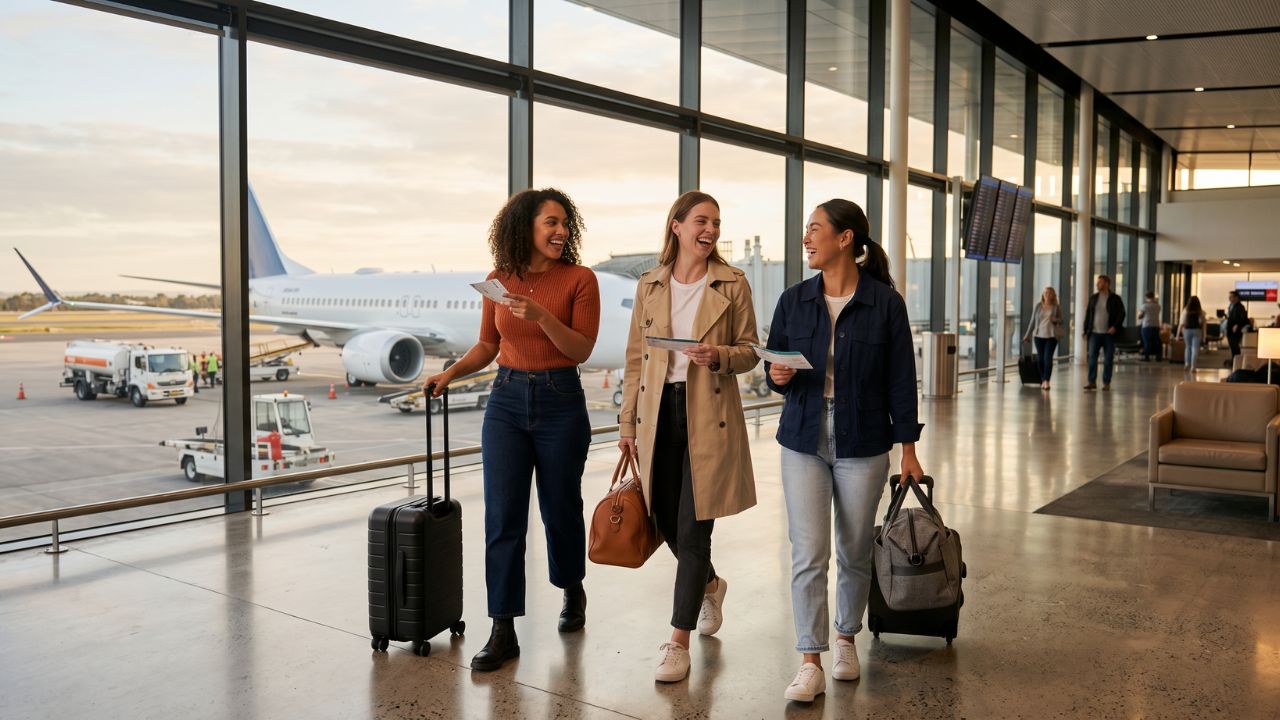
Image generated by AI
In a massive, highly calculated strategic maneuver designed explicitly to protect domestic and regional passengers from the devastating travel chaos and rolling flight cancellations that routinely paralyze Australian airspace, Virgin Australia is officially entering a new fleet era. Announced on June 18, 2026, the carrier is preparing to take delivery of its massive Boeing 737-10 aircraft, effectively building an impenetrable capacity fortress. Recognizing that Australian corporate and leisure travelers are entirely exhausted by the severe airport disruptions that frequently trap them in congested transit bottlenecks along the Eastern Seaboard, Virgin Australia is utilizing the largest variant of the 737 MAX family to flood the network with available seats. By deploying an aircraft capable of carrying up to 200 passengers, the airline guarantees it possesses the raw volume required to instantly rebook stranded clients when localized weather or ATC constraints trigger sudden airspace failure. As travelers desperately seek reliable carriers capable of mitigating terminal gridlock, this historic fleet expansion stands as the premier headline in today's breaking airline news and absolutely vital global aviation updates.
By introducing direct passenger coordination and dynamic scheduling backups, the regional aviation hubs target growing passenger demand across vital commerce sectors. The choice to coordinate flight departures in phases helps to manage gate capacity, supporting the country's broader regional transportation network.
Context: Shielding the Domestic Network From Collapse
For the millions of commuters navigating Australia's highly concentrated domestic aviation market this year, the sheer scale of operational bottlenecks at legacy mega-hubs has transformed routine interstate travel into a high-stakes gamble.
Historically, when a massive storm front hits Sydney or airspace restrictions throttle Melbourne, legacy carriers running smaller narrowbody aircraft immediately succumb to travel chaos. Because smaller planes offer zero buffer capacity, a single cancelled flight leaves 160 passengers stranded for days. However, Virgin Australia is fundamentally changing this dynamic with its scheduled late 2027 delivery of the Boeing 737-10. This aircraft represents a massive defensive weapon against operational instability. By increasing passenger volume to around 200 seats per airframe while maintaining the fuel efficiency benefits associated with single-aisle aircraft, Virgin Australia is engineering massive surge capacity into its daily schedule. When airport disruptions inevitably strike, the airline can deploy these larger aircraft to immediately absorb the backlog of displaced passengers, drastically reducing the psychological trauma of rolling flight delays and ensuring that essential business movement and tourism connectivity remain entirely intact.
To view live flight schedules, verify the active delay status of your specific itinerary, or to track active regional airspace restrictions, travelers must consult official aviation directories. For direct booking access into this highly resilient, disruption-resistant domestic network, travelers should aggressively utilize the official portals for Virgin Australia. To explore live flight tracking and monitor the exact severity of the localized bottlenecks causing the flight cancellations you must now actively bypass, passengers can consult the official FlightAware tracking service.
Section-Wise Breakdown of the Capacity Shield
The Flagship Defense: Boeing 737-10 Deployment
The Boeing 737-10 will become the absolute largest narrowbody aircraft in Virgin Australia’s fleet. Compared with earlier 737 variants that frequently sell out during peak disruptions, the MAX 10 features a longer fuselage designed for high-density domestic routes. This allows airlines to transport more passengers per flight without moving to heavy, operationally complex widebody aircraft. This massive seating buffer is explicitly designed to absorb the shock of sudden flight cancellations, offering immediate rebooking options to panicked travelers.
The Trunk Route Fortress: East Coast and Perth
The arrival of the 737-10 is expected to drastically stabilize domestic route planning across Australia’s most vulnerable transit corridors. Major city routes such as Sydney, Melbourne, Brisbane, and Perth—which suffer the most acute travel chaos during peak holiday periods—will benefit directly from increased capacity and scheduling flexibility. By deploying the 737-10 on these hyper-congested trunk routes, Virgin Australia can actively manage sudden demand spikes caused by competitor network failures. Furthermore, the aircraft is highly capable of executing short-haul international services within the Asia-Pacific region.
The Certification Delay Reality
While Virgin Australia has indicated that the first 737-10 delivery is scheduled for late 2027, this timeline is subject to Boeing’s production capabilities and strict regulatory certification. The MAX 10 has experienced delays due to rigorous certification requirements, which have influenced global airline delivery schedules. Despite these supply chain constraints, Virgin Australia's commitment to the aircraft highlights the critical necessity of high-capacity narrowbodies in fighting the modern era of travel chaos.
Technical Roster: Virgin Australia Fleet Data
While no specific flights were cancelled as part of this fleet expansion announcement, the entire strategic acquisition is designed to combat future airspace volatility. To ensure absolute factual accuracy regarding the exact parameters of this high-capacity disruption-bypass tool, the following matrix details the verified integration data for the Virgin Australia Boeing 737-10 delivery:
Virgin Australia 737-10 Fleet Deployment Strategy
| Operational Metric | Specification |
|---|---|
| Aircraft Variant | Boeing 737-10 (MAX 10) |
| Delivery Timeline | Late 2027 (subject to certification) |
| Passenger Capacity | Up to ~200 seats (dependent on configuration) |
| Primary Deployment | Domestic trunk routes (Sydney, Melbourne, Brisbane, Perth) & short-haul international |
Passenger Impact: Eradicating Stranding Anxiety
For the thousands of corporate commuters and domestic tourists who rely on the Australian "Golden Triangle" (Sydney-Melbourne-Brisbane), this massive capacity surge completely eradicates the psychological torture of being stranded during a severe weather event.
The immediate passenger impact is the absolute elimination of multi-day delays. Previously, a traveler facing a cancelled flight out of Sydney during the Friday afternoon rush was forced to wait up to 48 hours for an available seat on a competitor’s smaller 737-800. Under Virgin Australia's new 737-10 strategy, the airline possesses the raw volume to rebook that stranded passenger onto the very next 200-seat departure. This capacity buffer transforms a catastrophic two-day delay into a minor, two-hour inconvenience. Passengers will experience drastically improved seat availability on key trunk routes, ensuring that they can always secure an emergency flight home, even when the broader national airspace is collapsing.
Industry Analysis: The Necessity of Narrowbody Volume
Aviation industry analysts view the strategic acquisition of the Boeing 737-10 by Virgin Australia as definitive proof that sheer aircraft capacity is the ultimate defense against modern travel chaos.
Analysts note that airlines across the globe are abandoning smaller regional jets and standard narrowbodies because they offer zero operational resilience during peak disruptions. By standardizing its fleet around the massive 737 MAX family, Virgin Australia simplifies maintenance complexity and streamlines pilot training, creating a highly reliable operational ecosystem. Furthermore, the 737-10's lower fuel consumption per seat aligns perfectly with sustainability targets while providing the raw volume necessary to fight airspace gridlock. Industry experts warn that domestic carriers failing to secure high-capacity narrowbodies like the MAX 10 or A321neo will inevitably lose market share, as corporate travelers will actively migrate toward airlines that guarantee they won't be stranded during a cancellation event.
Actionable Advice for Surviving Australian Gridlock
If you are navigating the highly volatile domestic aviation network in Australia during upcoming travel seasons, execute this strategic planning checklist to fully bypass regional travel chaos:
- Leverage High-Capacity Aircraft: When booking flights between Sydney, Melbourne, and Brisbane, actively select departures operated by the largest available narrowbody aircraft. An airline flying a 200-seat jet has significantly more buffer capacity to rebook you instantly if an earlier flight is cancelled.
- Avoid the Golden Triangle Chokepoints: If rolling airport disruptions hit the East Coast, completely avoid transiting through Sydney. If traveling from Adelaide to Brisbane, explicitly book a direct route rather than risking a missed connection in a paralyzed NSW terminal.
- Capitalize on Fleet Standardization: Favor carriers like Virgin Australia that operate standardized fleets (the 737 family). If an aircraft suffers a mechanical failure, airlines with unified fleets can instantly swap in a replacement jet, whereas carriers operating fractured fleets are forced to cancel the flight outright.
- Demand Premium Recovery Options: Do not accept basic, low-frequency service. By actively routing your itineraries onto airlines investing in massive capacity surges (like the impending 737-10 delivery), you ensure you are flying with an operator dedicated to fighting terminal gridlock rather than succumbing to it.
FAQ: Virgin Australia & Travel Chaos
How is the Boeing 737-10 helping to defeat travel chaos?
By seating up to 200 passengers, the massive 737-10 provides Virgin Australia with the vital surge capacity required to instantly rebook stranded passengers when rolling flight cancellations hit the domestic network.
When will Virgin Australia receive the new 737-10 aircraft?
The first delivery of the Boeing 737-10 is scheduled for late 2027, subject to Boeing’s production timeline and strict regulatory certification processes.
Which Australian routes will benefit from this capacity surge?
The high-density aircraft will be deployed across major domestic trunk routes, heavily targeting hyper-congested corridors including Sydney, Melbourne, Brisbane, and Perth.
The Reality of Capacity-Driven Resilience
The historic fleet acquisition executed by Virgin Australia proves definitively that massive, targeted capacity flooding is the ultimate defense against systemic physical travel chaos. By securing the massive Boeing 737-10 for its domestic trunk routes, the carrier has provided Australian commuters with a heavily armored, exceptionally reliable bypass to terminal gridlock. As archaic legacy models desperately struggle to manually process surging passenger volumes—triggering rolling flight cancellations and severe airport disruptions that ruin vital corporate travel—passengers must accept a critical new reality: avoiding brutal travel anxiety requires actively abandoning airlines utilizing low-capacity jets and exclusively booking with carriers that deploy the sheer volume necessary to survive modern airspace collapse.
Key Takeaways
- The 737-10 Capacity Shield: Virgin Australia is acquiring the massive Boeing 737-10 to build an impenetrable buffer against domestic travel chaos.
- Maximum Volume: The aircraft seats up to 200 passengers, allowing the airline to instantly rebook travelers stranded by sudden flight cancellations.
- Targeting the Trunk Routes: The high-capacity jets will dominate the hyper-congested Sydney, Melbourne, Brisbane, and Perth corridors.
- Fleet Standardization: The acquisition supports a unified 737 MAX fleet strategy, drastically reducing maintenance delays and operational complexity.
- Passenger Survival: Domestic travelers must actively seek out airlines flying high-capacity narrowbodies to guarantee they are not stranded during peak airspace volatility.
Related Travel Guides
Massive Travel Chaos Paralyzes Chicago O'Hare with 1,425 Disruptions
Disclaimer
This article is for informational and educational purposes only. It does not constitute legal, financial, or professional advice. While we strive to provide accurate and up-to-date information, travel policies, regulations, and conditions change rapidly. Always verify information with official sources before making travel decisions. Nomad Lawyer makes no representations about the accuracy, reliability, completeness, or suitability of the information provided. Readers should consult qualified professionals for advice specific to their circumstances. The views expressed in this article are those of the author and do not necessarily reflect the views of Nomad Lawyer.
Kunal K Choudhary
Co-Founder & Contributor
A passionate traveller and tech enthusiast. Kunal contributes to the vision and growth of Nomad Lawyer, bringing fresh perspectives and driving the community forward.
Learn more about our team →