
Vietnam’s Quy Nhon And Pleiku Boost Tourism With A Bold 2050 Urban Vision For Smart And Sustainable Growth
Vietnam’s Quy Nhon And Pleiku Boost Tourism With A Bold 2050 Urban Vision For Smart And Sustainable Growth

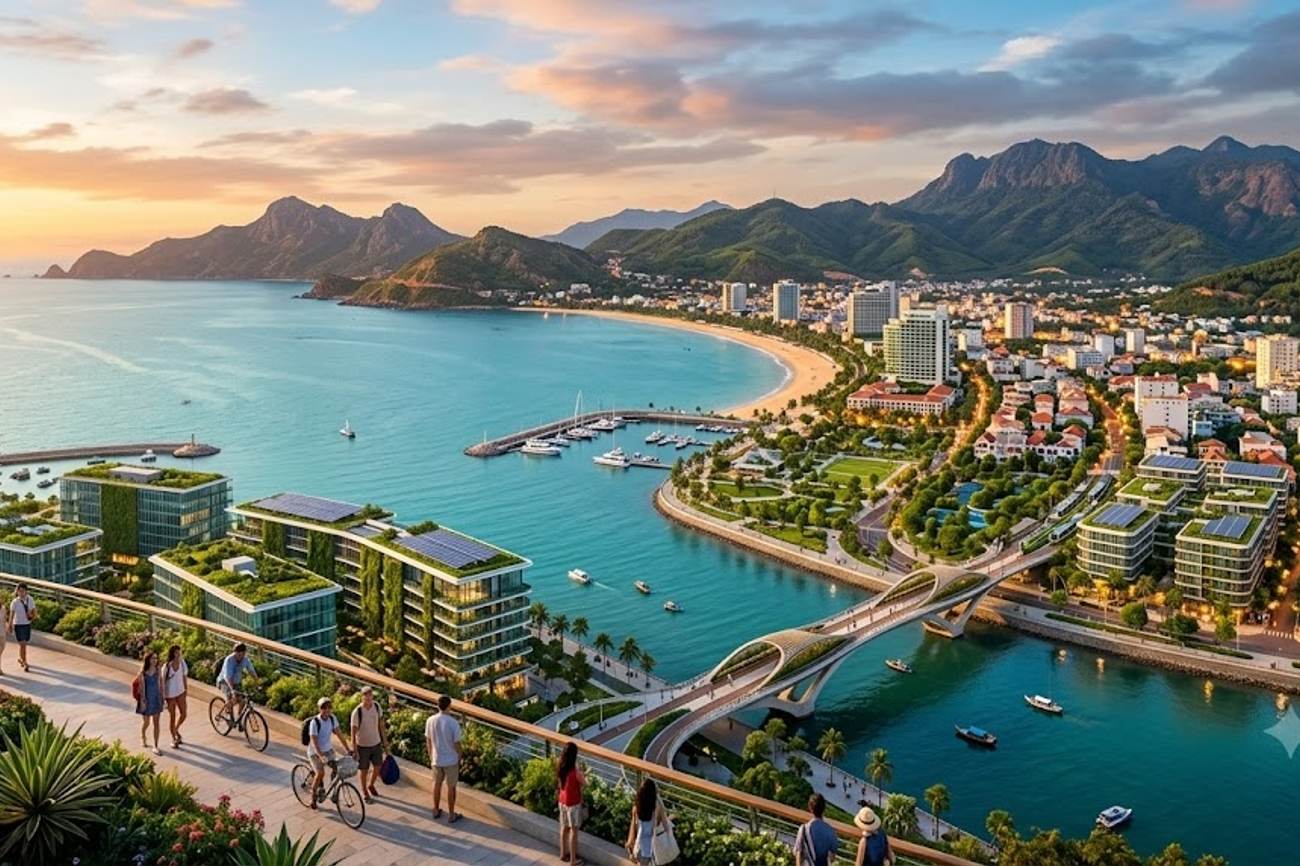
Image generated by AI
[Quy Nhon, September 14, 2026] — Vietnam has unveiled an aggressive urban transformation strategy for the cities of Quy Nhon and Pleiku, aiming to redefine the region as a hub for smart tourism and sustainable innovation by 2050. The master plan seeks to synchronize the development of a high-tech coastal center with a strategic highland gateway to catalyze investment and environmental resilience.
The initiative, approved by regional authorities, establishes a comprehensive framework for urban expansion, infrastructure modernization, and economic diversification. By integrating artificial intelligence research and climate-adaptive planning, the Vietnamese government intends to transition these cities from traditional provincial centers into global destinations for business, technology, and ecological tourism.
The 2050 Urban Vision Trigger
The catalyst for this overhaul is a strategic shift toward "Smart City" architecture designed to mitigate climate risks while maximizing the economic potential of the Gia Lai province and surrounding coastal areas. The vision is built on the premise that traditional urban growth is insufficient for the technological demands of the mid-century.
By implementing a Transport-Oriented Development (TOD) model, the government aims to reduce urban sprawl and concentrate growth along high-efficiency transit corridors. This transition is supported by the Ministry of Construction of Vietnam, which oversees the integration of green spaces and ecological corridors to ensure that rapid urbanization does not destroy the natural landscapes that drive the region's tourism appeal.
Markets and Infrastructure Impacted
The development plan splits its focus between two distinct geographical archetypes: the coastal smart city and the highland logistics hub.
Quy Nhon: The Coastal Innovation Hub
- Planning Area: 1,190.81 square kilometers.
- Administrative Reach: 19 units (10 wards, 9 communes).
- Projected 2025 Population: 884,097 residents.
- Key Infrastructure: Integration of Phu Cat Airport, Quy Nhon Port, and the Nhon Hoi Economic Zone.
- Tourism Corridors: A new coastal link connecting Ghent Rang–Quy Hoa with Nhon Ly–Ky Co–Eo Gio.
- Economic Focus: AI research, maritime logistics, and high-value business tourism.
Pleiku: The Highland Gateway
- Planning Area: 1,263 square kilometers.
- Administrative Reach: 13 units (5 wards, 8 communes).
- Current Population: 559,332 residents.
- Key Infrastructure: Pleiku Airport and the Quy Nhon–Pleiku Expressway.
- Strategic Links: The Bo Y–Pleiku–Quy Nhon economic corridor and the Vietnam–Laos–Cambodia development triangle.
- Economic Focus: Renewable energy, advanced agricultural processing, and cultural eco-tourism.
What This Means for Travelers
For the international traveler and digital nomad, these developments signal a shift in how Central Vietnam is navigated and experienced.
1. Enhanced Accessibility The focus on the Quy Nhon–Pleiku Expressway and the modernization of regional airports means the transit time between the coast and the highlands will drop significantly. Travelers will no longer have to choose between a beach holiday or a mountain retreat; the infrastructure is being built to support "multi-destination" itineraries in a single trip.
2. The Rise of "Bleisure" Travel With the establishment of AI research zones and innovation hubs in Quy Nhon, the city is pivoting toward "bleisure" (business + leisure). Expect an increase in high-end co-working spaces, international conference centers, and luxury hotels tailored for tech executives and researchers.
3. Sustainable Exploration The "Green Corridor" initiatives in Pleiku—connecting Bien Ho Lake and Chu Dang Ya—mean that tourism will be steered away from overcrowded city centers and toward managed ecological routes. This likely means more regulated access to nature reserves but a higher quality of infrastructure (boardwalks, electric shuttles, and eco-lodges).
4. Digital Integration As "Smart Cities," both destinations will likely implement integrated digital tourist passes, real-time transit tracking, and AI-driven visitor management systems to reduce congestion at major landmarks like Ky Co or Eo Gio.
The Roadmap to 2050
The implementation phase is divided into immediate infrastructure wins and long-term systemic changes. In the short term, the focus remains on the TOD model along National Highway 19 and National Highway 19B. These routes will serve as the skeletal structure for new urban clusters, preventing the "concrete jungle" effect seen in other rapidly growing Asian cities.
The mid-term goal involves the full activation of the marine economic corridor. This will synchronize the logistics of Quy Nhon Port with the tourism needs of the coast, allowing for more seamless cruise ship arrivals and expanded maritime excursions.
By 2050, the vision culminates in a fully integrated "Economic Triangle" where Pleiku serves as the primary logistics and cultural filter for visitors entering from Laos and Cambodia, who are then funneled toward the high-tech coastal services of Quy Nhon. The Vietnam National Authority of Tourism (VNAT) is expected to align its marketing strategies to promote this integrated coastal-highland circuit.
FAQ: Vietnam Urban Vision 2050
Will these developments increase travel costs in Quy Nhon and Pleiku? While luxury infrastructure and "smart" zones typically attract higher price points, the expansion of airport and expressway capacity generally lowers regional transport costs through increased competition and efficiency.
How will the "Green Corridors" affect sightseeing? Visitors can expect more structured, environmentally friendly ways to access natural sites. The plan prioritizes ecological protection, meaning some areas may transition from unrestricted access to guided, sustainable tourism models.
Is the AI and tech focus only for residents? No. The vision specifically targets "business tourism," meaning the cities are building infrastructure to attract international tech events, research symposiums, and digital nomads who require high-speed connectivity and modern office hubs.
When will the new transport links be fully operational? The plan is a long-term vision stretching to 2050, but the priority focus on the Quy Nhon–Pleiku Expressway and TOD models along National Highways suggests significant improvements will be visible in the coming 5 to 10 years.
Central Vietnam is betting on a high-tech, green future to move beyond the shadow of traditional tourism hubs.
#QuyNhon2050 #PleikuUrbanVision #VietnamSmartCities #GiaLaiProvince #PhuCatAirport #CoastalHighlandCorridor
Related Travel Guides
- Philippines Is Quietly Becoming The Ultimate Luxury Golf Travel Obsession And Paradise Across Asia, Here’s All You Need To Know
- flydubai Ignites Dubai Travel Boom With 125 Destinations As Global Network Recovery Enters A New Era
- Cape Town Soars To Unprecedented Heights As Record Aviation Movements Trigger A Global Travel Revival, Find Out Now
Disclaimer
This article is for informational and educational purposes only. It does not constitute legal, financial, or professional advice. While we strive to provide accurate and up-to-date information, travel policies, regulations, and conditions change rapidly. Always verify information with official sources before making travel decisions. Nomad Lawyer makes no representations about the accuracy, reliability, completeness, or suitability of the information provided. Readers should consult qualified professionals for advice specific to their circumstances. The views expressed in this article are those of the author and do not necessarily reflect the views of Nomad Lawyer.
Raushan Kumar
Founder & Lead Developer
Full-stack developer with 11+ years of experience and a passionate traveller. Raushan built Nomad Lawyer from the ground up with a vision to create the best travel and law experience on the web.
Learn more about our team →