Vietnam’s Ha Giang Tourism Boom Transforms Remote Villages Into Powerful Engines Of Sustainable Growth And Local Prosperity

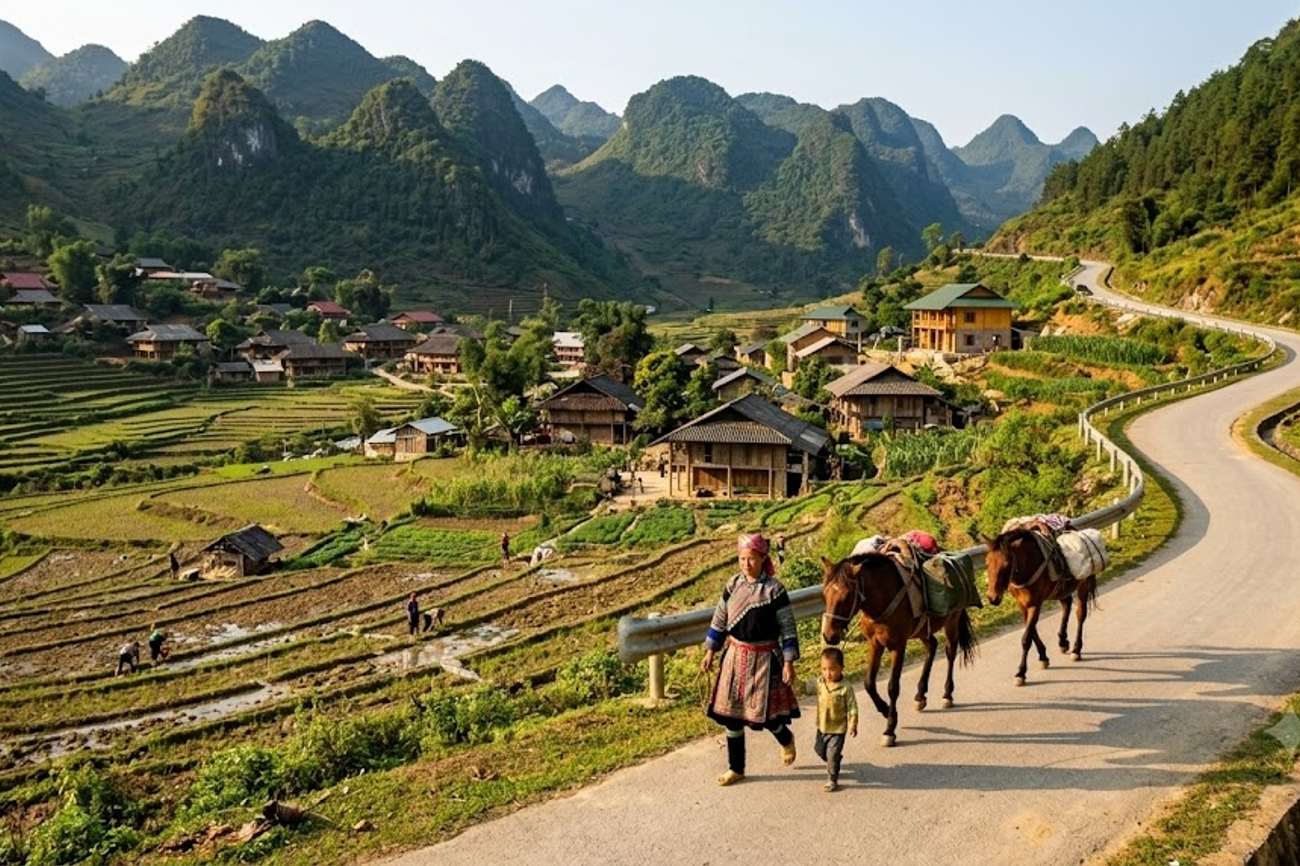
Image generated by AI
The economic disparity in Vietnam's northern highlands is being challenged by a shift toward community-based tourism, where ethnic minority groups—including the Tày, Dao, Hmong, and Lo Lo—are leveraging their cultural heritage to diversify income streams beyond subsistence farming. In the remote province of Ha Giang, the transition from a purely agricultural economy to a hybrid tourism-agricultural model is allowing residents to integrate into the national economy without migrating to urban centers.
The Socio-Economic Geography of Ha Giang
For decades, the northernmost reaches of Vietnam have been defined by geographical isolation. The rugged terrain of Ha Giang created a systemic barrier to market access, leaving ethnic minority populations trapped in a cycle of low-income seasonal labor and livestock raising. While Vietnam has seen aggressive national poverty reduction, the benefits remained unevenly distributed, often bypassing the highland communities due to a lack of infrastructure and employment diversity.
The emergence of community-based tourism (CBT) represents a strategic pivot. Rather than importing external corporate hotel chains that extract profits from the region, the current model focuses on the "assetization" of existing cultural markers. Traditional wooden stilt houses, indigenous agricultural techniques, and ancestral crafts are no longer viewed merely as remnants of a subsistence lifestyle but as high-value tourism assets. This shift allows the Vietnam National Administration of Tourism to promote a product that is inherently sustainable because it relies on the preservation of the existing environment rather than the construction of new, disruptive infrastructure.
Diversification of Income Streams in Mountain Villages
The economic transition in Ha Giang is not a replacement of agriculture, but a layering of revenue. This "hybrid livelihood" strategy mitigates the risk inherent in tourism—which is seasonal and volatile—by maintaining the food security provided by farming.
The following table outlines the transition from traditional subsistence to the diversified tourism economy:
| Traditional Economic Activity | Tourism-Integrated Revenue Stream | Impact on Household Economy |
|---|---|---|
| Subsistence Farming | Agritourism & Farming Experiences | Higher per-unit value for crops/methods |
| Residential Living | Homestay Accommodations | Consistent cash flow from lodging |
| Local Knowledge | Professional Guiding Services | Monetization of indigenous geography |
| Traditional Crafting | Artisan Workshops & Sales | Direct-to-consumer retail margins |
| Seasonal Labor | Stable Tourism Entrepreneurship | Reduced need for urban migration |
In villages like Thôn Tha, the conversion of stilt houses into homestays has functioned as a catalyst for micro-investment. The additional capital generated from visitors is frequently reinvested into the property itself or into land acquisition, creating a positive feedback loop of local wealth accumulation.
Expert Analysis: The Logistics of Cultural Preservation
For the nomadic traveler or the cultural tourist, the direct consequence of this model is an increase in "authentic" touchpoints. However, from a business perspective, the real victory here is the shift in agency. When local residents act as the primary entrepreneurs and cultural ambassadors, the "leakage" of tourism revenue—where money spent by tourists leaves the local economy to pay for foreign-owned hotels or tour operators—is significantly reduced.
The involvement of social enterprises like YESD is a critical variable in this equation. By providing training in hospitality management and language skills, these organizations are effectively professionalizing the informal economy. The pricing pressure created by this shift is interesting: by offering "authentic" experiences that cannot be replicated by luxury resorts, these villages create a niche market with higher price inelasticity. Travelers are often willing to pay a premium for genuine cultural immersion, which allows the community to maintain lower visitor volumes while maximizing profit per guest.
Furthermore, this model addresses a critical demographic crisis: the "brain drain" of rural youth. Historically, the only path to economic mobility for a young person in Ha Giang was to leave for Hanoi or Ho Chi Minh City. By transforming cultural knowledge into a viable career path, tourism provides a financial incentive for the younger generation to remain in their villages and preserve their heritage. This creates a sustainable cycle where traditional music, clothing, and architecture are preserved not as museum pieces, but as living, profitable assets.
Key Takeaways
- Hybrid Revenue Models: Residents are combining traditional farming with tourism services, ensuring food security while increasing disposable income.
- Reduction in Urban Migration: The creation of local tourism careers allows younger generations to find employment within their home villages.
- Asset-Based Development: Indigenous architecture (stilt houses) and cultural practices are being leveraged as primary economic drivers.
- Professionalization of CBT: Social enterprises are bridging the gap between indigenous knowledge and international hospitality standards through targeted training.
- Localized Profit Retention: By operating their own homestays and tours, ethnic minorities keep a higher percentage of tourism spend within the community.
FAQ: Ha Giang Community Tourism 2024
How do I book a community-based homestay in Ha Giang? Most authentic homestays in villages like Thôn Tha are booked through local social enterprises or registered community guides. It is recommended to use operators that prioritize fair-trade tourism to ensure funds reach the villagers directly.
Is it respectful to visit these ethnic minority villages? Yes, provided you follow local customs. Community-based tourism is designed by the residents to share their culture on their own terms. Always ask for permission before taking photos and respect the guidelines provided by your local guide.
What are the best months to visit the northern highlands? The region is best visited during the spring (February to April) for blossoms and the autumn (September to November) for the golden rice terraces, which are primary draws for cultural tourism.
Do I need a special permit to visit Ha Giang? Because Ha Giang is a border province, some remote areas may require a permit. Most reputable local tour operators or the International Air Transport Association (IATA) affiliated travel agencies can assist with the necessary documentation for international visitors.
The transformation of Ha Giang proves that the most sustainable way to integrate remote communities into the global economy is to make their heritage their greatest asset.
Tags: Ha Giang Province, Vietnam Community Tourism, YESD Social Enterprise, Thôn Tha Village, Ethnic Minority Economics 2024, Vietnam Northern Highlands
Related Travel Guides
This article is for informational purposes. Flight routes, passenger regulations, visa rules, and transit advisories are subject to change by airlines and aviation authorities. Readers are advised to verify schedules and travel documentation with relevant carriers and border agencies before departure.
Related Stories

Dubai Reveals Why True Travel Passion Never Fades As Miraculous Hotel Occupancy Defies The Scorching Desert Heat

The Fern Hotels & Resorts Unlocks New Hospitality Opportunities in Gujarat with The Fern Residency Somnath, Series by Marriott