Mauritius Unlocks Ancestral Roots Tourism as Aapravasi Ghat and Archival Registries Connect Indian Diaspora Travelers

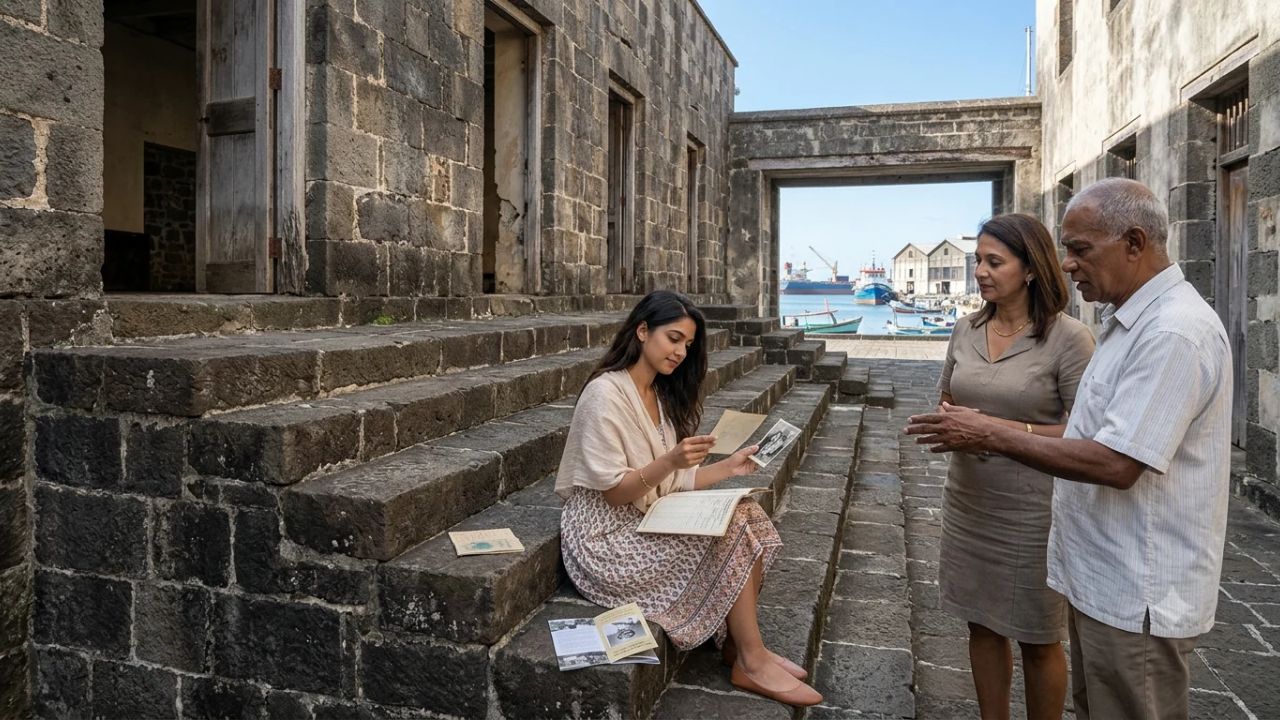
PORT LOUIS, Mauritius — Standing on the weathered basalt stone steps of Aapravasi Ghat where the waters of the Indian Ocean lap against the harbor walls of Port Louis, travelers and diaspora descendants are encountering one of the most poignant migration narratives of the modern world.
The harbor terminal, originally constructed by the British colonial administration as an immigration depot, served as the primary disembarkation gateway for hundreds of thousands of Indian contract workers who reshaped the demographic, economic, and cultural fabric of Mauritius. In 2026, marking two decades since Aapravasi Ghat was inscribed as a UNESCO World Heritage site in July 2006, the destination is witnessing a profound evolution from conventional beach holiday tourism toward high-engagement ancestral heritage travel.
Across the capital city, international visitors are pairing visits to the restored 19th-century port structures with meticulous genealogical investigations at the Mahatma Gandhi Institute in Moka, where archival registers preserve the paper trails of approximately 454,000 indentured immigrants who arrived between 1842 and 1910.
Simultaneously, a broader trans-oceanic heritage dialogue is gaining momentum across the Global South. As South Africa and India advance joint UNESCO nominations recognizing the historical path of Mahatma Gandhi—from his pivotal 1893 ejection at Pietermaritzburg railway station to the 1904 Phoenix Settlement near Durban—the contrasting tourism trajectories of Mauritius and South Africa offer valuable insights into how flight connectivity, digital payment ecosystems, and genealogical infrastructure dictate the success of diaspora travel corridors.
MAURITIUS INDIAN DIASPORA HERITAGE & TOURISM SCORECARD (2026)
| Category / Entity | Details / Impact |
|---|---|
| Primary Heritage Landmark | Aapravasi Ghat (Immigration Depot), Port Louis Bay, Mauritius |
| Historical Inscription | UNESCO World Heritage List (Inscribed July 2006; 20-Year Milestone) |
| Historic Arrival Landmark | 14 Basalt Stone Steps Connecting Disembarkation Quay to Depot Yard |
| Indenture Pioneer Voyage | The "Atlas" Arrived 2 November 1834 Carrying 36 Indian Laborers |
| Depot Construction Timeline | Commissioned in 1849 Following Imperial Slavery Abolition |
| Archival Research Center | Indian Immigration Archives at Mahatma Gandhi Institute (MGI), Moka |
| Archival Register Volume | 2,055 Historical Folios Covering ~454,000 Indentured Laborers |
| Core Recruitment Ports | Calcutta (Kolkata), Bombay (Mumbai), and Madras (Chennai) |
| Intangible Cultural Heritage | Geet-Gawai Bhojpuri Pre-Wedding Songs (UNESCO Inscribed 2016) |
| Digital Preservation Initiative | 3D Virtual Spatial Reconstruction by Mauritius Research Council |
| Bilateral Fintech Integration | Real-Time Cross-Border UPI QR Payments Activated (February 2024) |
| Indian Visitor Arrivals (H1) | 41,966 Arrivals (Jan–Jun 2026; +11.9% YoY vs 37,501 in H1 2025) |
| Comparative Market (S. Africa) | 25,717 Indian Arrivals in H1 2026 (-31.3% YoY); 37,875 (Jan–Sep) |
The Fourteen Basalt Steps: Reconstructing the 1834 Genesis of Indentured Migration
The historical genesis of the indentured labor system in Mauritius began on 2 November 1834, when the merchant vessel Atlas dropped anchor in the waters of Port Louis carrying 36 Indian laborers recruited to work on sugarcane plantations. A solemn commemorative ceremony held at Aapravasi Ghat on 2 November 2026 marked that pioneering voyage, reminding global travelers that the movement of contract workers across the Indian Ocean predated the construction of the permanent stone complex that stands today.
Following the formal abolition of slavery across the British Empire under the Slavery Abolition Act of 1833, colonial sugar estate proprietors faced an acute shortage of agricultural labor. In response, colonial authorities established what historical sociologists term "The Great Experiment"—a system designed to test whether free wage contract labor could successfully replace enslaved workforces on an industrial scale. Mauritius served as the primary testing laboratory for this global scheme.
The physical immigration depot that visitors observe along the edge of Trou Fanfaron bay was constructed in 1849 by the British colonial government. Designed as a transit station to register, medicalize, and distribute incoming indentured workers, the complex once occupied an extensive coastal area. Although urban development and roadway realignments over the past century have claimed more than half of the original 1865 structural footprint, the surviving architectural elements offer an unvarnished window into the daily administration of human migration.
Visitors navigating the cobblestone courtyards encounter the surviving stone walls of the original communal kitchens, the austere accommodation sheds where new arrivals were housed during quarantine periods, the residential quarters of the sirdars (overseers), and the depot's dedicated hospital block. The central symbolic axis of the entire compound remains the fourteen steep basalt steps rising directly from the historic seawater landing dock into the processing court.
Ascending these fourteen stone steps was the transformative physical threshold for every immigrant arriving in Mauritius. Up these steps walked men, women, and children who had completed voyages lasting between four and ten weeks across treacherous open seas from the ports of eastern and southern India. Stepping onto the crest of the basalt stairs signified the permanent separation from ancestral villages and the beginning of a five-year indenture contract under unfamiliar colonial masters.
Directly across the modern thoroughfare from Aapravasi Ghat lies Immigration Square, an area currently functioning as one of the busiest municipal bus terminals in Port Louis. More than 170 years ago, this asphalt transit concourse operated as the depot's outer immigrant yard, a teeming crossroads where time-expired laborers gathered to negotiate return voyages to India or organize transport to rural sugar estates across the island. The district was supported by an international merchant community of Indian, Chinese, and European traders operating dry goods stores, tailors, and provisioning depots.
To reintegrate this fragmented urban geography, the Aapravasi Ghat Trust Fund operates guided heritage walking trails that lead small groups of up to twenty visitors through the core depot, across Immigration Square, and into the surrounding port district. These organized visits require advance reservations, allowing travelers to grasp the depot not as an isolated museum enclosure, but as an integral civic anchor of early Port Louis maritime trade.
AAPRAVASI GHAT INDENTURE PROCESSING SEQUENCE: 1849–1910
| Column 1 |
|---|
| [ Bay of Port Louis Harbor ] ---> Maritime Vessel Anchors in Deepwater Roadstead |
| v |
| [ Seawater Landing Quay ] ---> Transfer of Laborers by Wooden Lighters to Shore |
| v |
| [ The 14 Basalt Steps ] ---> Symbolic Ascendancy; Entry into Colonial Registry |
| v |
| [ Quarantine & Medical ] ---> Health Inspection in Hospital Block; Disinfection |
| v |
| [ Registry Courtroom ] ---> Verification of Indenture Contract; Immigrant Number |
| v |
| [ Accommodation Sheds ] ---> Communal Cooking in Stone Kitchens; Awaiting Allocation |
| v |
| [ Outer Immigrants Yard ] ---> Distribution to Sugarcane Estates; Regional Furgons |
| (Modern Bus Terminal) |
Decoding 454,000 Lives: The Genealogical Engine at the Mahatma Gandhi Institute
While the physical depot in Port Louis provides spatial and architectural resonance, the emotional heart of Indian diaspora heritage travel resides twenty kilometers inland at the Mahatma Gandhi Institute (MGI) in Moka. Founded in 1970 through a joint educational partnership between the governments of Mauritius and India, the institute houses the National Indian Immigration Archives, an extraordinary repository of colonial administrative records that represents one of the most complete demographic archives of 19th-century labor migration anywhere in the world.
The MGI collection comprises approximately 2,055 leather-bound historical registers containing detailed records on roughly 454,000 Indian indentured men, women, and children who arrived in Mauritius between 1842 and 1910. The vast majority of these individuals originated from three primary recruitment zones, embarking from the colonial ports of Calcutta (now Kolkata), Bombay (now Mumbai), and Madras (now Chennai).
For modern travelers tracing their ancestry, these registers allow families to transform vague oral legends into verifiable genealogical fact. Colonial authorities maintained rigorous record-keeping protocols to manage labor quotas, identity verification, and contractual enforcement. As a result, each register entry typically captures an extensive biographical profile:
- The Immigrant Identification Number: A unique serial code assigned upon depot arrival that served as the worker's primary legal identifier throughout their stay in Mauritius.
- Biometric and Physical Details: Precise recordings of the immigrant's age, height, skin complexion, and distinctive physical marks or scars used for identity verification.
- Social and Regional Origins: The individual's father's name, caste or trade classification, religious denomination, native village (gram), district (zillah), and colonial presidency of recruitment.
- Maritime Passage Logs: The name of the transport vessel, the master mariner in command, the date of departure from India, and the exact arrival date in Port Louis.
- Archival Portraiture: From 1869 onward, following changes in colonial surveillance regulations, thousands of incoming workers were individually photographed, leaving behind a remarkable collection of sepia-toned studio portraits that survive intact in the MGI folios.
- Civil Records and Return Voyages: Records documenting marriage contracts solemnized in the colony, offspring birth notices, residential plantation transfers, and passenger manifests for the minority who completed their contracts and secured return passage to India.
The archive cannot promise a trace for every individual ancestor, as some folios suffered moisture damage or ink fading over the decades. Nevertheless, its sheer scale provides diaspora visitors with an unmatched investigative foundation.
To maximize the prospects of an archival discovery, the Mahatma Gandhi Institute advises travelers to complete preliminary research before departing for Mauritius. The most effective starting point is securing the civil status documents of the first generation born on Mauritian soil. A grandfather's or great-grandmother's local birth or marriage certificate, obtainable from the Central Civil Status Division in Port Louis, frequently records the immigrant identification number or vessel name of the arriving parent.
Equipped with an immigrant number, name spelling variants, and estimated arrival windows, researchers can submit inquiries via email or postal dispatch to the MGI archival team weeks in advance of their journey. This advance preparation allows archivists to locate the relevant folios before the family arrives in Moka, converting a short vacation into an unforgettable reunion with historical family documents.
GENEALOGICAL TRACING WORKFLOW: MGI ARCHIVES MOKA
| Column 1 |
|---|
| [ Step 1: Pre-Departure Document Gathering ] |
| Examine family birth, marriage, death certificates, and land title deeds for references |
| to ancestral names, village folklore, or colonial immigrant registration numbers. |
| v |
| [ Step 2: Civil Status Cross-Referencing ] |
| Retrieve first-generation Mauritian birth records from the Civil Status Division |
| in Port Louis to secure the verified "Immigrant Number" of the arriving ancestor. |
| v |
| [ Step 3: Advance Inquiry to MGI Archives ] |
| Transmit immigrant number, estimated arrival decade, and parent names to MGI archivists |
| in Moka via formal email to initiate ledger retrieval prior to flight arrival. |
| v |
| [ Step 4: In-Person Archival Consultation ] |
| Inspect the original leather-bound shipping manifest, verify village and district of |
| origin, view original studio photographs (post-1869), and collect certified extracts. |
| v |
| [ Step 5: Roots Mapping & Village Connection ] |
| Map the identified Indian ancestral village in Bihar, Uttar Pradesh, Tamil Nadu, |
| or Maharashtra, establishing an unbroken lineage across five generations. |
Living Intangible Heritage: Geet-Gawai and Bhojpuri Oral Traditions
The preservation of Indian heritage in Mauritius extends far beyond archival parchment and stone foundations; it thrives as an active, living expression of communal culture. Central to this enduring cultural identity is Geet-Gawai, an elaborate Bhojpuri musical and ritual ceremony performed in the days preceding traditional Hindu weddings.
In 2016, UNESCO inscribed Geet-Gawai on the Representative List of the Intangible Cultural Heritage of Humanity, formally acknowledging the resilience of an oral artistic tradition maintained by diaspora communities across five generations.
Originating in the agricultural heartlands of the Bhojpuri-speaking belt of modern Bihar, Jharkhand, and eastern Uttar Pradesh, Geet-Gawai was carried aboard 19th-century indenture ships by women who preserved ancestral verses, wedding blessings, and agricultural songs in their personal memory. In Mauritius, isolated by ocean expanses from their homeland, female performers adapted these traditions into a self-sustaining communal rite.
The ceremony combines religious prayer, ancestral storytelling, rhythmic percussion, and communal dancing. Led by experienced elderly women known as geetharins, the ensemble sits in a circle around an altar adorned with flowers, incense, and offerings. The musical accompaniment relies on traditional instruments preserved through centuries:
- The Dholak: A two-headed hand drum providing the driving syncopated cadence that accelerates as the evening progresses.
- The Bronze Lota and Spoon: A domestic brass water pot struck rhythmically with a metal utensil, delivering the distinct, metallic chime characteristic of rural Bhojpuri folksong.
- The Harmonium and Majeeras: Hand-pumped reed organs and brass finger cymbals that guide vocal melodies through traditional pentatonic scales.
For travelers from India, attending or witnessing a Geet-Gawai performance offers an extraordinary auditory experience. The Bhojpuri dialect spoken and sung in rural Mauritian villages preserves archaic grammatical forms, vocabulary, and phonetic inflections that have largely disappeared or evolved in northern India. The songs recount episodes from the Ramayana, invoking the blessings of deities, while also celebrating domestic family love, the sorrow of separation from maternal homes, and the enduring resilience of the indentured pioneers.
Cultural tourism specialists emphasize that travelers must approach Geet-Gawai with deep respect. Because it remains an authentic, intimate domestic ceremony rather than a packaged tourist spectacle, visitors should not attempt to enter private neighborhood celebrations uninvited. Instead, travelers interested in experiencing the art form can access authorized recordings at the Aapravasi Ghat Beekrumsing Ramlallah Interpretation Centre, explore UNESCO's dedicated audiovisual archives, or attend scheduled cultural showcases organized by the Bhojpuri Speaking Union and local cultural foundations.
Digital Storytelling and Spatial Heritage: The 3D Aapravasi Ghat Reconstruction
One of the persistent challenges facing heritage managers at Aapravasi Ghat is spatial interpretation. Because modern urban expansion, highway infrastructure, and commercial port facilities have consumed approximately 60 percent of the original 1865 complex, visitors standing in the surviving courtyard often struggle to conceptualize the vast institutional scale of the historic immigration depot.
To bridge this interpretive gap, Mauritius has embraced cutting-edge digital spatial preservation. In 2024, the Mauritius Research and Innovation Council (MRIC), working in close collaboration with the Aapravasi Ghat Trust Fund and international digital heritage technologists, completed an extensive interactive three-dimensional digital reconstruction of the complete 19th-century depot complex.
This digital modeling project utilized terrestrial laser scanning, photogrammetry, and historical architectural blueprints preserved in British colonial archives. The resulting virtual model recreates the depot as it existed during its operational peak in the 1860s:
- The Lost Seaward Frontage: Rebuilding the historic water line where wooden rowing lighters ferried workers from ocean vessels directly to the landing stage.
- The Demolished Quarantine Dormitories: Showing the rows of wooden and stone barracks capable of sheltering hundreds of individuals simultaneously during peak harvesting seasons.
- The Sanitary and Medical Infrastructure: Illustrating the ventilation systems, cooking ranges, and medical inspection wards designed to contain outbreaks of cholera, smallpox, and malaria.
- The Surrounding Urban Context: Showing how the depot connected directly with the commercial storehouses of Trou Fanfaron, the central market of Port Louis, and the carriage roads leading into the interior sugar estates.
For international travelers and diaspora families planning visits, this digital reconstruction represents an invaluable pedagogical tool. Available through multimedia kiosks at the visitor interpretation center and integrated into educational digital platforms, the 3D model allows guests to visually align surviving stone ruins with their original architectural context. Rather than encountering isolated stone foundations, travelers can visualize the daily spatial journey of an ancestor from arrival at the waterfront to registration, quarantine, and departure for the plantation fields.
Heritage authorities are careful to position the 3D reconstruction not as a replacement for physical preservation, but as a supplementary narrative layer that deepens historical empathy and educational impact.
MAURITIUS VS. SOUTH AFRICA: INDIAN TRAVEL CORRIDOR DYNAMICS
| Entity / Route | Metrics | Operational Status |
|---|---|---|
| Attribute | Mauritius Heritage Corridor | South Africa Gandhi Trail |
| Primary Core Themes | Indentured Labor, Genealogy, | Satyagraha Evolution, |
| Aapravasi Ghat, Living Bhojpuri | Civil Rights, Apartheid | |
| Key UNESCO Designation | World Heritage Site (2006) | Tentative List (2026) |
| Direct Flight Connectivity | Daily Non-Stop (Air Mauritius) | No Direct Non-Stop Svc |
| Transit Visa Friction | Visa-Free for Indian Citizens | Electronic ETA Pilot |
| Digital Payment Integration | Real-Time Cross-Border UPI QR | Credit Cards / Local FX |
| H1 2026 Indian Arrivals | 41,966 (+11.9% Year-on-Year) | 25,717 (-31.3% YoY) |
| Full 9-Month Arrivals (2026) | Upward Growth Trajectory | 37,875 (Down from 54,121 |
| Diaspora Archival Access | 2,055 Registers at MGI (Moka) | Research Libraries / Ctr |
Bilateral Tourism Economics: Roadshows, Air Links, and the UPI Cross-Border Bridge
The expansion of heritage and diaspora tourism in Mauritius does not exist in an economic vacuum. It is supported by aggressive tourism marketing, expanding air connectivity, and pioneering cross-border financial technologies that eliminate friction for international visitors.
Data released by Statistics Mauritius highlights the surging prominence of the Indian outbound travel market. In the first half of 2026, Mauritius recorded 41,966 tourist arrivals by residents of India, representing an 11.9 percent increase compared to the 37,501 Indian visitors registered during the corresponding period in 2025.
To put this performance into perspective, the island's total visitor arrivals across all international source markets grew by just 1.5 percent over the same period. The Indian market expanded at nearly eight times the national average rate, solidifying its position as one of the fastest-growing source markets for the Mauritian economy.
This arrival growth was actively cultivated through targeted promotional campaigns. In June 2026, the Mauritius Tourism Promotion Authority (MTPA) led a high-level trade delegation across three major Indian commercial hubs: Bengaluru, Mumbai, and Indore. The traveling delegation comprised 26 senior representatives from leading Mauritian hospitality groups, destination management companies, resort operators, and airline partners.
Across the three cities, the MTPA delegation engaged with more than 300 Indian travel agents, wholesale tour operators, and media representatives. Significantly, the presentations highlighted that Mauritius is no longer solely a luxury honeymoon or beach enclave, but a multifaceted destination catering to multigenerational families seeking to combine seaside relaxation with cultural explorations in Port Louis and genealogy research in Moka.
Complementing this marketing push is an innovative financial bridge. In February 2024, the governments of India and Mauritius officially launched real-time cross-border Unified Payments Interface (UPI) services. Under this system, Indian travelers can complete retail transactions, pay restaurant bills, and settle entrance fees across participating Mauritian merchants by scanning local QR codes directly through their standard mobile banking applications.
For family travelers exploring the markets of Port Louis, paying taxi fares, or purchasing tickets at cultural centers, the availability of familiar UPI transactions eliminates foreign exchange conversion fees and the need to carry large sums of local Mauritian Rupees (MUR). While merchants and visitors must verify local banking support before relying exclusively on mobile payments, the cross-border fintech link underscores the expanding structural integration linking the two economies.
Comparative Transnational Heritage: South Africa’s Gandhi Trail vs. Mauritius Indenture
To fully appreciate the significance of Mauritius's diaspora heritage model, it is instructive to examine the parallel efforts underway in South Africa, where another profound chapter of the global Indian diaspora unfolded.
In August 2026, the government of South Africa formally submitted a series of landmark sites associated with Mahatma Gandhi to UNESCO's World Heritage Tentative List. In September 2026, India submitted its own complementary nomination dossier. Together, this proposed transnational series links two core historical landmarks in South Africa with seven key heritage properties in India, documenting the political and philosophical evolution of nonviolent resistance (Satyagraha).
The South African component centers on two transformative locations in KwaZulu-Natal:
- Pietermaritzburg Railway Station: On the cold winter night of 7 June 1893, Mohandas K. Gandhi, then a 23-year-old lawyer holding a valid first-class railway ticket, was forcibly ejected from a train by railway staff because colonial regulations reserved first-class compartments exclusively for white passengers. Gandhi spent the night shivering in the station's unheated waiting room, an experience he later described as the defining catalyst that committed him to fighting institutional injustice. Today, the waiting room houses an evocative historical exhibition, while a bronze statue on the platform depicts Gandhi in his youth and as an elder statesman.
- Phoenix Settlement in Inanda: Established by Gandhi in 1904 outside Durban, the settlement served as a communal laboratory for self-reliance, simple living, and civil resistance. The site contains the reconstructed printing press building where Gandhi published the newspaper Indian Opinion, alongside a memorial museum, community clinic, and reference library.
The proposed UNESCO serial nomination links these South African origins with seven major sites across India: Sabarmati Ashram in Ahmedabad, Mani Bhavan in Mumbai, East Champaran in Bihar (where Gandhi launched his first Indian satyagraha in 1917 among exploited indigo tenant farmers), and historical compounds in New Delhi, Wardha, and Pune.
However, a sharp divergence emerges when examining recent tourism performance metrics between the two nations. While Mauritius experienced double-digit growth in Indian arrivals (+11.9% in H1 2026), South Africa experienced a pronounced contraction.
According to official tourism data, South Africa welcomed 25,717 Indian arrivals in the first half of 2026, marking a 31.3 percent decline from the 37,447 Indian travelers recorded during the same period in 2025. This downward trajectory persisted through the third quarter, with total Indian arrivals for the first nine months of 2026 falling to 37,875 compared to 54,121 during the corresponding nine months of 2025.
Industry analysts attribute this divergence primarily to connectivity and administrative hurdles:
- The Aviation Deficit: Mauritius enjoys reliable, direct non-stop air service connecting Mumbai, Delhi, and Chennai with Sir Seewoosagur Ramgoolam International Airport via Air Mauritius. In contrast, South Africa currently lacks direct non-stop flights from India. While South African tourism officials met with Air India representatives in New Delhi during an August 2026 promotional mission—supplemented by digital campaigns featuring cricket iconography—no firm launch date or flight schedules have been inaugurated. Indian travelers bound for Durban or Johannesburg must navigate multi-stop connections via Middle Eastern or African hubs, adding hours and logistical complexity.
- Visa Processing Friction: Mauritius offers straightforward, visa-free entry for Indian passport holders. South Africa operates an Electronic Travel Authorisation (ETA) pilot program, but the system is currently restricted to four designated international airports, including OR Tambo International in Johannesburg and King Shaka International in Durban. Travelers must carefully verify eligibility rules and airport routing before completing bookings.
The contrasting fortunes of Mauritius and South Africa demonstrate that rich historical narratives and UNESCO listings alone cannot sustain tourism growth. To convert diaspora interest into actual visitor arrivals, destinations must combine heritage storytelling with direct aviation corridors, streamlined entry procedures, and integrated digital payment solutions.
RECOMMENDED 4-DAY INDIAN DIASPORA HERITAGE ITINERARY: MAURITIUS
| Column 1 |
|---|
| DAY 1: PORT LOUIS MARITIME FOUNDATIONS |
| - 09:00: Arrive at Aapravasi Ghat UNESCO World Heritage Site; explore 14 basalt steps. |
| - 10:30: Tour Beekrumsing Ramlallah Interpretation Centre and interactive exhibits. |
| - 12:00: Walk through Immigration Square bus terminal and old merchant quarter. |
| - 13:30: Traditional Mauritian Creole-Bhojpuri lunch at Port Louis Central Market. |
| - 15:00: Visit Blue Penny Museum for 19th-century colonial cartography and prints. |
| DAY 2: GENEALOGICAL EXPLORATION AT MOKA |
| - 09:30: Travel inland to Mahatma Gandhi Institute (MGI) in Moka. |
| - 10:00: Scheduled consultation with MGI archivists; inspect original shipping ledgers. |
| - 12:30: View historical portraiture collections and immigration registers. |
| - 14:00: Explore the MGI Folk Museum of Indian Immigration. |
| - 16:00: Afternoon tea in the highlands of Saint Pierre. |
| DAY 3: SPIRITUAL LANDSCAPES & LIVING TRADITIONS |
| - 08:30: Drive south to Ganga Talao (Grand Bassin), the sacred crater lake. |
| - 10:00: Visit towering statues of Lord Shiva and Goddess Durga (Mangal Mahadev). |
| - 12:30: Scenic drive through the Black River Gorges National Park. |
| - 15:00: Cultural briefing with local Bhojpuri cultural societies; introduction to |
| the living rhythms, instruments, and preservation of Geet-Gawai songs. |
| DAY 4: COASTAL PLANTATION ROOTS & CONTEMPORARY LEISURE |
| - 09:00: Explore historic sugar estate heritage trails in Pamplemousses district. |
| - 11:30: Tour the SSR Botanic Garden, discovering endemic flora and spice groves. |
| - 14:00: Leisure afternoon along the northern coastlines of Trou aux Biches. |
| - 18:30: Farewell seaside dinner experiencing fusion Mauritian gastronomy. |
Essential Practical Guidance for Heritage Travelers
For travelers embarking on an ancestral journey to Mauritius, careful advance preparation ensures a deeply fulfilling and smooth experience:
- Archive Booking Timelines: The Indian Immigration Archives at the Mahatma Gandhi Institute in Moka operate during standard weekday business hours. Visitors planning archival searches should submit inquiry forms via the institute's official portal at least four to six weeks prior to departure. Walk-in requests without prior documentation can result in lengthy delays while staff locate historical registers from secure vaults.
- Documentary Checklist: Carry physical and digital copies of all available family records, including first-generation birth certificates, marriage extracts, deceased relatives' death notices, and any inherited legal documents that might mention an immigrant registration number (No. d'Immigrant).
- Payment Methods: While real-time UPI QR payments are increasingly accepted at major retailers, supermarkets, and established restaurants in Port Louis and Grand Baie, smaller vendors, informal market stalls, and rural taxi operators continue to transact in cash. Visitors should keep a modest reserve of Mauritian Rupees (MUR) for day-to-day minor expenditures.
- Cultural Sensitivity: When visiting sacred spiritual locations such as Ganga Talao or historic village shrines, dress conservatively with shoulders and knees covered. Remove footwear before stepping onto temple platforms. If invited into a community setting during wedding festivities, observe social protocols and seek permission before taking photographs or recording traditional songs.
As global tourism navigates the demand for meaningful, identity-affirming travel, Mauritius proves that historical preservation can become an extraordinary bridge across continents. Beneath the shade of the banyan trees at Aapravasi Ghat, the 14 basalt steps remain not merely a monument to past hardship, but a gateway where descendants reclaim the names, voyages, and enduring courage of their ancestors.
Related Travel Guides
- Mauritius Cultural Odyssey: Historic Port Louis, Sugarcane Estates, and Island Heritage
- Roots and Diaspora Tourism: How Global Travelers Are Reconnecting with Ancestral Lands
- South Africa Gandhi Heritage Trail: Pietermaritzburg, Phoenix Settlement, and Durban History
- UNESCO Intangible Cultural Heritage: Preserving Oral Traditions, Rituals, and Folk Music
This article is for informational purposes. Flight routes, passenger regulations, visa rules, and transit advisories are subject to change by airlines and aviation authorities. Readers are advised to verify schedules and travel documentation with relevant carriers and border agencies before departure.
Related Stories
Cairns Confronts Domestic Tourism Contraction as Jet Fuel Spikes and Aviation Capacity Squeeze Queensland Holiday Budgets

San Diego Champions Plant-Based Tourism Innovation as Flipfloptimism Campaign Connects Coastal Culture with Biodegradable Footwear