
Vietnam's Blue Economy Shift: Community-Led Marine Protection and Eco-Tourism Mandates 2026
Vietnam is pivoting toward a community-managed blue economy, leveraging Resolution No. 36-NQ/TW and Decision No. 147/QD-TTg to transition coastal villages from extractive fishing to regenerative eco-tourism.

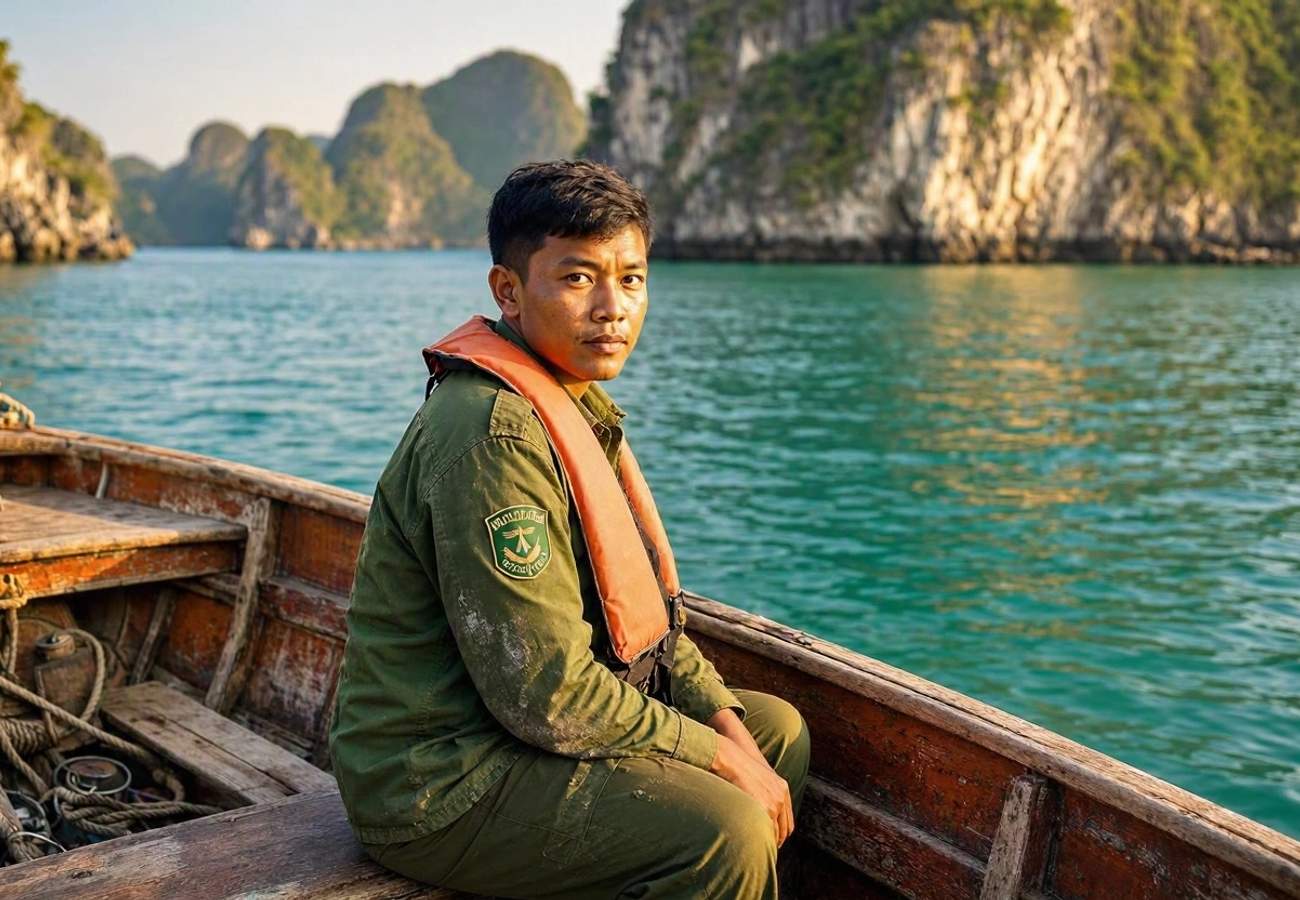
Image generated by AI
A projected tourism revenue target of $130 billion to $135 billion by 2030 is driving a radical restructuring of Vietnam’s coastal management. This financial ambition is not being pursued through traditional mass-market expansion, but through a systemic shift toward a "blue economy" that transfers custodial power from central state agencies to the villagers living on the front lines of marine degradation.
The Legislative Framework of the Blue Revolution
Vietnam is currently dismantling the top-down enforcement model of maritime governance in favor of community-led stewardship. This transition is anchored by three primary legal instruments designed to decouple economic growth from environmental destruction.
The overarching blueprint is Resolution No. 36-NQ/TW, which establishes the Strategy for Sustainable Development of Vietnam’s Marine Economy. This mandate redefines the ocean not as a resource to be extracted, but as a sustainable engine for growth that requires strict ecological compliance. To give this strategy teeth, Resolution No. 139/2024/QH15 implements national marine spatial planning. This law creates a rigid zoning system that separates core preservation sanctuaries from commercial buffer zones, ensuring that industrial shipping and large-scale commercial fishing cannot encroach upon community-managed eco-tourism sites.
Finally, Decision No. 147/QD-TTg provides the financial impetus, directing public investment toward rural coastal infrastructure. This includes the development of eco-lodges and hospitality training for former fishermen, effectively turning traditional villages into professionalized tourism hubs.
Marine Zoning and Economic Targets
The implementation of these laws is most visible in the provinces of Quang Ninh, Khanh Hoa, and Quang Nam. By restricting large-scale commercial cruise vessels and industrial runoff, the state is betting that "high-value, low-impact" travel will yield more long-term profit than volume-based tourism.
| Regulatory Instrument | Primary Objective | Key Target/Metric | Impact Area |
|---|---|---|---|
| Resolution No. 36-NQ/TW | Sustainable Marine Economy | Vision to 2045 | National Coastline |
| Resolution No. 139/2024/QH15 | Marine Spatial Planning | Zoning & Buffer Areas | Ha Long Bay, Nha Trang |
| Decision No. 147/QD-TTg | Green Tourism Revenue | $130B – $135B by 2030 | Quang Ninh, Khanh Hoa |
Expert Analysis: The Shift from Extraction to Stewardship
For travelers booking trips to Vietnam's coast, the direct consequence of these policies is a visible change in the service economy. The "tour guide" is no longer a third-party agent from a city hotel, but often a former commercial fisherman retrained as a marine warden.
This shift is a calculated move to solve the "tragedy of the commons." When the state manages a reef, locals may still poach. When the locals own the rights to the eco-tourism revenue generated by that reef, they become its fiercest protectors. In the Cham Islands of Quang Nam Province, this is evident in the total ban on single-use plastics and the employment of villagers as paid rangers to stop blast fishing.
The pricing pressure created by this model means that "budget" mass-tourism packages will likely disappear in favor of higher-priced, curated experiences. However, this ensures that the revenue stays within the community rather than leaking to international tour operators. By integrating International Air Transport Association (IATA) standards for sustainable travel and aligning with the Vietnam National Administration of Tourism, the country is positioning itself as a premium regenerative destination.
Regional Implementation Highlights
- Ly Son Island (Quang Ngai): Local residents have pivoted from extractive fishing to coral nursery management, partnering with scientists to restore dive sites.
- Bai Tu Long National Park (Quang Ninh): The park has banned large commercial vessels from sensitive zones, instead empowering local households to lead kayak and mangrove tours.
- Cat Ba Biosphere Reserve (Haiphong): The reserve has replaced wild harvesting with community-led aquaculture tours and strict construction limits to protect endangered wildlife.
- Nha Trang Bay (Khanh Hoa): Marine wardens now utilize the legal clarity of Resolution No. 139/2024/QH15 to expel unregulated commercial operators from protected zones.
Key Takeaways
- Financial Pivot: Vietnam is targeting up to $135 billion in tourism revenue by 2030 via a sustainable, community-first model.
- Legal Protections: Resolution No. 139/2024/QH15 provides the legal framework to protect eco-tourism zones from industrial encroachment.
- Labor Transition: Former fishermen in regions like Ly Son and the Cham Islands are being retrained as marine wardens and eco-guides.
- Zoning Restrictions: Large commercial vessels are increasingly restricted in sensitive areas like Bai Tu Long National Park.
- Community Funding: Visitor fees in protected areas are now directly earmarked for reef restoration and local recycling systems.
FAQ: Vietnam Marine Tourism 2026
Will these new regulations make travel to Ha Long Bay more expensive? Likely yes. The shift from mass tourism to "high-value" eco-tourism under Decision No. 147/QD-TTg prioritizes quality and sustainability over volume, which typically increases the cost of permits and guided tours.
Are there restrictions on what I can bring to the Cham Islands? Yes. The Cham Islands Marine Protected Area enforces a strict ban on single-use plastic bags to protect the coral reefs. Travelers are expected to bring reusable alternatives.
How does community-led tourism benefit the traveler? Visitors receive more authentic, expert-led experiences. Guides are often former fishermen with deep indigenous knowledge of the local ecology, providing higher information gain than standard commercial tours.
What is the "Blue Economy" in the context of Vietnam? It is a strategic economic model that balances maritime industrial growth with the preservation of ocean health, ensuring that the sea remains a viable economic resource for future generations.
The tide has turned: Vietnam is proving that the most effective way to save a paradise is to give the keys back to the people who live there.
Related Travel Guides
Disclaimer
This article is for informational and educational purposes only. It does not constitute legal, financial, or professional advice. While we strive to provide accurate and up-to-date information, travel policies, regulations, and conditions change rapidly. Always verify information with official sources before making travel decisions. Nomad Lawyer makes no representations about the accuracy, reliability, completeness, or suitability of the information provided. Readers should consult qualified professionals for advice specific to their circumstances. The views expressed in this article are those of the author and do not necessarily reflect the views of Nomad Lawyer.
Kunal K Choudhary
Co-Founder & Contributor
A passionate traveller and tech enthusiast. Kunal contributes to the vision and growth of Nomad Lawyer, bringing fresh perspectives and driving the community forward.
Learn more about our team →