
US Court Overturns Trump Administration's 75-Country Immigrant Visa Ban for 2026
A federal judge has struck down a sweeping immigrant visa ban affecting 75 countries, ruling that nationality-based suspensions violate the Immigration and Nationality Act of 1952.

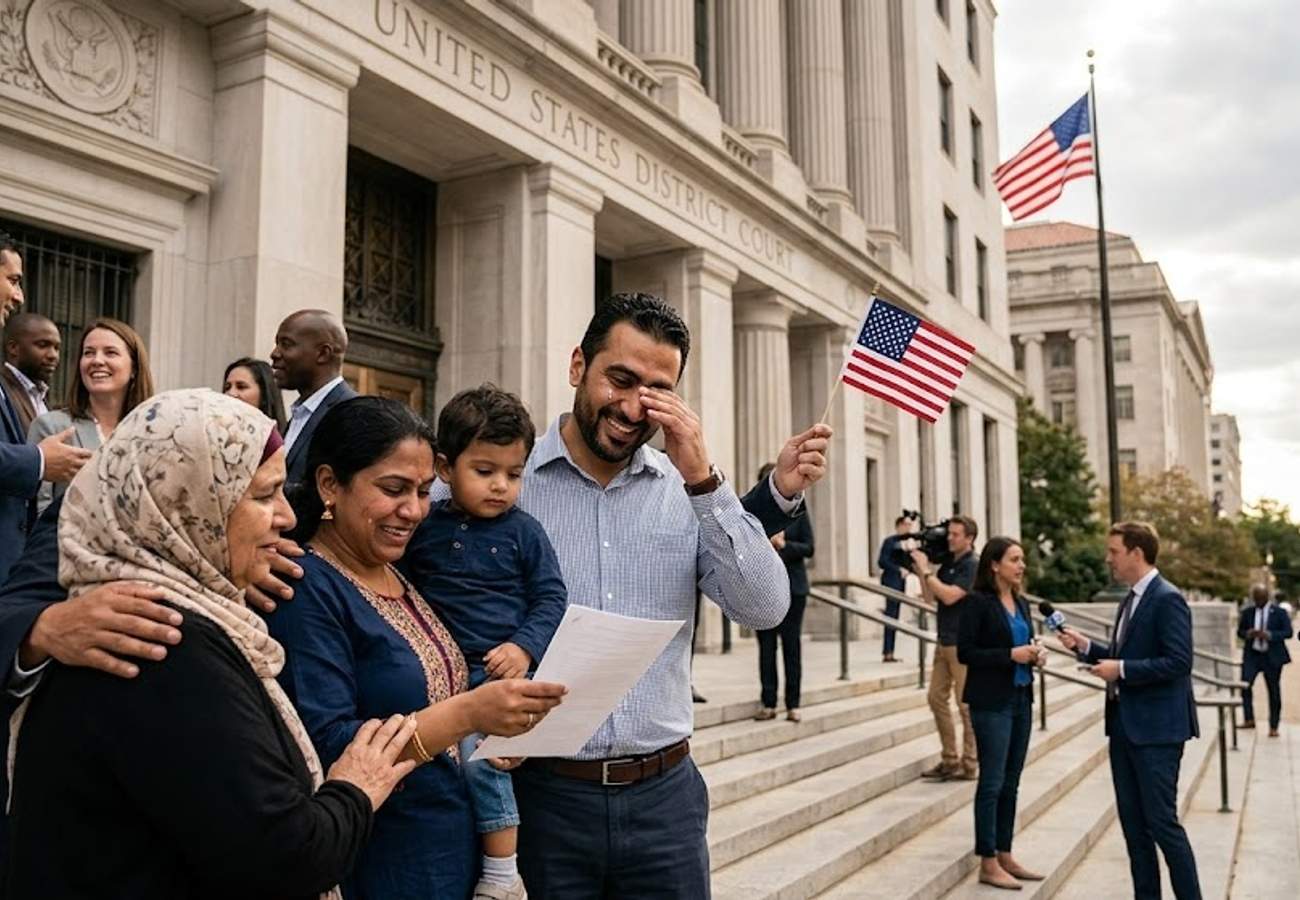
Image generated by AI
A federal judge has ordered the immediate reversal of a Trump administration policy that suspended immigrant visa issuance for nationals of 75 countries. The ruling restores the pathway for thousands of applicants seeking lawful immigration to the United States.
Judge Jeannette Vargas ruled that the ban, implemented in January, exceeded the legal authority of Secretary of State Marco Rubio and was "contrary to law." The policy specifically targeted V visas, employment-based visas, and family-based visas. Notably, the ban never extended to tourist or student travel visas.
The court has mandated that all visa refusals based solely on this nationality-based policy must be reversed, though officials may still deny visas based on other valid, individual legal grounds.
Legal Basis for the Ruling
The core of the dispute centered on whether the US government could suspend immigrant visas based primarily on an applicant's nationality. Judge Vargas found that this approach directly conflicted with the Immigration and Nationality Act of 1952.
Our analysis of the ruling indicates that the administration attempted to replace individual merit assessments with a blanket presumption of inadmissibility based on country of origin. The court clarified that while the US can screen for security and financial stability, it cannot use a sweeping nationality-based mechanism to bypass the required individual evaluation.
The Role of Diplomatic Evidence
A critical piece of evidence in the case was a State Department diplomatic cable sent to US consular posts. This cable instructed officers to refuse immigrant visas even when applicants provided evidence to overcome "public-charge" concerns.
This instruction proved that the outcomes were predetermined, regardless of the applicant's actual financial standing. The impact was felt most acutely by those who had already completed substantial processing. In several instances, applicants had been approved, but their physical visas were withheld at the consulate due to the January policy.
Impact on Global Mobility
The suspension created significant disruption for international relocation, affecting regions across Africa, Asia, Latin America, the Caribbean, the Middle East, and the Balkans.
- Family Reunification: Thousands of families faced indefinite postponements.
- Corporate Mobility: Employment-based immigrants faced missed job start dates and delayed relocations.
- Logistical Chaos: Many applicants had already committed funds to housing, education, and flights based on prior approvals.
Comparison of Visa Policy Shifts
The following table outlines the transition from the January suspension to the current legal standing.
| Policy Element | January 2026 Position | Following The Court Ruling |
|---|---|---|
| Countries affected | 75 | Nationality-based suspension struck down |
| Main visa category | Immigrant visas | Individual processing can resume |
| Family-based immigration | Suspended for affected nationalities | Cases based solely on policy must be reconsidered |
| Employment-based immigration | Suspended for affected nationalities | Individual eligibility can be assessed |
| Tourist visas | Not covered by this policy | No direct change |
| Student visas | Not covered by this policy | No direct change |
| Public-charge assessment | Applied within the policy framework | Individual assessment remains relevant |
| Other legal refusals | Remained possible | Remain possible |
| Government response | Administrative suspension | Appeal remains possible |
The Persistence of Public-Charge Screening
It is a common misconception that this ruling removes financial scrutiny. The US public-charge framework remains fully active. Immigration authorities will still evaluate whether an applicant is likely to become dependent on government support.
However, this assessment must now be individualized. The following factors will be weighed on a case-by-case basis rather than by nationality:
| Factor | Blanket Nationality Approach | Individual Assessment |
|---|---|---|
| Nationality | Could determine treatment | Cannot replace individual assessment |
| Age | Not individually decisive | Can be considered |
| Health | Not individually decisive | Can be considered |
| Family circumstances | Not individually decisive | Can be considered |
| Financial resources | Could be overridden by policy | Relevant to assessment |
| Education and skills | Could not necessarily overcome policy | Can form part of overall assessment |
| Employment prospects | Limited by suspension | Can be relevant |
| Supporting evidence | Could be ineffective against blanket policy | Can be considered |
The State Department continues to utilize other financial-screening tools, including the public-charge bond process for specific immigrant visa categories.
Why This Matters
From a logistical and legal perspective, this ruling shifts the burden of proof back to the consular officer. For travelers and corporate mobility providers, the "information gain" here is clear: a prior approval is no longer automatically blocked by a passport's country of origin.
However, the operational reality is that the State Department may be slow to clear the backlog created since January. For those in the 75 affected countries, the ruling is a legal victory, but it does not guarantee an immediate visa. The return to individual assessment means that rigorous documentation of assets, education, and employment prospects is now more critical than ever to avoid a "public charge" denial.
Industry Outlook
The administration continues to defend its vetting standards, with a State Department spokesperson stating the government is "protecting the American people by upholding the highest standards of screening."
Expect a period of administrative volatility as the State Department processes the backlog of reversed refusals. Legal experts anticipate the government may attempt an appeal to a higher court to reinstate some form of the suspension. Until then, the path for family and employment-based immigration from these 75 nations is officially reopened.
The return to individual adjudication marks a significant pivot in US border policy for 2026.
Related Travel Guides
Disclaimer
This article is for informational and educational purposes only. It does not constitute legal, financial, or professional advice. While we strive to provide accurate and up-to-date information, travel policies, regulations, and conditions change rapidly. Always verify information with official sources before making travel decisions. Nomad Lawyer makes no representations about the accuracy, reliability, completeness, or suitability of the information provided. Readers should consult qualified professionals for advice specific to their circumstances. The views expressed in this article are those of the author and do not necessarily reflect the views of Nomad Lawyer.
Preeti Gunjan
Contributor & Community Manager
A passionate traveller and community builder. Preeti helps grow the Nomad Lawyer community, fostering engagement and bringing the reader experience to life.
Learn more about our team →