
USA Canada Tourism Crisis 2026: Managing Overtourism at Iconic National Parks
As international travel surges in 2026, the US and Canada face a critical overtourism crisis at their most iconic wild sites, forcing a shift toward timed entry and smarter visitor management.

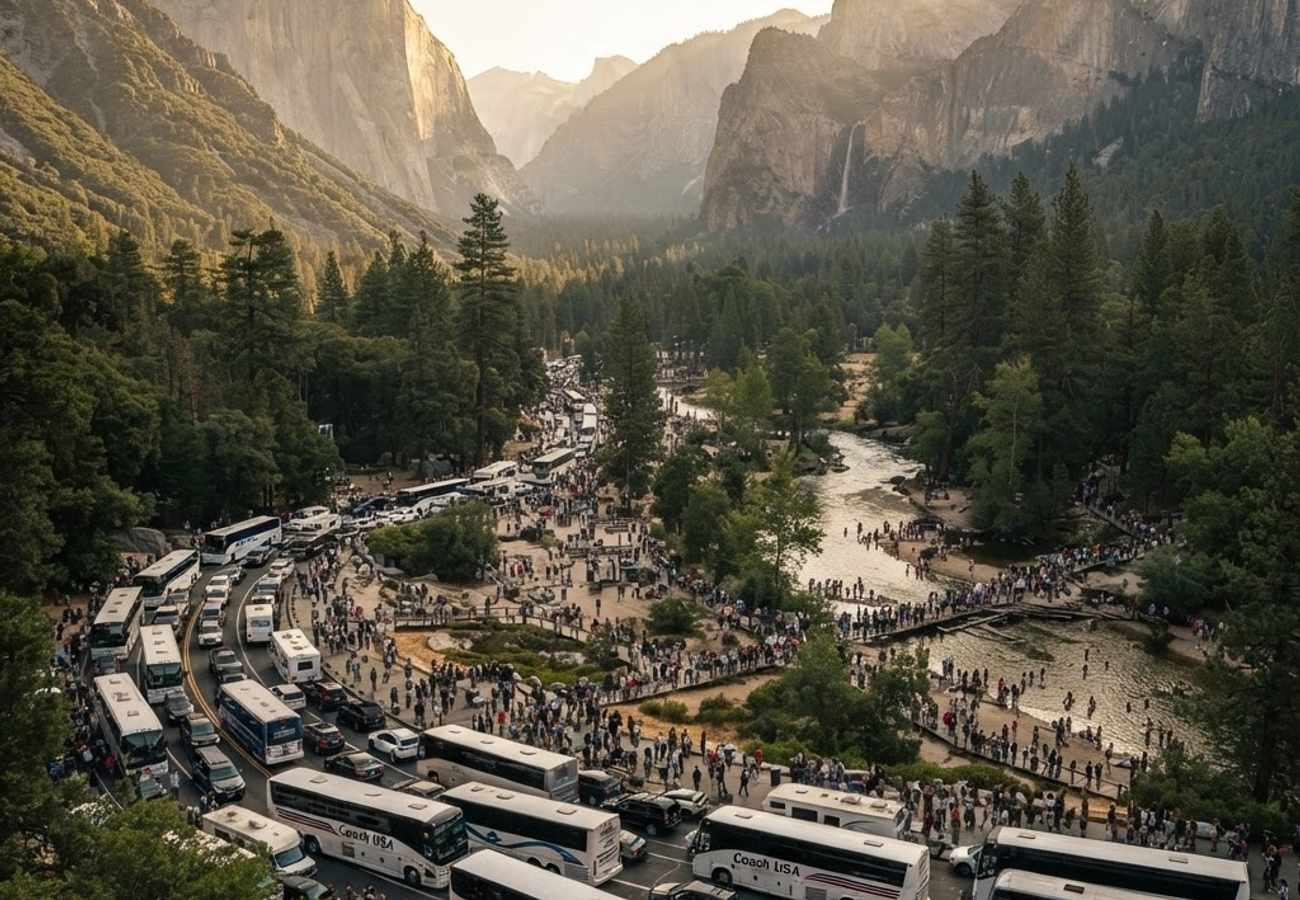
Image generated by AI
The surge of global travelers discovering North America's wilderness has triggered a systemic overtourism crisis. With millions descending on a handful of "wild icons," the balance between economic gain and environmental preservation has reached a breaking point.
The competitive travel dynamic between the USA and Canada has entered a volatile phase. While the influx of international visitors bolsters local economies, it has simultaneously created a management nightmare characterized by gridlocked highways, degraded habitats, and overwhelmed park infrastructure. The challenge for 2026 is no longer about attracting tourists, but about strategically dispersing them to prevent the permanent erosion of the landscapes they come to admire.
The Economic Paradox of High Visitation
The tension surrounding North American tourism is rooted in a stark economic paradox: the very crowds that threaten the environment are the primary drivers of regional prosperity. In 2024, the National Park System recorded 331.9 million recreation visits, which fueled a massive economic engine.
Visitors contributed approximately $29 billion in spending within gateway communities, resulting in an estimated $56.3 billion in total economic output. This activity supported roughly 340,100 jobs, proving that tourism is an indispensable lifeline for rural towns, hotels, and local guides.
However, the 2025 data highlights the fragility of this growth. While the National Park Service saw 323 million total visits—a slight decline of 2.7% from 2024—twenty-six individual parks hit all-time visitation records. This indicates that while overall numbers may fluctuate, the pressure is concentrating on a few "super-destinations," exacerbating the overtourism effect.
Mapping the Pressure Points
Overtourism in the US is not a uniform phenomenon but a series of localized crises. The disparity in visitor volume between parks demonstrates why a "one size fits all" federal policy is ineffective.
In 2025, the distribution of visits revealed extreme concentrations:
- Great Smoky Mountains National Park: 11.5 million+ visits
- Zion National Park: Nearly 5 million visits
- Yellowstone National Park: Approximately 4.8 million visits
- Yosemite National Park: Over 4.2 million visits
- Rocky Mountain National Park: About 4.17 million visits
These figures suggest that management must be surgical. Instead of blanket restrictions, authorities are now identifying specific "pressure points"—such as particular trails or viewpoints—to apply targeted interventions.
2026 U.S. Tourism Market: Overtourism Indicators
The following data outlines the projected pressures facing the US tourism infrastructure through 2026.
| 2026 U.S. Tourism Indicator | 2026 Figure / Outlook | Impact on Overtourism |
|---|---|---|
| International visitor arrivals | 70.5 million | Sustained pressure on primary "bucket-list" destinations. |
| Growth in international arrivals | +3.2% | Demand is increasing, necessitating expanded capacity. |
| International visitor spending | $178 billion | High economic stakes make restricting access difficult. |
| NPS recreation visits (2025) | 323 million | Confirms massive domestic and global demand. |
| NPS visitor hours (2025) | 1.39 billion hours | Highlights extreme wear on roads and facilities. |
| 2025 NPS visits vs 2024 | −2.7% | Overall dip masks record-breaking crowds at specific sites. |
| 2026 World Cup effect | Major demand driver | Expected surge in travel across US, Canada, and Mexico. |
| Return to 2019 inbound volume | Not expected until 2029 | Recovery is uneven, creating unpredictable spikes. |
Strategic Solutions: Timed Entry and Traffic Management
To combat peak-hour congestion, several parks are implementing "Timed Entry" systems. This strategy does not limit the total number of guests but regulates the rhythm of arrival.
Rocky Mountain National Park, for example, has deployed a 2026 timed-entry system starting May 22, specifically targeting the high-traffic Bear Lake Road Corridor. By spreading arrivals across the day, the park reduces the risk of traffic gridlock and environmental degradation during peak windows.
Conversely, Yosemite provides a lesson in data-driven flexibility. In 2026, Yosemite opted against a season-wide vehicle reservation system. Analysis showed that many weekdays maintained stable traffic and available parking. This proves that reservation systems should be a scalpel, not a sledgehammer—used only where the data justifies the restriction.
Diversifying the Tourist Map
A significant driver of overtourism is the "postcard effect," where travelers flock to the same five or six iconic names. To solve this, tourism boards are shifting their marketing strategies to promote "hidden gems."
By redirecting traffic toward lesser-known national monuments, historic towns, and scenic drives, the US can:
- Reduce the burden on overloaded sites like Zion and Yellowstone.
- Spread economic benefits to underserved rural communities.
- Improve the visitor experience by offering solitude and authentic wilderness.
The Role of Transit in Ending Parking Nightmares
The conflict between private vehicles and wilderness preservation is a primary catalyst for park degradation. The National Park Service has identified shuttle systems as a critical tool for congestion management.
By connecting gateway towns directly to park hubs, shuttles remove thousands of private cars from narrow mountain roads. This transition transforms transportation from a logistical hurdle into a conservation tool, ensuring that the "wild icons" remain wild.
The survival of North America's natural wonders now depends on the transition from unplanned growth to precision management.
Related Travel Guides
Disclaimer
This article is for informational and educational purposes only. It does not constitute legal, financial, or professional advice. While we strive to provide accurate and up-to-date information, travel policies, regulations, and conditions change rapidly. Always verify information with official sources before making travel decisions. Nomad Lawyer makes no representations about the accuracy, reliability, completeness, or suitability of the information provided. Readers should consult qualified professionals for advice specific to their circumstances. The views expressed in this article are those of the author and do not necessarily reflect the views of Nomad Lawyer.
Preeti Gunjan
Contributor & Community Manager
A passionate traveller and community builder. Preeti helps grow the Nomad Lawyer community, fostering engagement and bringing the reader experience to life.
Learn more about our team →